
The next morning, the Tesla was fully charged but still displayed warning lights and error messages. And it didn’t start. The display showed a critical undervoltage error, but it wasn’t entirely clear whether this referred to the high-voltage battery or the 12V battery.
The 12V battery measured at only 11V. So we guessed that the root cause was probably the 12V battery. Charging it with an external charger didn’t solve the problem.

Hans then dismounted the 12V battery, which wasn’t that easy on the Tesla.
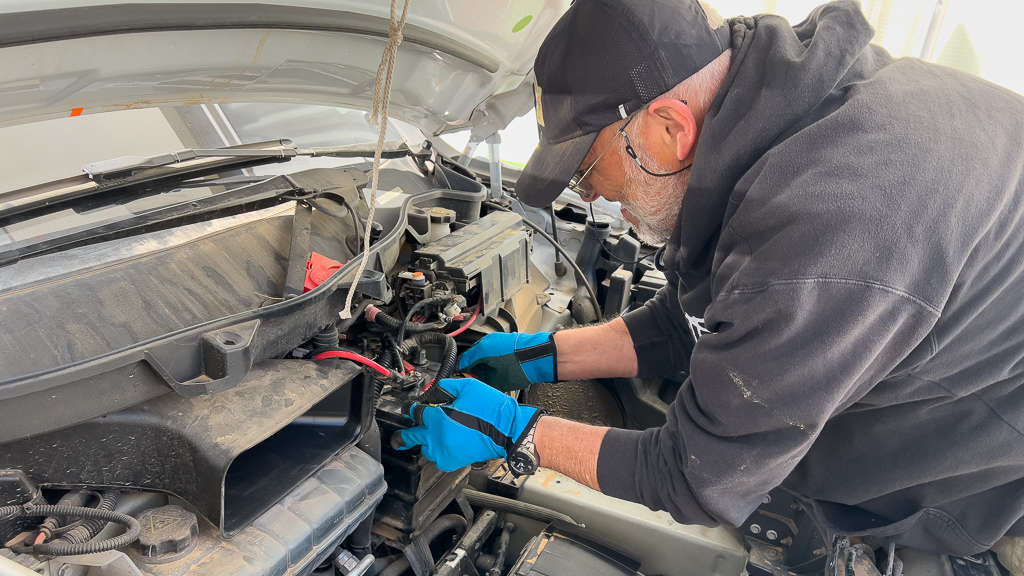
We then drove to a store in Nouadhibou that specializes in car batteries and tried to find a new 12V battery for the Tesla. Since the size of the Tesla battery is rather exotic, we weren’t sure if we could find one. Luckily, they had the right size in stock. But the first sample we got was dead when we tested it. So we had to go back to the store and exchange it against another sample. This one was fine. Before putting it back in the car, we fully charged the battery with an external charger.

Sadly, it didn’t solve the problem. The undervoltage messages were still displayed, and we weren’t able to start the Tesla. We also tried to reset the battery management system of the Tesla several times. No success. After looking for hours on Tesla forums and talking to a couple of experts, Hans had the suspicion that the charging of the 12V battery from the HV battery was interrupted. The self-diagnosis of the Tesla identified this problem and prevented any further starts of the car. The only way to fix this problem would be to dismantle the HV battery and check for any interrupted connections. Not a job that could be done in Mauritania. The next workshop that could potentially analyze and repair the high-voltage battery would be the Bosch service center in Casablanca, about 2000km away. But since the HV battery of the Tesla was still under warranty, it would make more sense to transport the Tesla back to Switzerland to repair or exchange the HV battery there.
Therefore, our only option was to organize a tow truck for the Tesla. That wasn’t that easy because nobody was willing to tow the Tesla across the border between Mauritania and Morocco. The towing company from Morocco would pick up the car only in Morocco, after the border. But they weren’t willing to enter the no-man’s-land or come to Mauritania. With the help of Victor (Villa Maguela), we found another towing company in Mauritania that would bring the car to the no-man’s-land.
Altogether, it took us three days to organize everything.
I wasn’t sad about the waiting time in the Hotel Delphin because I had severe stomach problems at that time. During the whole trip, I completely avoided tap water, ice cubes, and salads because in over 90% they are the root cause of stomach problems in Africa. When we arrived at the Hotel Delphin, Toni, the manager of the hotel, invited us for lunch and served a salad. I thought that it would be extremely impolite not to eat the salad. For about a week, I had severe cramps, and the toilet was my best friend. By the way, I don’t blame Toni. He is an extremely nice and super friendly guy, and I’m sure he had only the best intentions. And I’m still not sure if there would have been any good way to avoid the result without disappointing people. If you have any good ideas, please write them in the comments below.
Three days later, a tow truck arrived at the hotel to pick up the Tesla and Hans.


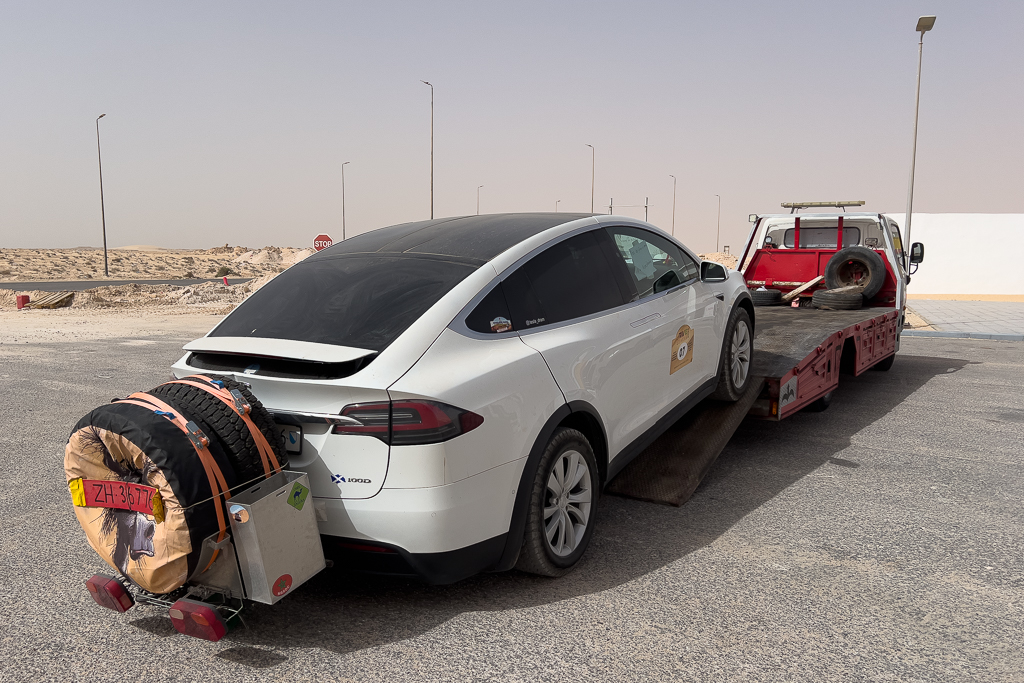
Getting out of Mauritania was quick. It took us just 45 minutes at the border. In the no-man’s-land between Mauritania and Morocco, the Tesla was unloaded from the tow truck.

The only option to get the Tesla through the Moroccan border was to tow it with my Audi.

The reason why I couldn’t tow the Tesla all the way from Nouadhibou to Morocco was that if the HV battery of an EV is not working, the cooling and lubrication of the electric motors are also not working. In addition, the energy gained from recuperation could not be stored anymore in the HV battery. All this would lead to severely damaged components of the Tesla after just a few kilometers of towing.

Getting through the Moroccan border took nearly four hours. But for two full hours, everything was just on hold, and nobody was working at the border. At noon, there was a one-hour lunch break, and then around 2 p.m., there was another one-hour break for an unspecified reason.
All cars had to go through the scanner. Since the Tesla needed to be towed, that was a bit more complicated and took more time than usual. But in the end, everything worked very well. This border is, in principle, well organized (at least compared to other borders in West Africa) and quite relaxed. The only problem is that everything takes forever.
Right after the border, we waited at a gas station for the next tow truck. About one hour later, it arrived and picked up the Tesla and Hans. They had planned to drive directly to Dakhla, while I had to charge my Audi in Bir Gandouz overnight.
Between the border and Gir Gandouz, we had hidden a couple of weeks ago the whisky of Hans in the sand (see here). With the help of the GPS coordinates and pictures of noticeable rocks next to the spot, I was able to quickly find the bottle and dig it out.

I spent the night in the Hotel Barbas in Bir Gandouz while charging my car at the Type 2 charger from Kilowatt next to the hotel.


The next day, I drove the 300km from Bir Gandouz to the Boarding Hotel in Dakhla.

At this hotel is another 22kW Type 2 charger from Kilowatt installed.
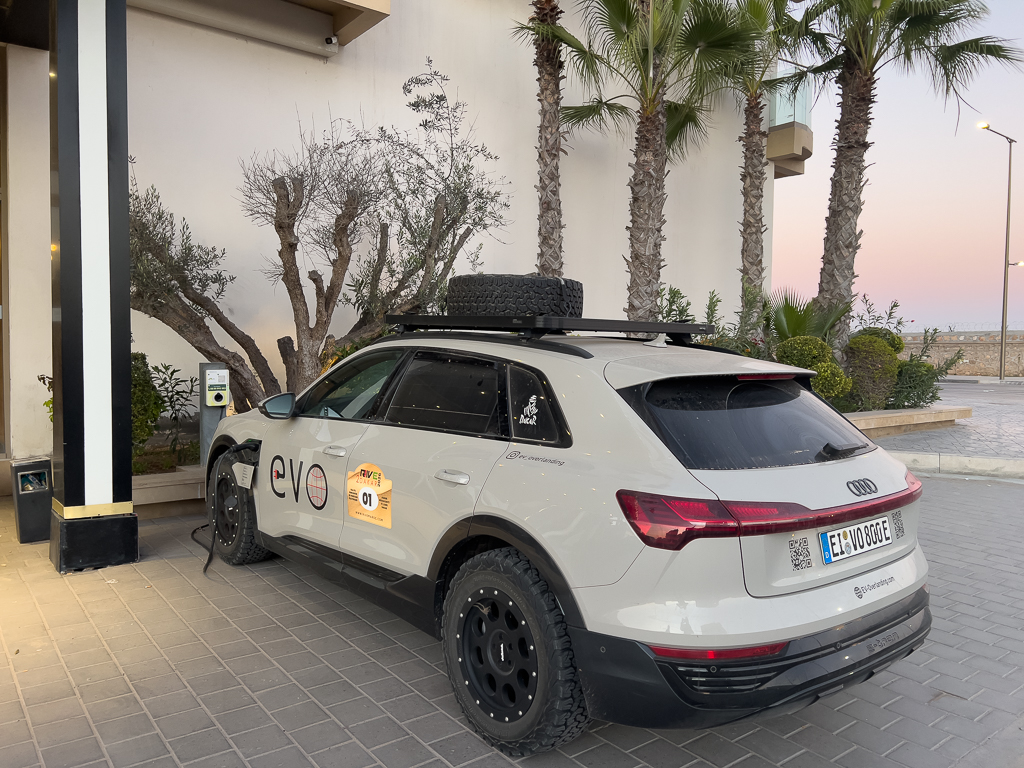
At the Dakhla Boarding Hotel, I also met Hans again. It was time to say goodbye, because his Tesla would be transported back to Switzerland, and he had booked a flight to Zurich via the Canary Islands for the next day. Normally, I don’t drink any alcohol, but in this special situation, I was happy to toast with Hans with his beloved whisky. We had a great time together, and there wasn’t a single conflict between us during the whole trip. And that’s definitely not a given. There were more than enough stressful and challenging moments. Sadly, we couldn’t finish the trip together. On the positive side, we had learned quite a lot due to the Tesla breakdown. For example, how to organize transportation across borders. And most importantly, that it’s not the end of the world if a car breaks down in a place like Mauritania. I think this is an important lesson for future trips, and it will give us additional self-confidence to be able to deal with all kinds of unexpected situations.

I knew that the next section would be very tough. It’s a 350km drive from Dakhla to Boujdour without any chance of charging in between. In addition, the weather forecast predicted a severe storm with 80km/h wind velocity. Even worse, the wind would be 100% headwind.
I had two options: waiting in Dakhla for two more days until the storm had calmed down, or trying to reach Boujdour using hypermiling strategies. I decided on the second option.
To reduce my energy consumption as much as possible, I did the following things:
- Set the Drive Select mode of my Audi to Efficiency
- Set the air con to off
- Raise the tire pressure to 4bar
- No charging of camera batteries from the car
- Driving with a maximum velocity of 50km/h
Despite all these measures, at 50% of the distance to Boujdour, my car battery was already under 50%. The storm was really severe, and it was pretty clear that I wouldn’t be able to reach Boujdour. I was very close to turning around and driving back to Dakhla and waiting there until the storm had calmed down.
But I wanted to try one last option: driving extremely slowly. I reduced my velocity from 50km/h to 30km/h. And surprisingly, this had a huge impact. About an hour later, the indicated remaining range was already enough to reach Boujdour. After another hour of driving, I could even raise the velocity again. Just before sunset, I reached Boujdour with 3% SOC and was able to charge there with 22kW at the gas station (see PlugShare for details).

Due to the severe storm while driving through the desert, sand was everywhere in my car.

Lessons learned from the hypermiling drive: There is no optimal velocity for EVs for the lowest energy consumption. That’s a myth. If your remaining range is critical, drive slower. If it still doesn’t work out, drive even more slowly.
When my car was fully charged, it was already dark. I had the choice to either spend the night at the gas station in Boujdour or drive 190km to Laâyoune. Due to the ongoing severe sandstorm, the gas station wasn’t very inviting. I therefore decided to continue to Laâyoune.
I reached the Hotel Noon in Laâyoune just before midnight. It was a very long day of nearly 18 hours driving and charging, and I was very tired when I arrived at the hotel. But sadly, the access to the charger was blocked by two other cars, despite the fact that I contacted the hotel well in advance and they promised me that they would reserve the parking spot next to the charger for me. The manager of the hotel asked me to drive on the sidewalk instead. I wasn’t happy at all about this idea because the space there was extremely tight, and there were a lot of critical metal objects that could scratch my car. But I was too tired to argue. The result was a couple of big scratches on the side of my car. The manager completely underestimated the size of my car and also gave wrong instructions.


About an hour later, one of the cars left, and I could finally connect my car to the charger. But that was not the end of the problems. As soon as I was in my room, the charger stopped working. With the help of Ayoub via telephone, we managed to identify the main fuse of one phase in the power distributor as the root cause. By moving the fuse slightly, the problem could be solved. Around 2 a.m. I was finally in my bed.
The next morning, my car was fully charged, and I was able to leave Laâyoune and the Hotel Noon.

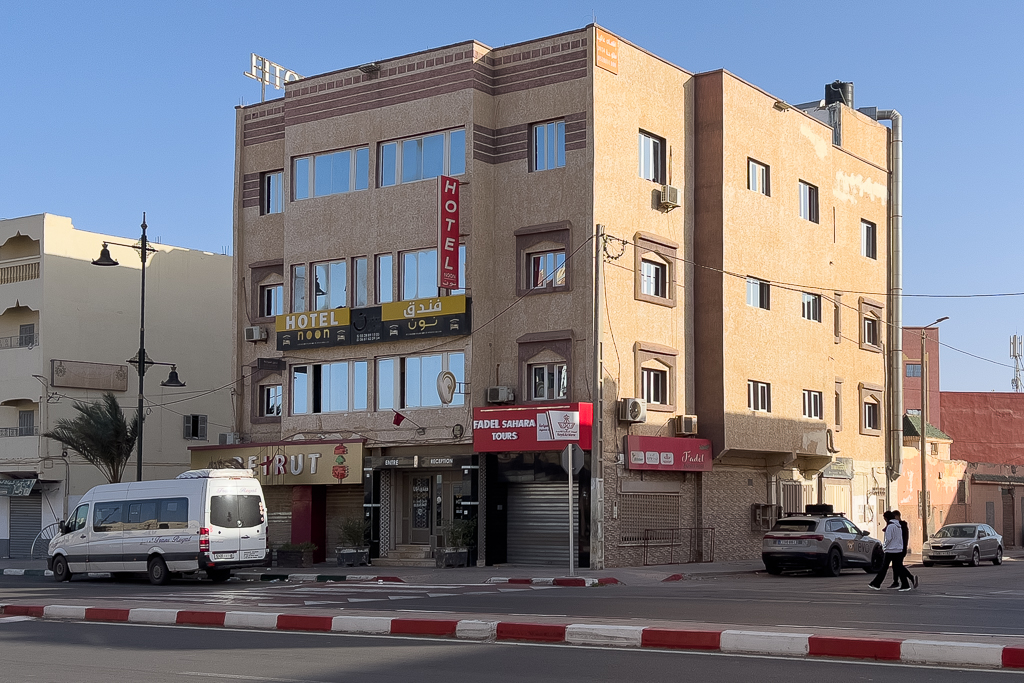
This was definitely my least favorite place on the whole trip. I already had a bad feeling about this place when we stayed there a few weeks ago. Often, it’s best to trust your gut feelings. If a place does not feel right, look for another place.
From Laâyoune, it was a 286km drive to the Equinox campground in El Ouatia (Tan Tan Plage). In front of the camp was another 22kW Type 2 charger from Kilowatt.

I spent the night in one of the rooms of the camp and then continued the next morning to Agadir. It was again a 350km drive. But contrary to the drive to Boujdour, the storm was gone. The impact of wind on energy is always astonishing. This time, I could even drive at 80km/h and could still easily reach Agadir.
I decided to stay again at the beautiful Atlas Kasbah Ecolodge, so far my favorite hotel in Morocco.

Since I needed some time to decompress, process my images, and work on my blog, I stayed four nights at the Atlas Kasbah.

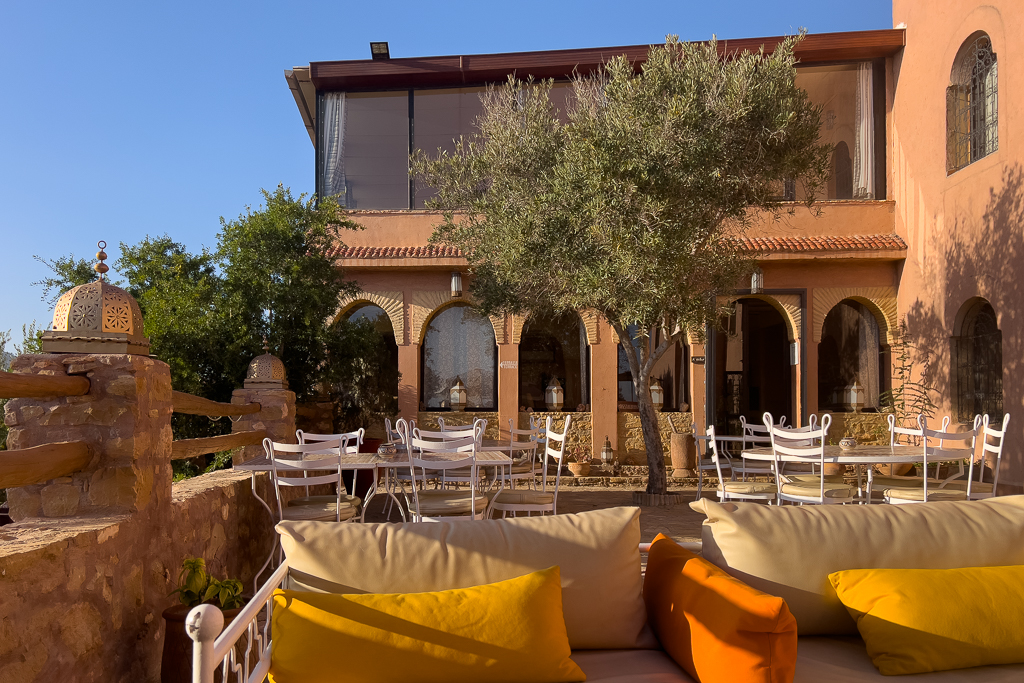

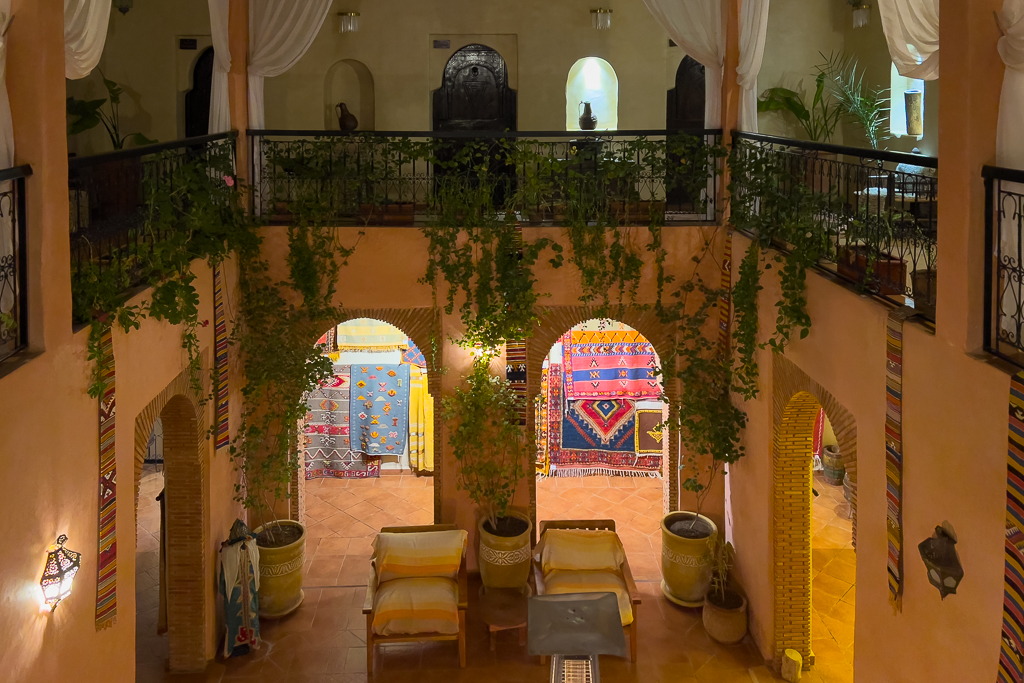

Since I had enough time, I could charge my car at a single-phase wall plug with 6A.

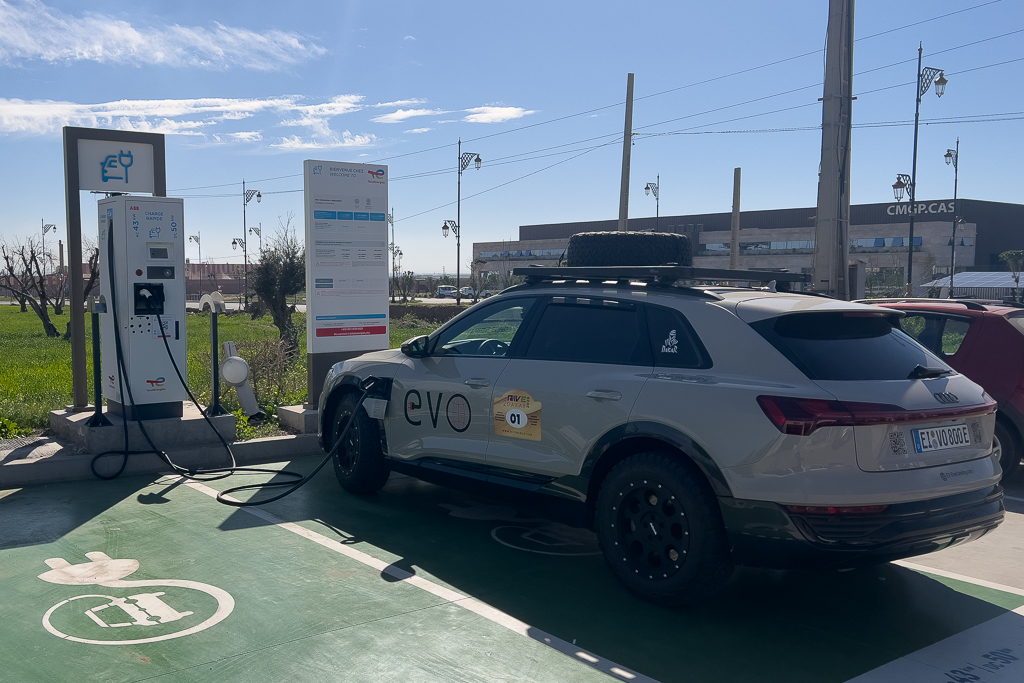
My next destination was Marrakech. It was a 266km drive to the campground Le Relais de Marrakech, north of the city. Before arriving at the campground, I charged my Audi to 50% at a Total Energies charger in Marrakech.
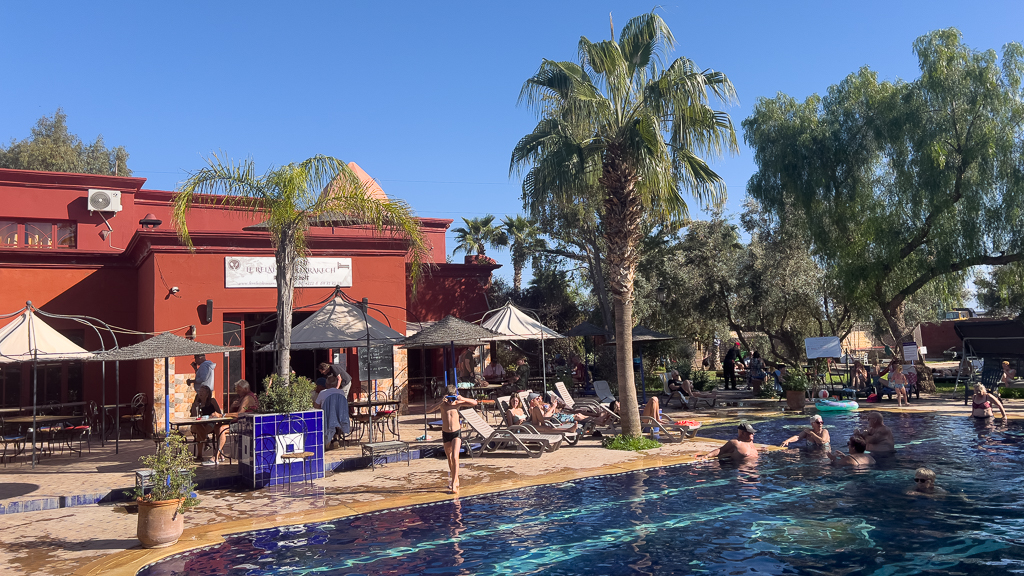
The Le Relais de Marrakech campground is a great place to relax and meet other overlanders. But it was also extremely crowded this time of the year.

The Budapest-Bamako Rallye had two groups this year. The standard rallye group, which we already met in the Diawling NP, and the Adventure Extra Group, which started a couple of weeks later. This second group of the Budapest-Bamako Rallye arrived shortly after me at the campground in Marrakech.


It was Interesting to see all the different cars. But the already completely overcrowded campground had to deal now with an additional 200 cars and 500 people. It was time to leave.
My next destination was Rabat, where I had planned to visit Ayoub. I used two different FastVolt chargers (50 kW DC) along the highway to charge my car. They are not free, but activating them using the FastVolt app always worked perfectly.


When I arrived in Rabat, I wanted to try out a new charger that was installed by Kilowatt just one day ago. It’s only 40kW DC, but it’s completely designed and manufactured in Morocco by Ali from Kilowatt. After talking to some people involved in this project, I understood that the main motivation for building this charger wasn’t cost reduction but serviceability. Repairing an off-the-shelf DC charger is not easy. Getting spare parts to Morocco takes forever, and most companies are also not willing to provide all the necessary information to enable a repair of the charger in Morocco.
If you design and manufacture everything by yourself, you can also easily repair everything in case something breaks. Especially in Morocco, that’s a very important aspect.

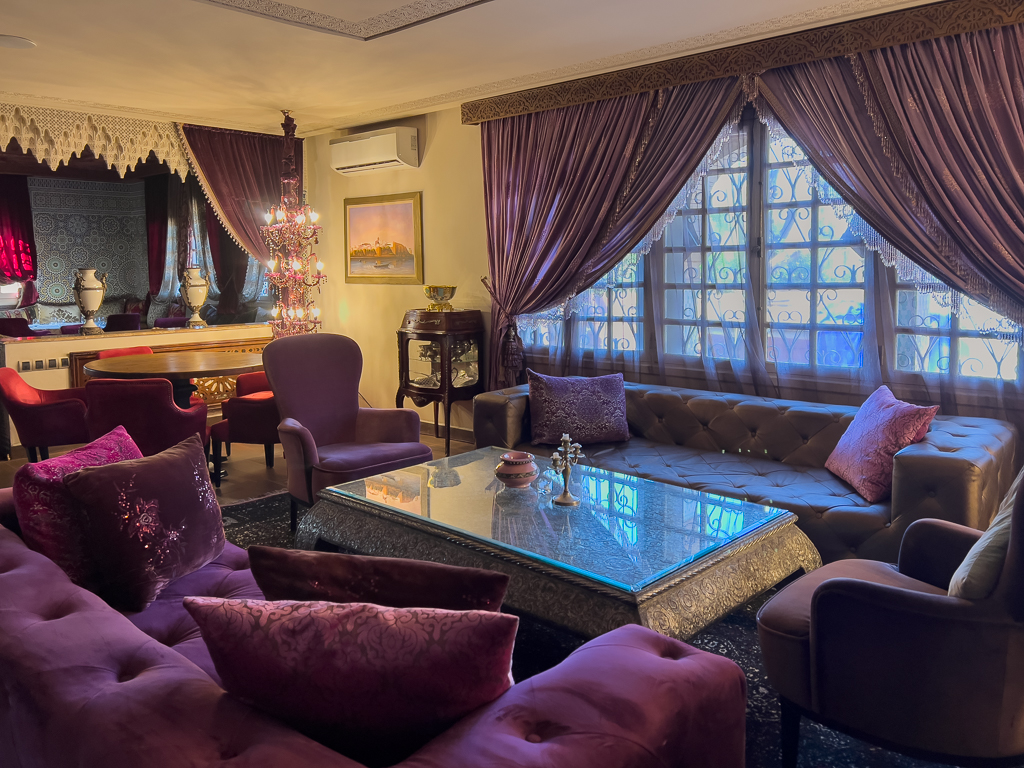
When looking at booking.com for a hotel in Rabat for two nights, I found an interesting offer. From the images, it looked like a nice place, and the price was reduced to nearly 50%.
And it was indeed a good choice. It’s located in the embassy district of Rabat, and the building is the former residence of the ambassador of Saudi Arabia.

The interior of the building looked a bit like something out of the fairytale The Arabian Nights.




In Rabat, I met Ayoub again. He lives in this city and kindly offered to show me some of the highlights of his hometown.
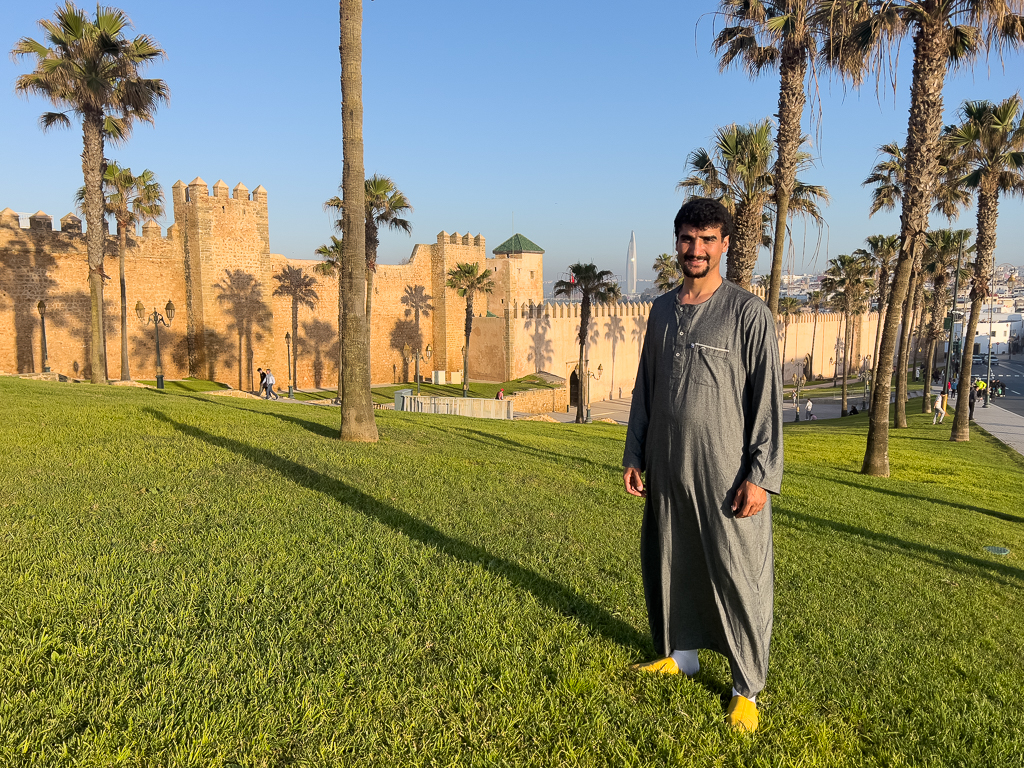
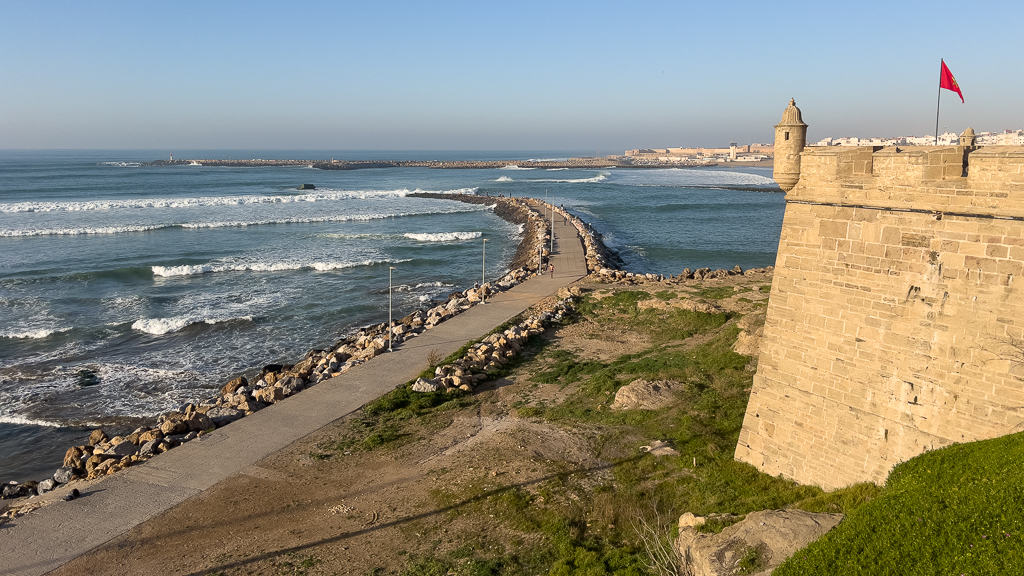
Rabat was surprisingly beautiful with lots of interesting historic buildings.

It’s also located next to the sea and has a nice city beach.
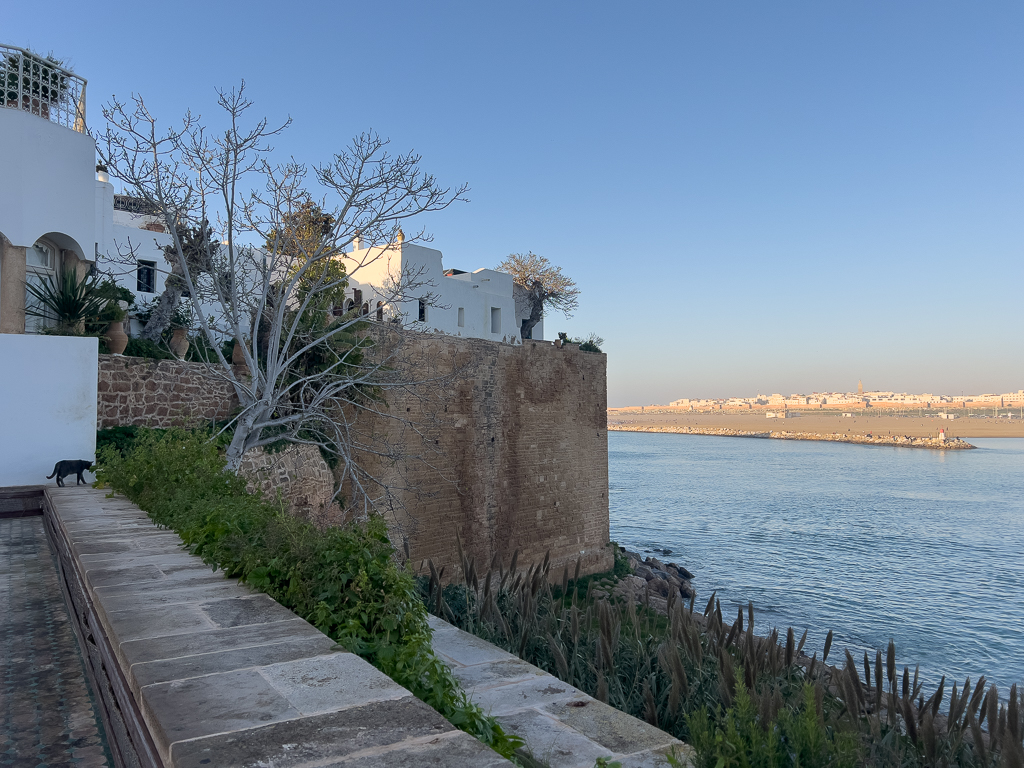
Inside the medina, there are many cafés, art galleries, and handicraft shops. And Rabat is extremely clean and always has a very relaxed vibe.

The most famous place in Rabat is probably the Mausolée Mohammed V, the tomb of the former king of Morocco (and his two sons).
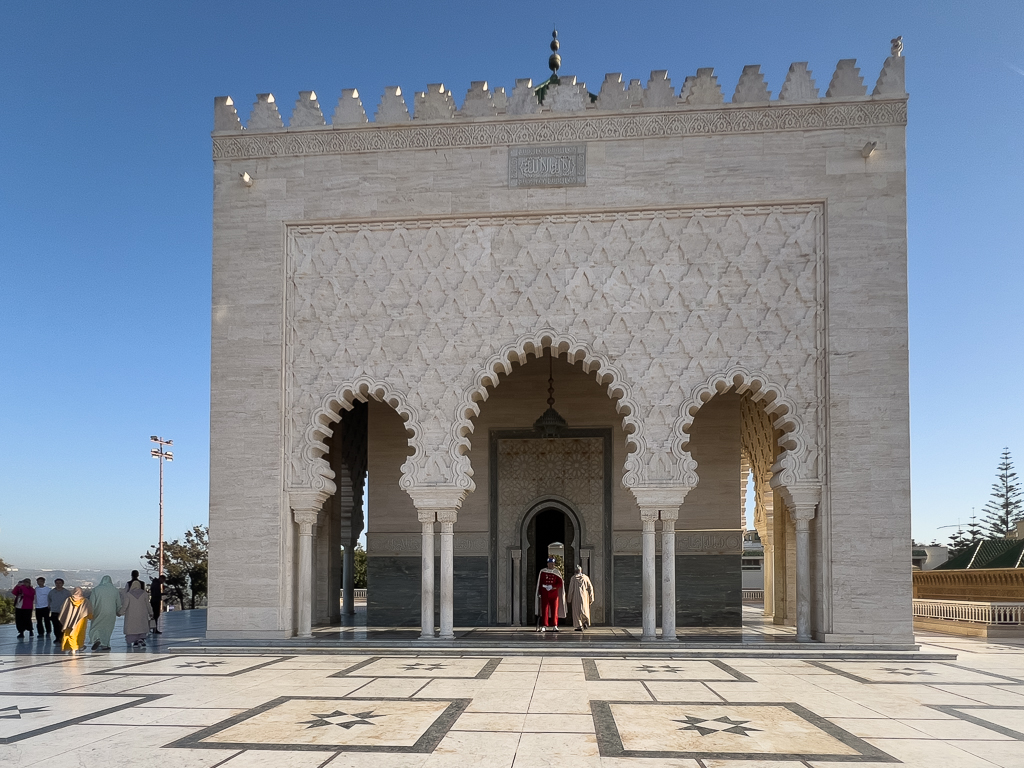
The building is guarded by traditional honor guards on horses.


Next to the mausoleum is the Tour Hassan located. It is the minaret of an incomplete mosque. The building started in the 12th century and was never finished.

When I was in Rabat, it was Ramadan. I’ve never been in a muslim country during Ramadan, so I wasn’t sure what to expect. And to be honest, I didn’t know much about the very specific rules and customs during Ramadan. Therefore, it was great to have Ayoub with me. He explained a lot of interesting details to me. Just two examples: in larger cities located at the coast, cannon shots indicate the breaking of the fast after sunset, and you start the meal with dates and milk.
All restaurants serve special evening meals during Ramadan, most of them for a special (low) price. We went to a fish restaurant in the city center and got a meal with 10 different seafood and fish dishes, a soup, a salad, tea, fresh orange juice, and a dessert for less than 10€.

The next morning, I charged my car to 80% at the Kilowatt charger in Rabat (in theory, a 180kW DC charger, but I got less than 50kW out of the charger) and then continued to Tanger.

I had booked two nights at the Hilton Tangier Al Houara to continue working on my blog and also prepare everything for the long ferry ride. It’s located about 20km outside of Tanger at a nice beach.

My main reason for choosing the Hilton was that it has good charging options for electric cars.
There are a few Tesla Superchargers that can currently only be used by Tesla vehicles.

And there are a couple of Volvo Type 2 chargers. I couldn’t clarify whether they could be used by all cars or are reserved for Volvo cars.

But they also have a couple of CEE 32A plugs, which I used to charge my car using my Juice Booster.
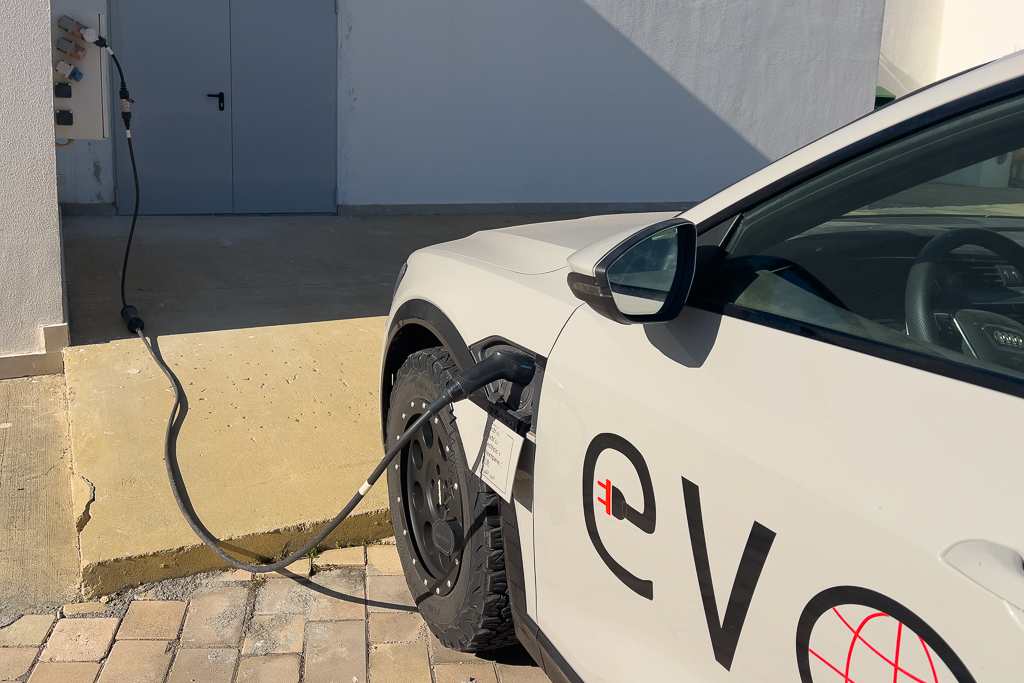
It’s a modern-style resort hotel with a relaxed vibe, some nice pools, and direct access to the beach.


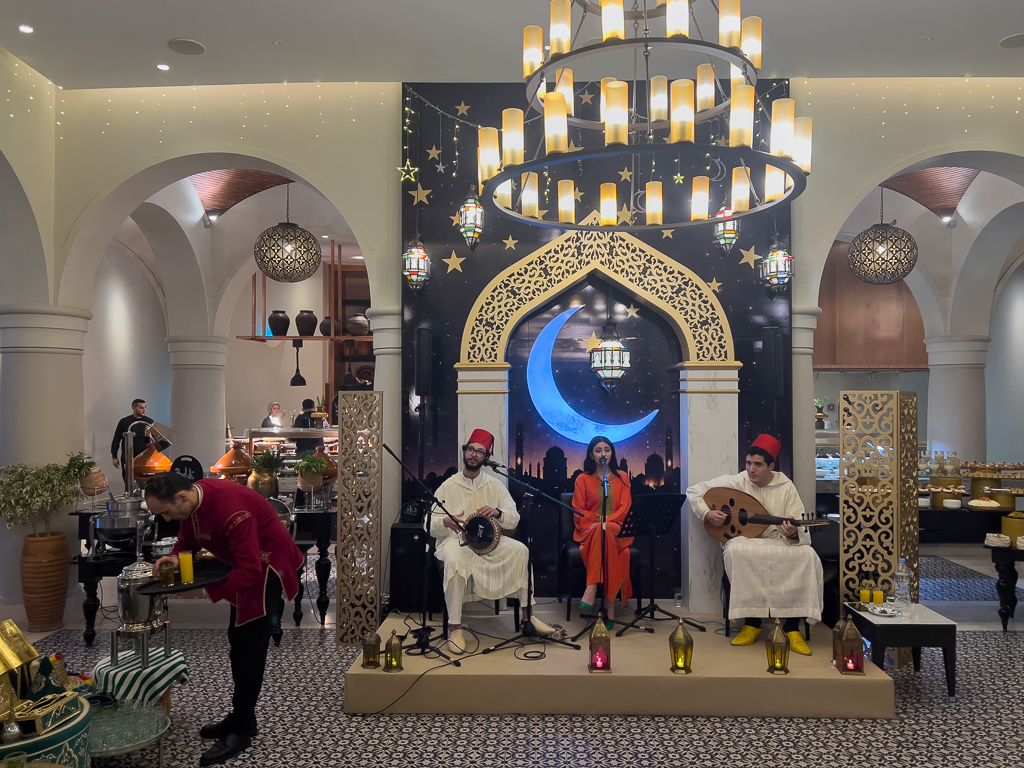
There were also two restaurants in the resort. One of them was also offering a special Ramadan buffet.
The next day, it was finally time to leave Africa. The immigration and customs check at the port of Tanger Med took about 2 hours. All cars had to go through a scanner.

Driving my car on the ship was quite stressful. I had to drive down a ramp in reverse, and the loading instructor yelled at me that I should look into his eyes and do exactly what he tells me. But he had completely overlooked a Mercedes parked to the left of me. If I had done exactly what he wanted me to do, I would have crashed into the Mercedes. In the end, he apologized to me.
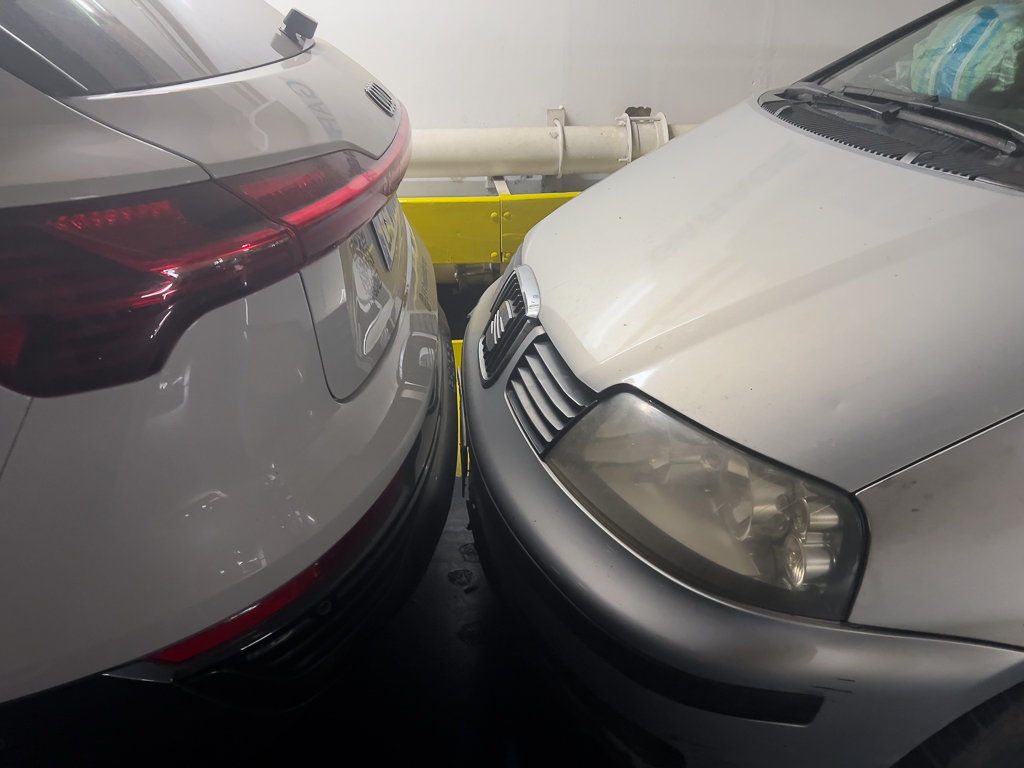
And all the cars were parked with zero distance between them. The only option to get in and out of my car was through the side windows.
But luckily, the following 42-hour ferry ride from Tanger to Genova was perfectly smooth this time: calm sea, nice weather, no emergencies, and interesting conversations.
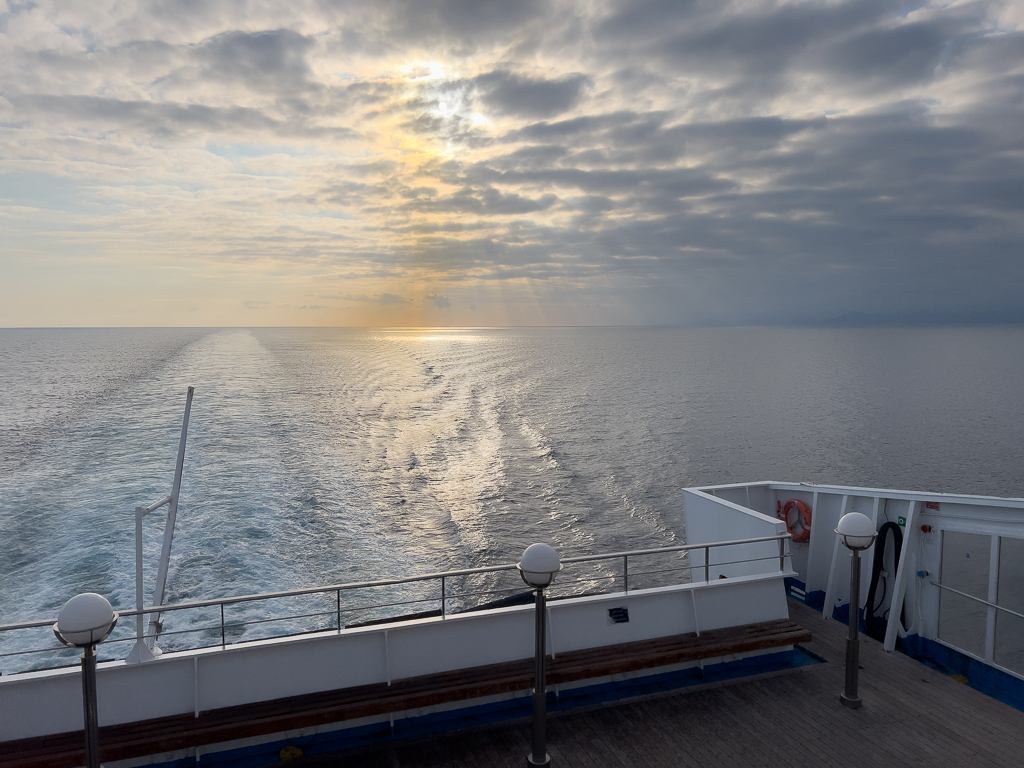
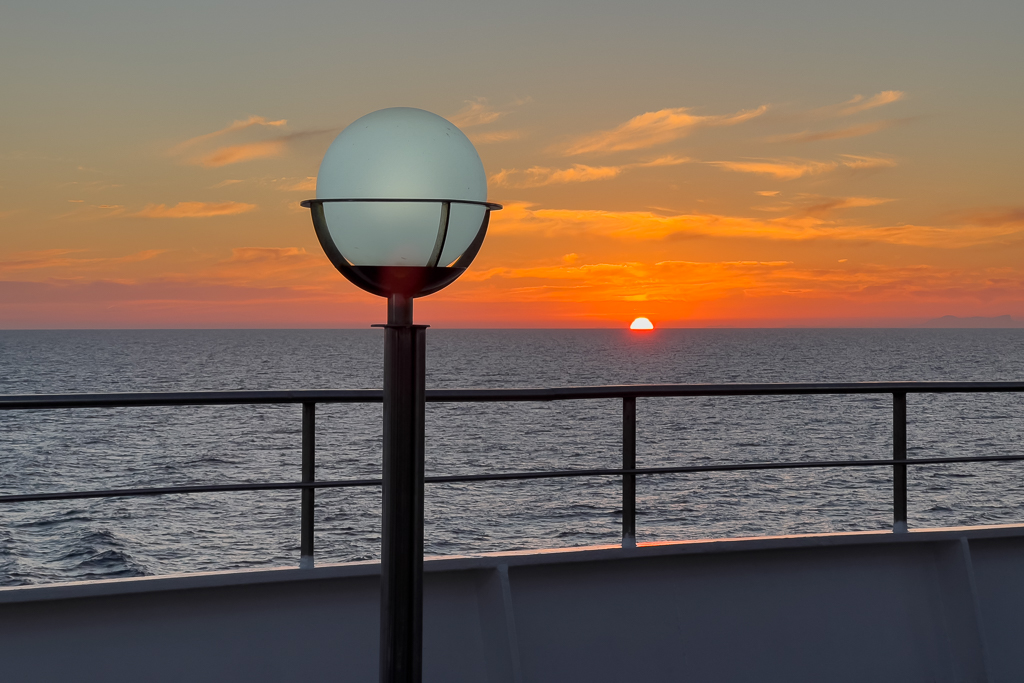
The ferry arrived in the evening in Genova. I spent one night in my car at one of the highway rest stops in Italy and drove the remaining distance to Germany the next day.
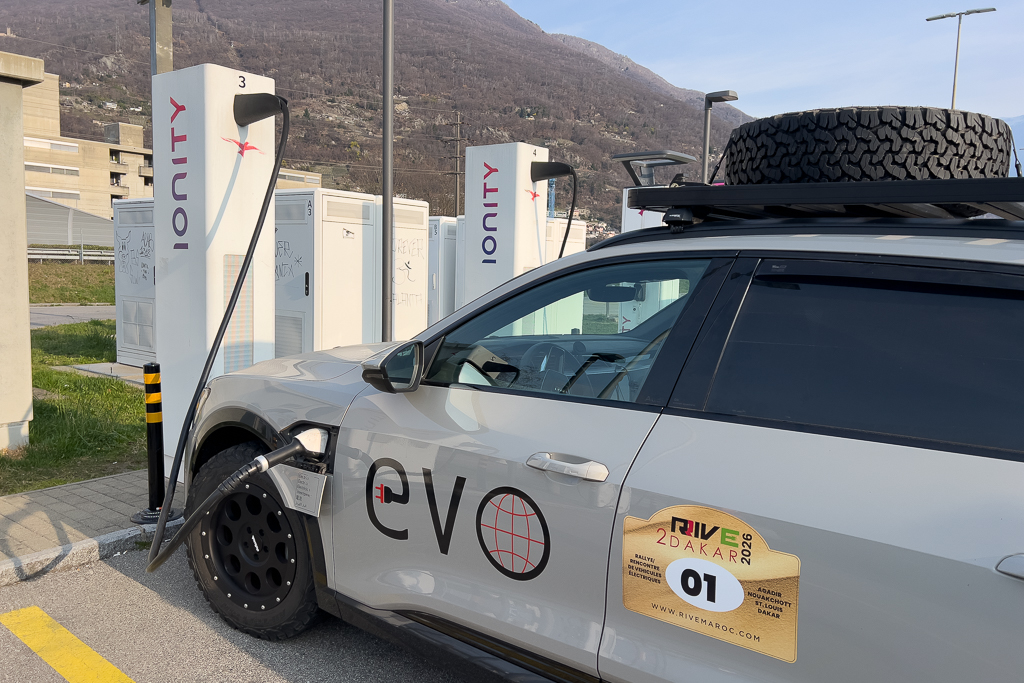
Charging in Europe was, of course, a non-issue. Most of the chargers had 300kW output, way more than my car is able to receive.



Summary
Altogether, I’ve driven 9766km from Germany to The Gambia and back to Germany. The average energy consumption over the whole distance was 28.6kW/100km, and the average velocity was exactly 50km/h.
I’ve recorded a GPS track log for the whole distance from Tanger to The Gambia using Organic Maps and MapOut. The following images show the track with distance marks in km.

MapOut can also display an altitude profile for the whole trip. As you can see, except for the Anti-Atlas in Morocco, it was mostly flat.

All in all, it was a great trip. Of all the trips I have done in the past, it was probably the one where I had to leave my comfort zone the most. West Africa is very different from South America, Southeast Asia, or even Southern Africa. The most stressful were definitely the border crossings, followed by the corrupt police officers and the extremely chaotic traffic, especially in the larger cities.
I’ve learned a lot during the trip, and it will clearly help me in future overlanding trips.
Here is a list of the most important lessons learned if you are planning to do a similar trip:
- Bring enough cash. Credit cards are rarely accepted, and ATMs are either nonexistent, not working, or not accepting certain credit cards. We needed around 1500€ of cash per person during the trip (in addition to the occasional payments with credit cards). Euros are widely accepted and can always be easily changed to local currency. Keep in mind that according to the official rules, any amount above 1000$ needs to be declared at the Mauritanian customs. I haven’t done this, and it’s very easy to hide a couple of € somewhere in your car. But it‘s illegal. If you decide to do this, it‘s at your own risk.
- Don‘t take the NGR Kick mobile charger on this kind of expedition. It‘s not working with too low or too high voltage (which is quite common outside of Europe). It either significantly reduces the Amps or shuts off completely. The Juice Booster is far more reliable and robust against unusual voltages.
- Apply for the eVisa for Mauritania well in advance. The online application process is not always going smoothly. Sometimes you have to repeat the process. Especially the requirements for uploading documents and images are quite finicky (format, pixels, file size, aspect ratio, landscape vs. portrait, sharpness, contrast, background color, etc.).
- Address all conflicts within a team or between teams immediately, but do it respectfully. This is not a normal road trip but a real expedition with long days, not enough sleep, and lots of challenging situations. Everybody will reach a personal limit at some point. Therefore, clear communication is the key. Waiting out conflicts won’t work under these circumstances.
- Prepare for corruption. Think about how you would like to deal with this situation before you get into the situation. Will you fight for your rights and against corruption, or would you rather pay a small amount of money to get out of the situation as quickly as possible?
- Connect with other people driving the same route. WhatsApp or Facebook Groups can help a lot in getting recent information.
My Audi Q8 e-tron has proven itself perfectly during the trip. Besides the backend problem during the first day, I had zero problems with the car. And the performance of the Audi in soft sand was extremely impressive. The same can be said about the Juice Booster. It worked flawlessly during the whole trip.
If you have any questions about my trip, my car, or the equipment that I’ve used, feel free to write a comment down below or use the contact form on this side.
I will conclude my Dakar travel report with a few additional topics worth mentioning.
Meeting a very special person
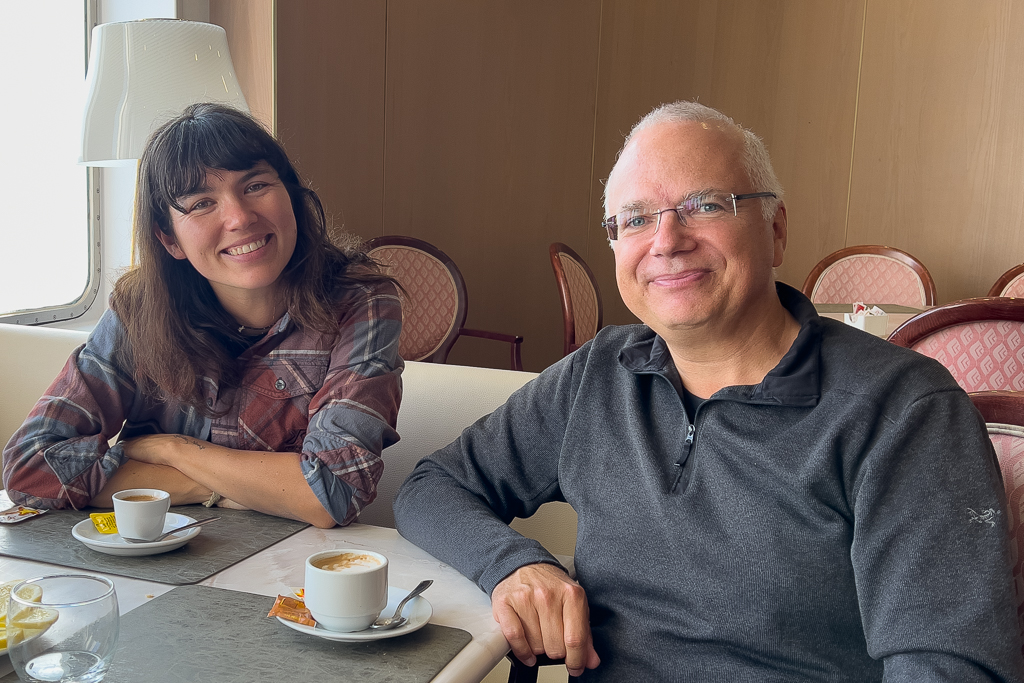
I wrote in my Mirleft post that I met, besides Hannah and Javi, another very interesting person on the ferry.
But before I tell you more about this encounter, I have to share a short story: just a few weeks before my trip, my daughter Linnéa asked me, if I could meet any famous person in the world, who would it be? I named two: Barack Obama and Eva zu Beck. Both for pretty much the same reasons. They are both intelligent, charismatic, authentic, great speakers, and most importantly, have values, principles, and visions that I share.
Maybe not everyone knows Eva zu Beck, so let me give you some information about her: She is an adventurer, YouTuber, and director and host of a National Geographic TV series. She is quite famous in the travel community with millions of followers on YouTube and Instagram.
It was extremely unlikely that I would ever meet either of the two in my life. But sometimes strange things happen.
When I was just finished with the immigration out of Italy at the port in Genova, I saw Eva with her dog Vilk waiting there in the line. I briefly exchanged a few sentences with her since I didn’t want to disturb her. Luckily, I met her again later at the Moroccan immigration on the ship. We had to wait there in line for nearly 3 hours. So lots of time to talk.
All I can say is that she is in real life 100% as cool and awesome as in her videos, and that I’m extremely glad that I had the chance to meet her.
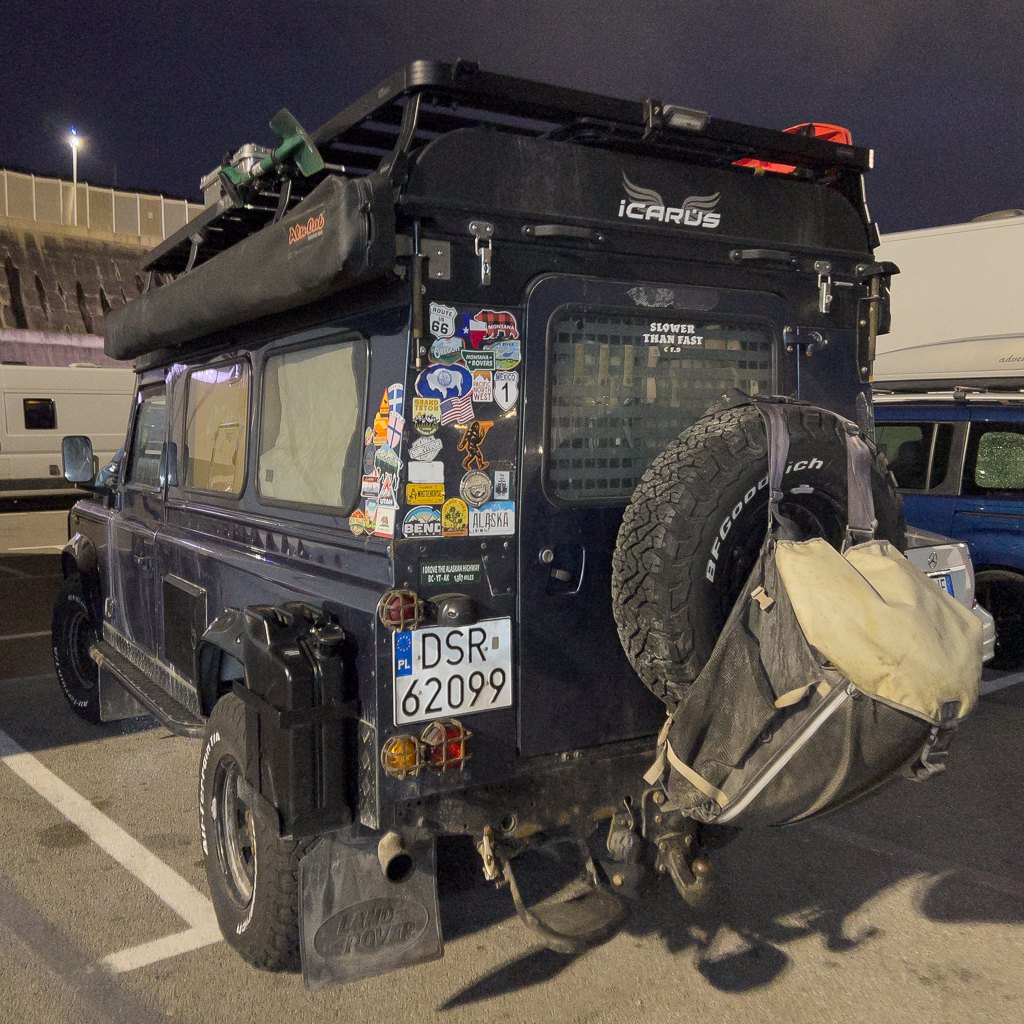
During the trip, we stayed connected via Instagram and regularly exchanged information about border crossings, desert tracks, and other topics.
Two months later, we even took the same ferry back from Tanger to Genova and had plenty of time to exchange interesting travel stories on the ship.
I wasn’t mentioning Eva in my earlier blog posts because I didn’t want to reveal her location for her safety. She already had a couple of really uncomfortable and frightening incidents with a stalker in the past.
Moroccan Sahara / Western Sahara
I know that this is a very sensitive topic and that a lot of people have a strong opinion about this. I got the recommendation to not address it at all because whatever you say, you will get hate from either side (or from both).
Eva got a serious shitstorm for talking about the Western Sahara in one of her last videos.
But after discussing this topic with her and reading all the comments under her video (now switched off), I think it would be a mistake not to at least mention the conflict here in my blog. Especially since I’ve travelled twice through this area and spent some time there.
But I’ll try to be as neutral as possible. The region I’m talking about is the area between Tarfaya and the border to Mauritania. The official point of view of Morocco and of the majority of people living in Morocco is clear: this is the Moroccan Sahara, and it’s part of Morocco. But not everyone shares this opinion. The situation and the history of this area are quite complex. I strongly recommend to inform yourself about the different standpoints and arguments using the available sources on the internet and build your own opinion.
Here are a couple of links for the start:
https://en.wikipedia.org/wiki/Western_Sahara_conflict
https://en.wikipedia.org/wiki/Western_Sahara
https://youtu.be/giUf3_zWN3s?si=OggSINJQZSPxVVcD
https://youtu.be/fUDEZlqbmxg?si=SLvMIp6XlGt35JC8
https://youtu.be/-T2ha4a_AuE?si=A_IbgdMb8HFHJC9Q
Plans for 2026 and 2027
I have recorded about 6TB of video footage during the Dakar trip. It will take some time to process all this material. But my plan is to create a couple of interesting videos for YouTube and Instagram about my trip through Western Africa. I already know that there are some spectacular scenes in the material. The release date of the videos will likely be in the second half of 2026.
In addition, I’m planning to do a couple of presentations in 2026 about my Dakar trip. I will give you an update as soon as the dates and locations are fixed.
Since I’m currently still working full-time as an engineer in the automotive industry and needed most of my 2026 vacation days for the Dakar trip, there won’t be any additional longer trips this year for me.
For 2027, I’m currently evaluating two options: Either I will be shipping my car to South America to explore some of the legendary overlanding tracks on this continent. Or I’ll try to cross one of the largest deserts in the world with my car using a solar setup for charging. Both options are serious expeditions and need careful preparation. Stay tuned, I’ll keep you updated.
 EV Overlanding