
Our plan for the next two days was to explore the Banc d’Arguin National Park near Chami a bit more thoroughly.
Before the trip, I bought the Mauritania guidebook from Pistenkuh and also downloaded their GPS track ARGa, which leads through the NP. The idea was to drive from Chami on the southern track to somewhere close to Arkeiss, camp there during the night, and then drive back to Chami the next day on the northern track.
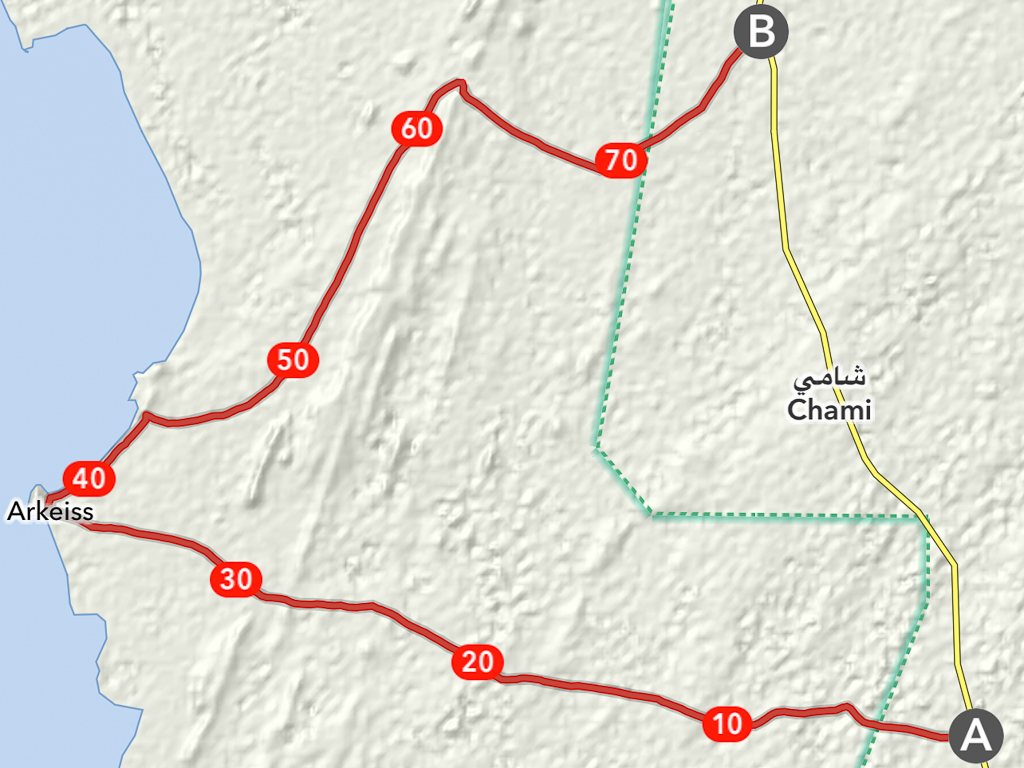
The whole distance of this loop is around 120km with about 80km offroad on soft sand.
We knew that the energy consumption would be very high and therefore charged our cars to 100%.
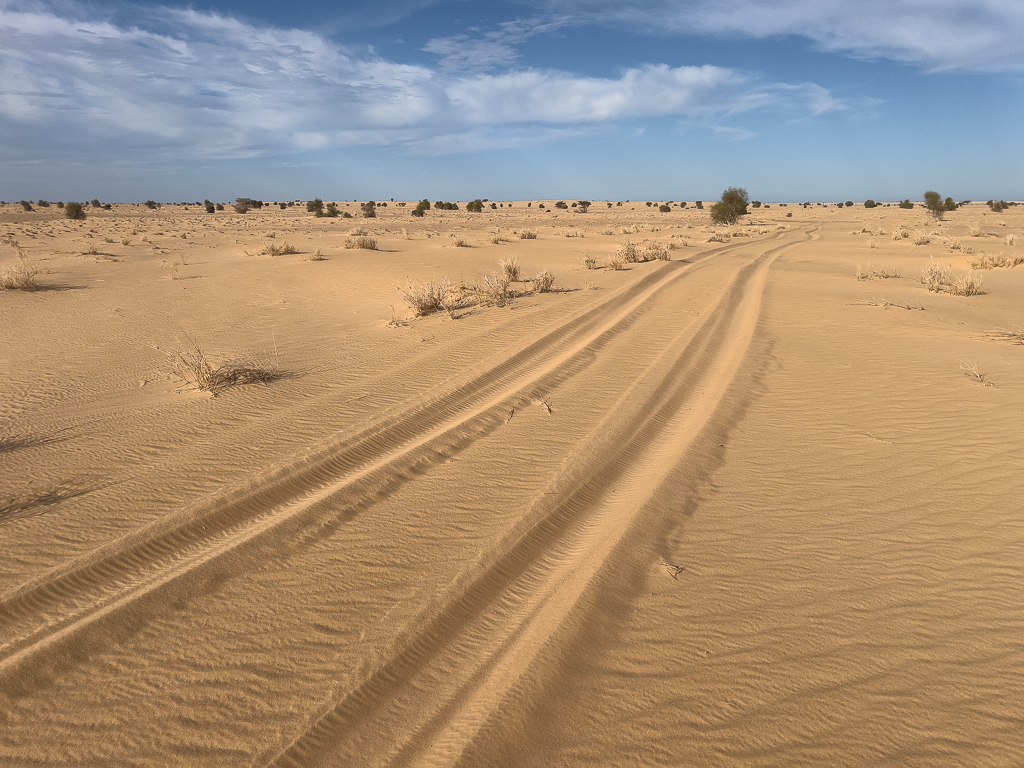
About half of the time, there were no tracks visible, and we just had to follow the GPS coordinates. Sometimes, signposts appeared in the middle of the desert showing the direction to Arkeiss.
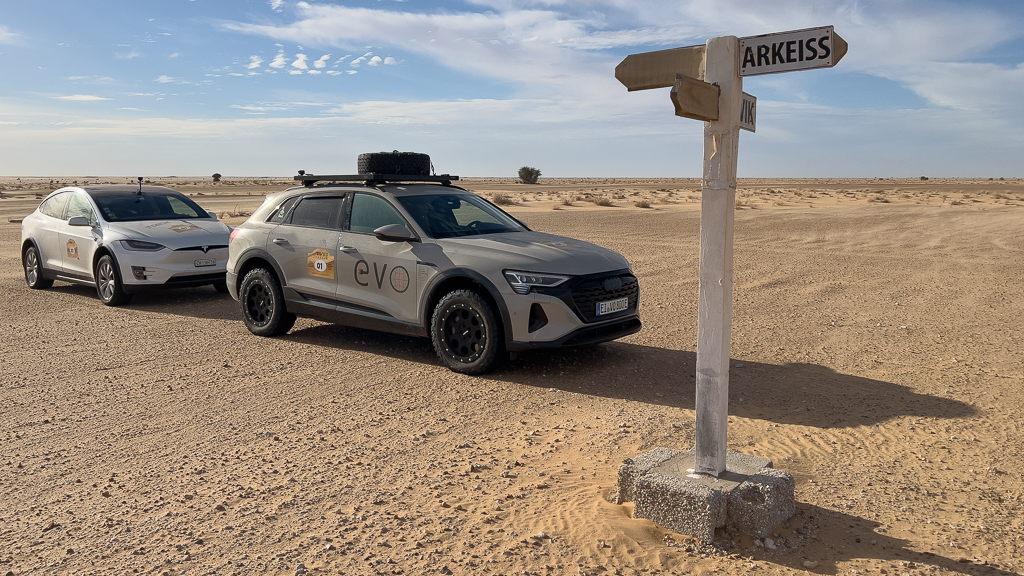
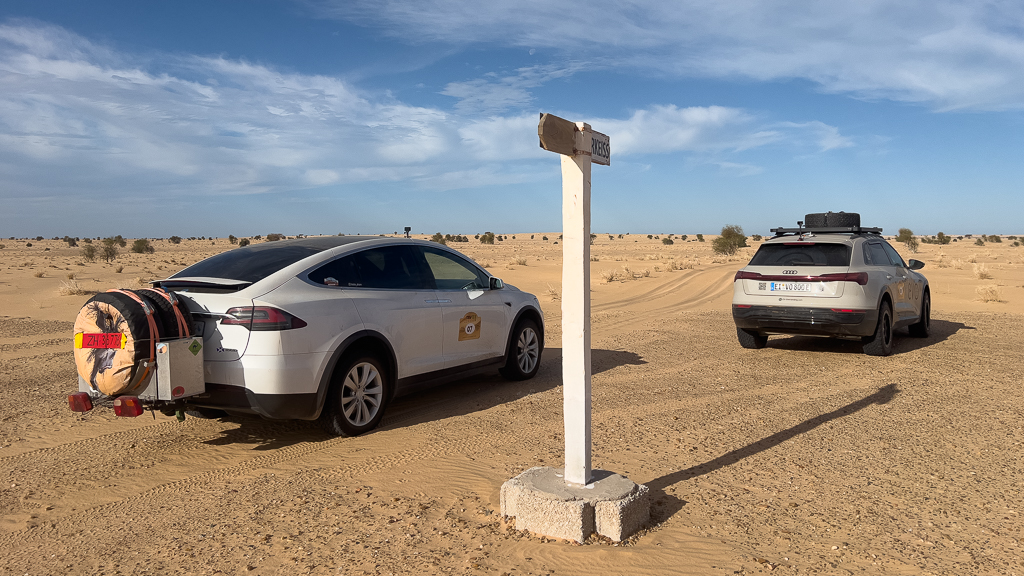
Many section consistet of deep soft sand. But at the start of the tour, we reduced our tire pressure to about 1.5bar (from 3.5bar) and had no problems getting through these passages without getting stuck. As long as you keep moving, both the Tesla and the Audi show a great performance in sand. But if we had to stop completely for whatever reason, it would be a real challenge to get the cars going again.
About three hours later, we reached the small fishing village of Arkeiss.
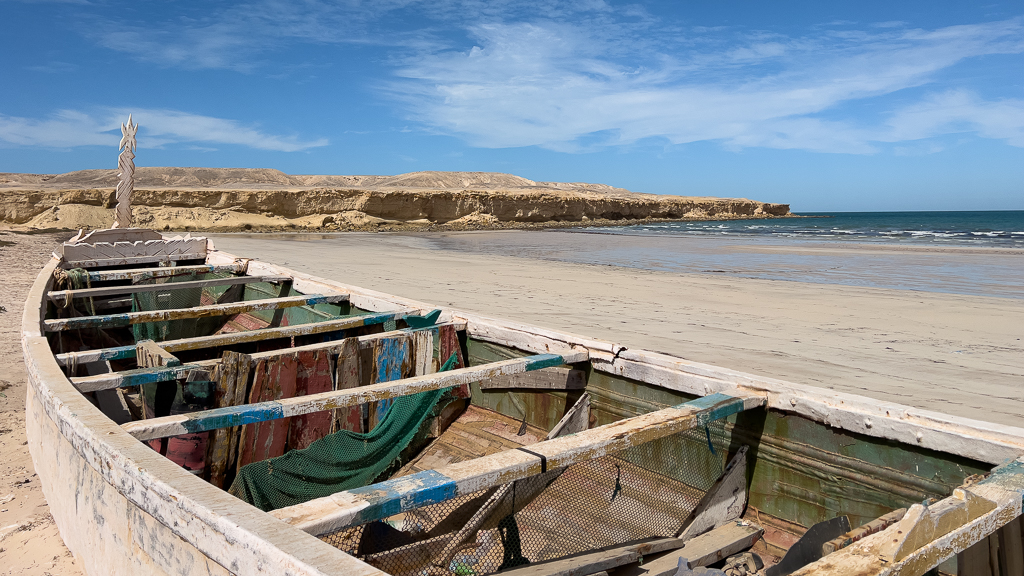
At the beach next to the village, we had a lunch break.
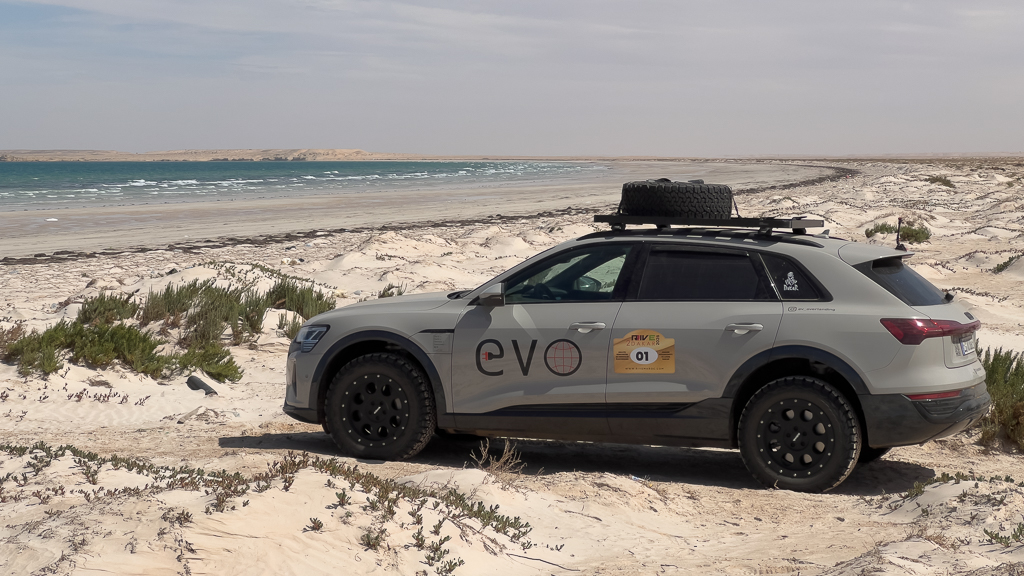
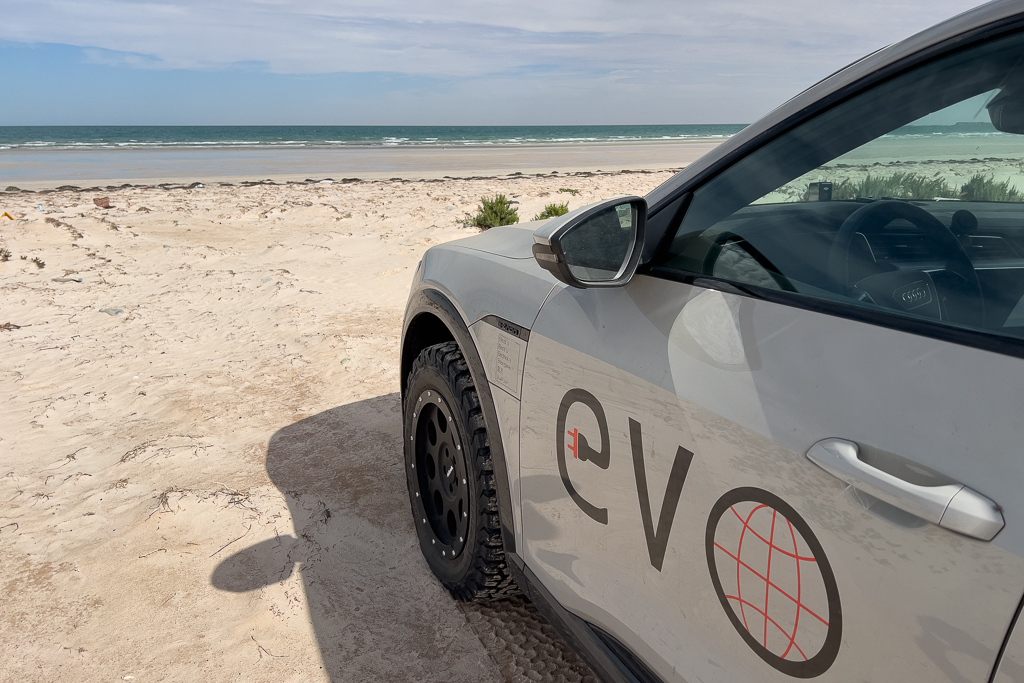
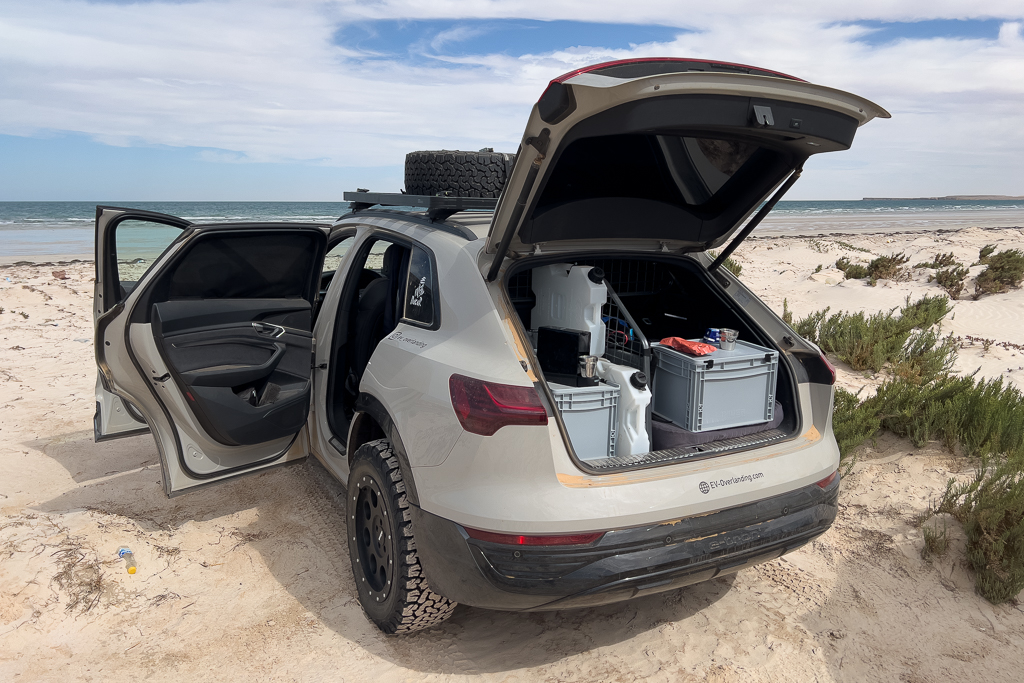
The possibility of having a good espresso in the middle of nowhere is really cool. Yes, it’s not needed, and yes, carrying a Nespresso machine to the desert of Mauritania is a bit decadent. But it’s so nice!
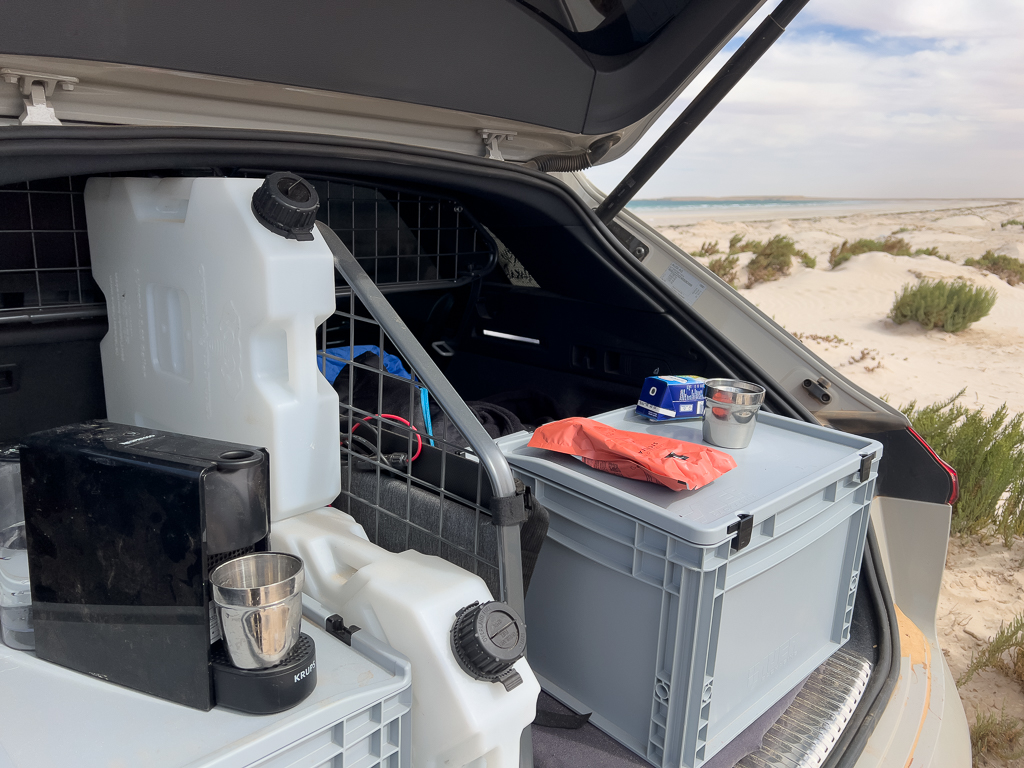
We were discussing whether we should drive along the beach and take some cool drone shots of our cars on the beach. But I decided against this idea because it was only two hours until high tide. If we got stuck on the beach, we could lose our cars. It was not worth the risk, in my opinion.
Instead, we followed the Pistenkuh track to the next cape north of Arkeiss. According to the guidebook, it was impossible to reach this cape by car. But when we arrived at the point where the GPS track turned east and away from the coast, we found a challenging track, steep and with huge corrugations, leading down to the beach.
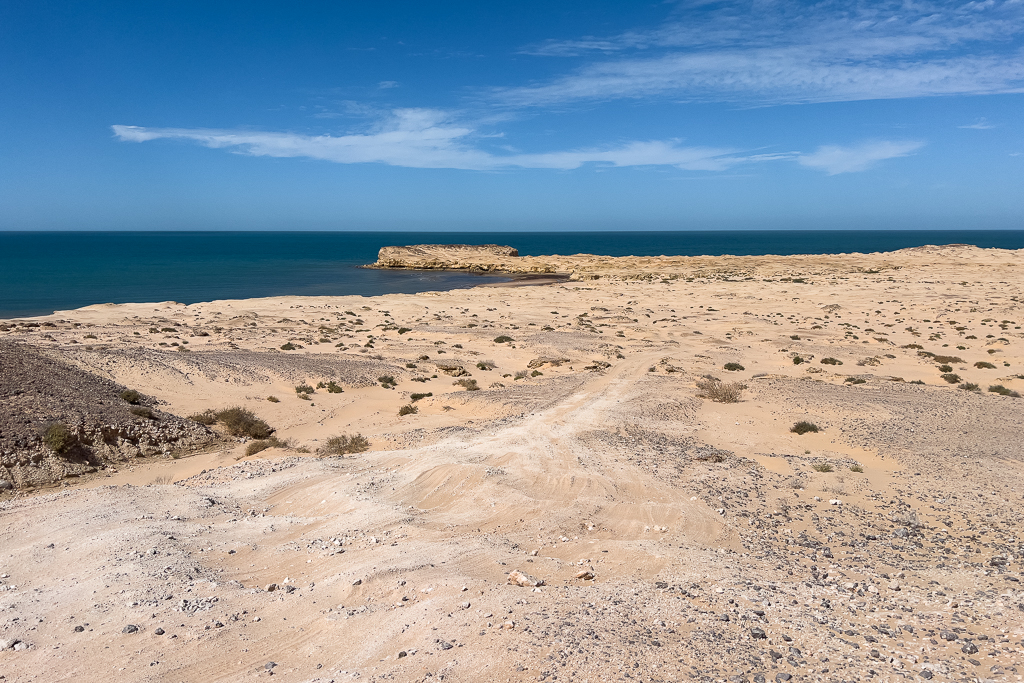
I wasn’t 100% sure if we would be able to get up again with our heavy cars. Therefore, my idea was to drive down with the Audi while Hans stayed at the top with his Tesla. Then I would turn around and try to get back to the top of the hill. If this works well, we would drive down with both cars and try to find a nice camp spot for the night. And if not, Hans should be able to pull my car back to the top of the hill if we combine all our towing ropes.
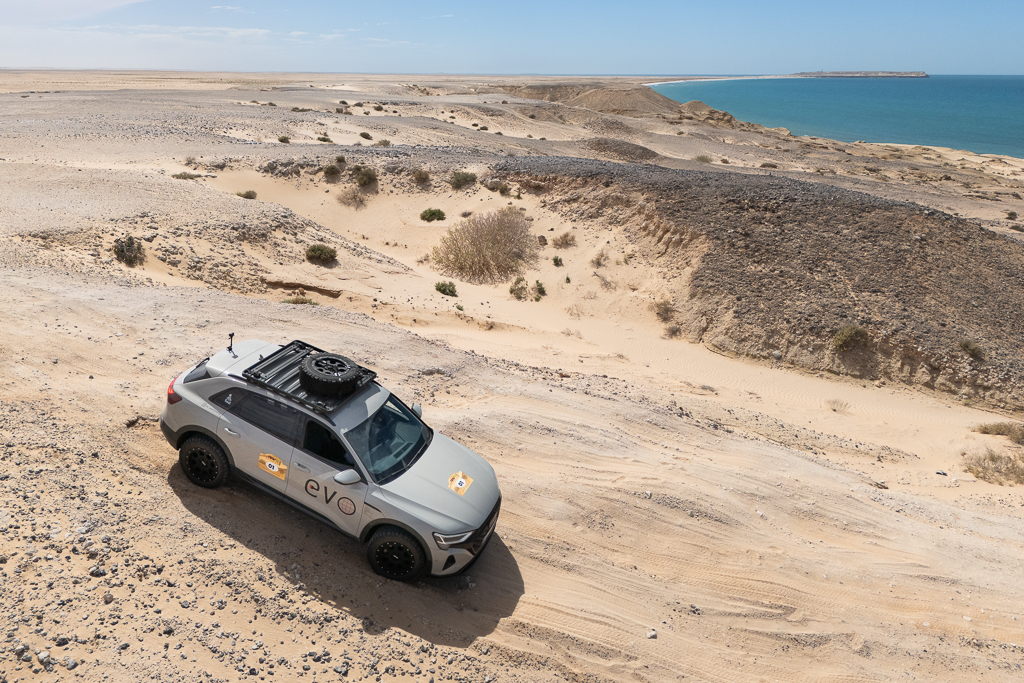
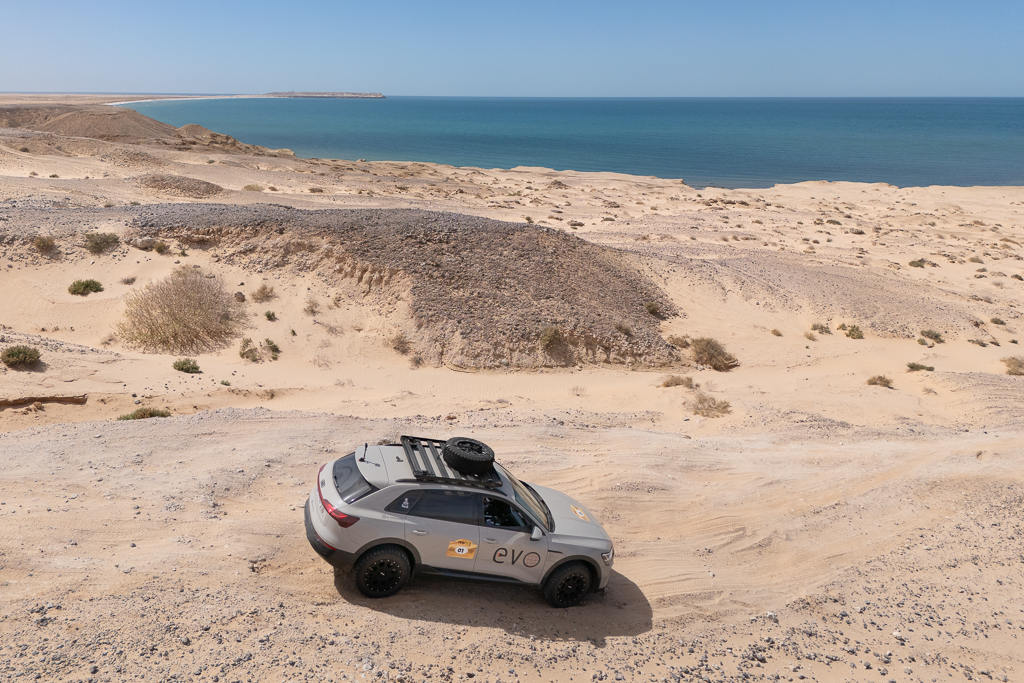
Luckily, this wasn’t necessary. My Audi easily managed to get back to the top. We therefore drove down to the beach in both cars.
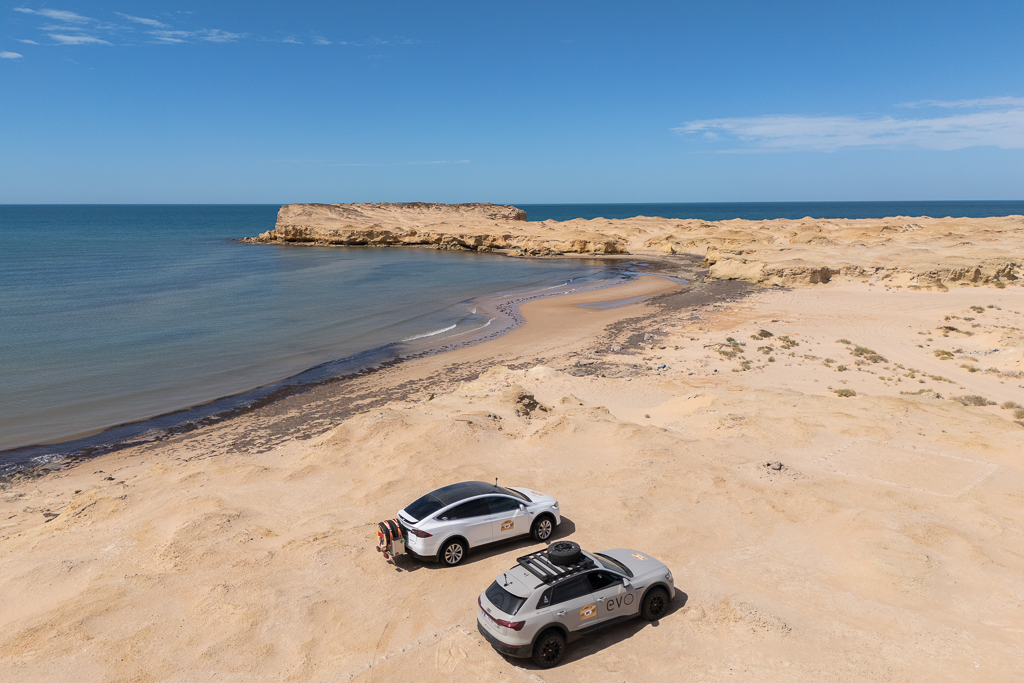
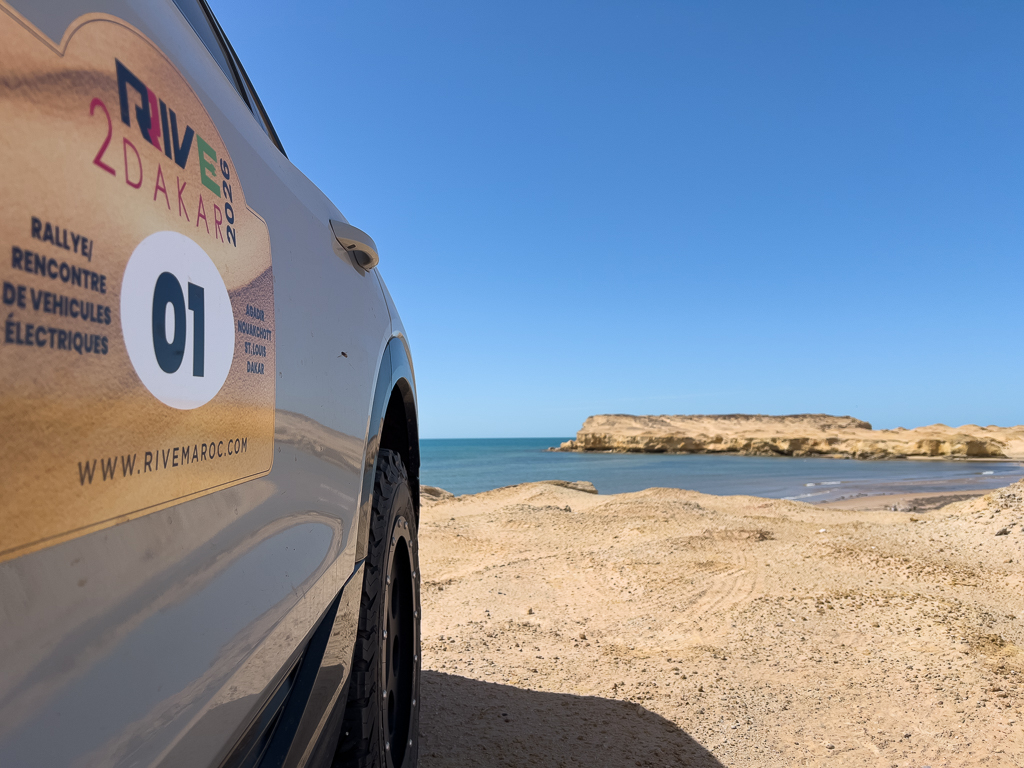
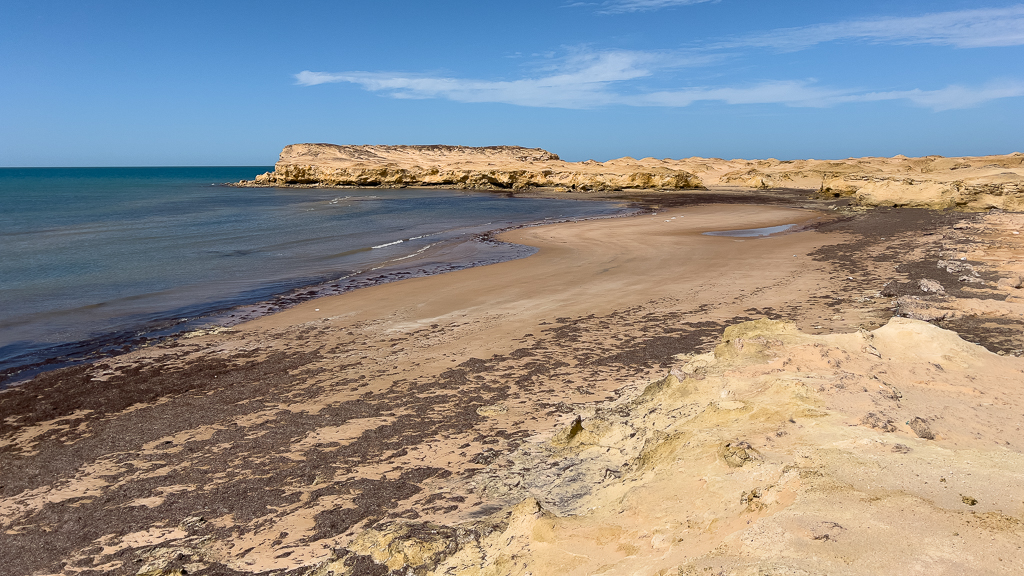
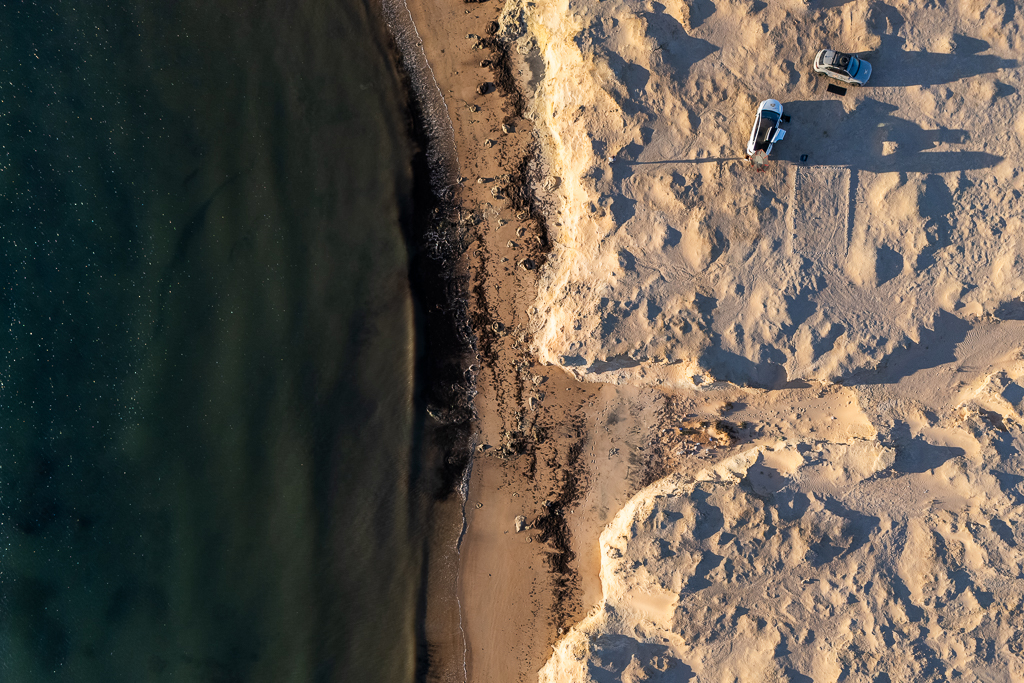
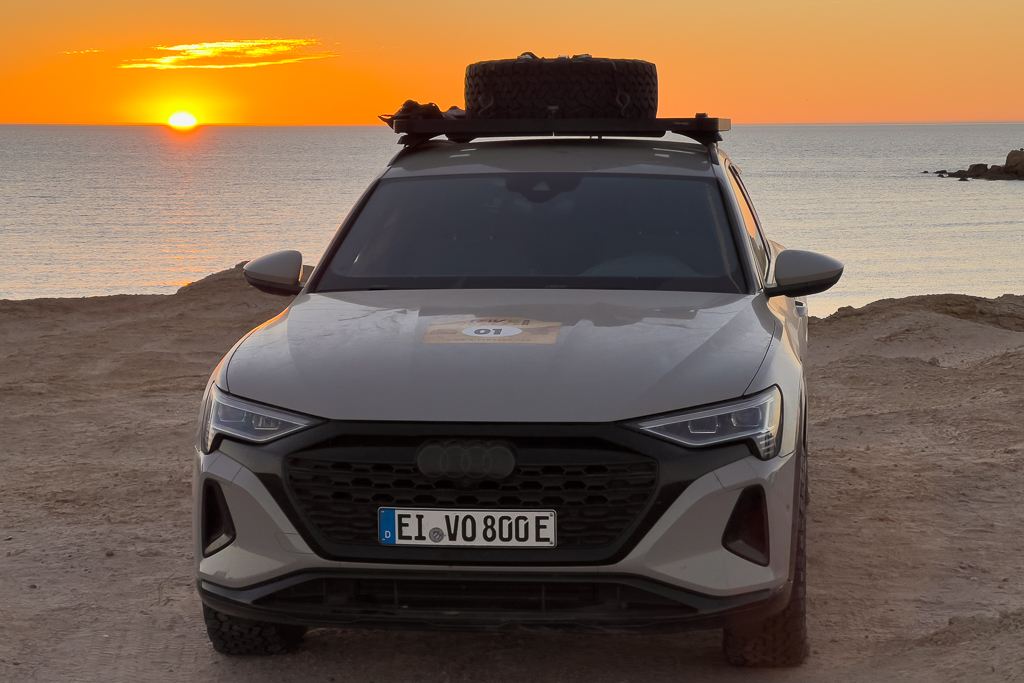
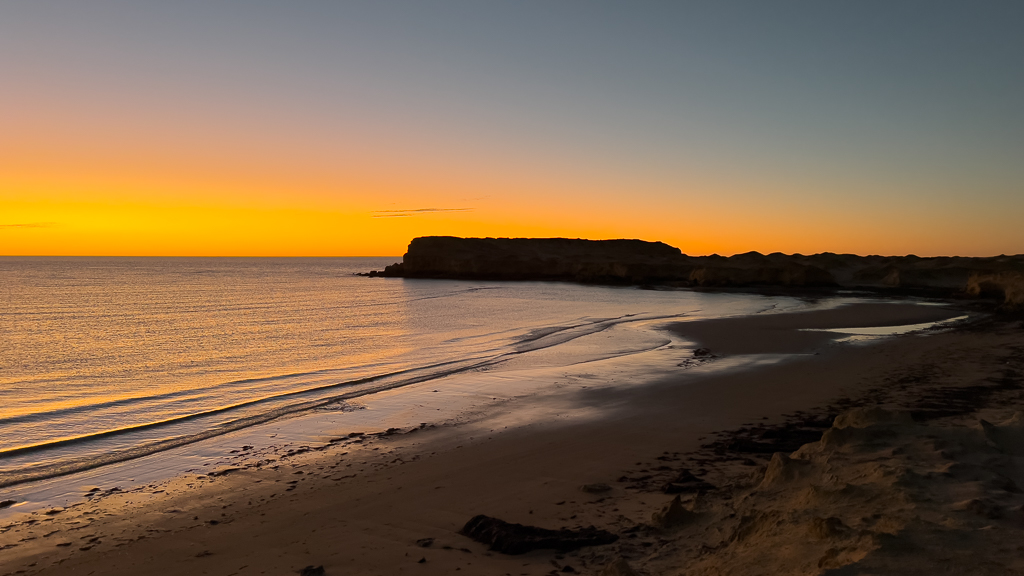
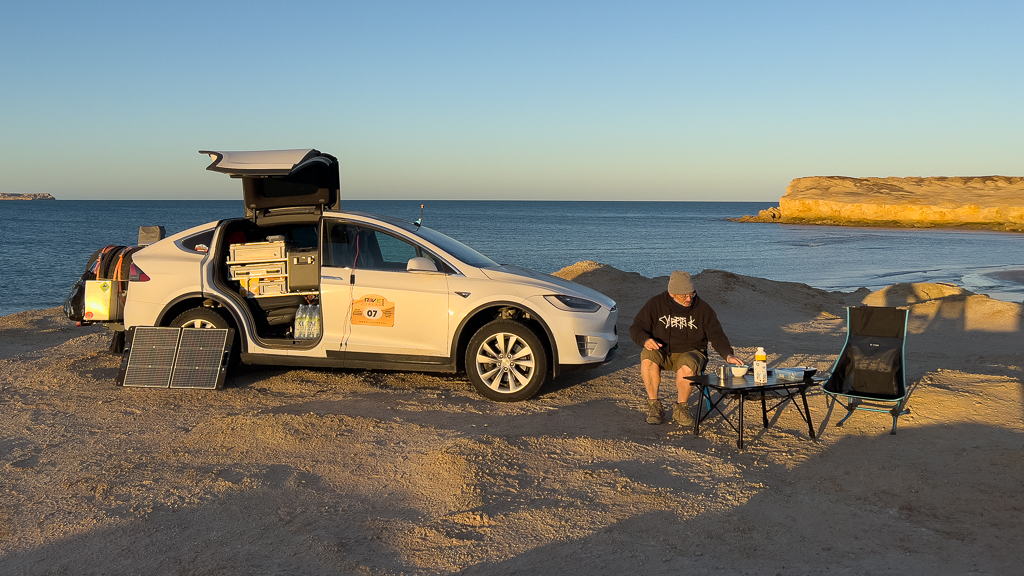
It was a stunningly beautiful location with nice beaches, steep cliffs, and a perfect camping spot for the night overlooking the beach. It was 3 p.m., but sometimes it’s best to finish a day early and enjoy the surroundings.
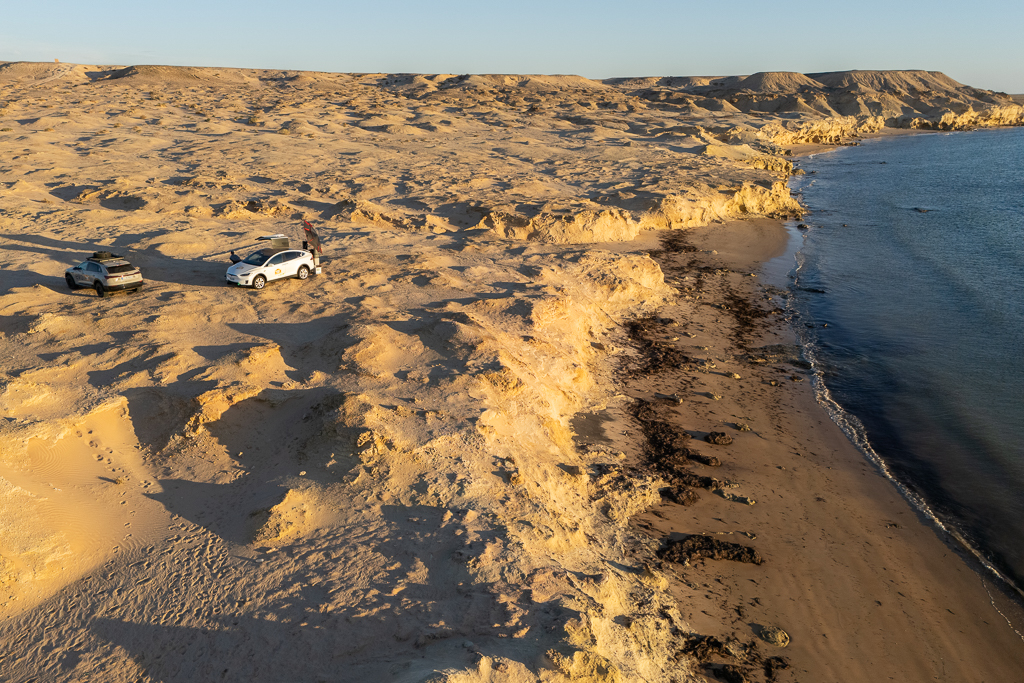
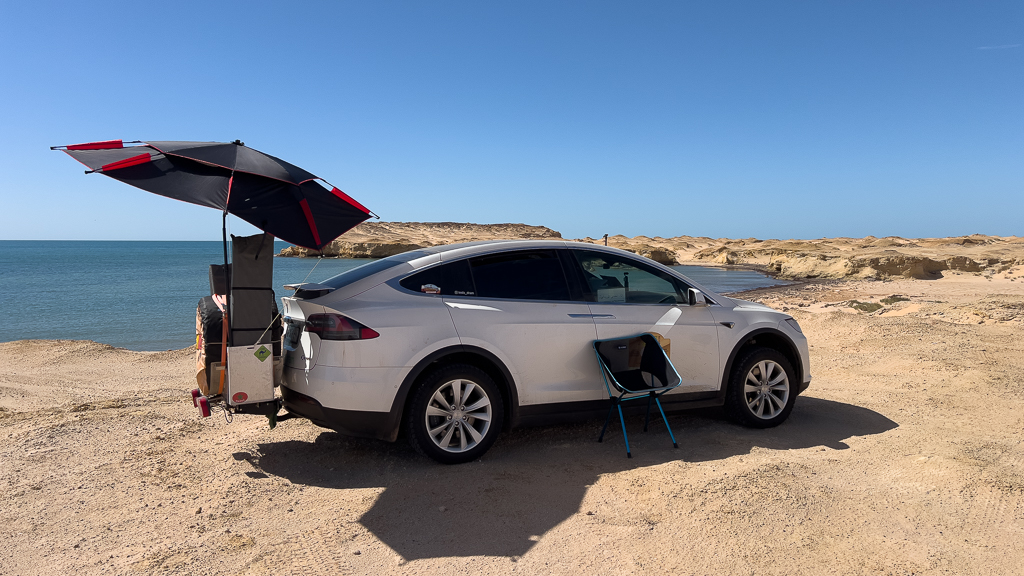
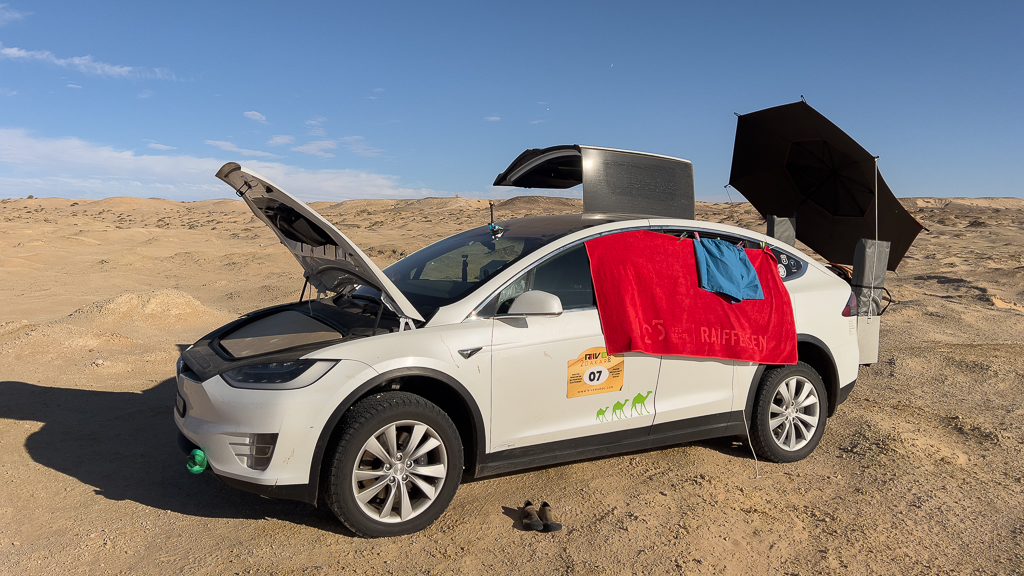
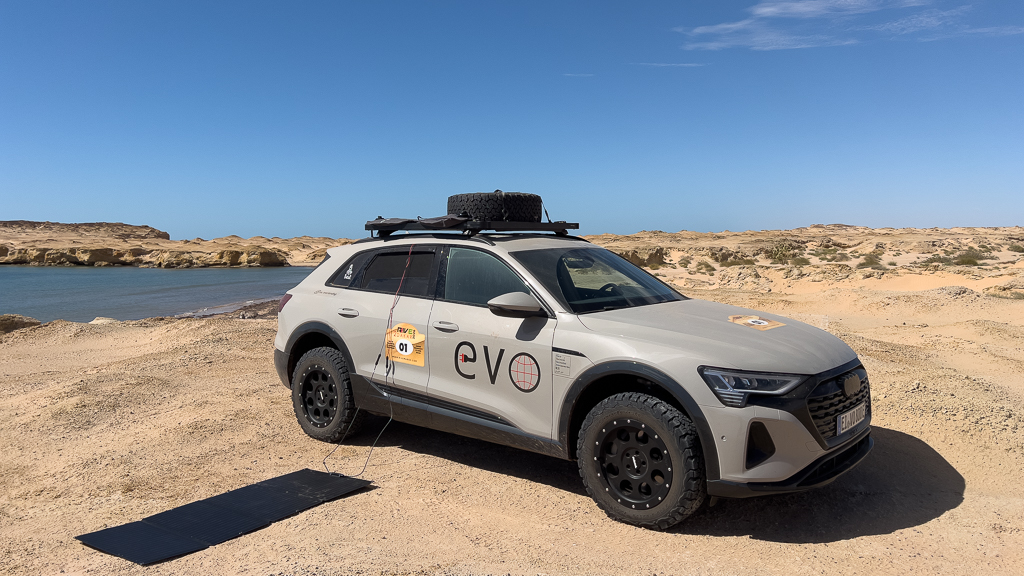
Since I used my EcoFlow power station for the Nespresso machine at lunch and also to charge my camera and drone batteries, I set up a solar panel to recharge it. I got 103W of inflow despite the less-than-perfect angle and late afternoon sun. Not bad!
We did a short hike to explore the cape and nearby beaches.
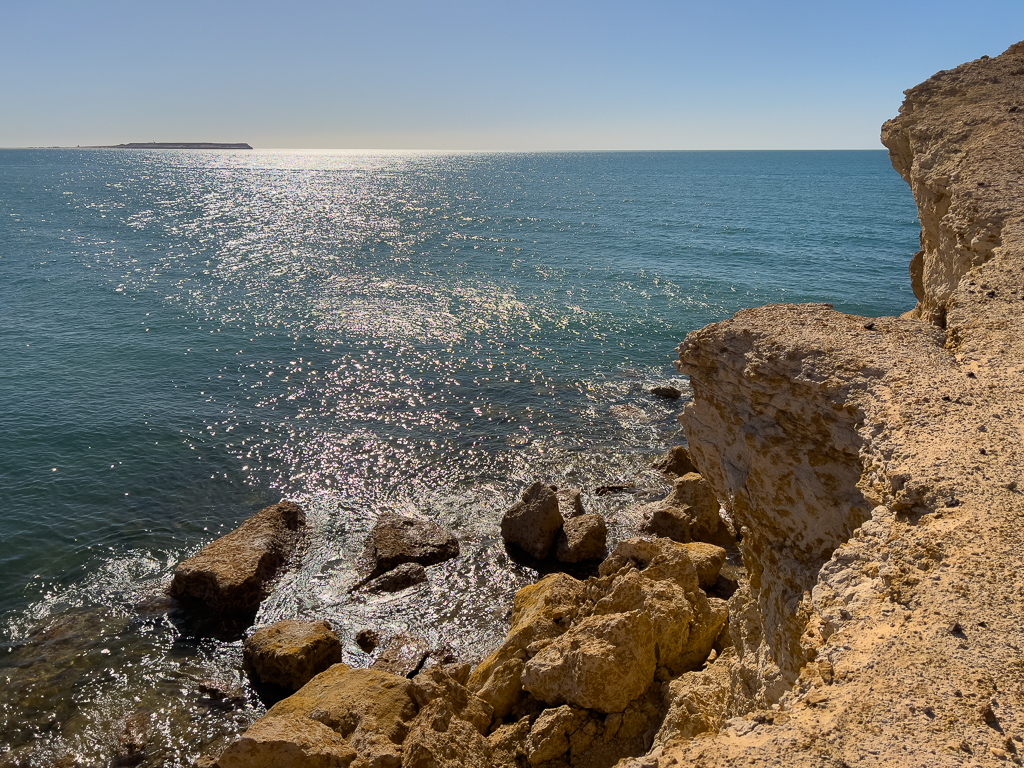
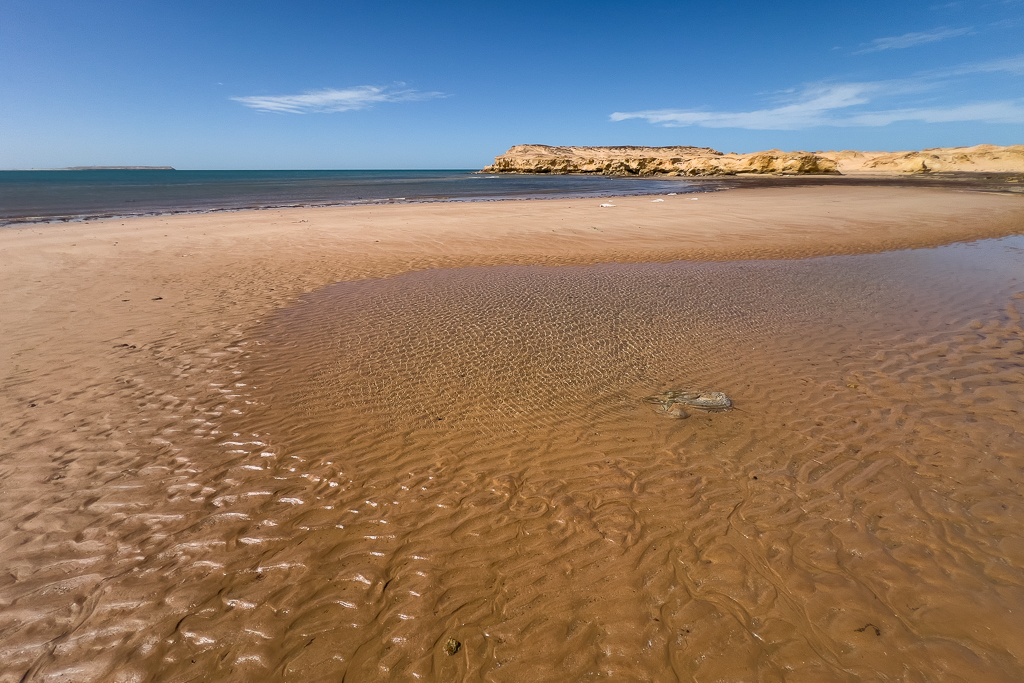
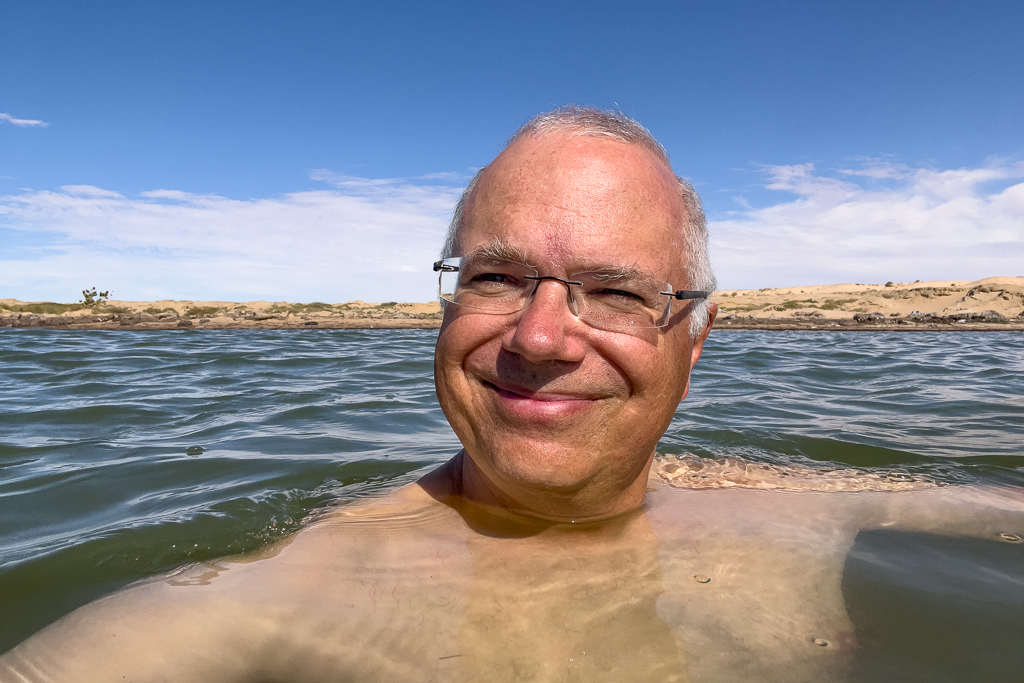
And went for a swim. The water temperature was just perfect.
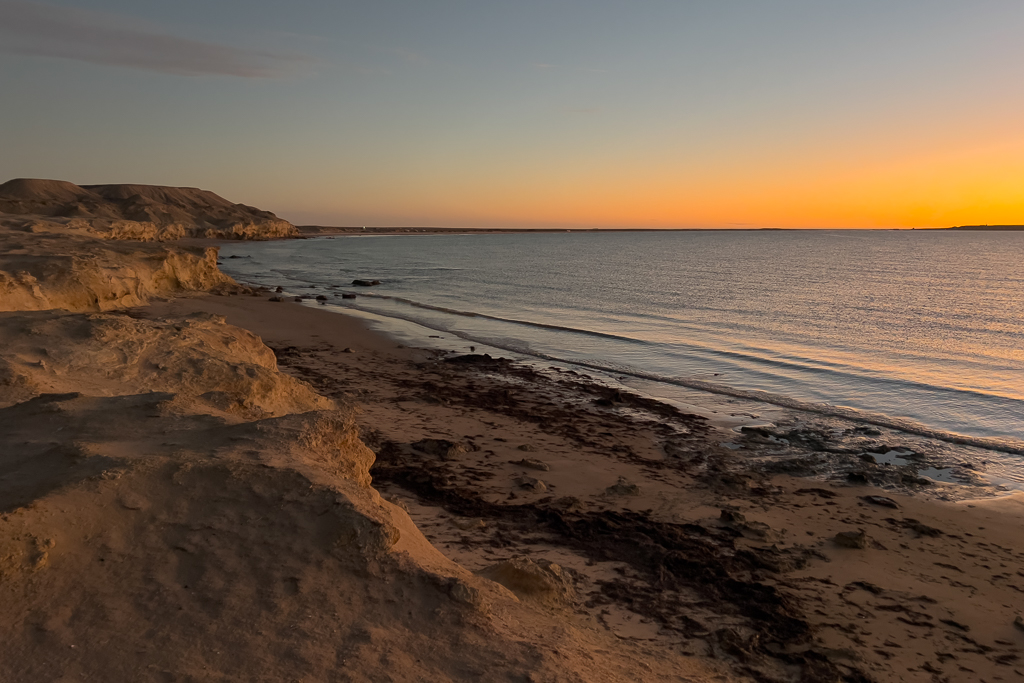
In the warm light just before sunset, the place looked even more spectacular.
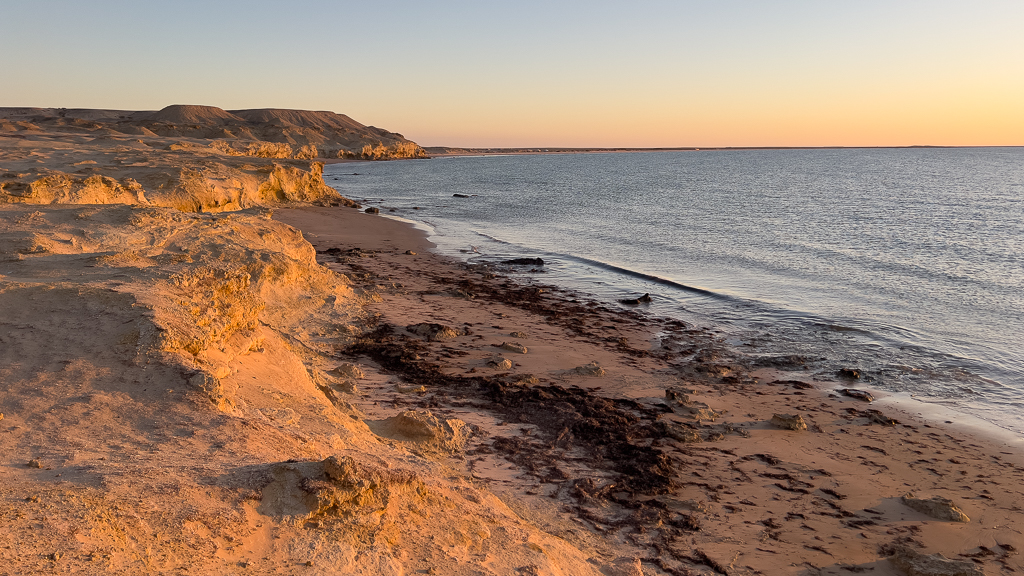
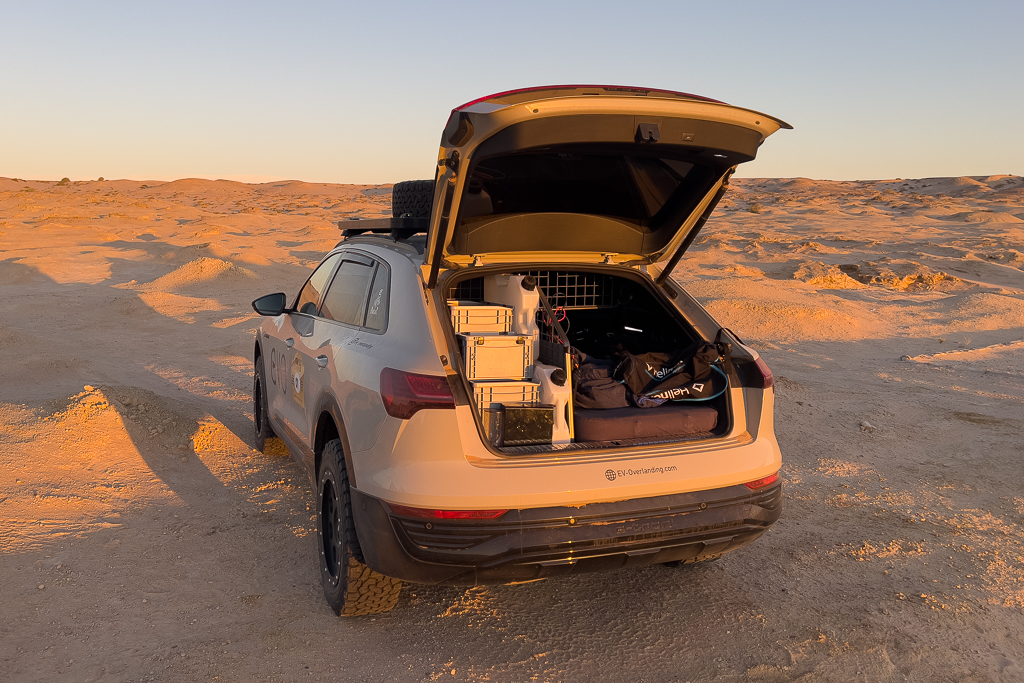
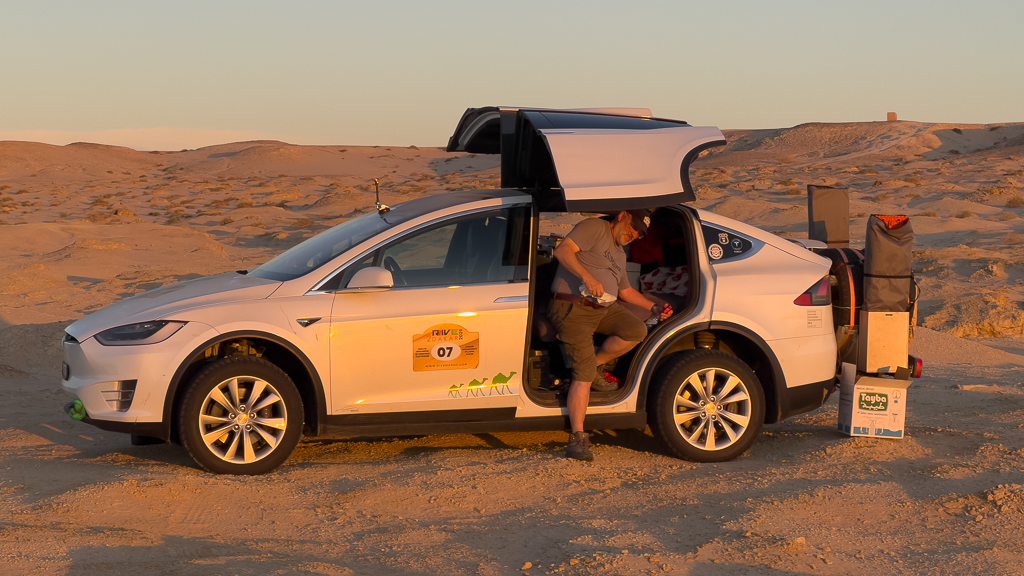
It felt so great to be completely alone at this stunning place. I really love wild camping at remote locations!
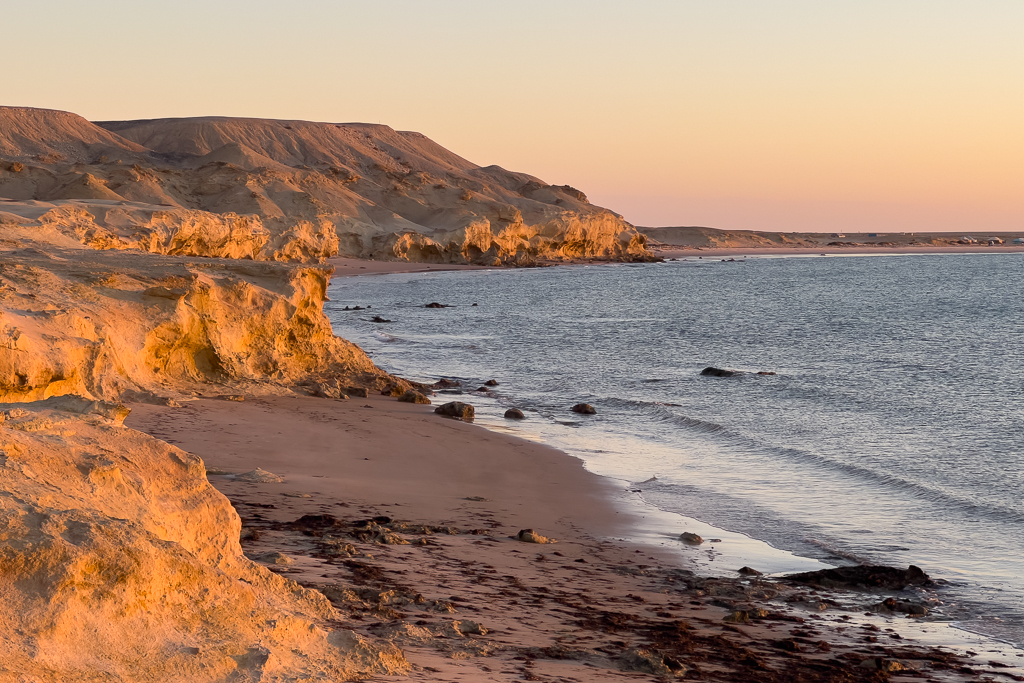
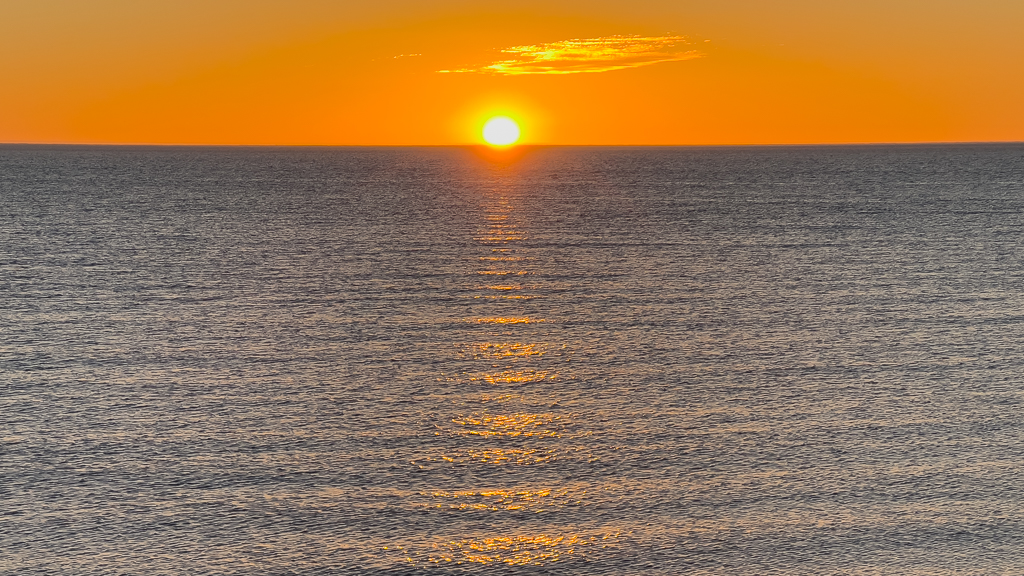
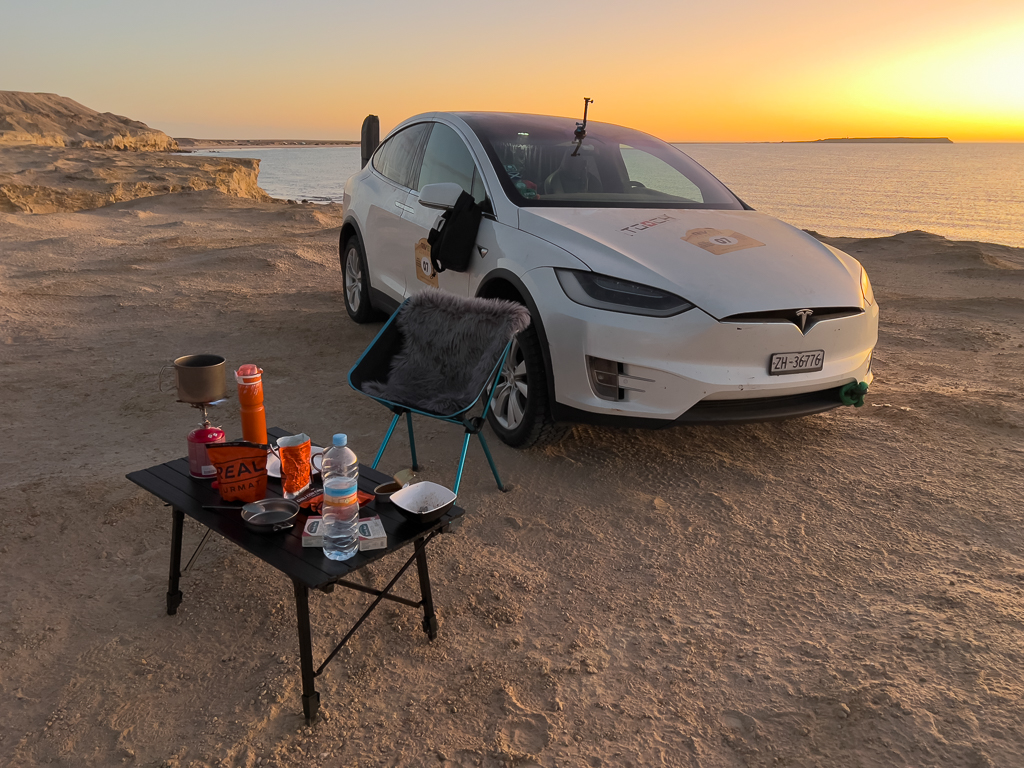
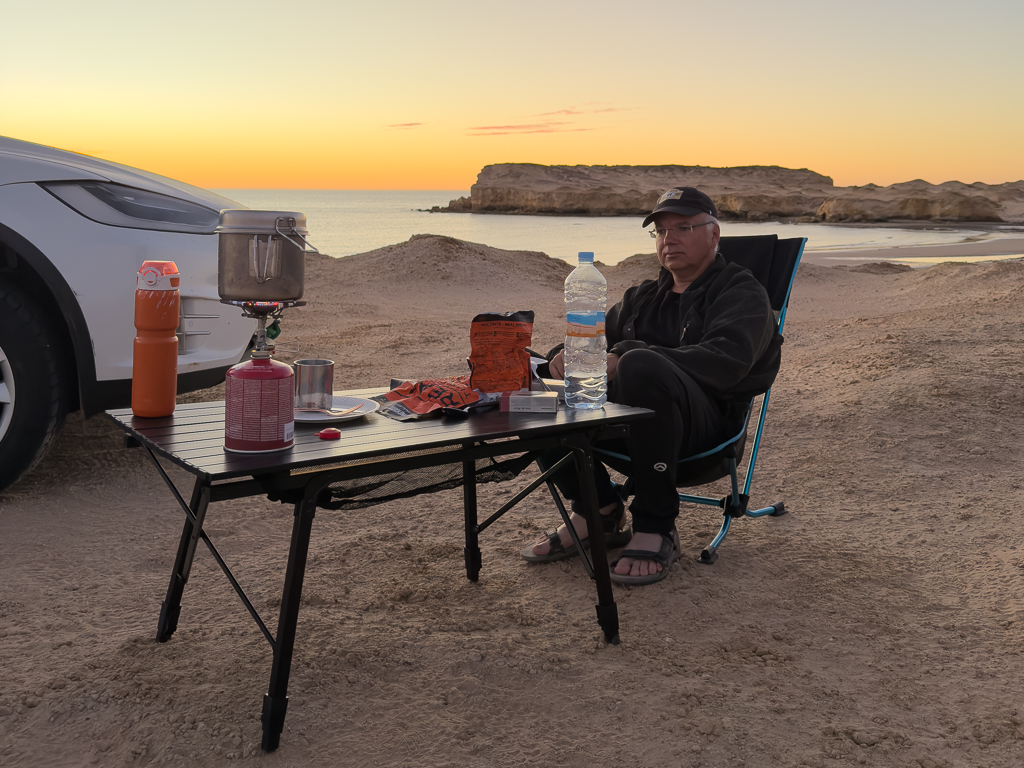
After sunset, we prepared food for dinner. Nothing fancy, but just a couple of freeze-dried expedition meals from a Norwegian company that I brought with me on this trip. They only take a few minutes to prepare and taste surprisingly good. Our favorite meal was the chicken curry.
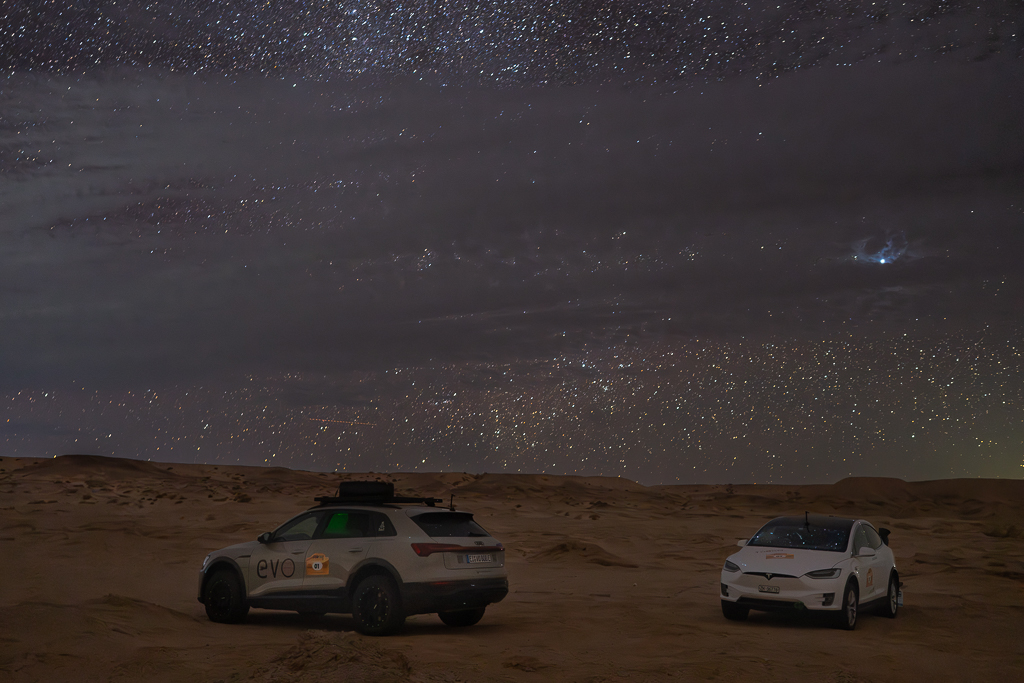
It was quickly getting dark, and we went inside our cars to sleep.
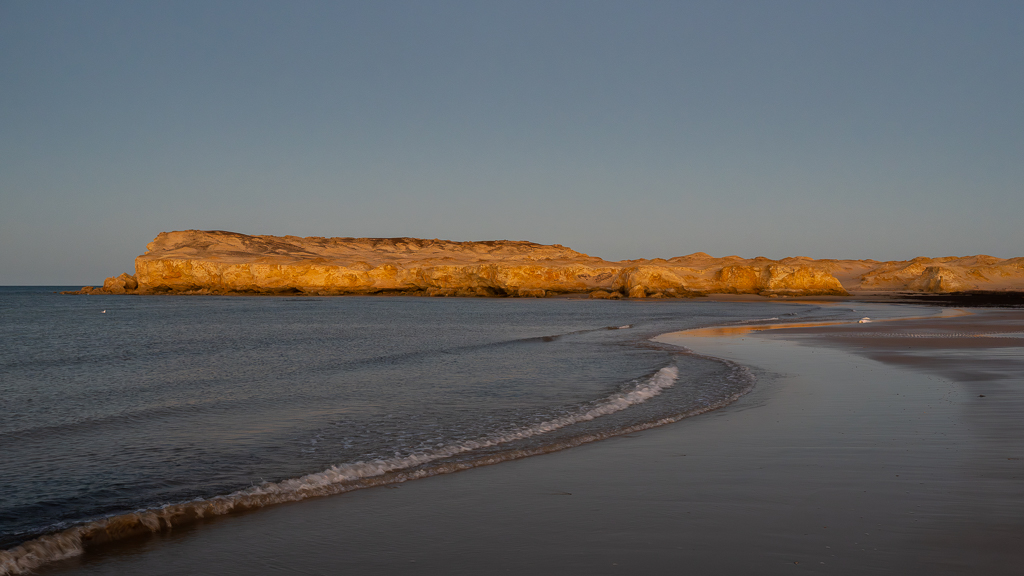
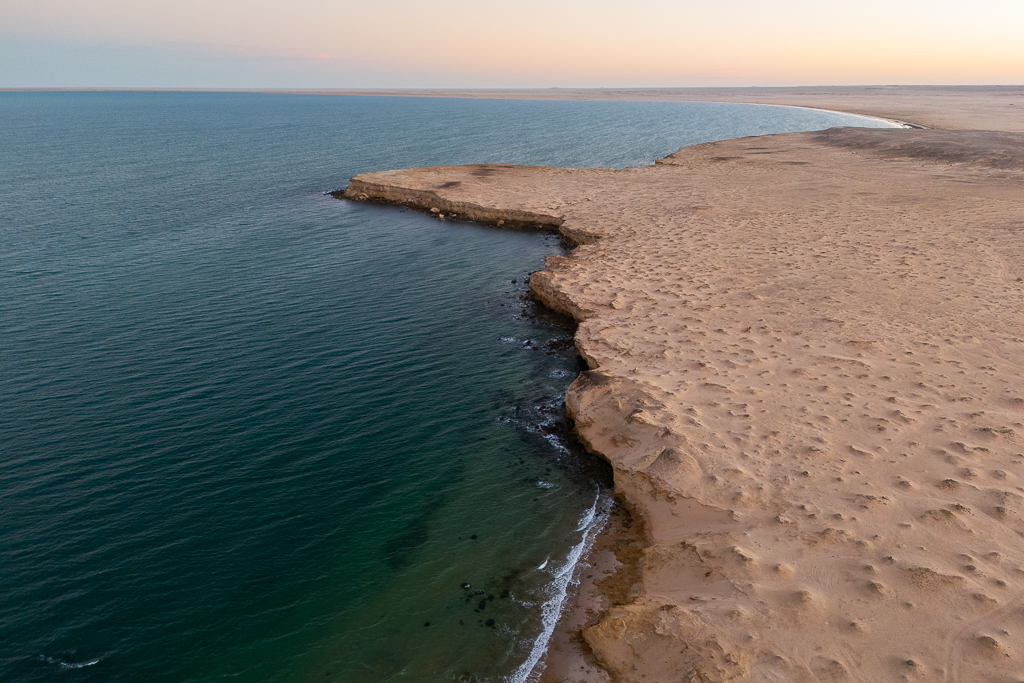
The next morning, I took out my drone for some landscape shots in the soft early morning light.
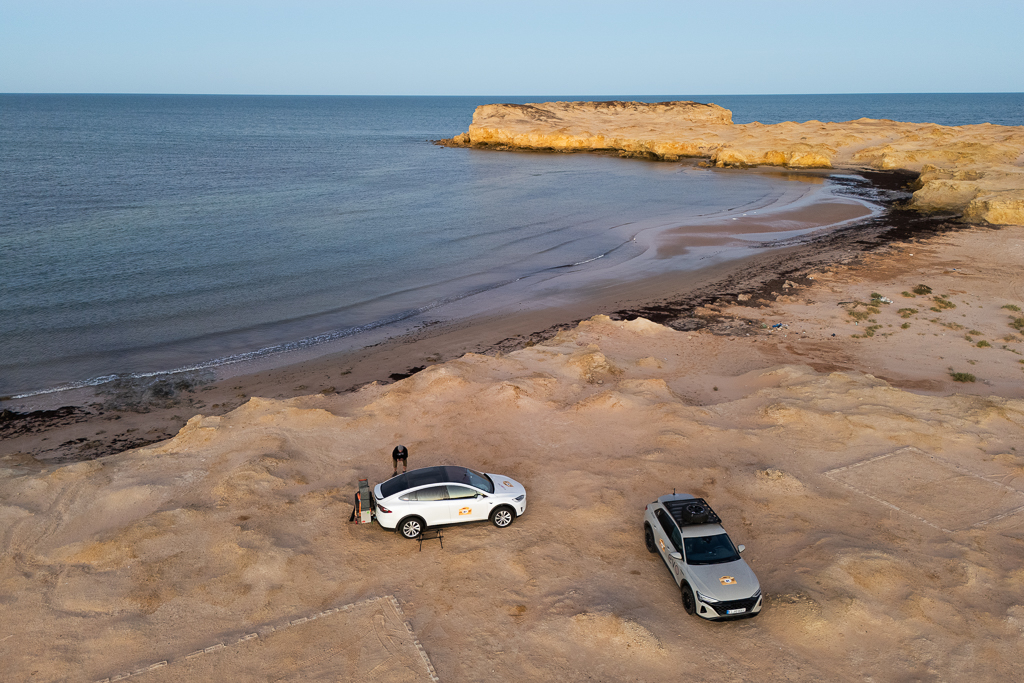
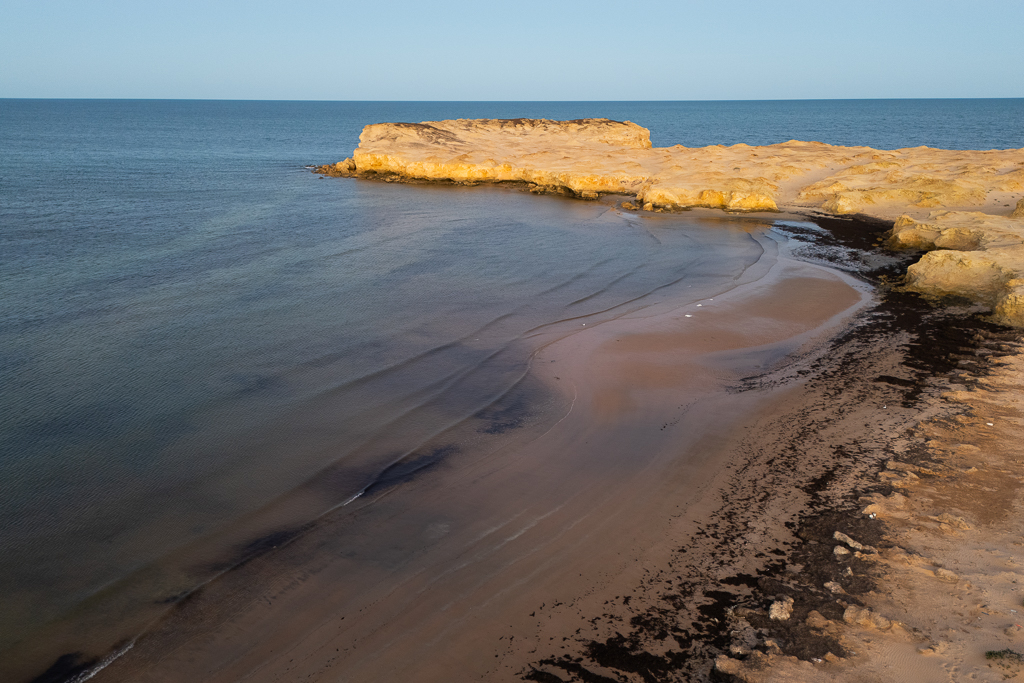
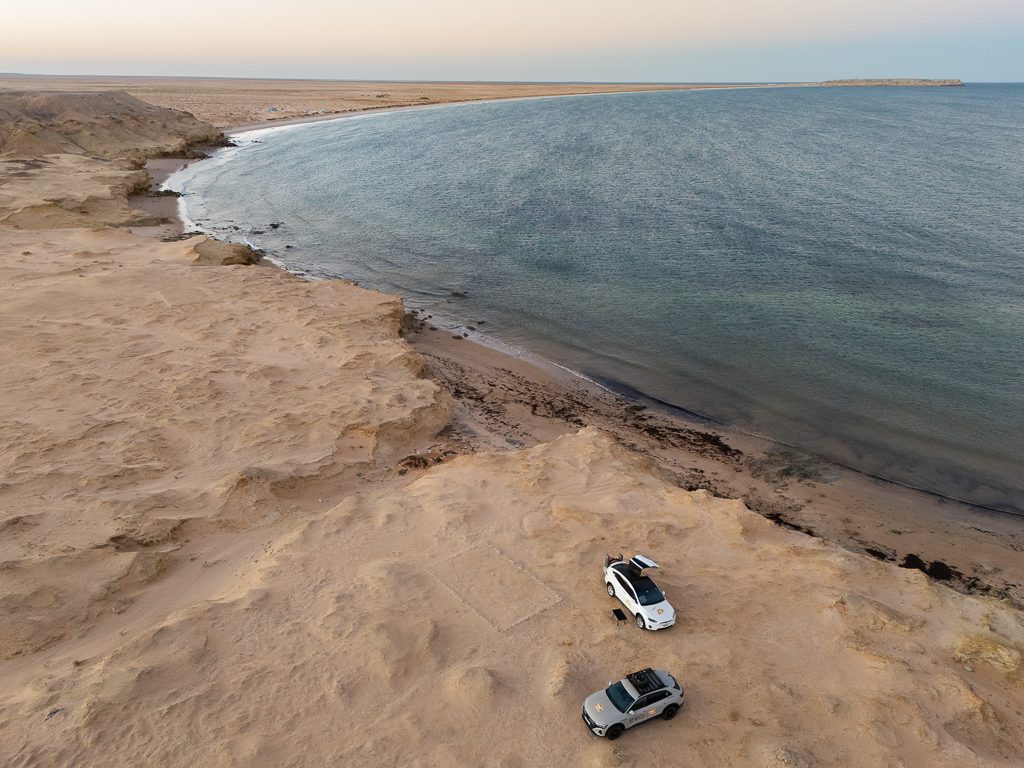
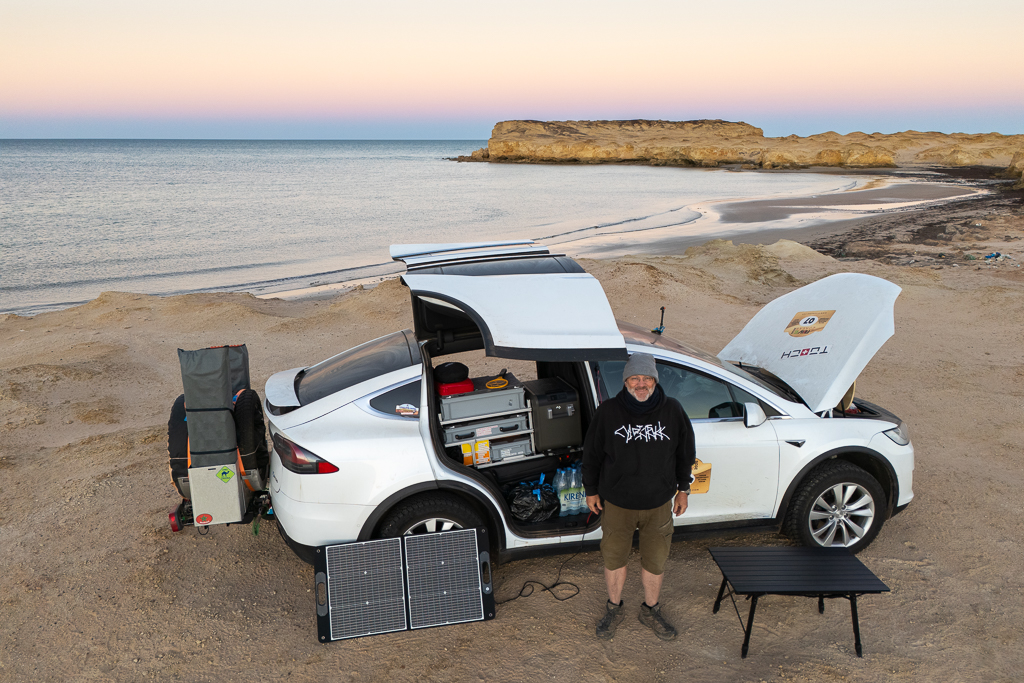
Later, we had breakfast at our camp and then put everything together to be ready for our next desert adventure.
Finding the right way on the northern track back to Chami was even a bit more challenging. There were nearly no tire tracks visible. The only option was to roughly follow the GPS coordinates while looking for critical obstacles on the ground.
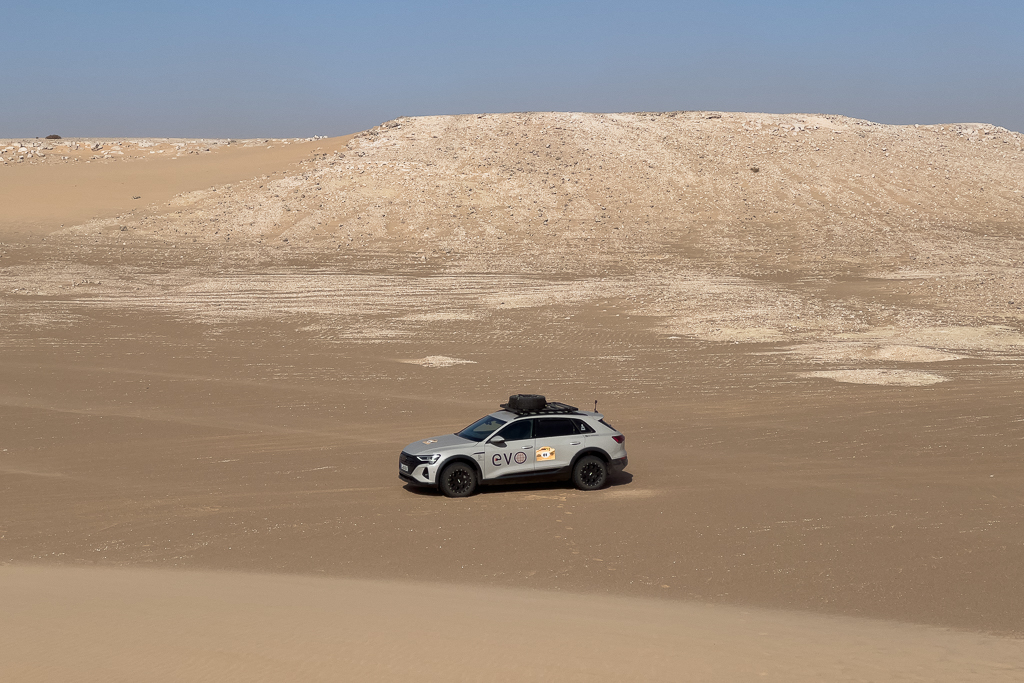
The environment changed often between a rocky desert and soft sand.
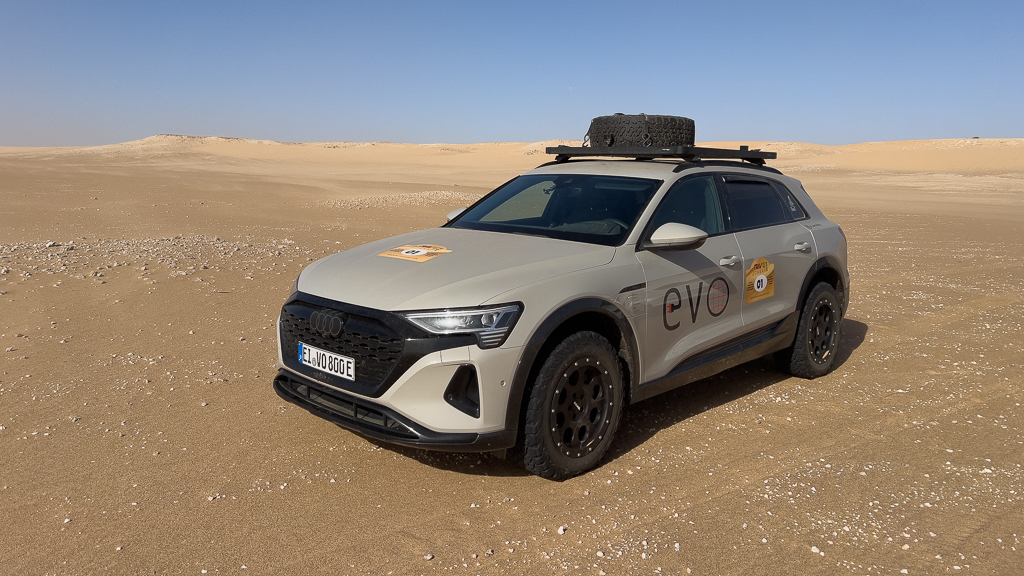
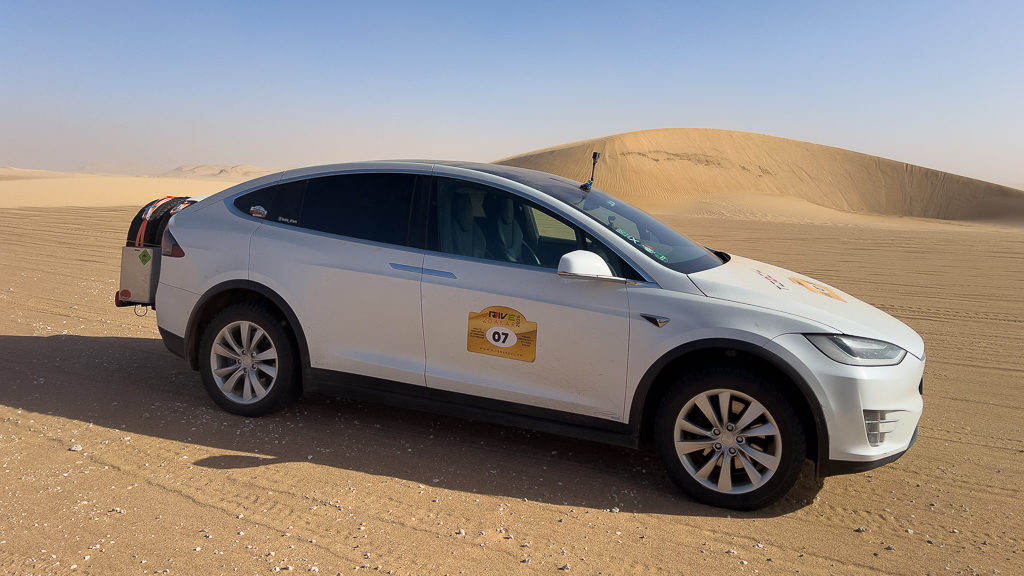
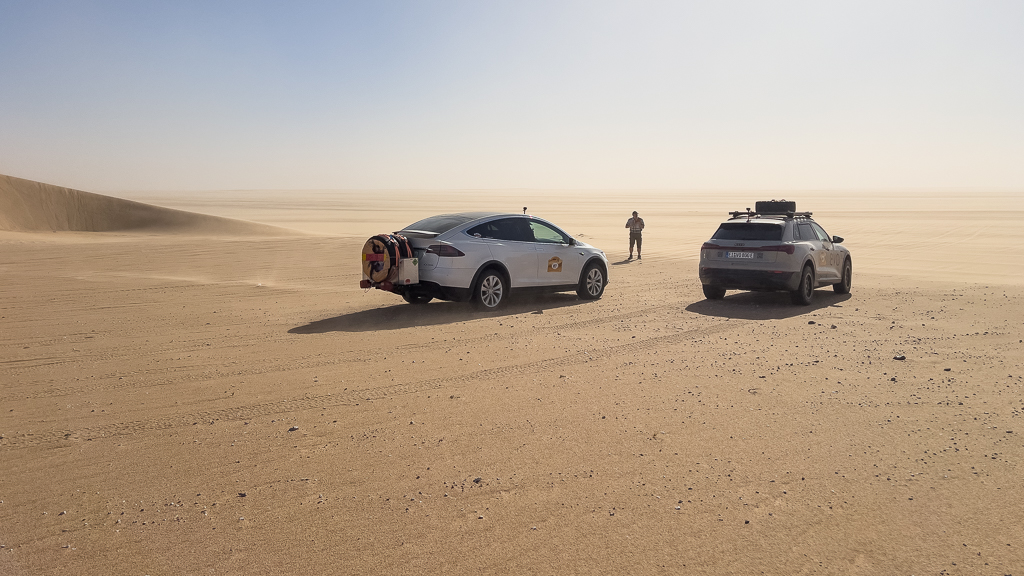
At a certain point, we had to cross a large dune belt. A perfect place for some spectacular images of our cars in the dunes.
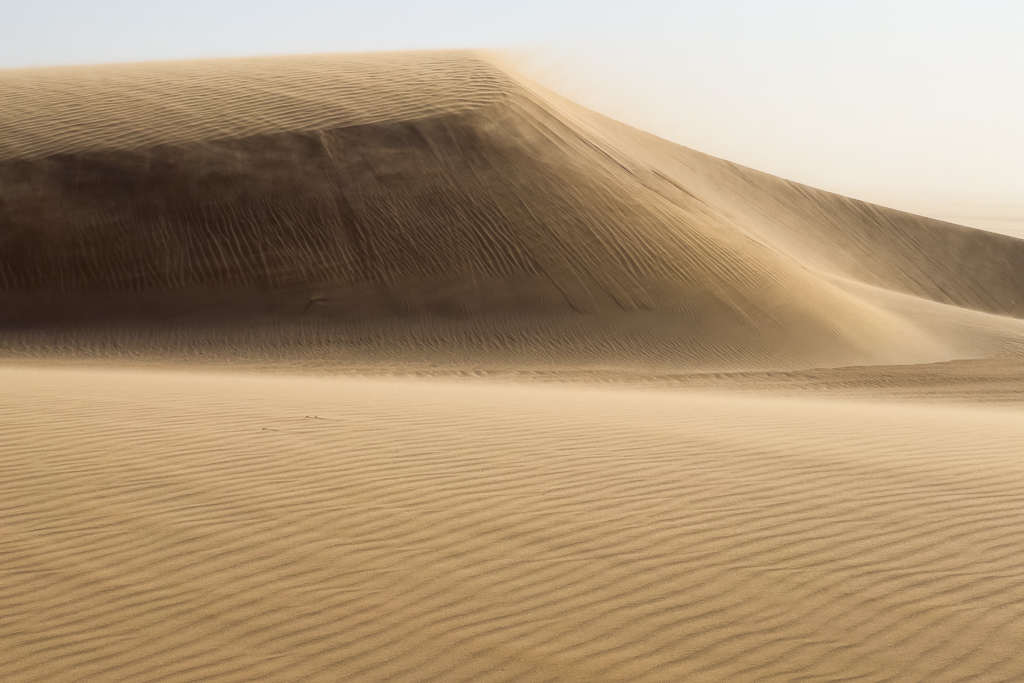
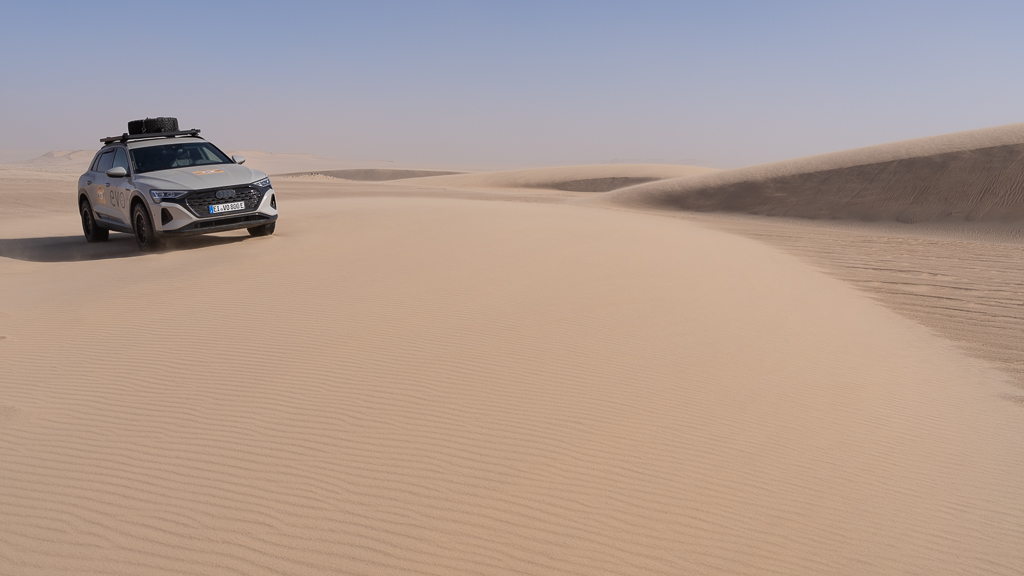
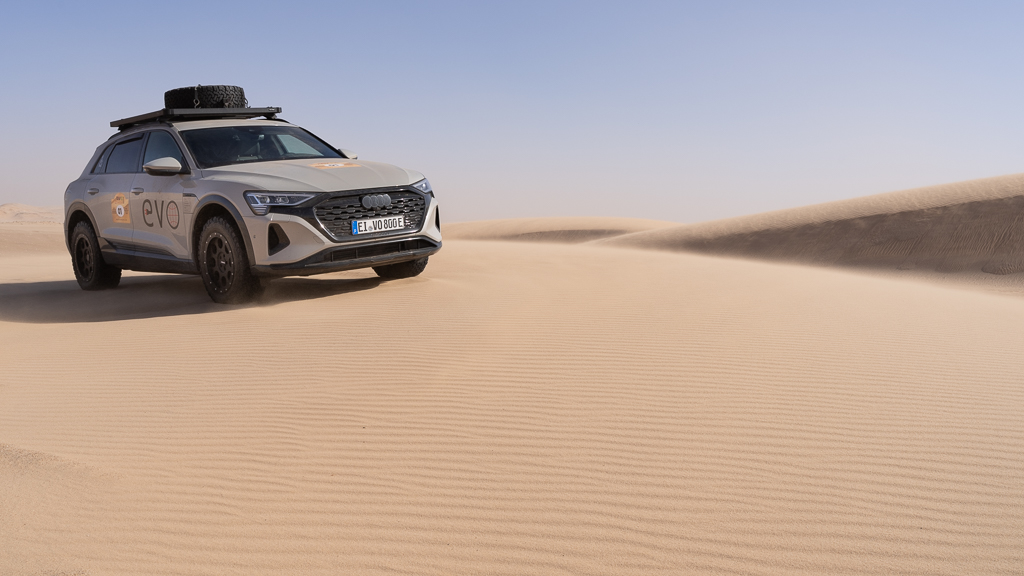
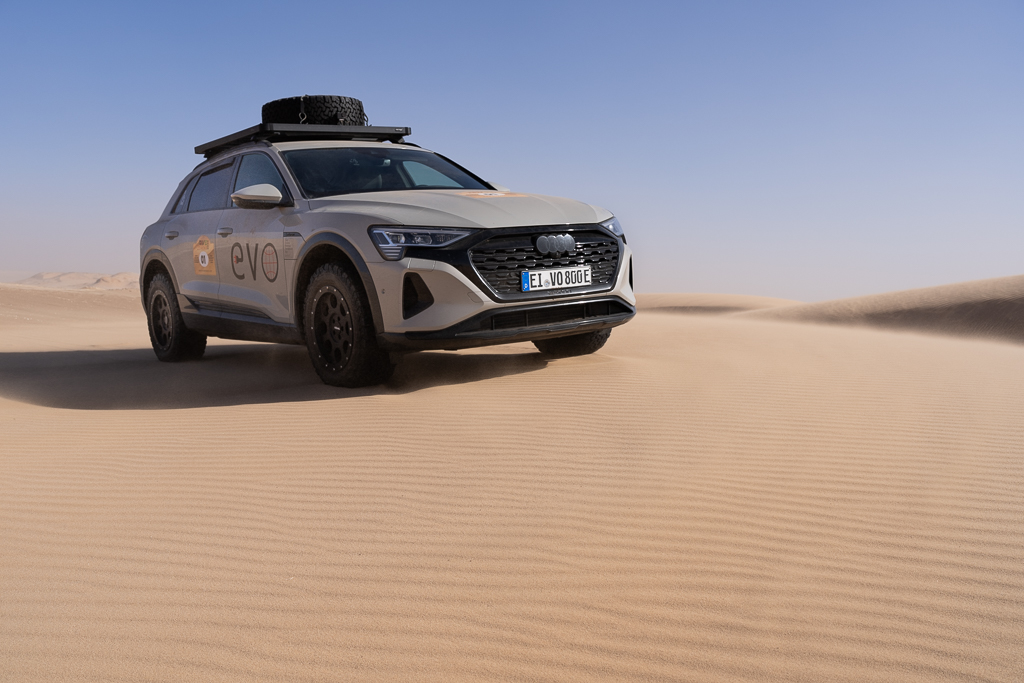
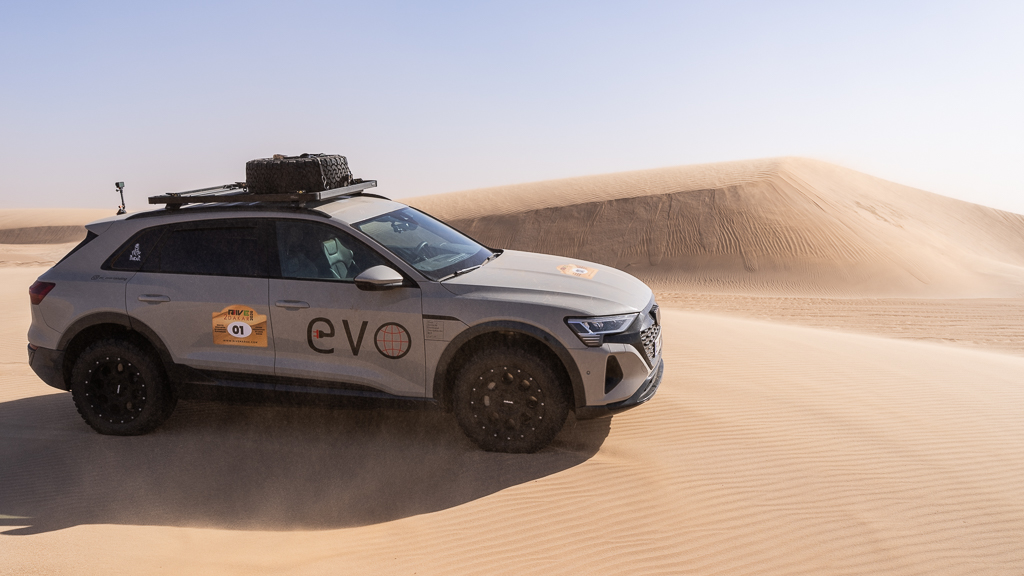
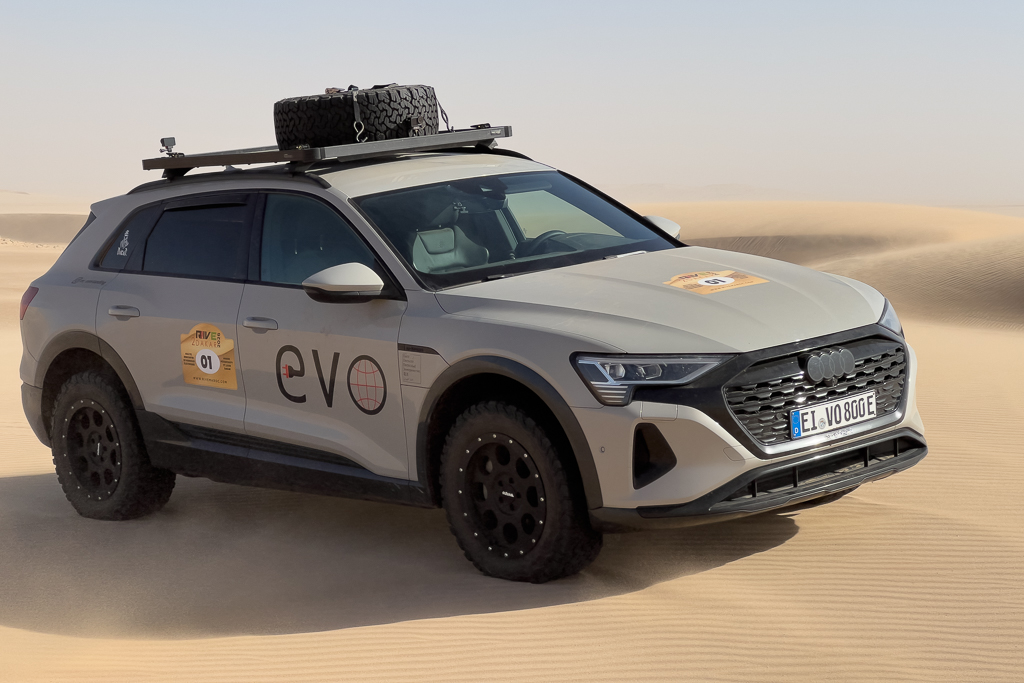
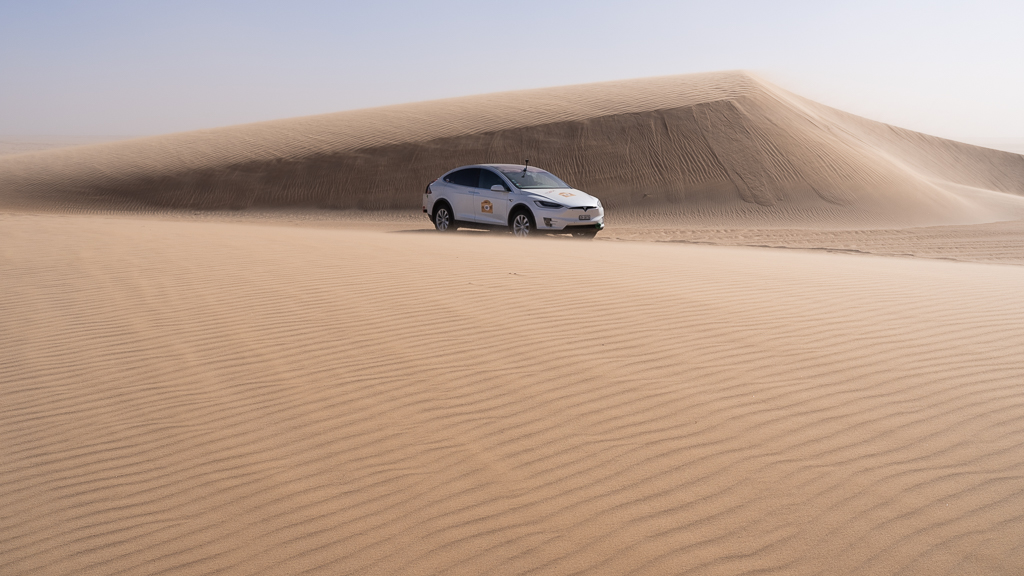
To get a better overview of the surroundings, I climbed on one of the dunes.
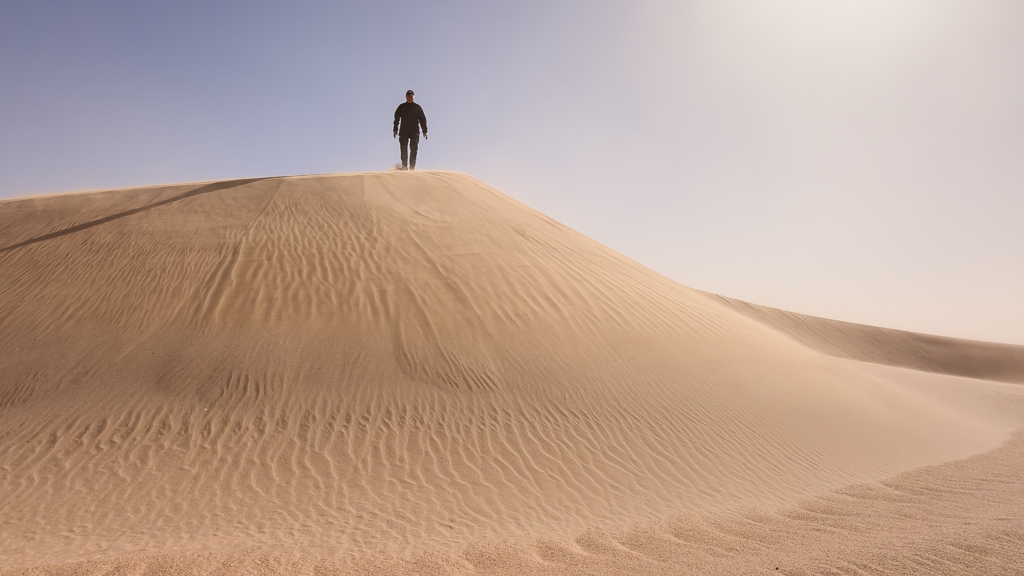
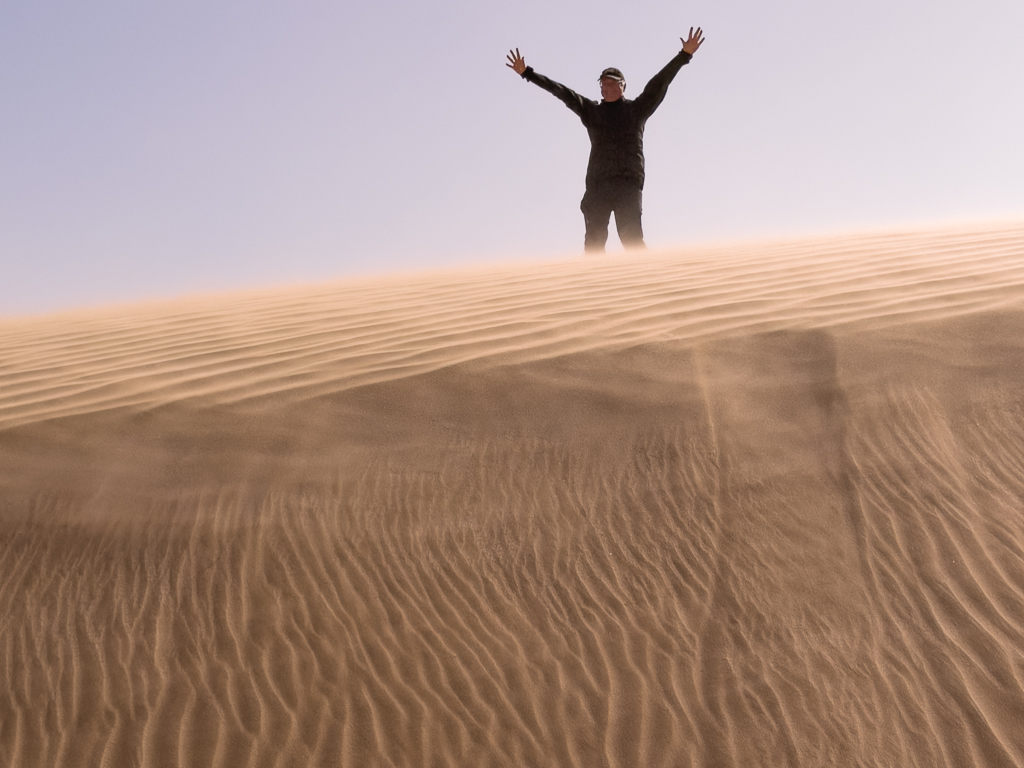
We had lots of wind on that day. The sand in the air created a very mystical atmosphere.
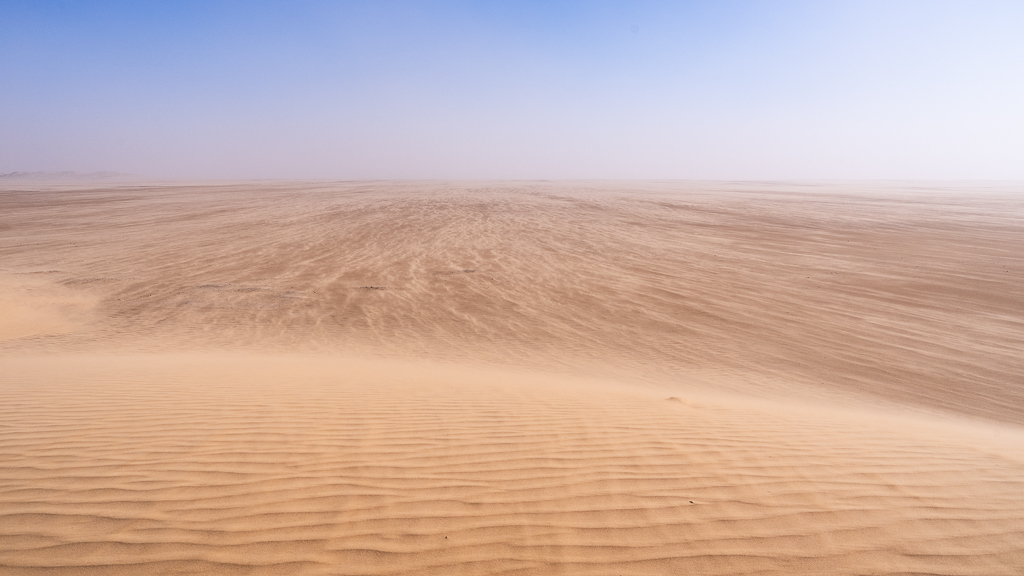
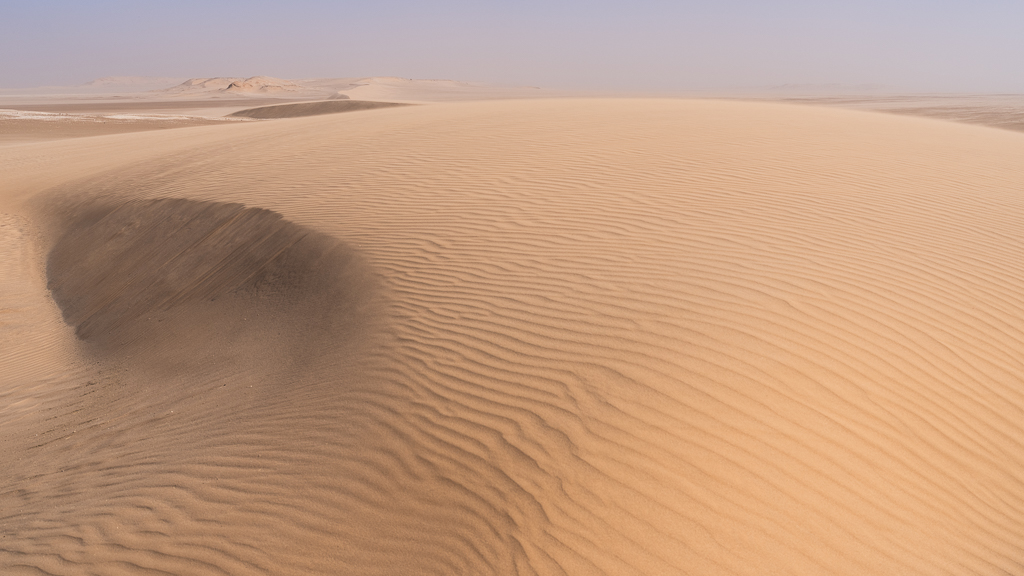
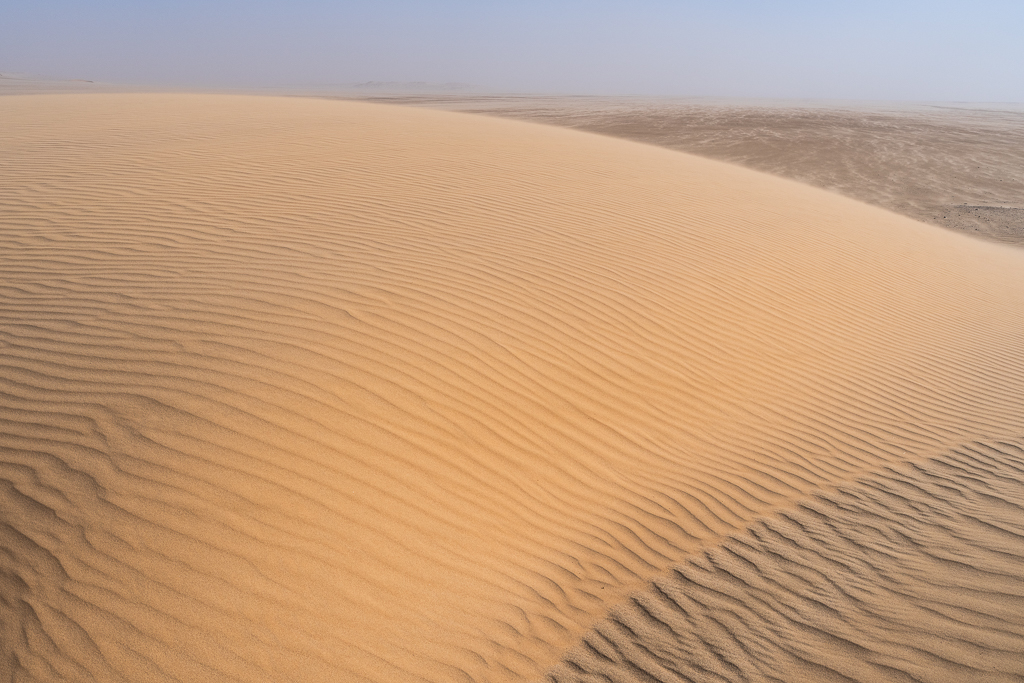
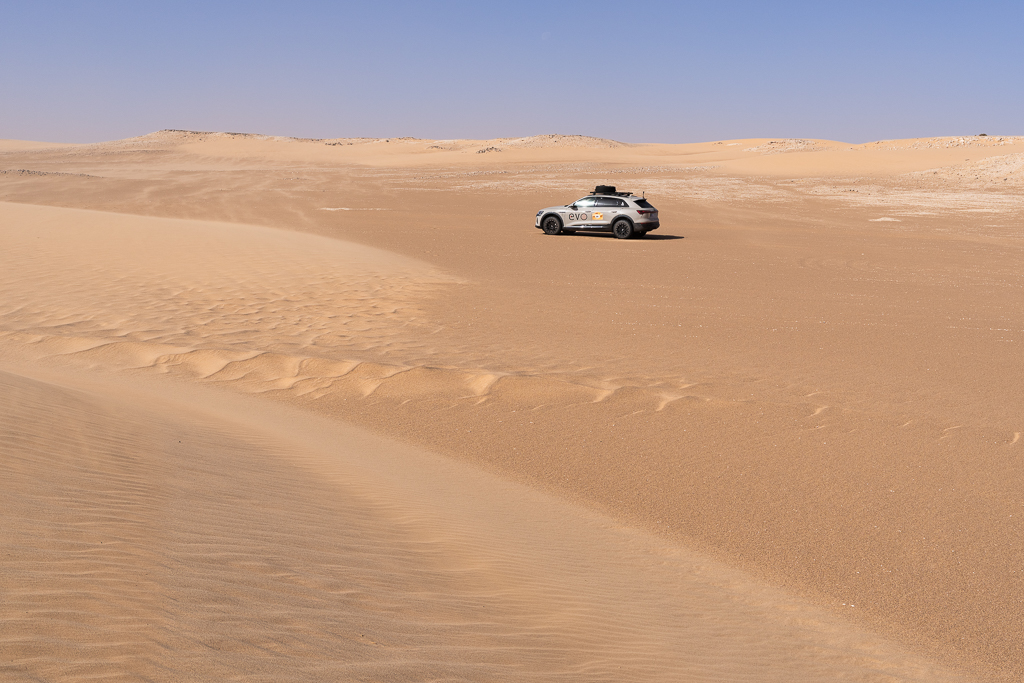
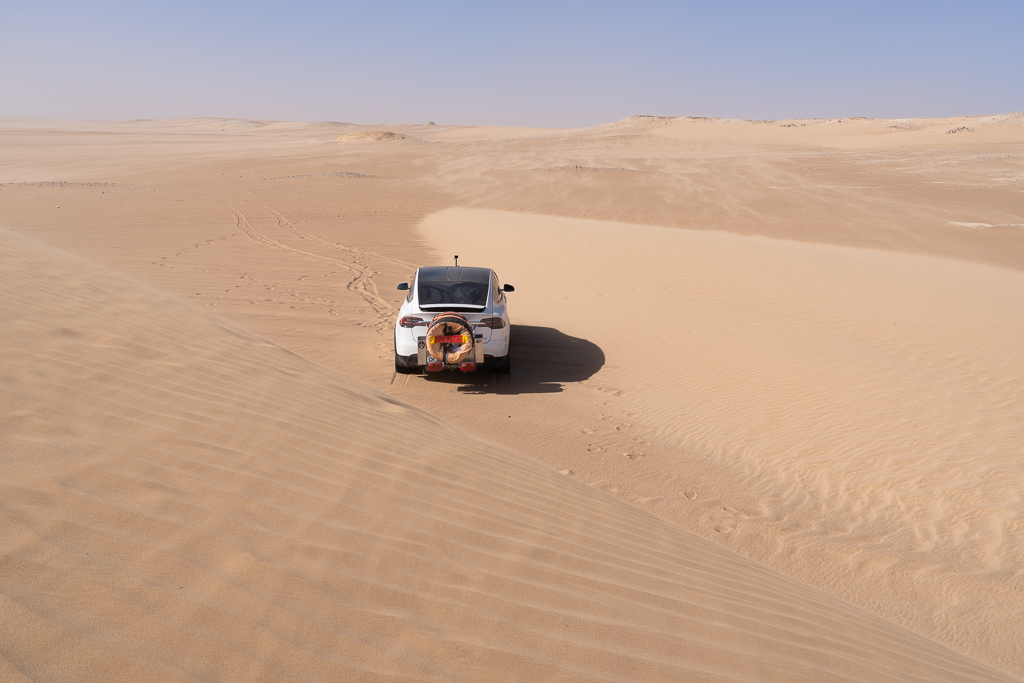
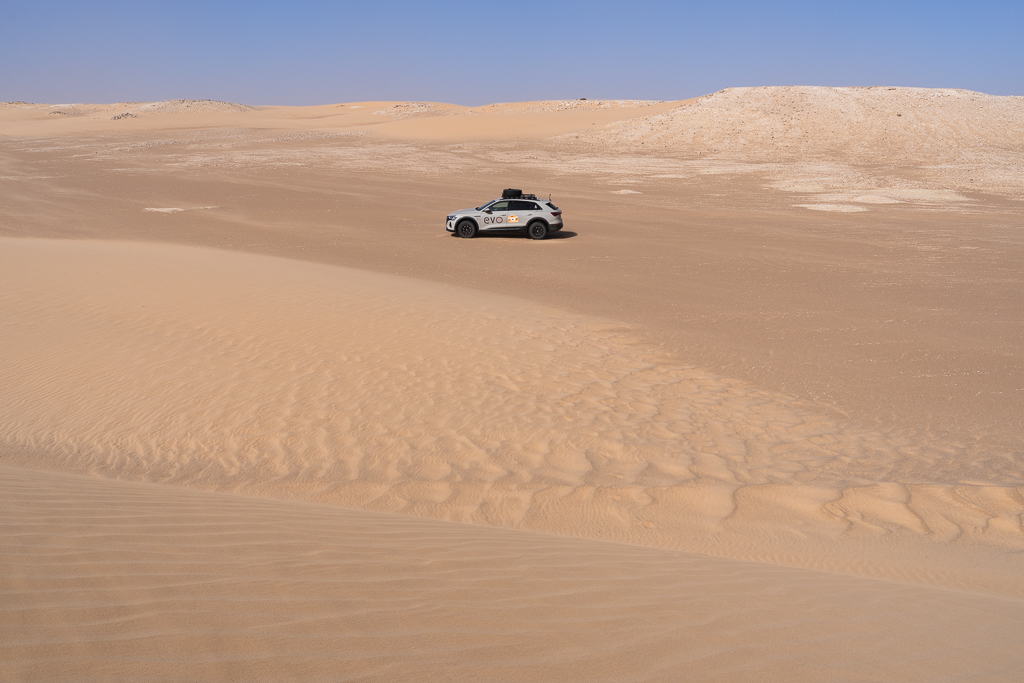
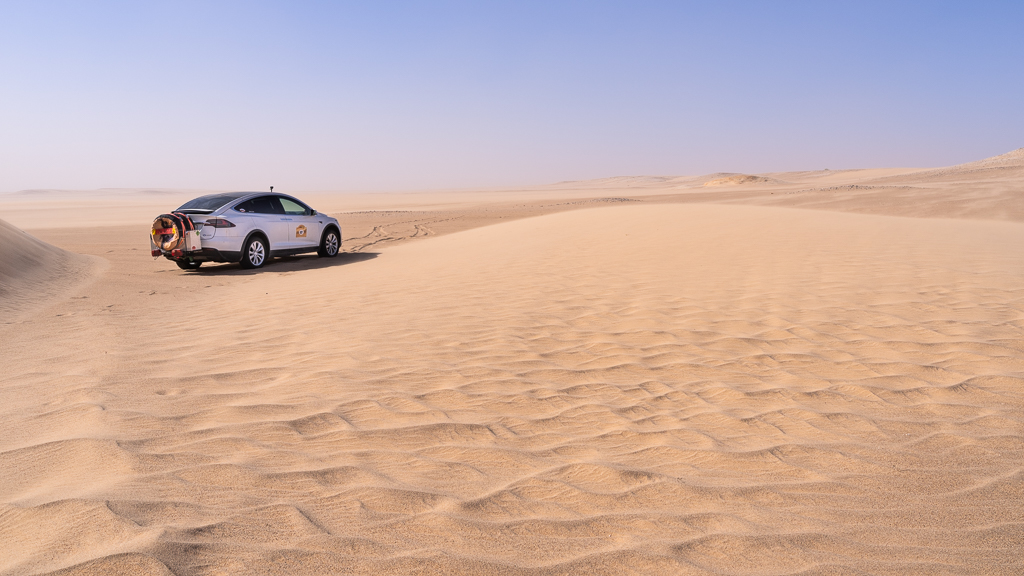
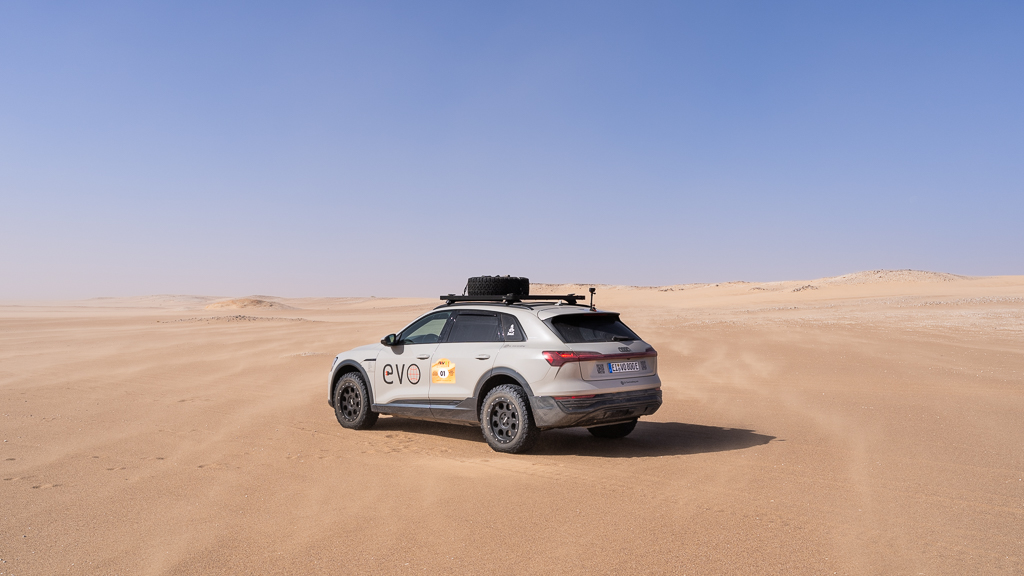
We had now altogether spent three days in the Banc d’Arguin National Park. I love this place. It’s probably one of my favorite places on this trip.
As expected, our energy consumption was quite high with all the soft sand sections. The Tesla of Hans was nearly empty when we reached the Gouffa Hotel in Chami.
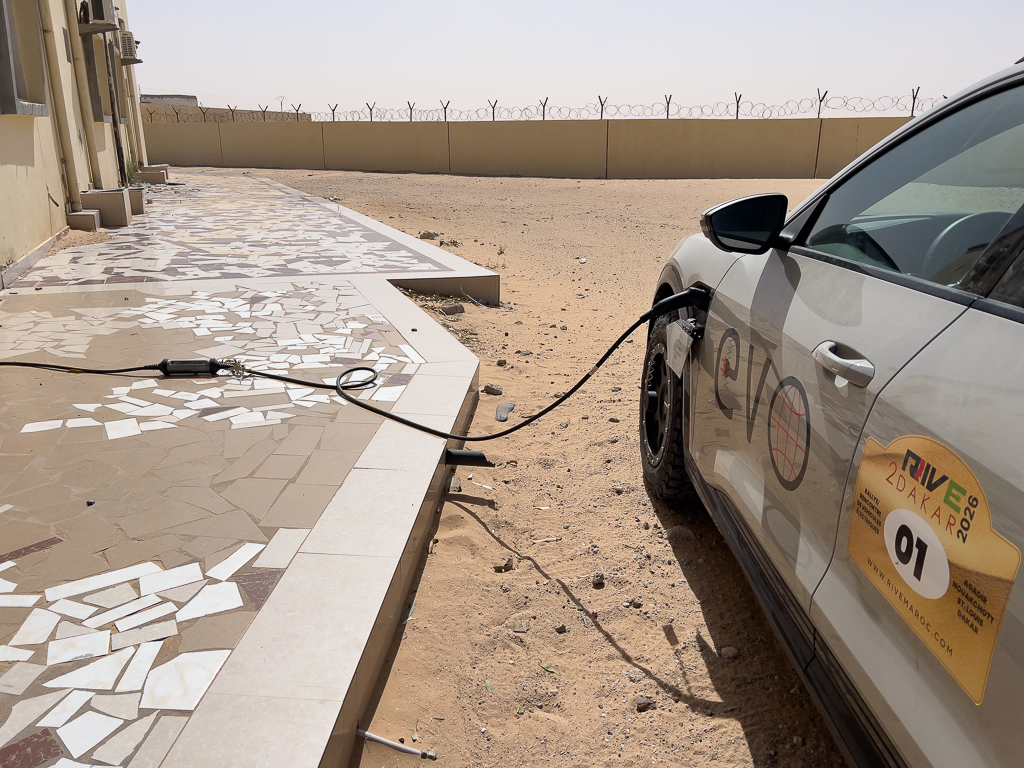
This time, there was no power outage, and we could easily charge both our cars overnight back to 100%. Hans slept in his car while I spent the night in a hotel room.
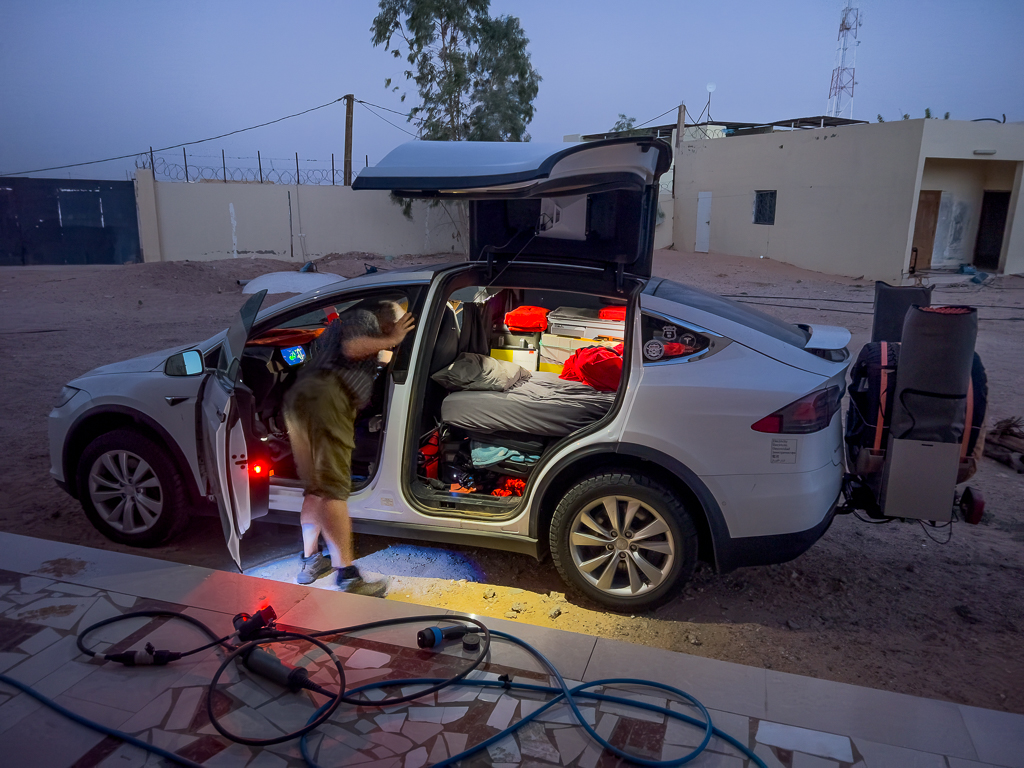
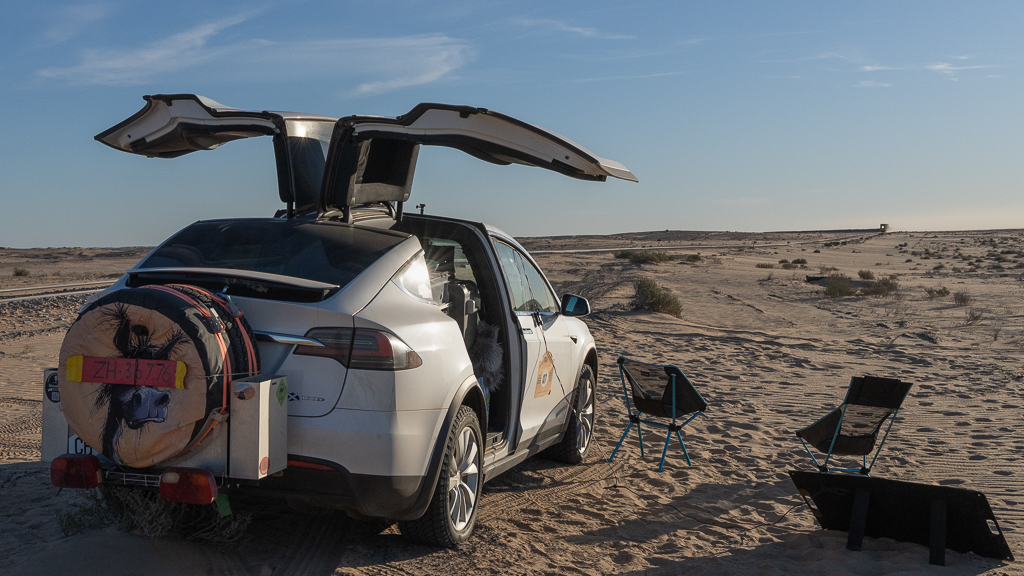
The next day, we wanted to explore an offroad track that follows the famous iron ore railway in the north of Mauretania. It starts at a village named Boulenouar, located about 90km northeast of Nouadhibou and 150km north of Chami. The track continues for nearly 400km to Choum through a very remote desert area. Besides Chami and Nouadhibou, there were absolutely zero places where we could charge our cars. Since the energy consumption was expected to be very high in the desert, our options to explore this track were sadly very limited. To be on the safe side, the plan was to drive along the track until our SOC showed 50%, then camp next to the railway, hoping to get some good shots of the iron ore train, and then turn around and drive to Nouadhibou to charge our cars.
The first adventure was to get through Boulenouar and find the start of the track. This village is completely crazy. There are no real roads. It‘s a village built on dunes (or maybe there were roads in the past, and now everything is just deep sand). It’s very different from anything I‘ve seen before. And this village is a maze. It took us a couple of attempts to find the right way and finally reach the railway.
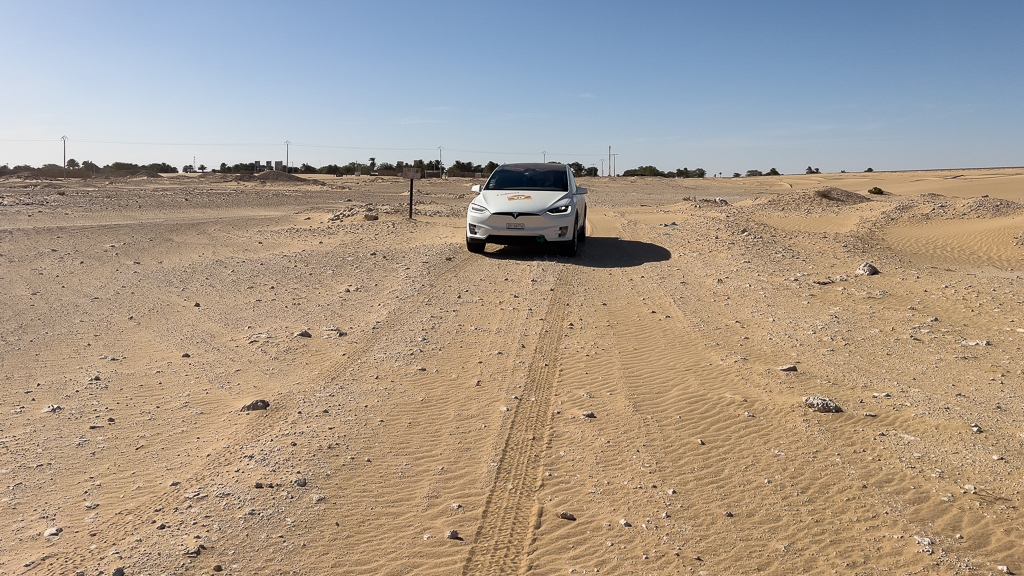
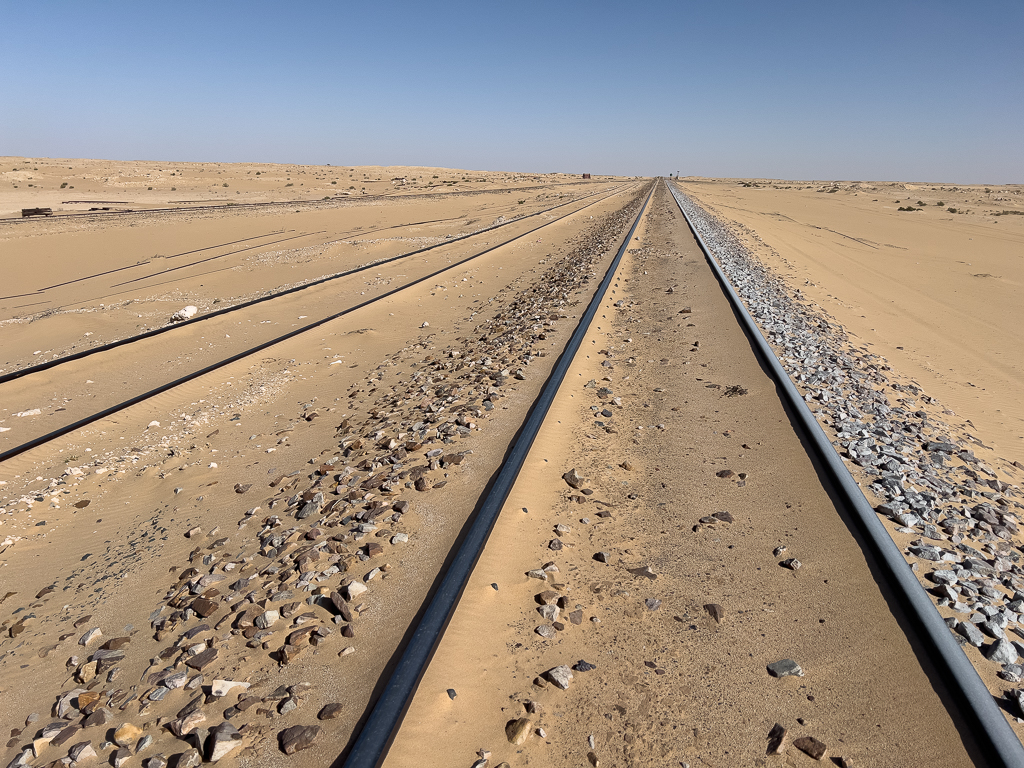
There is no real track to follow. Sometimes you can see old tire tracks in the sand, but often you just have to find your own line through the landscape. At first, it feels a bit challenging because the terrain is not flat. You have to cross small hills and dunes regularly. And in some sections, the sand was quite soft. But after a couple of kilometers without getting stuck, I got a better feeling for the terrain and also the limitations of my car, and was able to relax and enjoy the drive.
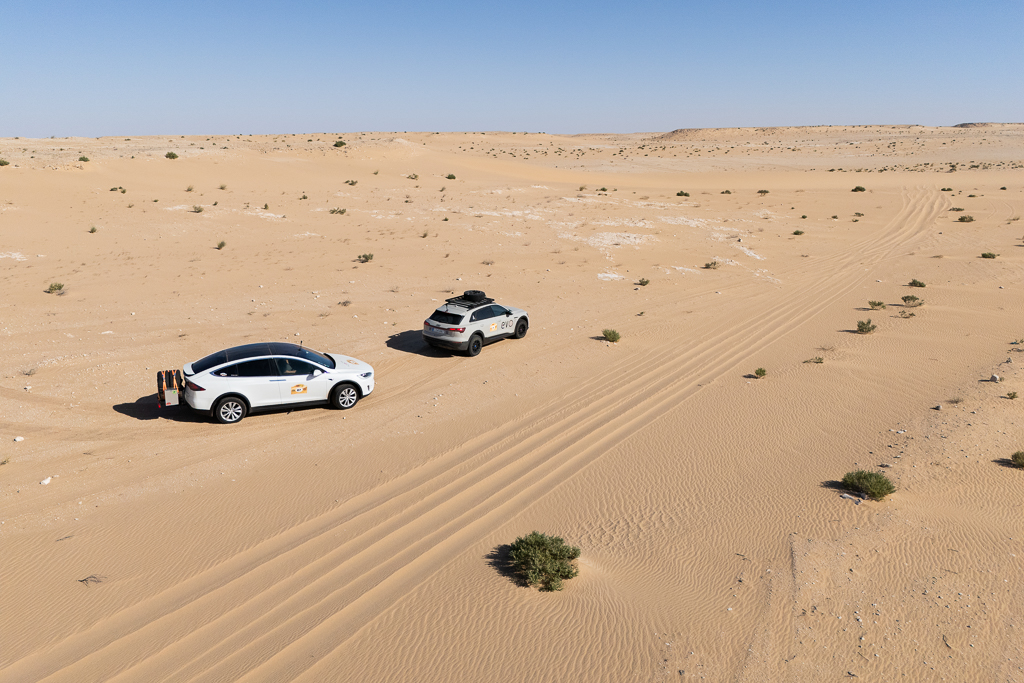
Unless you are in a sandstorm, orientation is no big problem on this track. You just have to stay south of the railway. In addition, we downloaded the GPS coordinates for the ERZ track from Pistenkuh.
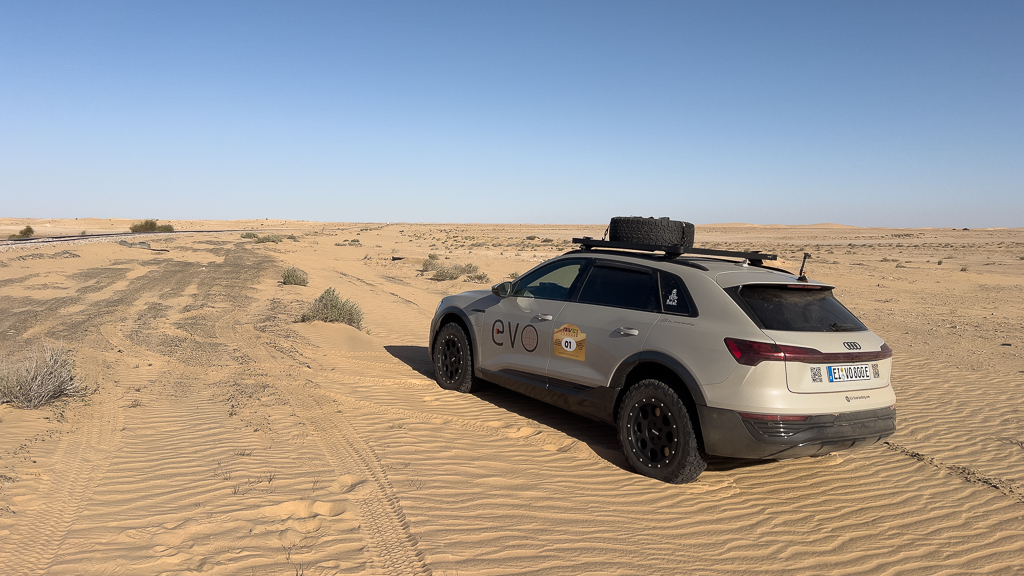
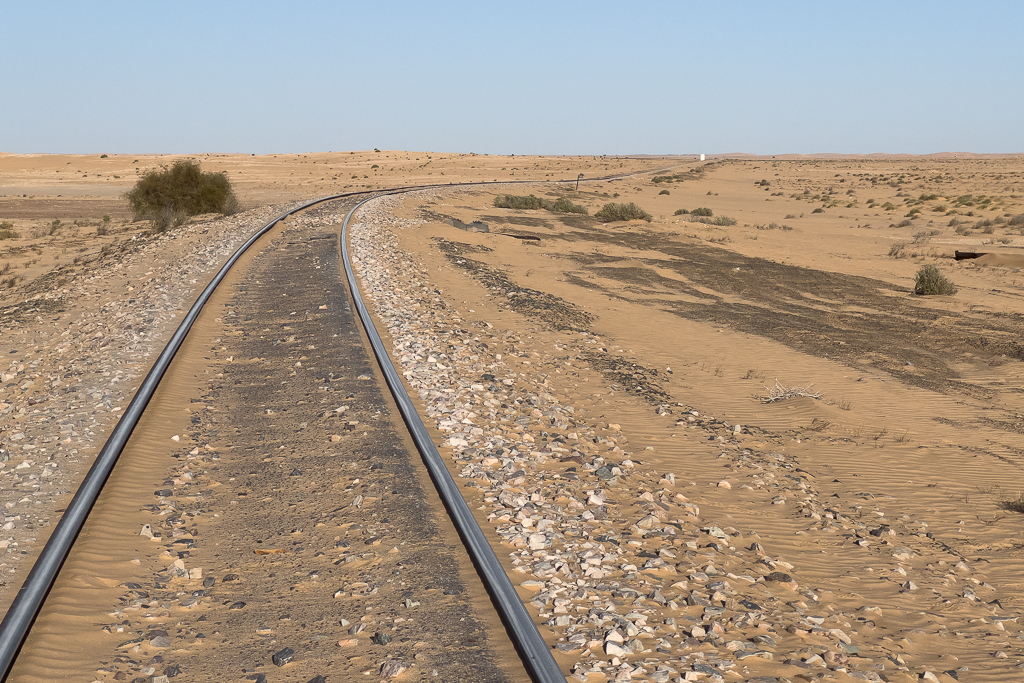
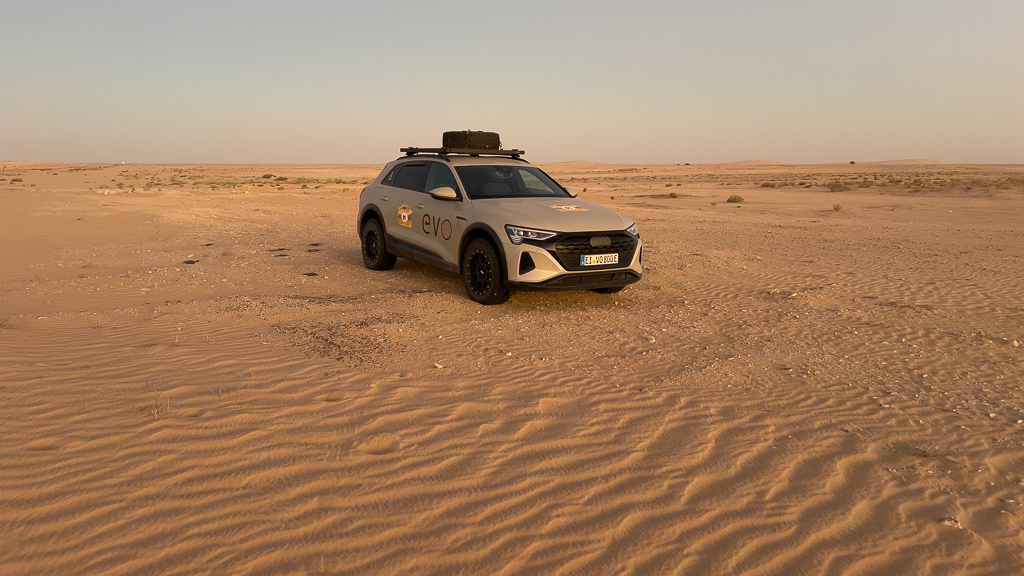
However, as expected, the energy consumption was extremely high, at approximately 71kWh/100km. At around 20km into the track, we already reached the 50% SOC mark and decided to finish there and set up camp for the night next to the railway.
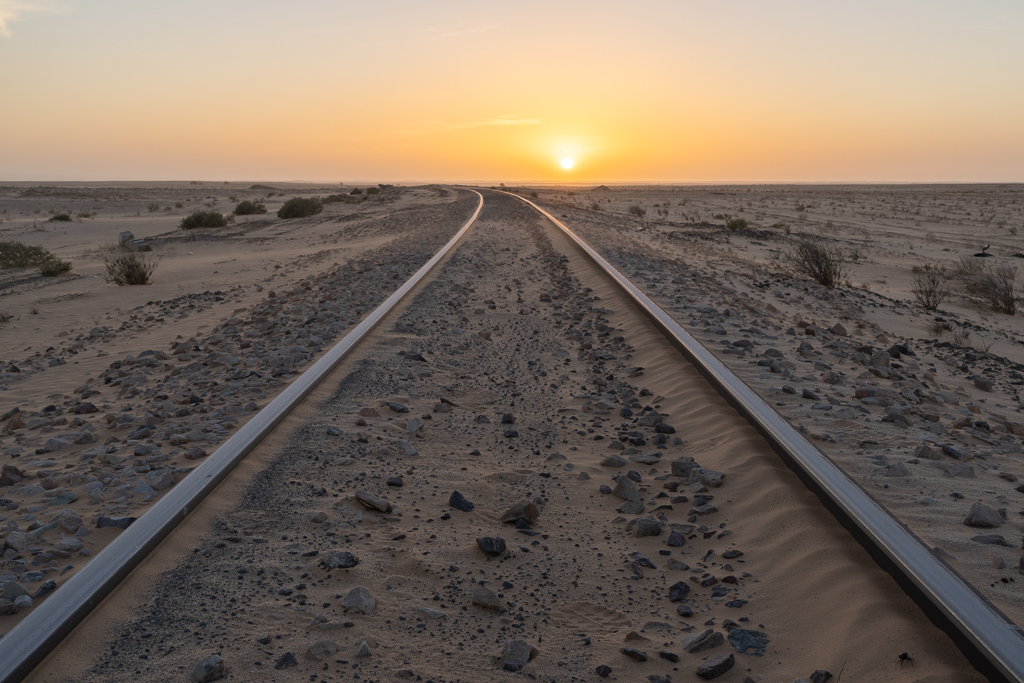
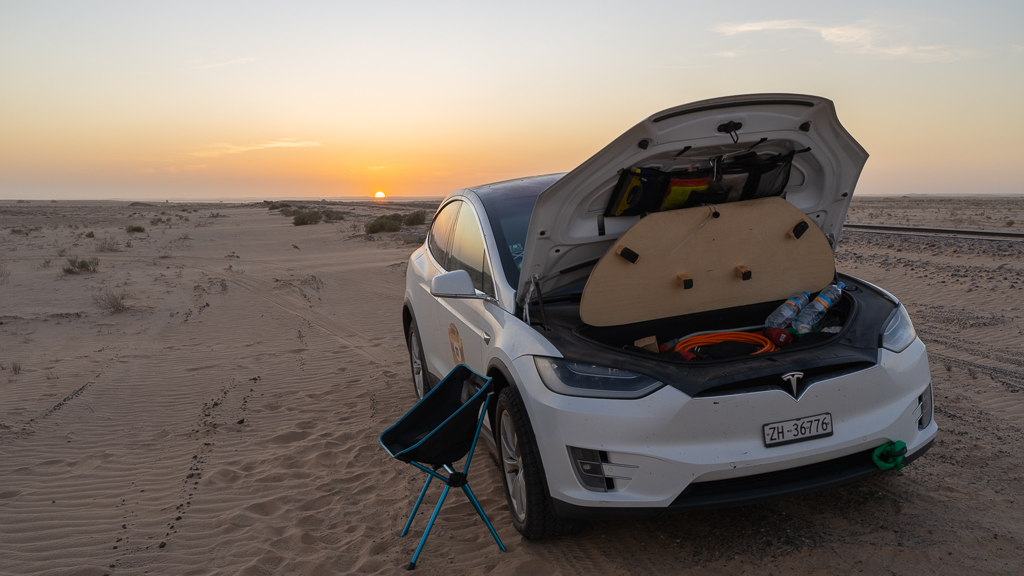
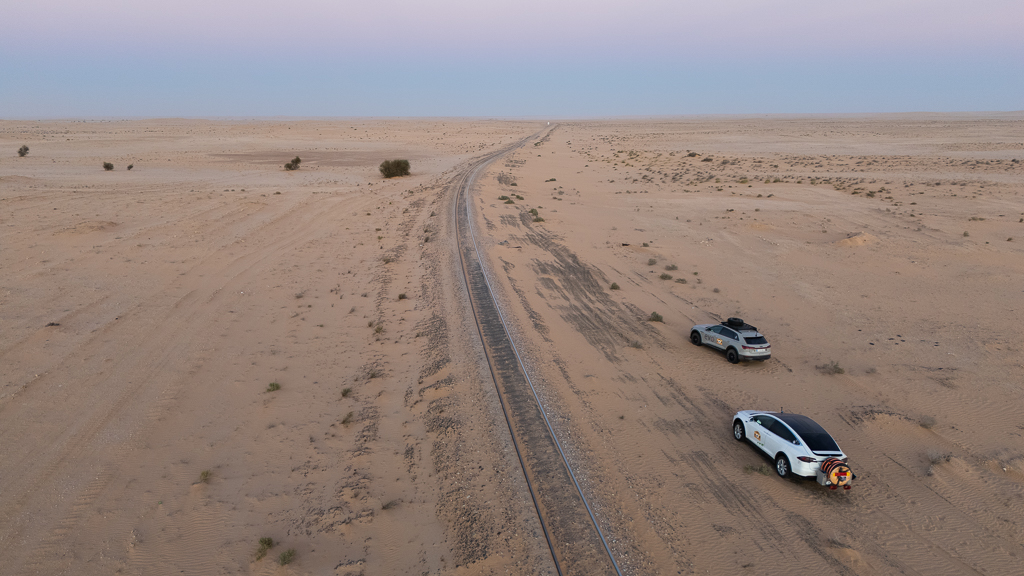
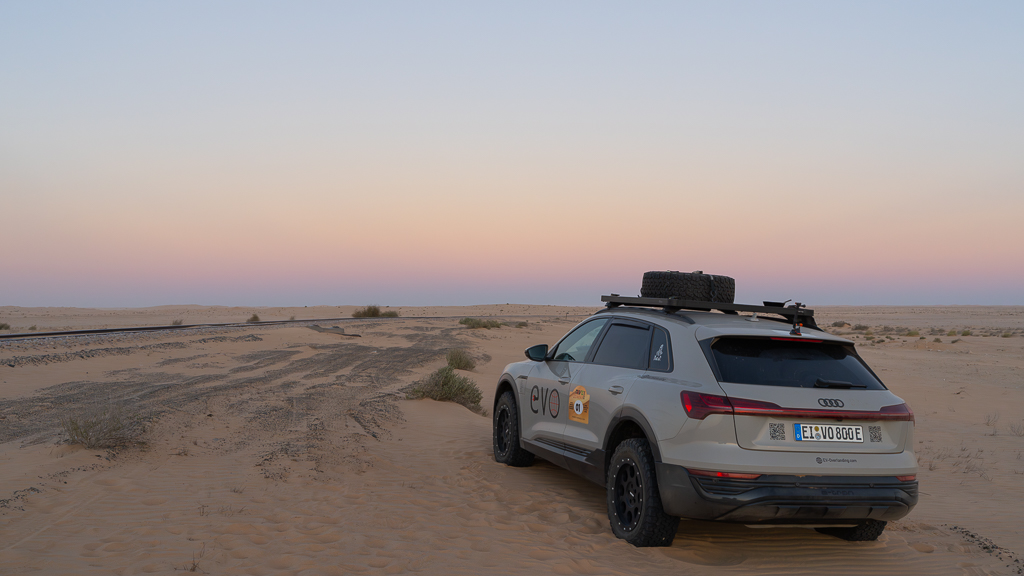
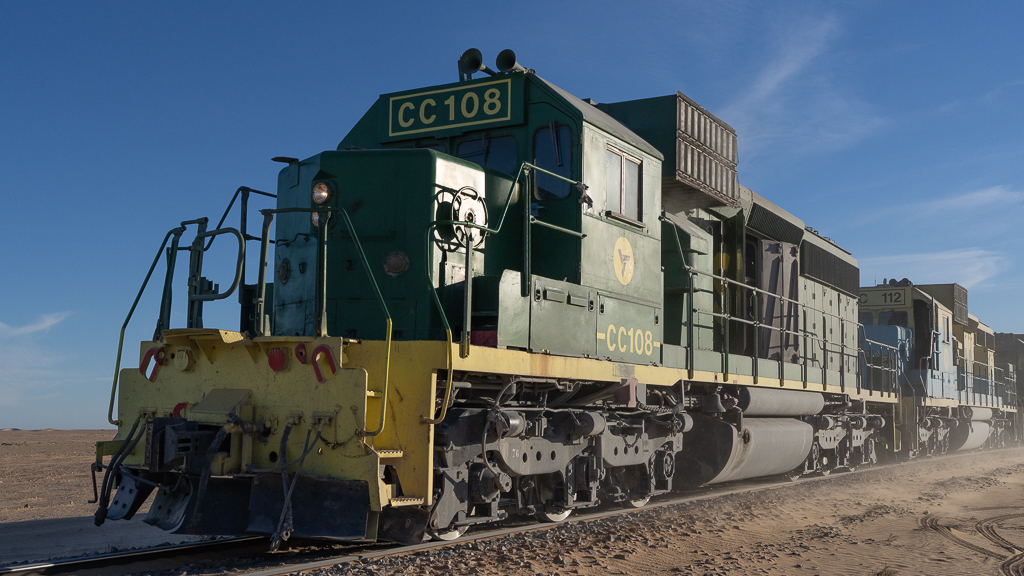
Our main motivation for driving this track was to see the famous iron ore train. It’s one of the longest and heaviest trains in the world, with a length of 2.5-3km and up to 220 wagons. Each train has two diesel-electric locomotives, modified for extremely high temperatures and with sand-plowing capability. The train transports iron ore from the mines near Zouerat to the port of Nouadhibou over a distance of 700km through an extremely remote desert. There are, on average, three trains per day, but there is no real schedule. It was therefore unclear whether we would be able to see one or not. Luckily, just after sunset, we heard some strange noise from far away. I immediately started my drone, and there was indeed a train visible on the horizon.
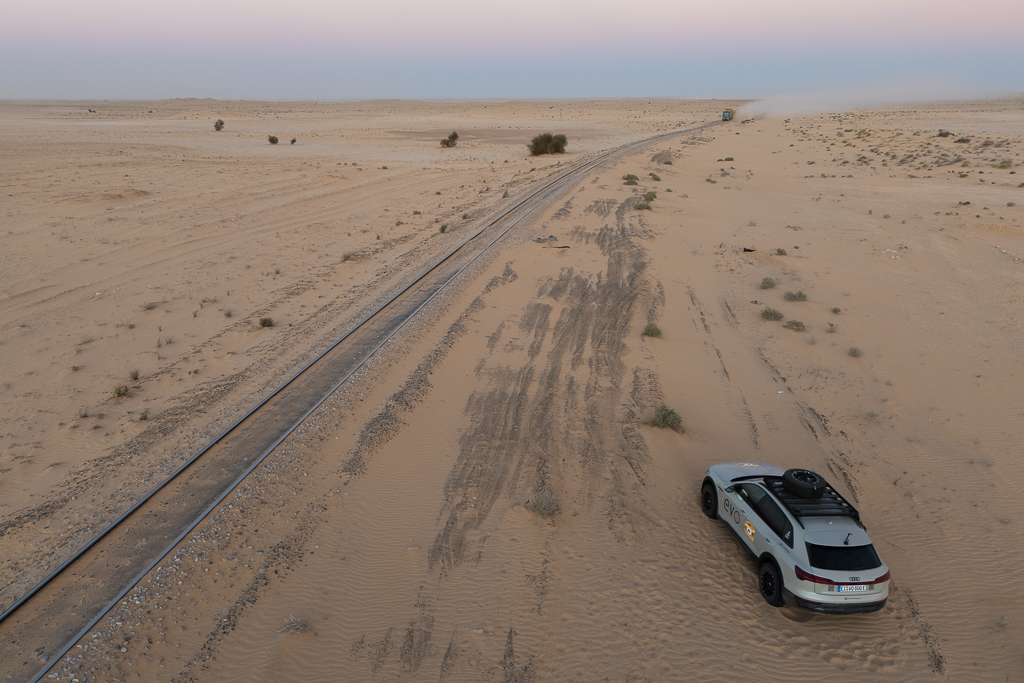
Sadly, it had only one locomotive in the front, and was much shorter than 2.5km. But it was still an interesting experience.
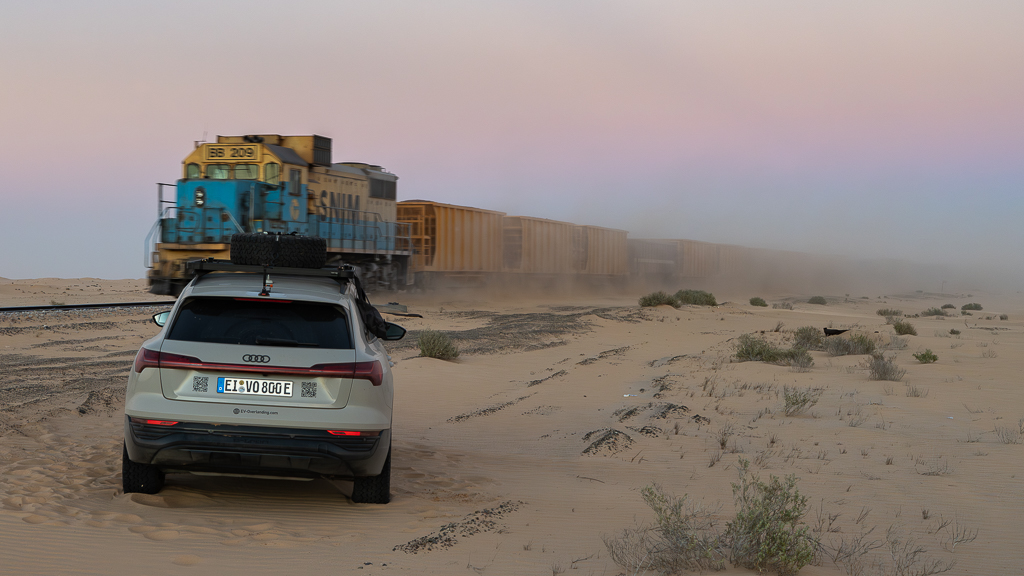
Afterwards, we went to bed in our cars. The starry sky at night was extremely impressive.
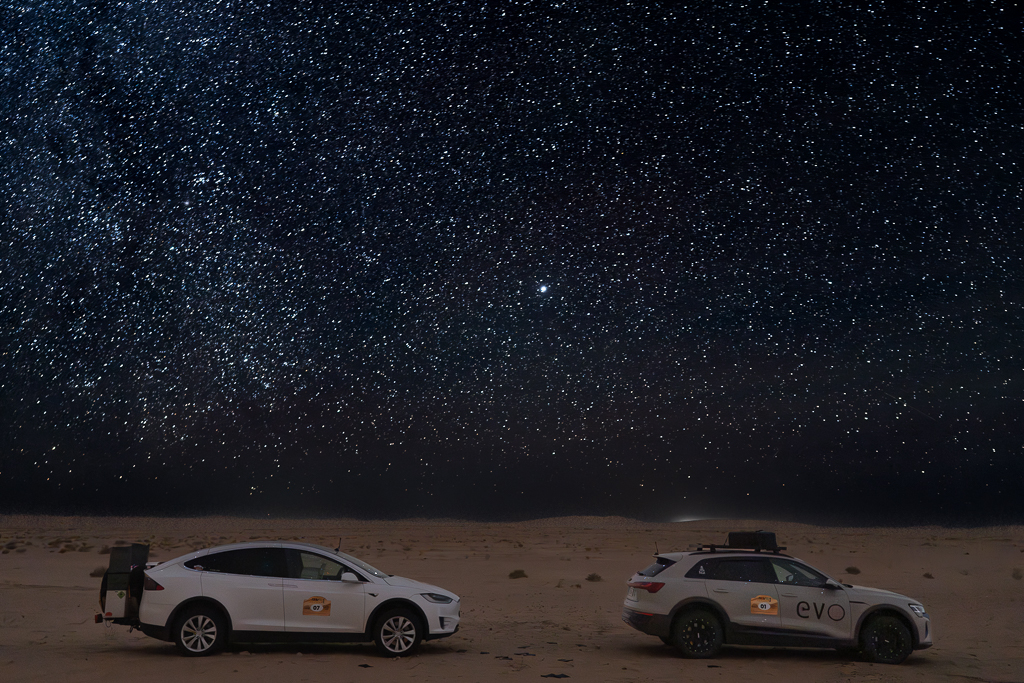
The next morning, we enjoyed a beautiful sunrise.
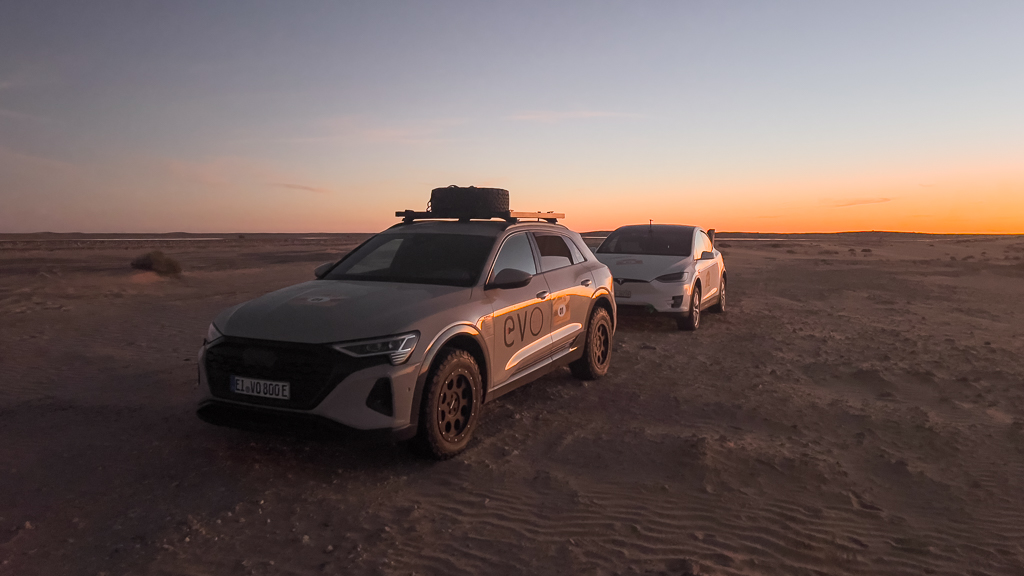
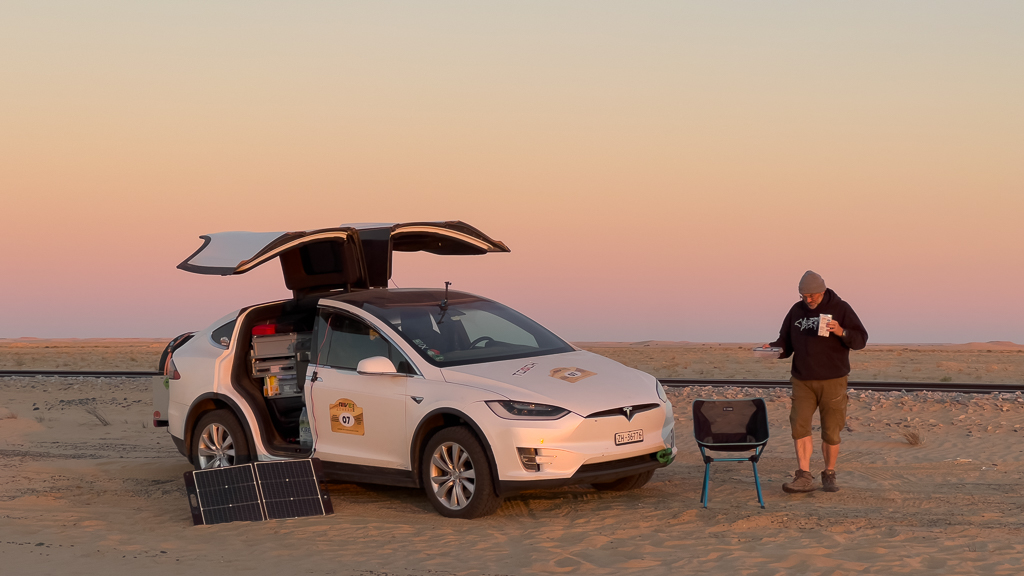
While we had breakfast next to our cars, we were always hoping to see another train and were listening all the time for any strange noises. You can hear the train long before you can see it.
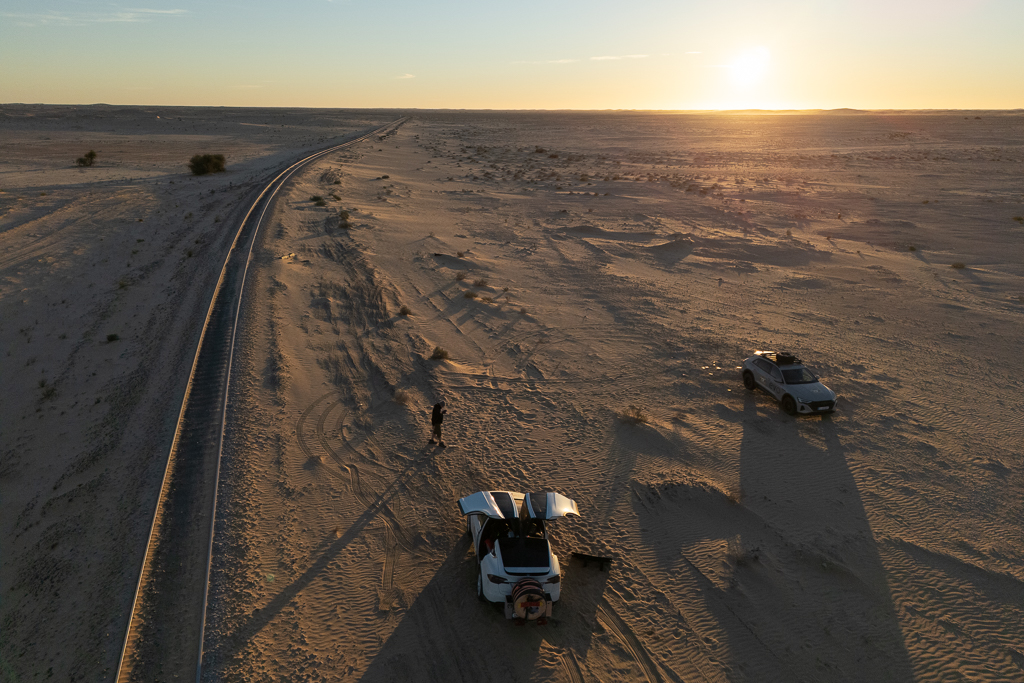
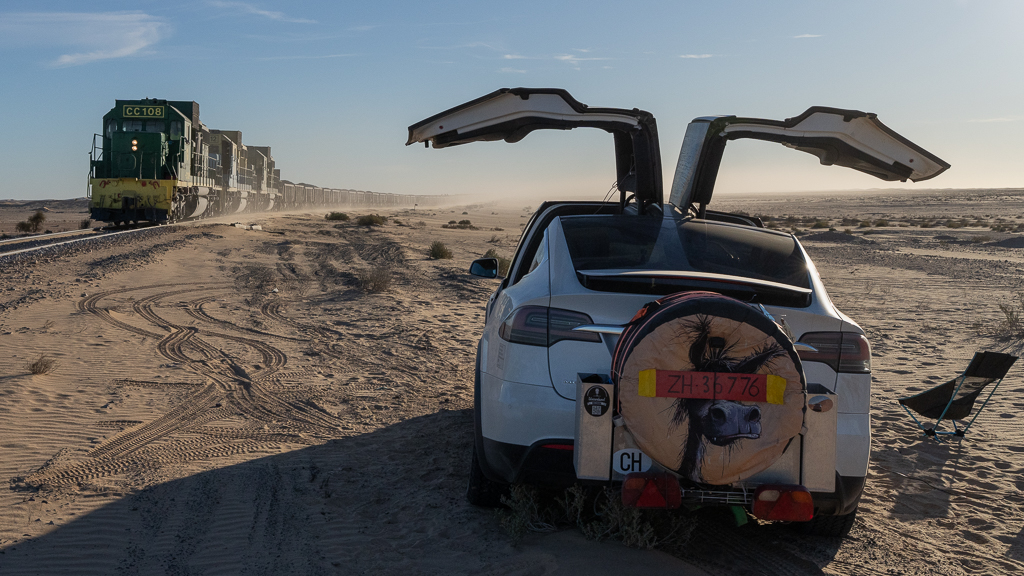
About an hour after sunrise, I heard an unusual noise. And indeed a train was approaching.
This time, we were lucky, and it was a full-length iron ore train, fully loaded and with two locomotives in the front.
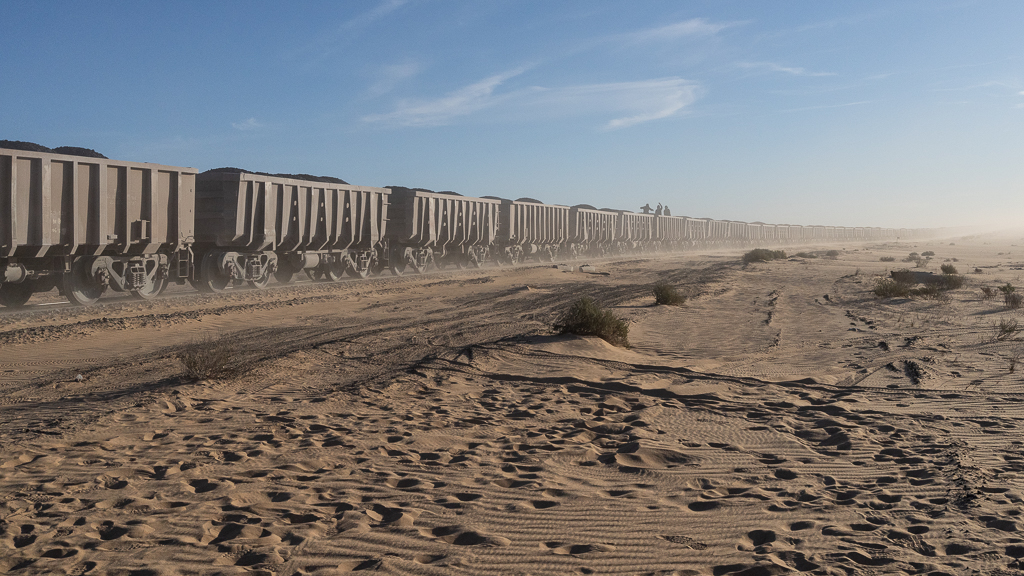
Recently, it has become popular for young people to travel to Mauritania just to ride this train in one of the iron ore wagons.
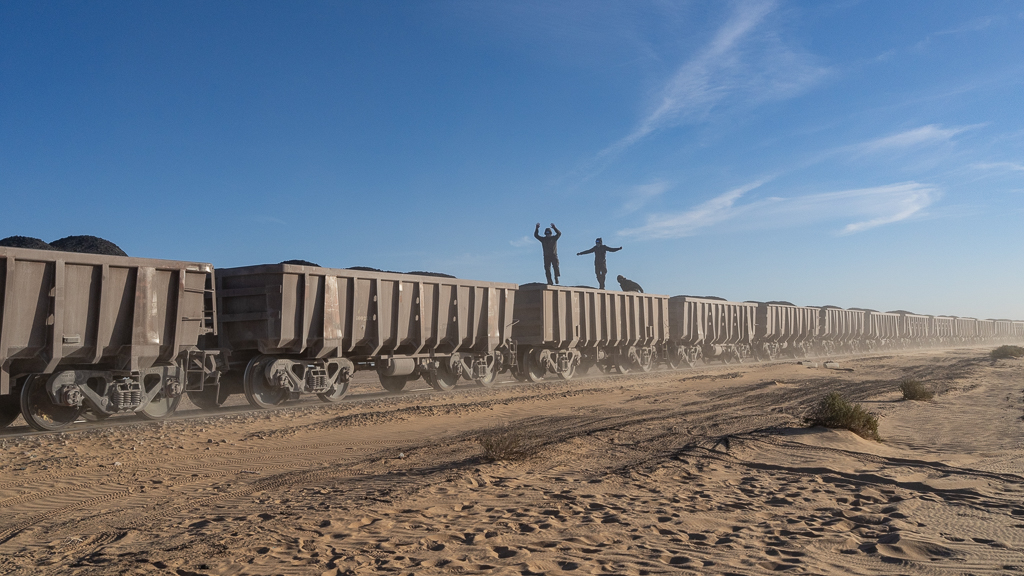
It’s illegal, and it’s challenging. Sand and dust are everywhere. It can be extremely hot in the daytime with no chance of shade and very cold at night. Of course, there is no water, no toilet, no chance for a break on the train. The ride can take up to 24 hours, one way.
If you get caught at the port of Nouadhibou, you will get a huge fine. Therefore, you have to jump from the moving train before reaching the port. At least this part of the adventure can be quite dangerous. If you slip at the wrong moment, you will die.
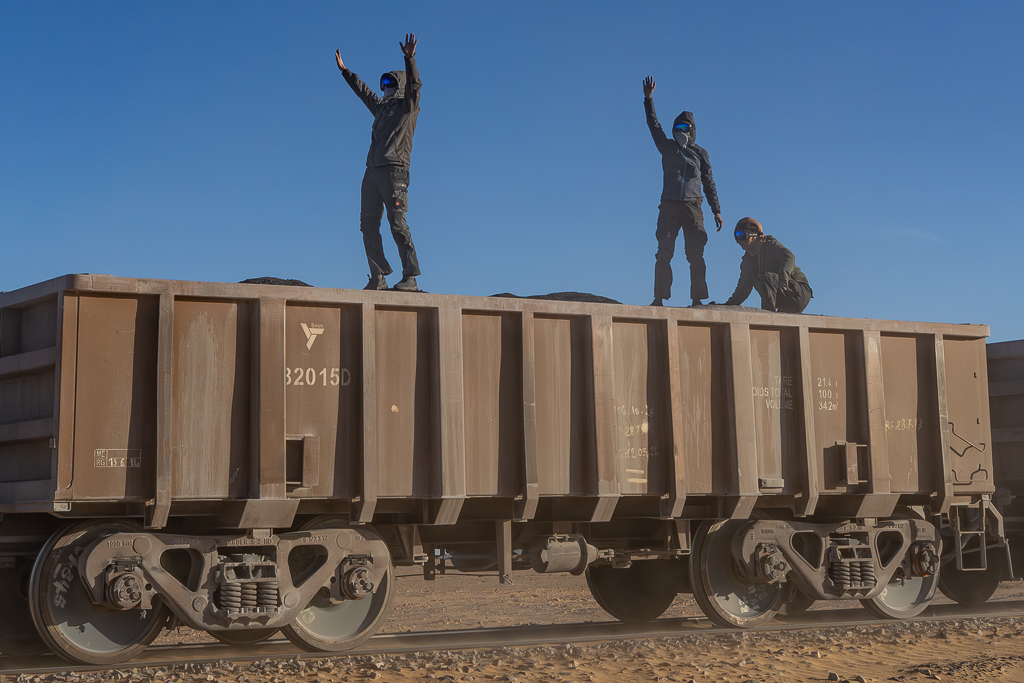
Altogether, it’s probably more a type 2 fun. But many young people are attracted by this adventure. Someone described it recently as “a unique, Mad Max-style experience”. I think that sums it up very well.
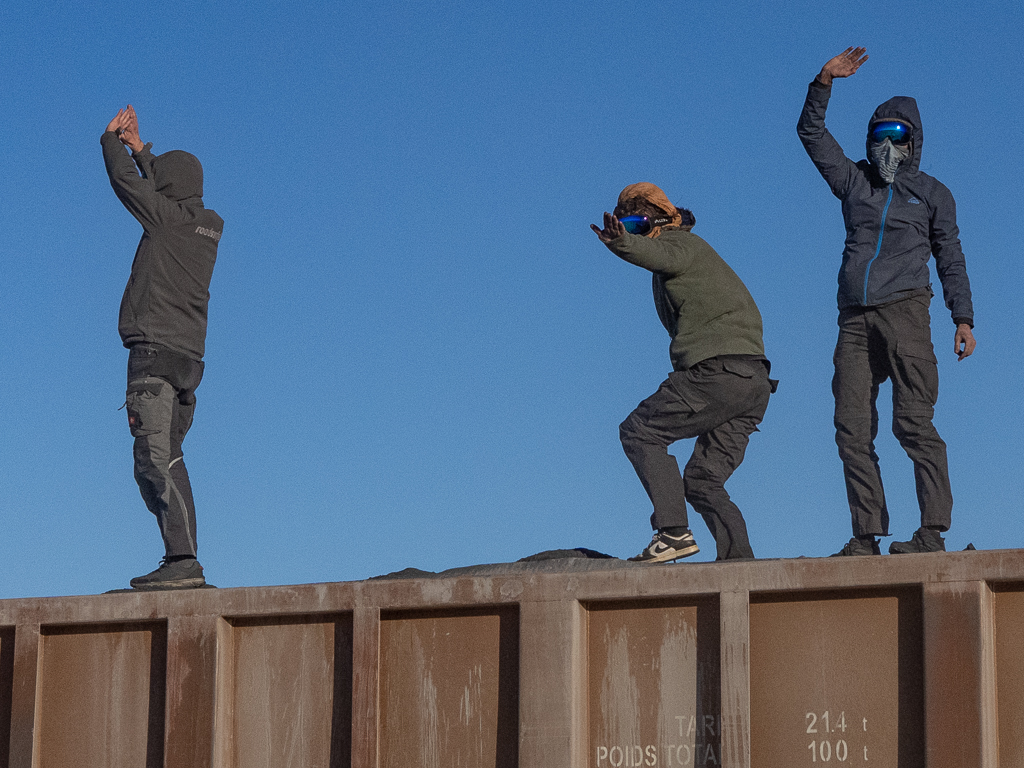
Later that day, when we went to the Villa Maguela in Nouadhibou to return our rented drones to Victor, we ran into the three guys from the iron ore train by chance.
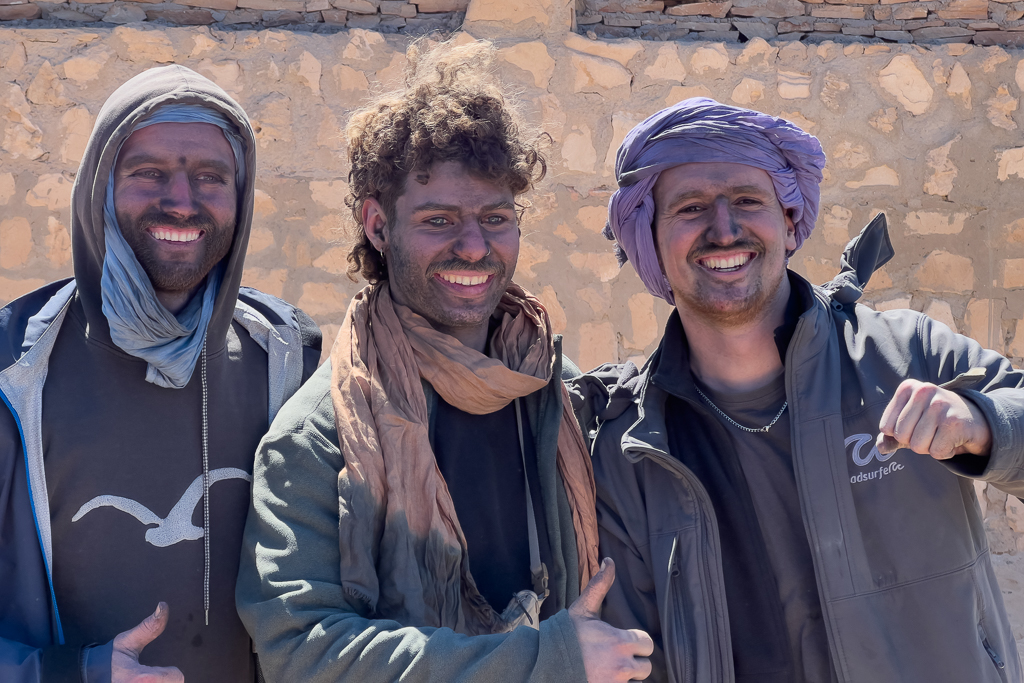
They were still pumped with adrenaline and very happy that they survived.
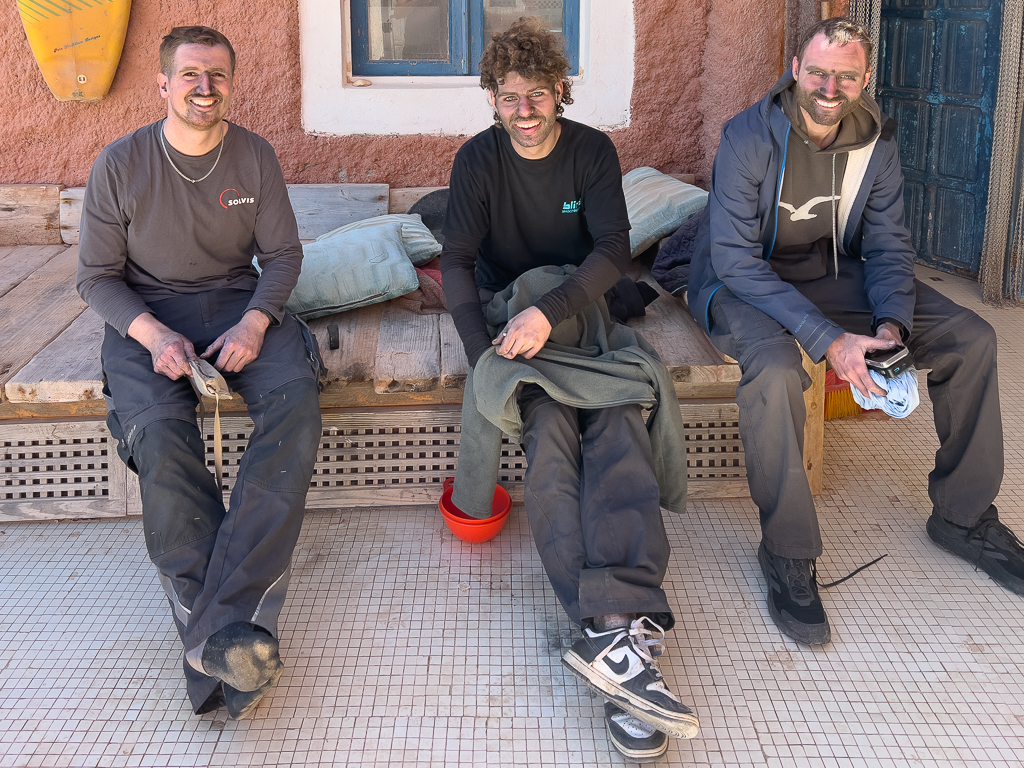
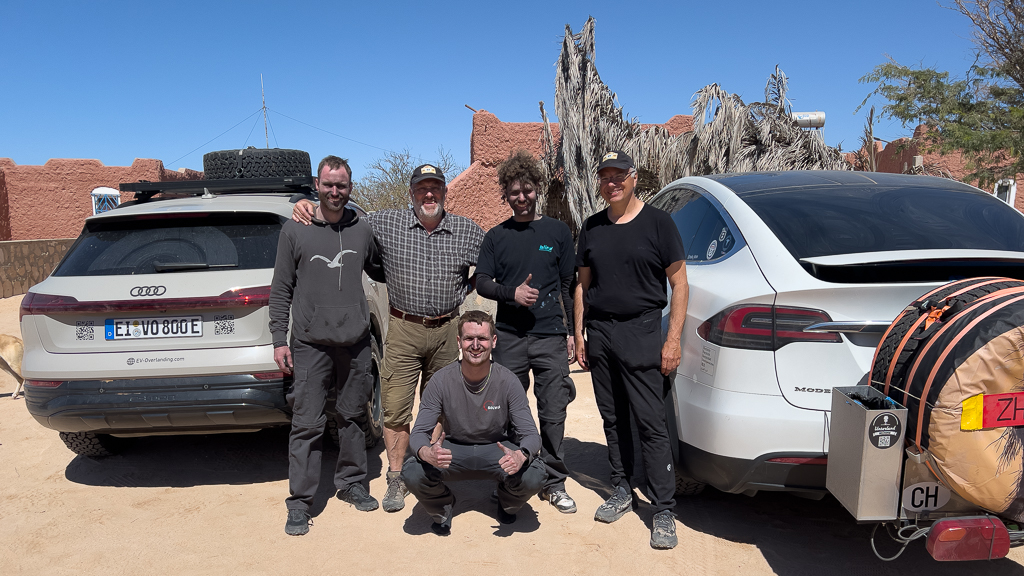
After exchanging stories with them about crazy train rides and electric car adventures, we said goodbye to the three German guys and also to Victor and his lovely Villa Maguela. By the way, renting the drones from Victor was a perfect decision. All alternatives, like sending drones with DHL to Mauritania or smuggling them through Morocco, would have been far more risky.
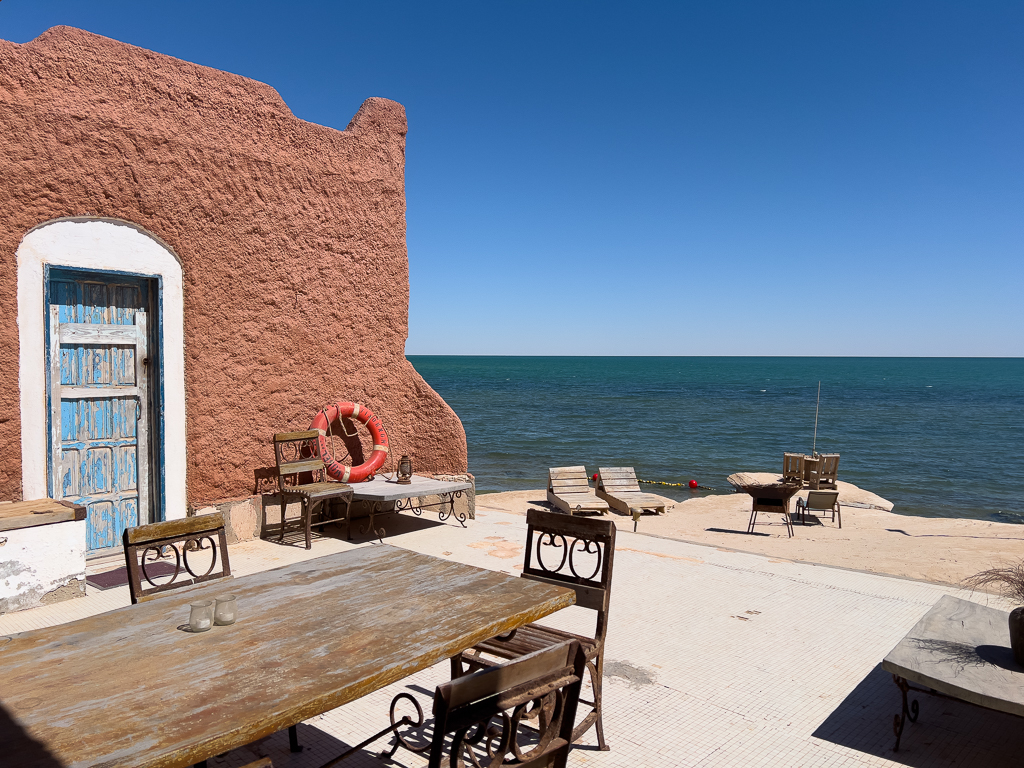
Since we couldn’t charge our cars at the Villa Maguela, we drove the few kilometers to the Hotel Delphin in Nouadhibou, where charging with 32A three-phase was possible.
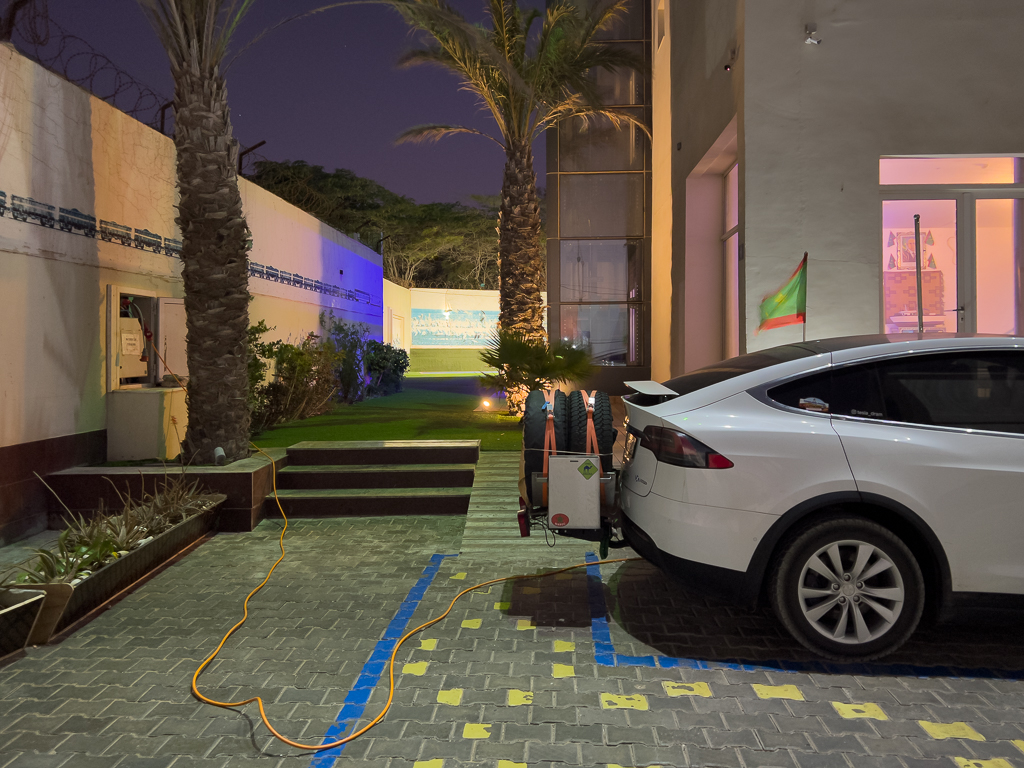
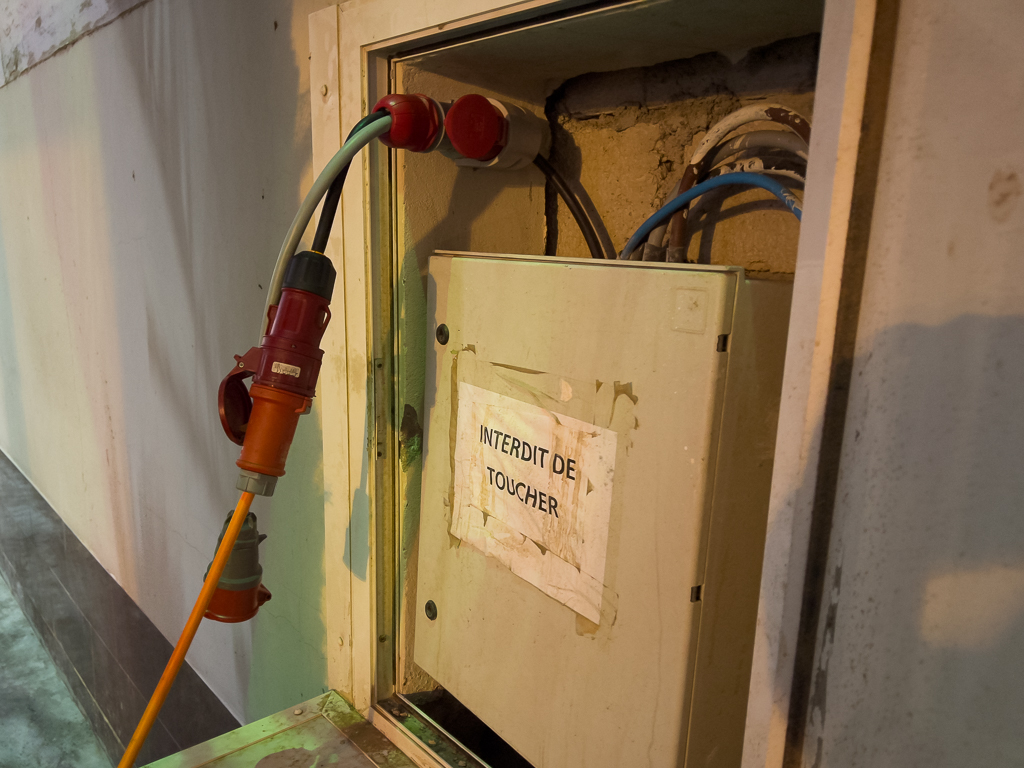
When we left the Villa Maguela, the Tesla suddenly showed 0km remaining range and gave some strange error messages and warning lights. Hans managed to reach the Hotel Delphin and was able to charge his Tesla. But we were both unsure whether charging overnight would really solve the problem …
 EV Overlanding