
Before we left the Hôtel le Trarza at the Lac Rose, Ayoub installed a CEE32 plug for the next EV explorers. We also added this place on PlugShare to be easily found.
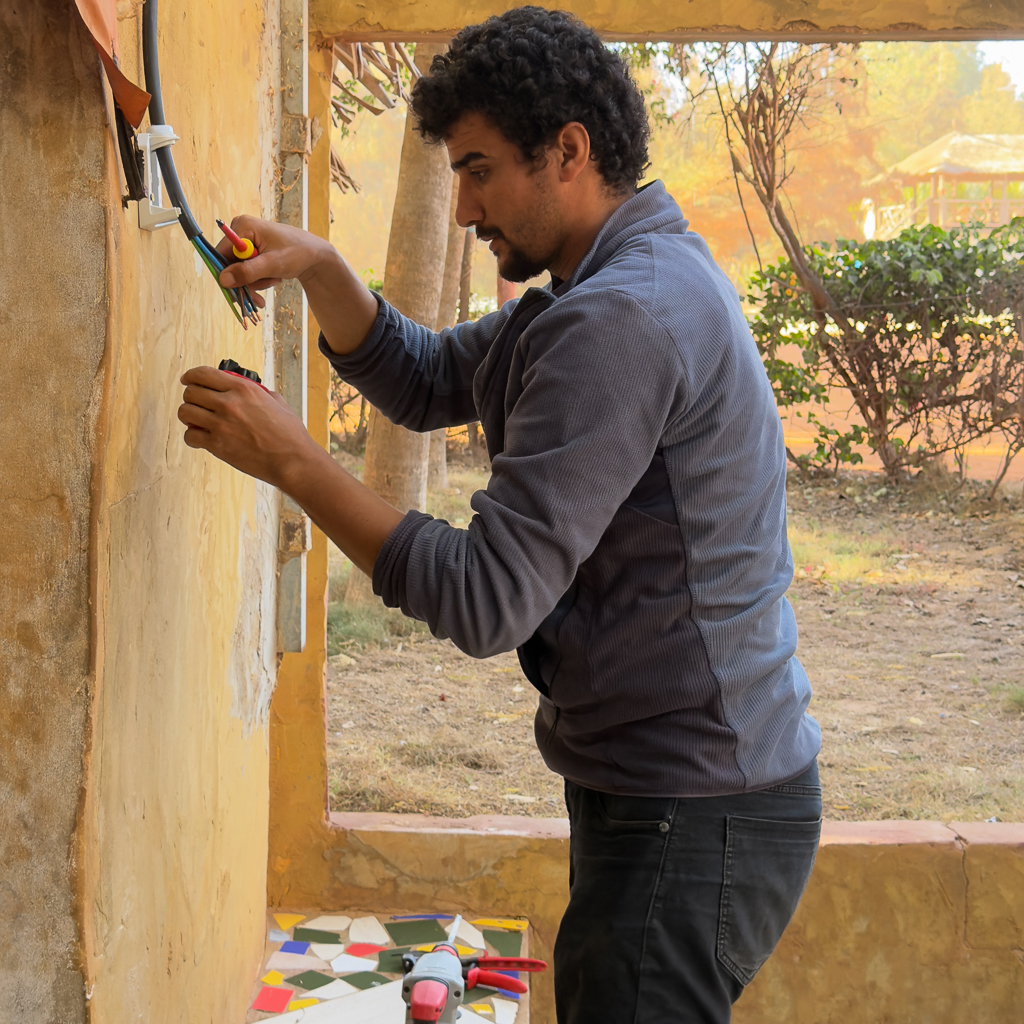
Our next destination was The Gambia, our fourth African country on this trip.
On the way to the border, we had a somewhat strange encounter with a corrupt police officer. At one of the many checkpoints, the officer wanted to see our driver’s licenses, kept them, and then told us that tinted windows are not allowed in Senegal. Of course, this was bullshit (both the Tesla and my Audi only had tinted rear windows directly from the factory). He just wanted money. It was very obvious. He directly told us: „Pay or you won’t get your driver’s licences back“. I know that the best approach is not to pay and wait until he loses interest to not support corruption. But this can sometimes take hours. Since we were already a bit late for the border and he wanted only 6€, we decided to pay.
Hans, being the typical Swiss guy, just pulled the money out of his pockets and wanted to hand it over to the police officer. He hadn’t expected this and got completely confused: „No, no, no, don’t do this here, everybody can watch me here“ 😂.
Silvia and Ayoub had a similar incident at a different checkpoint in Senegal with their car. They had to pay a small fee because they had stored luggage on the rear bench of their car, which, according to the officer, is not allowed in Senegal. Oh, and they also had a dog in their car. Dogs are also not allowed in cars in Senegal. Another common reason for demanding money is driving with sandals. At least one has to admit that they are very creative. You never know if you should laugh or be angry. But Senegal clearly has a problem with corruption.
Afterwards, we arrived at the Kerr Ali border without any further incidents.
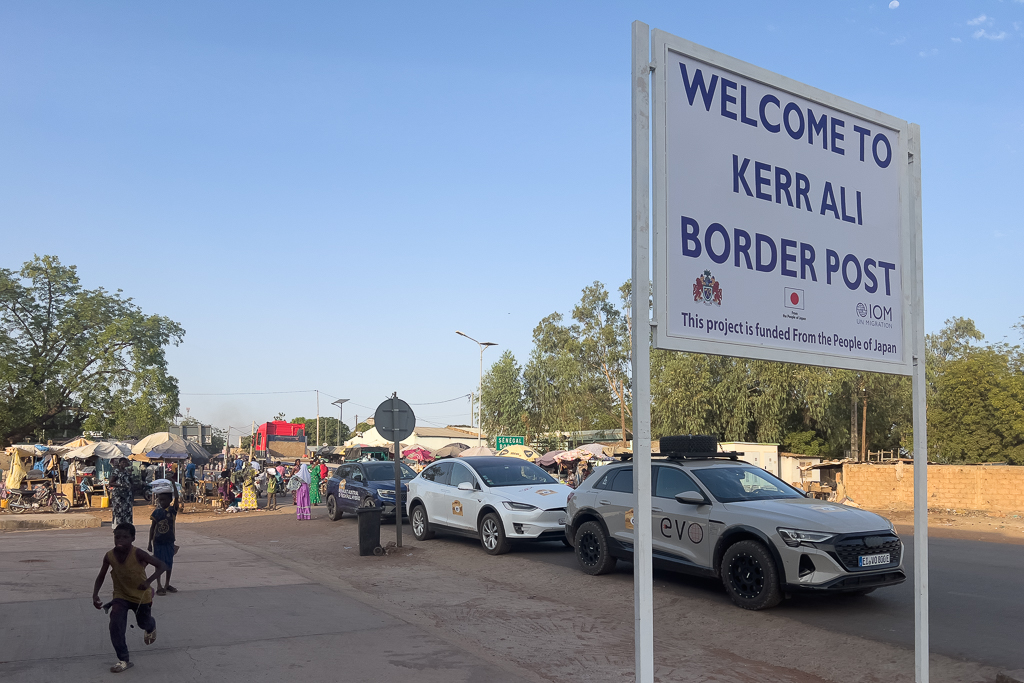
I expected that the Senegal-Gambia border would be an easy one. Boy, was I wrong!
Our cars were immediately surrounded by dozens of kids. In addition, countless people wanted to sell us something. It was definitely more stressful and chaotic than any of the previous borders.
Getting out of Senegal was easy. But when we tried to enter The Gambia, the real problems started. Immigration was no problem for Hans, Silvia, Thomas, and me, with our European passports. But Ayoub has a Moroccan passport. The official rule is very clear: Moroccans can enter The Gambia visa-free. But they insisted at the border that he would need a visa. We even showed them the official government website where the rules are clearly stated. But the chief at the immigration just said that he makes the rules, and what some government in the capital says doesn’t interest him. So there was no chance for Ayoub to enter. Silvia and Ayoub had to turn back to Senegal. But since our electric cars were nearly empty and the next electricity was in Gambia, we had to continue.
Next problem: they denied entry for our cars. They were not willing to give us a Passavant or TIP but insisted that we would need a Carnet de Passage. The official rule is also very clear here: you don’t need a Carnet de Passage for a short stay in Gambia. Same situation as at immigration: the chief of customs told us directly that he is the boss and can decide who can enter and which papers are needed.
About an hour later, after confirming that, of course, he is the big boss and knows everything, and that it was our mistake to not bring a Carnet, and promising him that we would do this the next time, he finally agreed to give us a TIP for 5 days 😉. Then he had to go to pray, and we had to wait for another hour. The whole border crossing took us again about 4 hours.
When we finally entered The Gambia, it was already dark. We only had to drive for about 20km to reach the Roadside Cafe Gambia of Steve near Soma, where we had planned to spend the night. But these 20km took forever. Every few hundred meters was a checkpoint, and they always complained about something new: we stopped too late, we approached too fast, we took the wrong lane, and so on. Luckily, they never wanted any money. It seems like the officials in The Gambia just love to show that they are the authorities and can define what people should and shouldn’t do. Maybe it’s their compensation for being underpaid. Who knows? So be it. This is Africa.
Long after sunset, we arrived at the Roadside Cafe and received a warm welcome from Steve, the owner of the campsite and overlanding meeting point. Steve is originally from Scotland and recently settled down in Gambia after traveling with his motorbike for many years through Africa. He dreams of building a big new resort in this village and is currently looking for investors for his project. I’m not 100% convinced that this will work out, but I like people with big dreams and visions, and it was definitely very interesting to talk to him.
Our original plan was to stay at this place, but we urgently needed to charge our cars, and Steve sadly didn’t have any reliable power outlets.
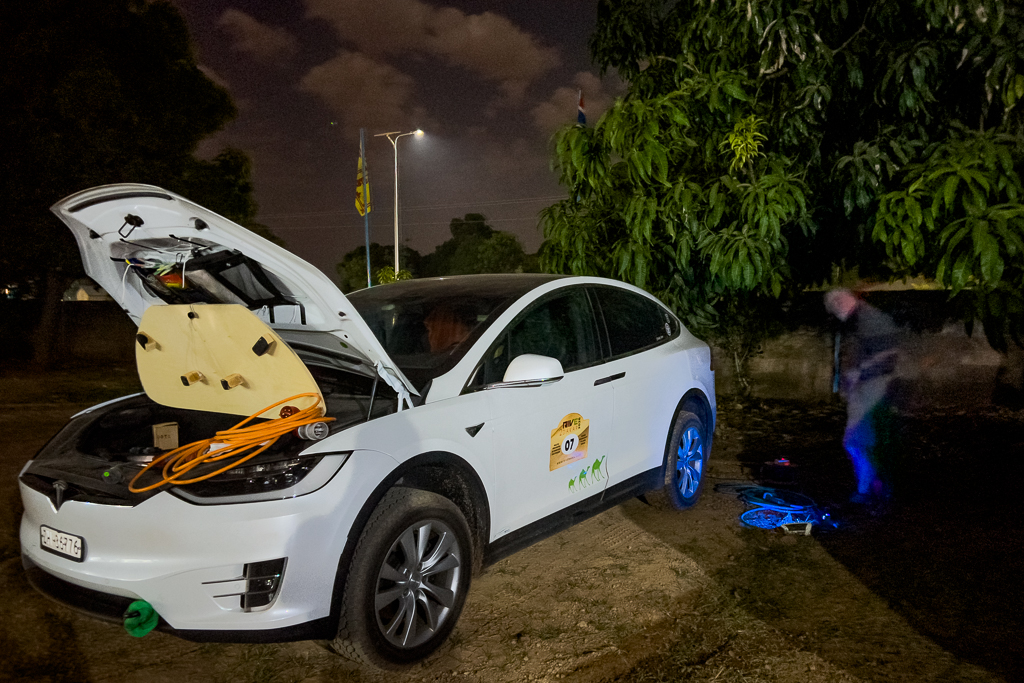
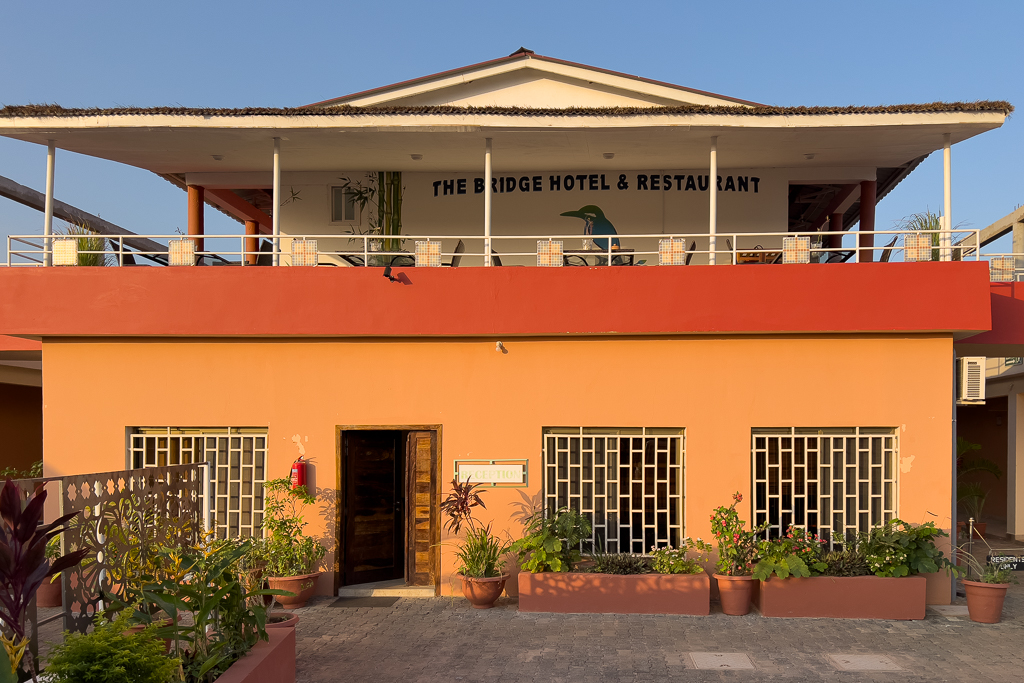
But thankfully, Steve helped us to find an alternative solution for charging. He contacted The Bridge Hotel, which is located not far from his Roadside Cafe. That wasn’t easy for Steve because before building the Roadside Cafe, he was managing The Bridge Hotel. About a year ago, he had fallen out completely with the owners of the hotel due to different ideas on how to progress with the hotel. We were therefore very thankful that he stepped out of his comfort zone and contacted the hotel for us.
It’s a nice and clean hotel, and we booked three rooms there.
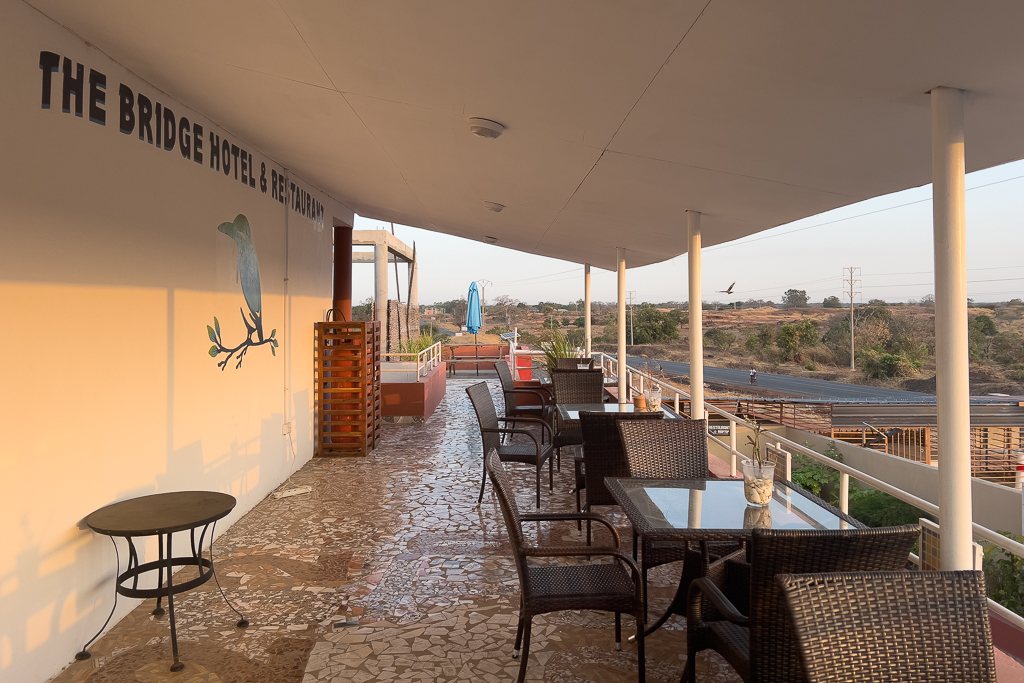
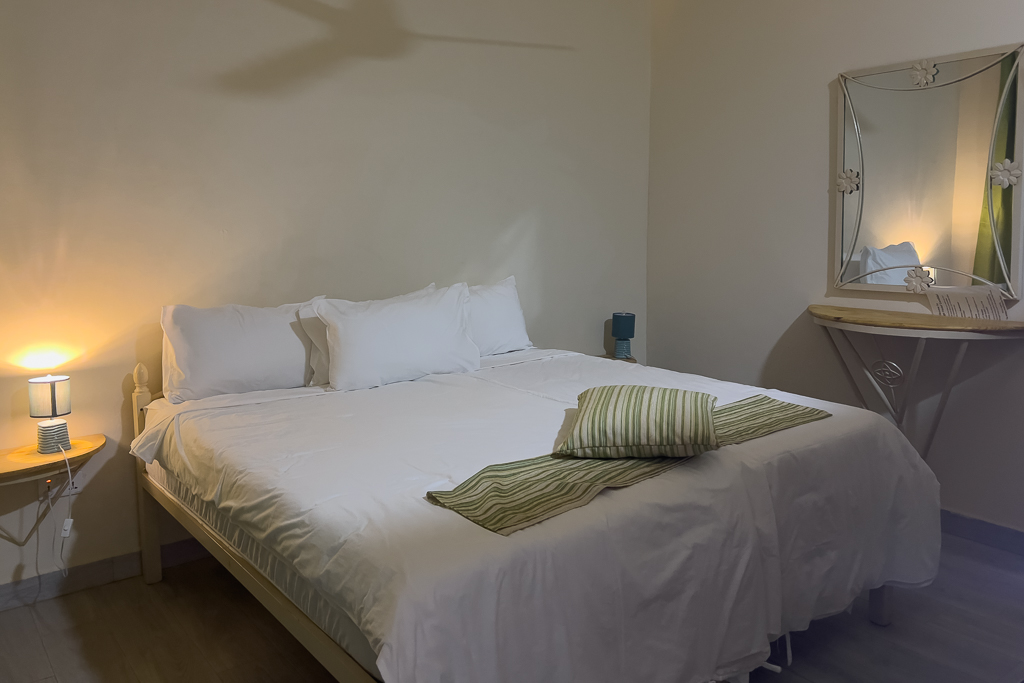
But most importantly, it had an electric installation with 100A 3-phase on the input side. Since Ayoub couldn’t enter The Gambia, I had to take over his job of finding and, if necessary, installing charging infrastructure. I’m not an electrical engineer, but I have a solid engineering background and know the basics. And I got a crash course from Ayoub just a few days ago.
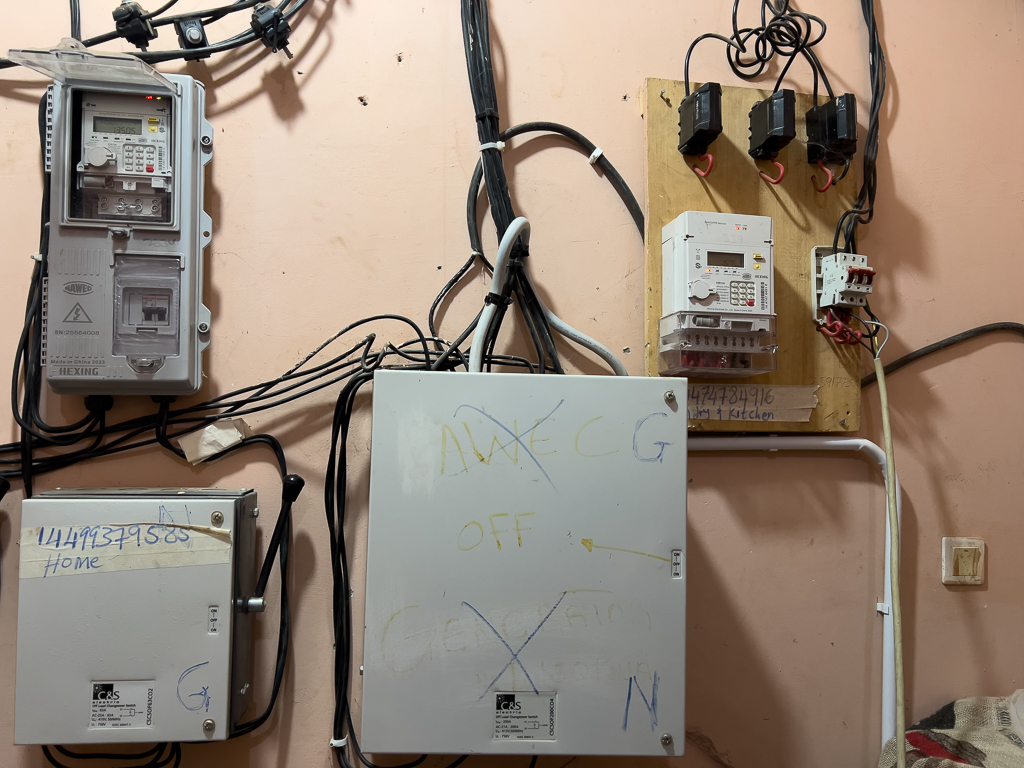
I also discussed the different options via phone with Ayoub. Despite the high input power, the installation at the bridge hotel had some weak points. First, there was no ground. Second, there was no fuse or breaker for the neutral wire. And third, there were no fuses at all on the input side before the distributor.
To solve at least the second problem, we installed an additional circuit breaker between our charger and the hotel installation, including the neutral wire.
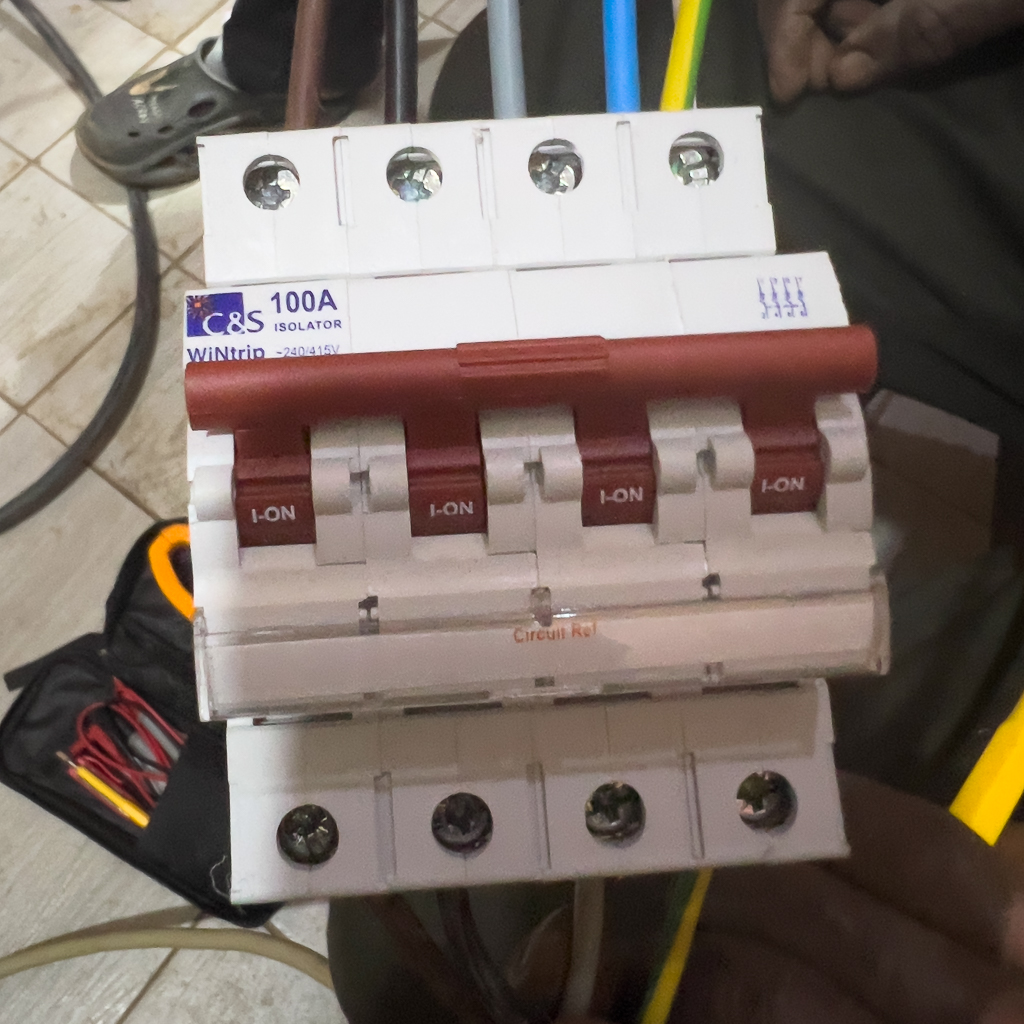
This was done by the local electrician of the hotel.
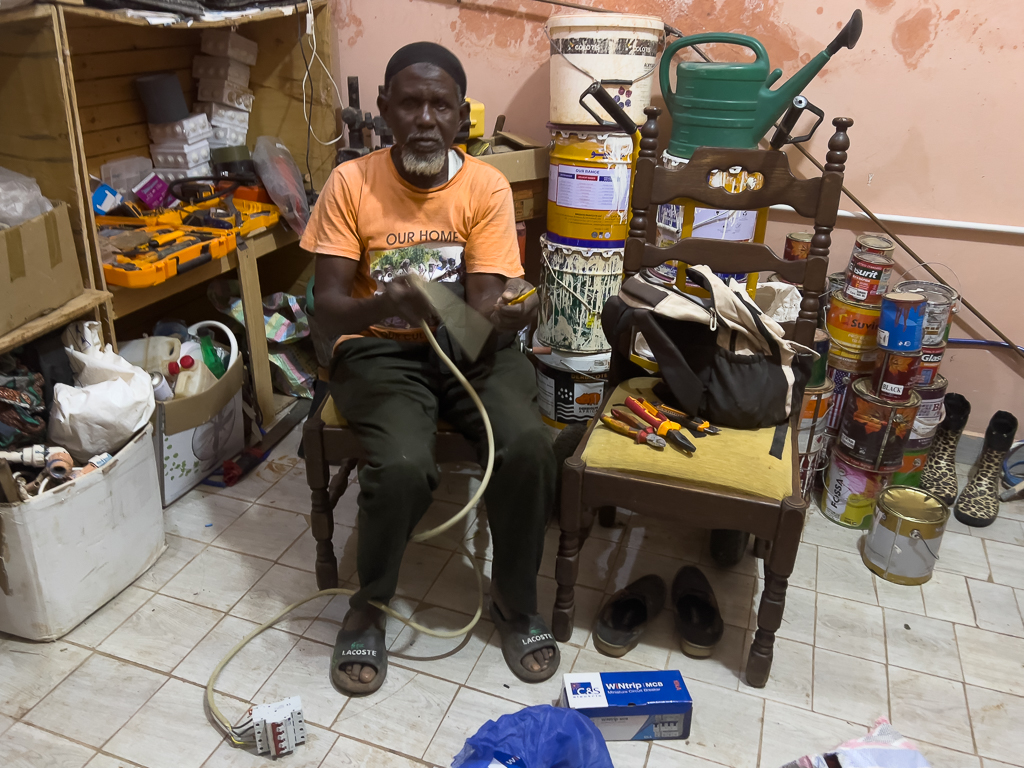
When he tried to mount the cable, he first put it on the wrong side of the local circuit breaker, which still had power. Since he wasn’t using any protective gloves, he was lucky that nothing bad happened.
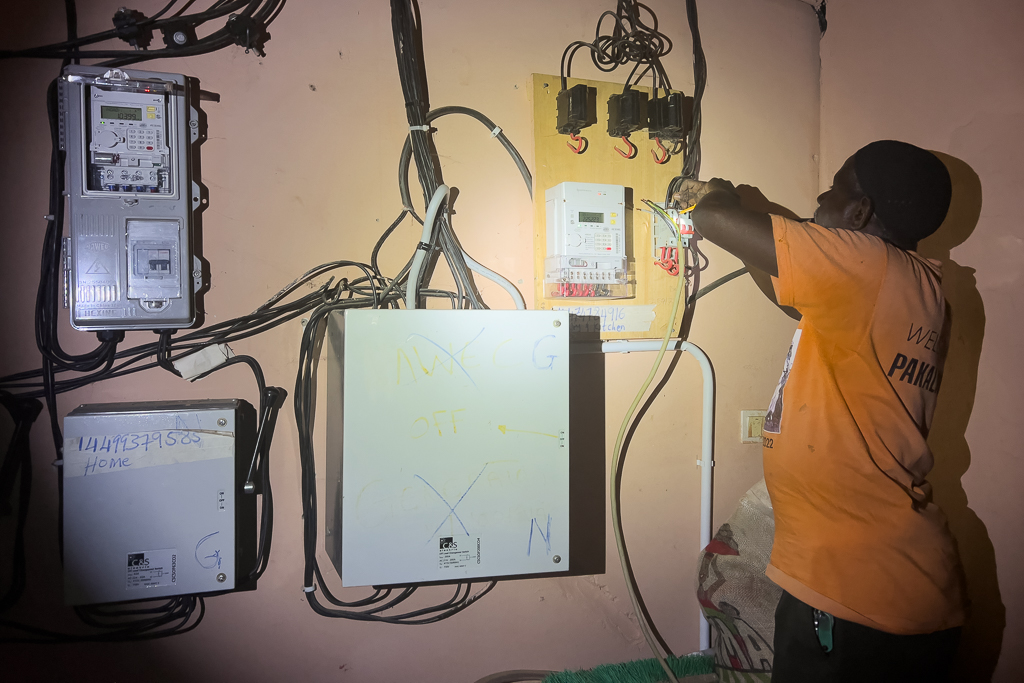
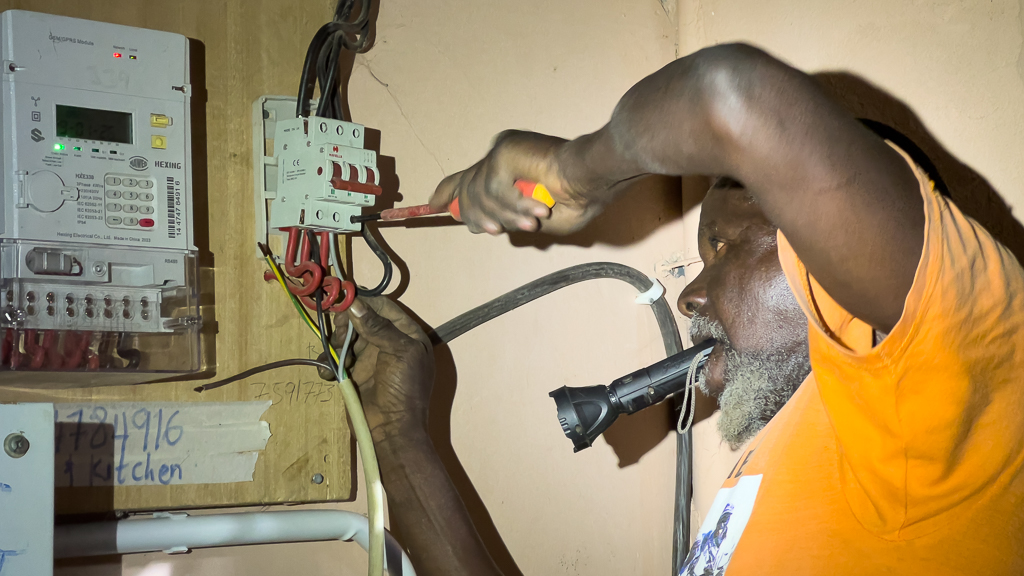
Soon, he realized his error and switched to the output side, which had no power because the switch of the circuit breaker was off.
From the main electrical installation of the hotel to the nearest place where we could park our cars, it was quite a long distance.
Luckily, Hans still had the charging box and the 40m cable from Ayoub in his Tesla. The 40m were sufficient to bridge the distance to our cars.
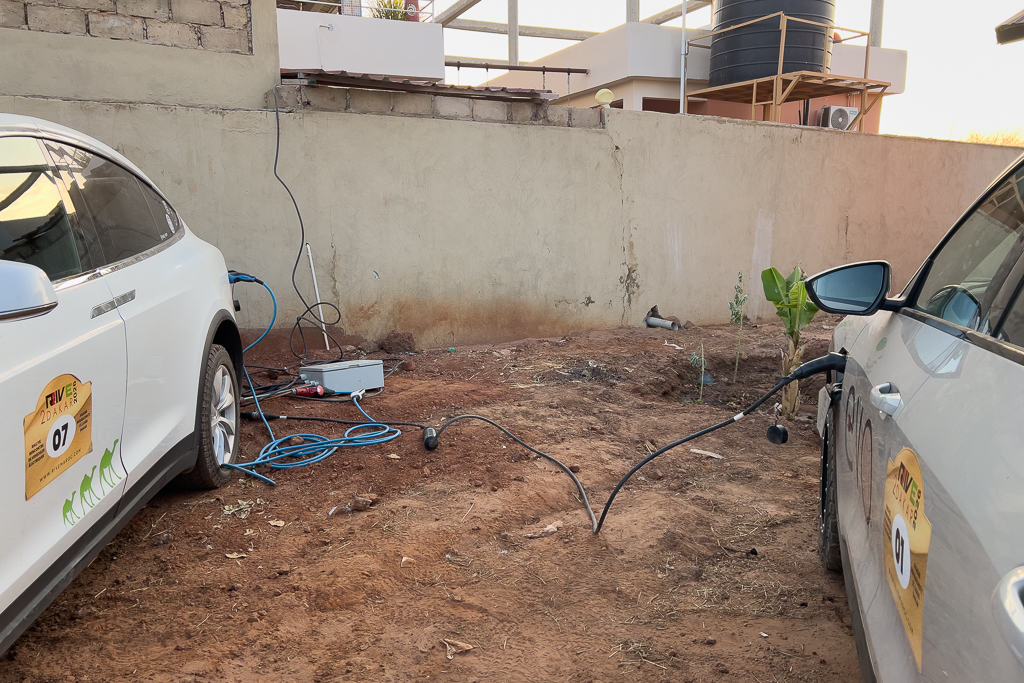
At first, we tried to charge both cars at the same time. But the Tesla stopped charging after just a few minutes. The main problem was the NRG Kick charger that Hans uses (in combination with a less-than-perfect power supply). It is very sensitive to over- and undervoltage. In third-world countries, you often have voltage drops below 210V or peaks over 240V. In both cases, the NRG Kick first ramps down the Amps significantly and then stops charging completely. We had this experience several times on our Dakar trip. Two cars, the Tesla and the Ford, were using an NRG Kick as their main charger, and both had the same problem. The NRG Kick might be a good mobile charger for Europe, but for third-world countries, it’s just unusable. My Juice Booster, on the other hand, worked perfectly under all conditions. It is far more reliable and robust against unusual voltages.
They both have very different design principles: the NRG Kick wants to protect the car and the installation under all circumstances, while the Juice Booster wants to get the job done even if this means minor risks for the car or infrastructure. The basic idea of the NRG Kick is quite understandable, but if this leads regularly to no charging at all, it simply makes no sense.
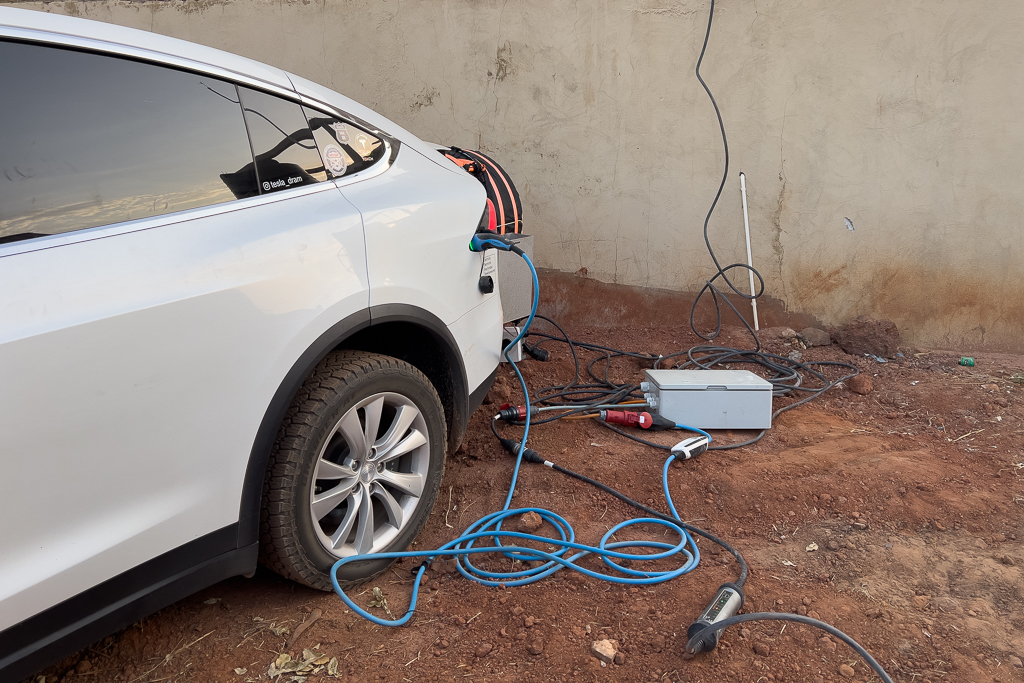
Since we couldn’t charge both cars overnight, we decided that the Tesla would stay at The Bridge Hotel for the next two days (while slowly charging with 6A), and we would travel all together in my Audi to our next destination, Janjanbureh.
After discussing it with Ayoub, I chose to charge with only 8A 3-phase to not overheat the thin wires of the local installation. But that was sufficient to get my car back to 100% the next morning. We then left The Bridge Hotel and drove along the south bank of the Gambia River to Janjanbureh.
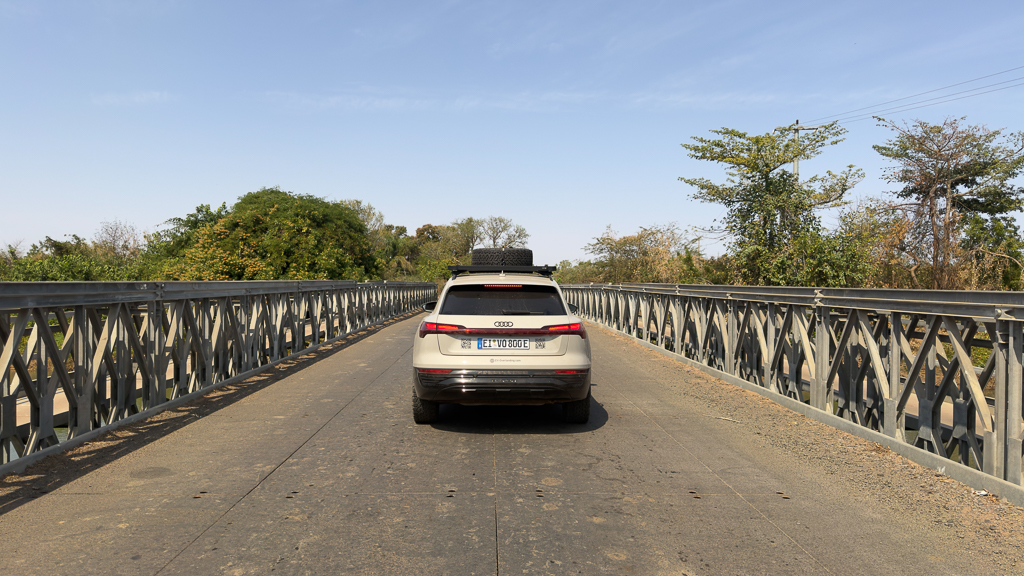
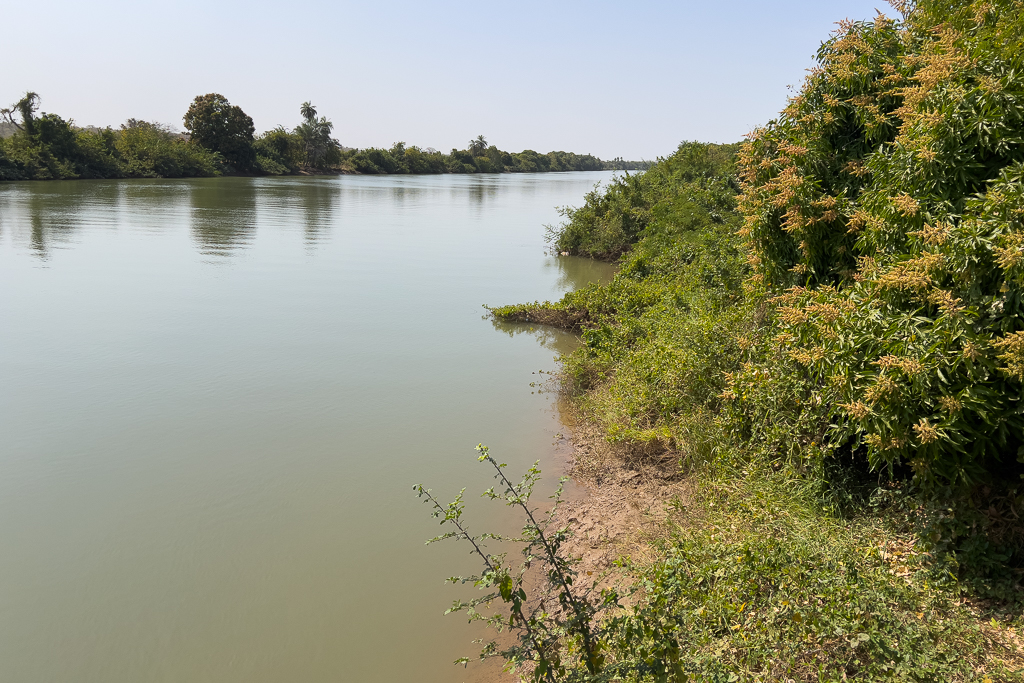
Our main reason to visit Janjanbureh was the hope of seeing hippos in the Gambia River. Steve had recommended the Hippo Bush Camp (also known as Fair Play Gambia) as one of the best places for hippos and also for some authentic jungle experience.
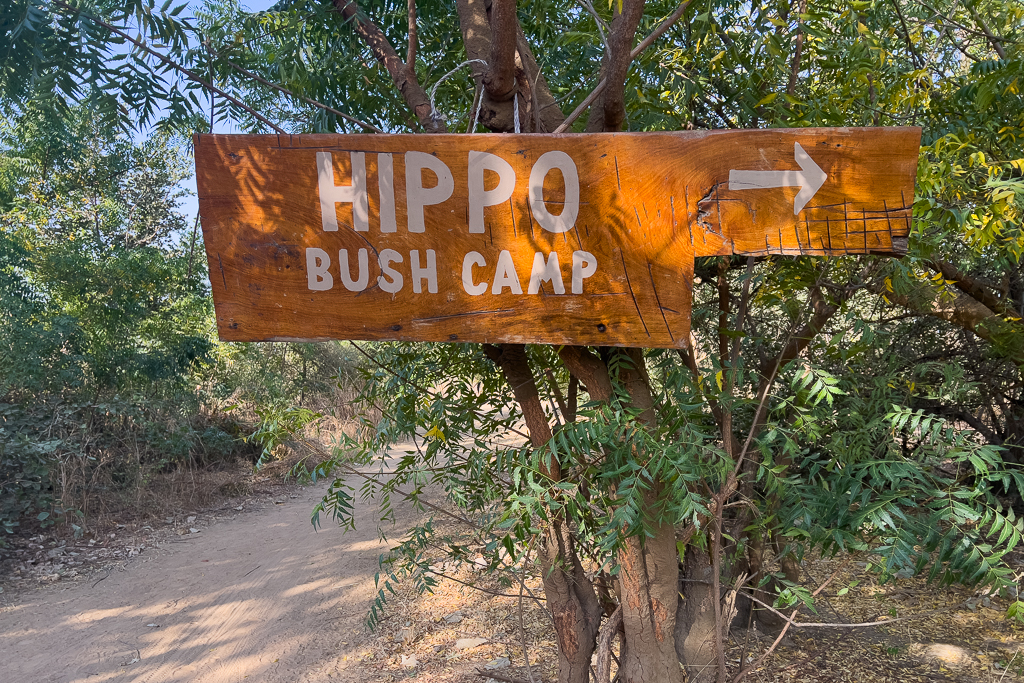
The way to the bush camp wasn’t easy to find, and the track was very narrow. Big expedition trucks would have no chance to reach the camp.
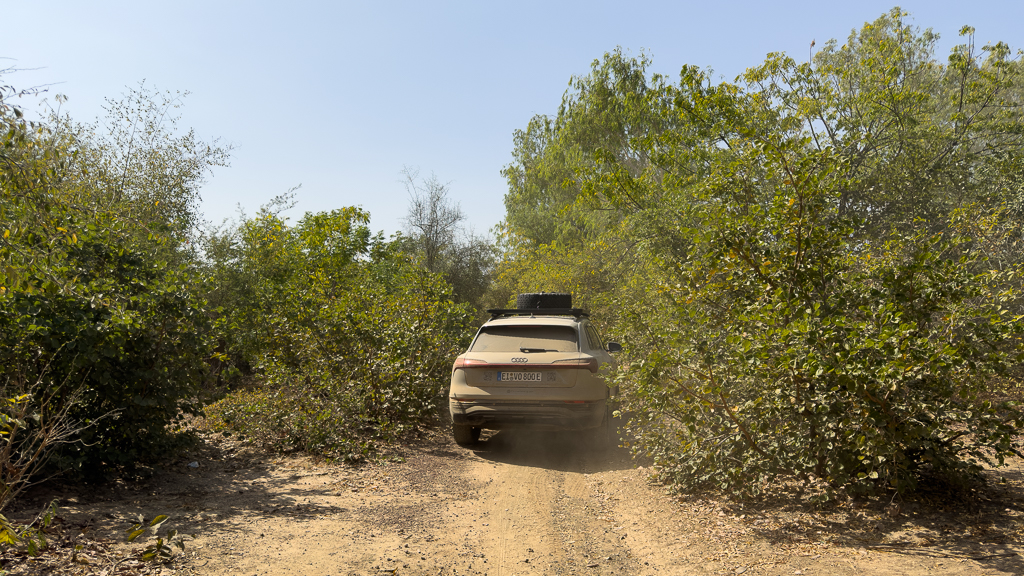
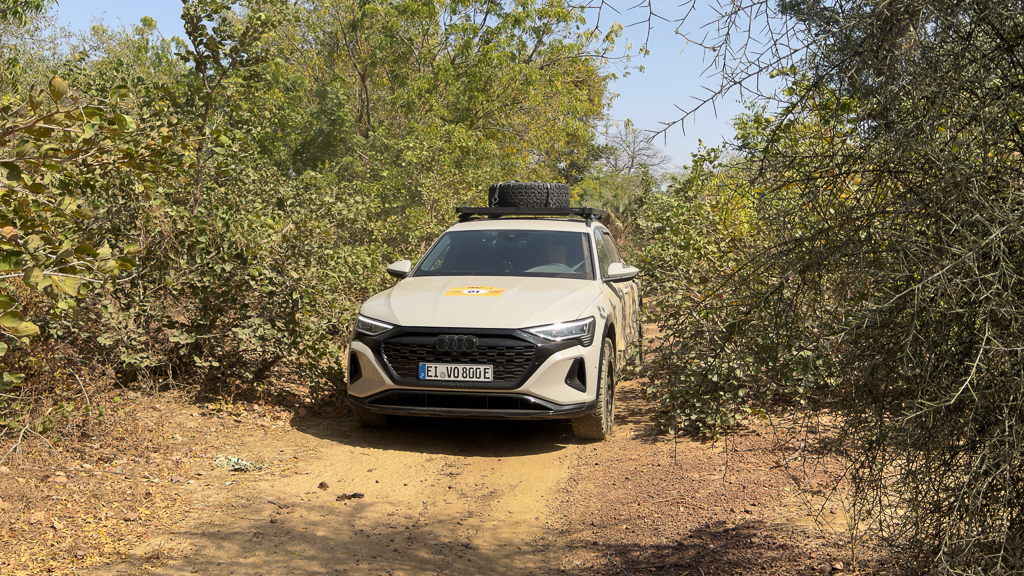
Finally, we made it to the camp.
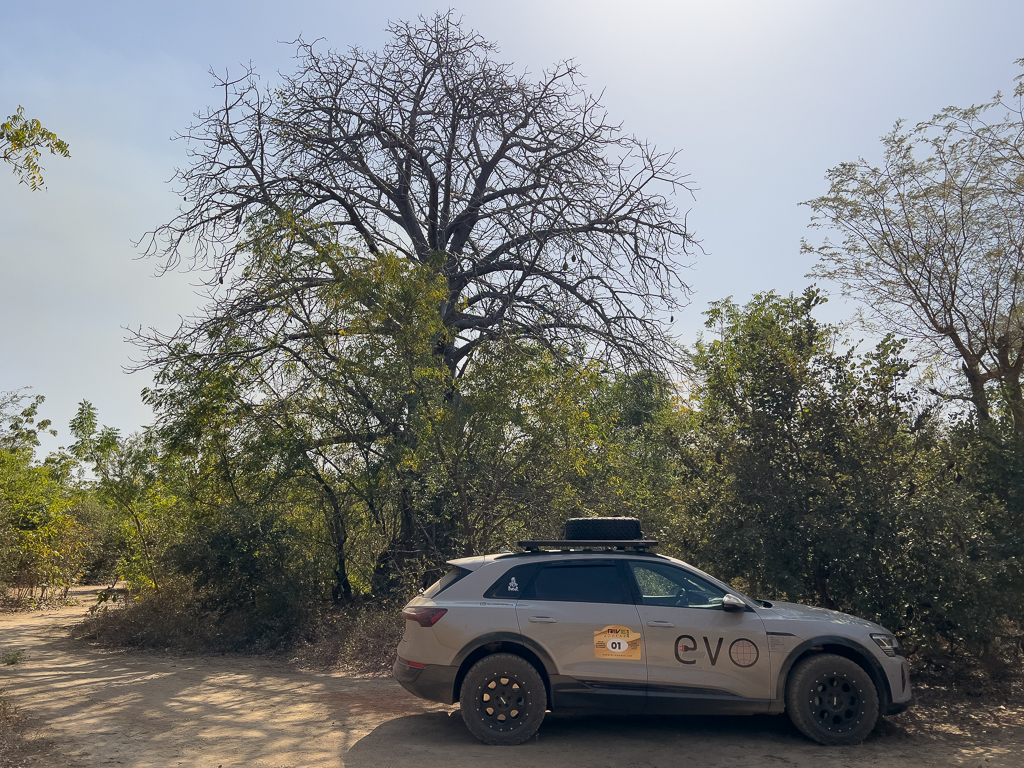
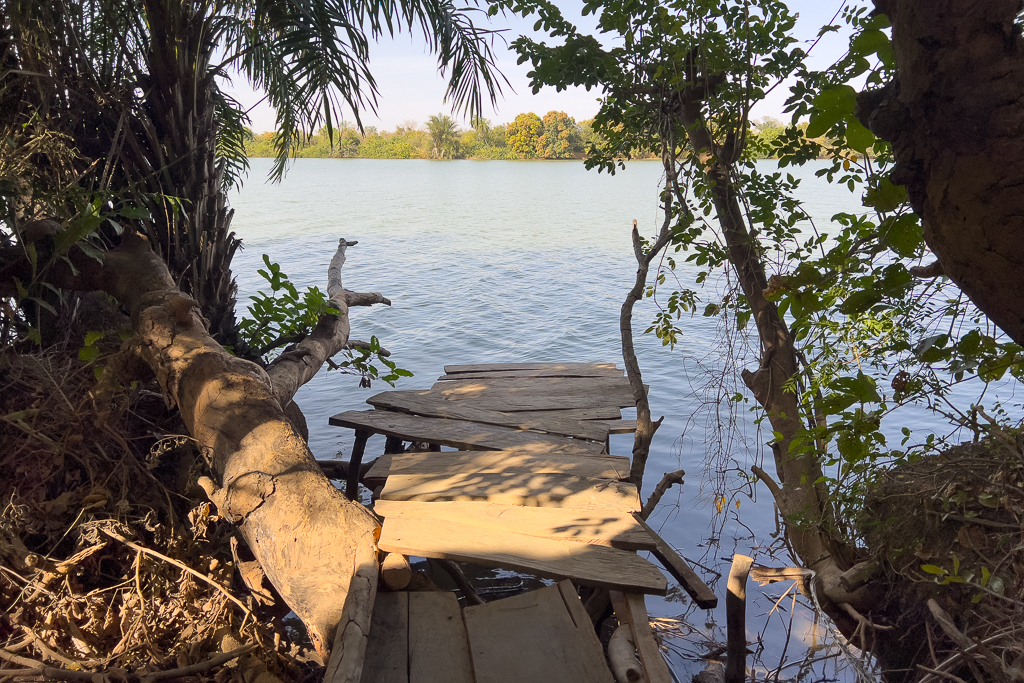
It was located directly on the Gambia River.
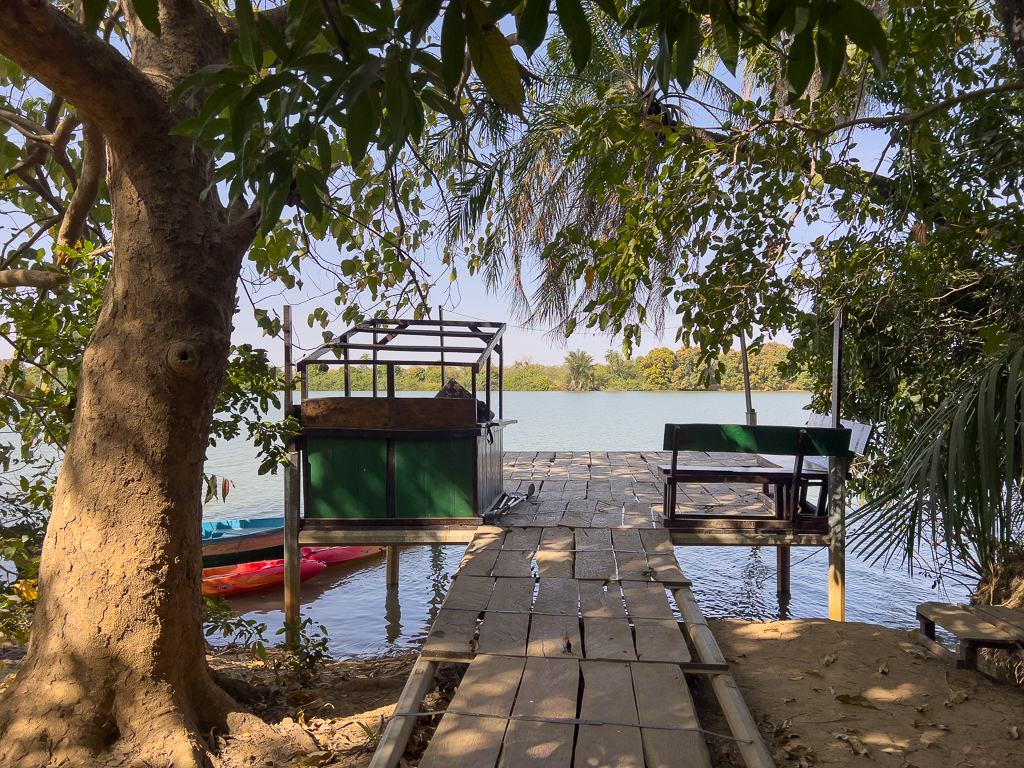
We were greeted by the owner, Dave, and some of his friends and employees.
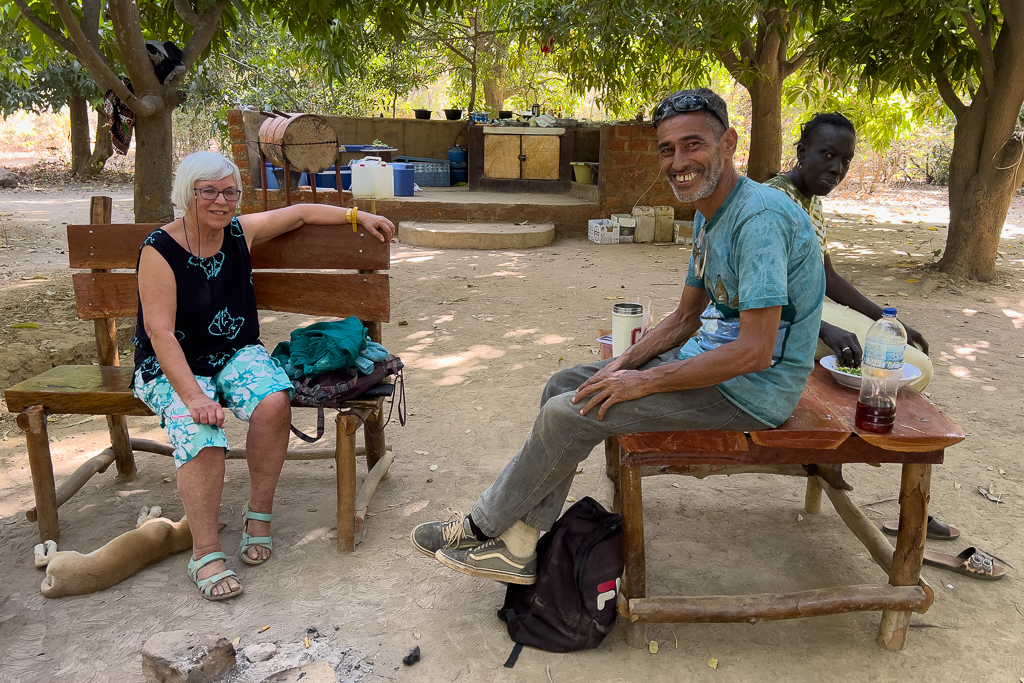
Dave is another very interesting dropout with big dreams. He lived in Africa for a long time and recently built this camp. It’s a real bush camp without any extensive comfort or luxury.
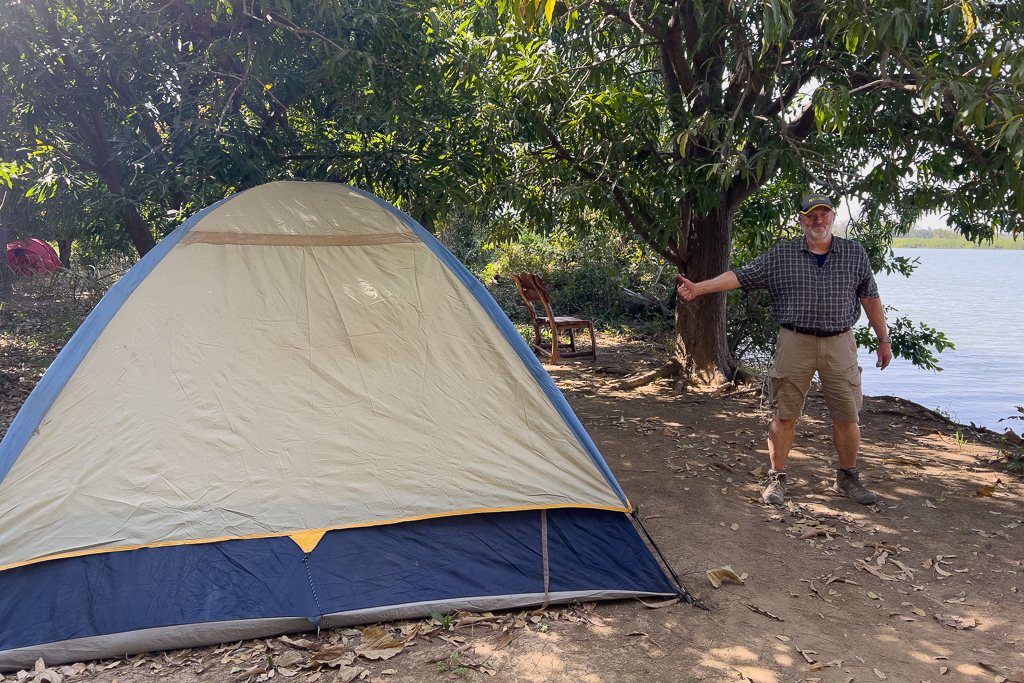
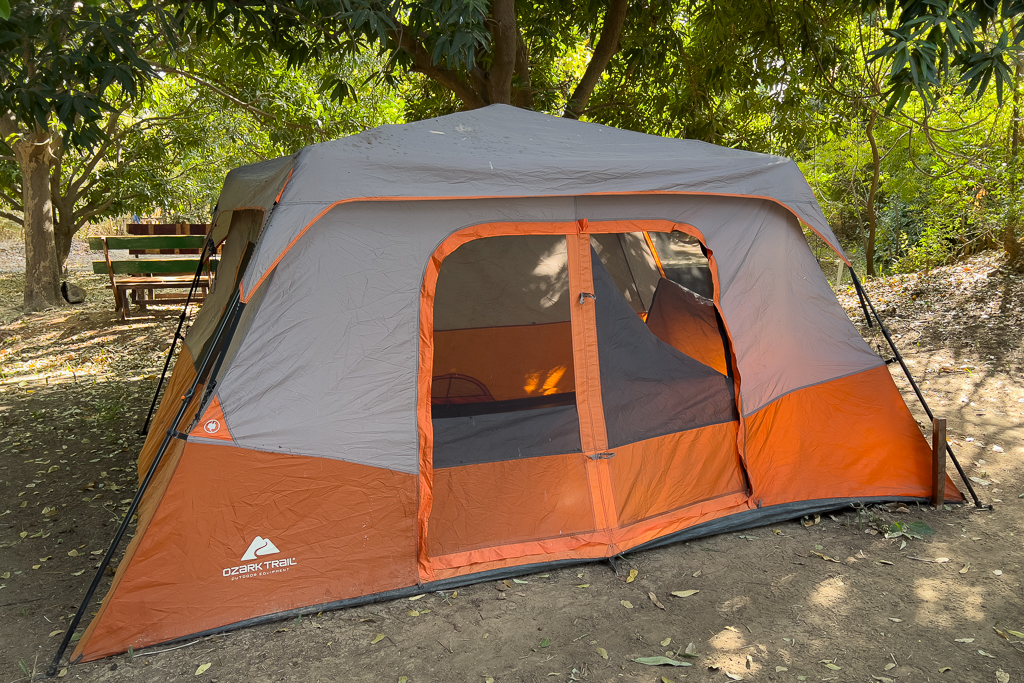
We got three nice tents directly at the river to spend the night.
The toilet was a compost toilet. But it was nice and clean, without any bad smells.
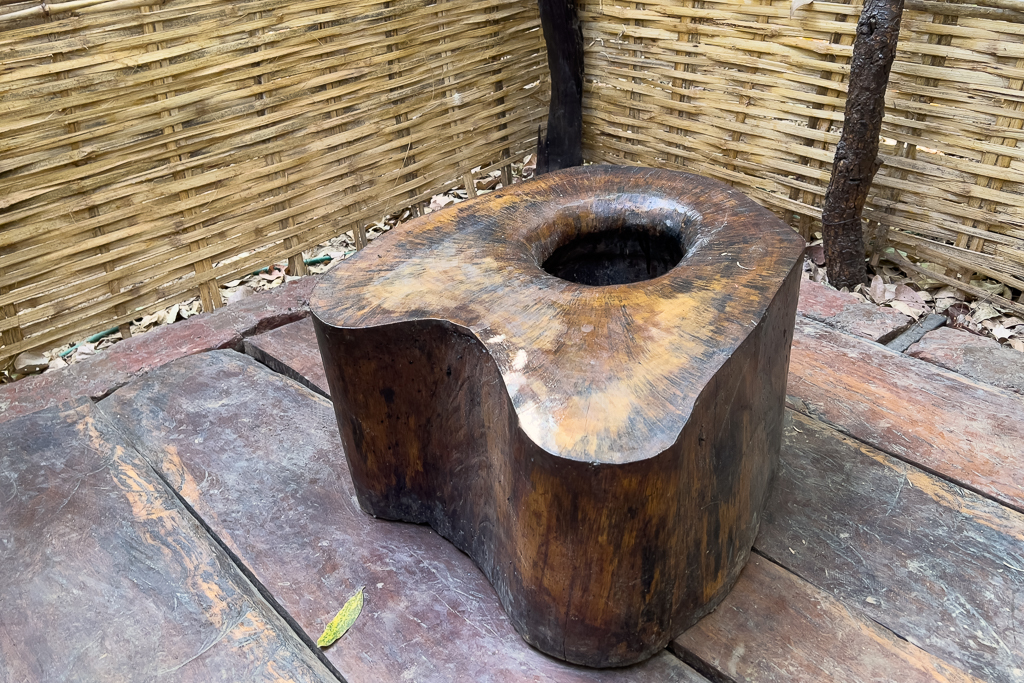
The following image shows the bathroom of the camp. The only water source was the river.
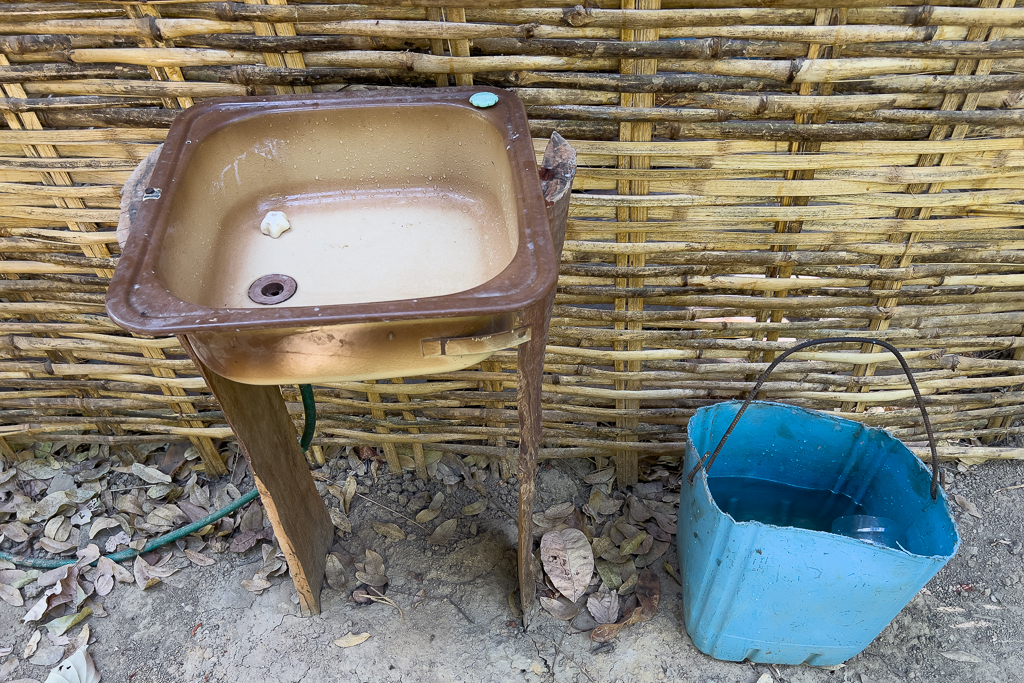
The camp shower consists of just a bucket and a privacy fence.
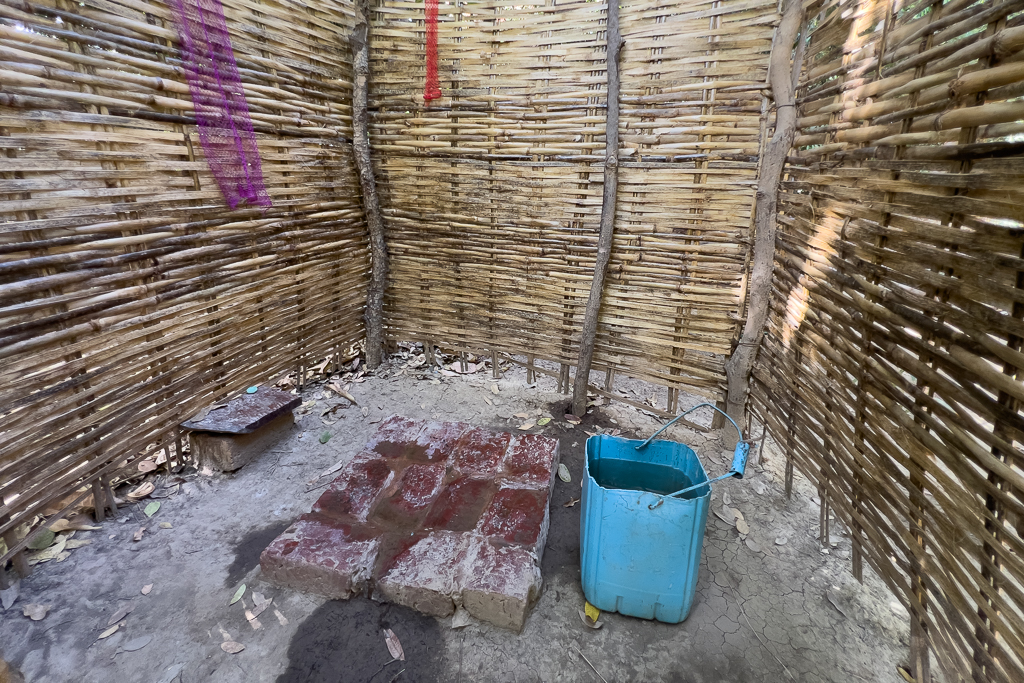
I loved this camp and wasn’t really missing anything. It reminded me of my time in Costa Rica, where I spent three months in bush camps in the jungle many years ago.
Hans, and especially Thomas, were not 100% convinced of this camp and were wishing for a bit more comfort. But since there was no real alternative in Janjanbureh, they had to accept their fate and make the best out of the situation.
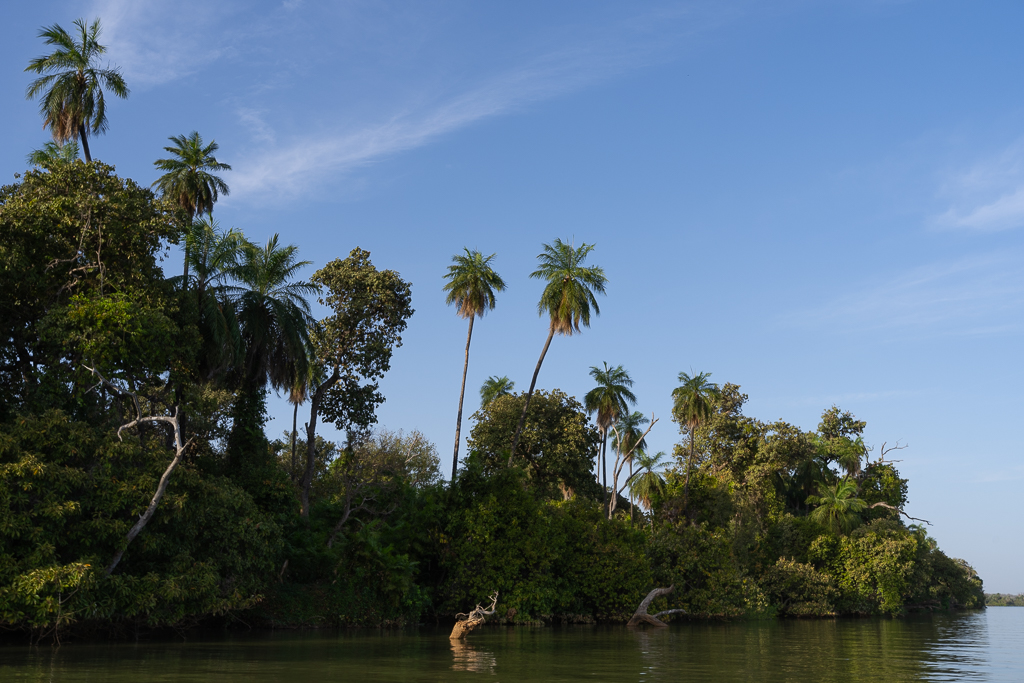
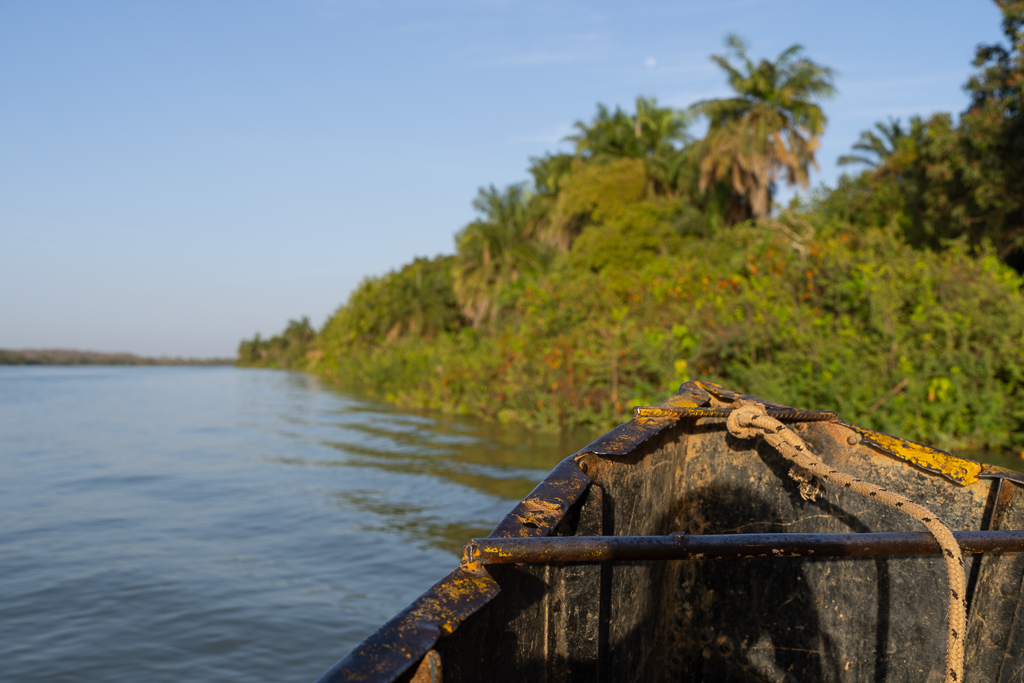
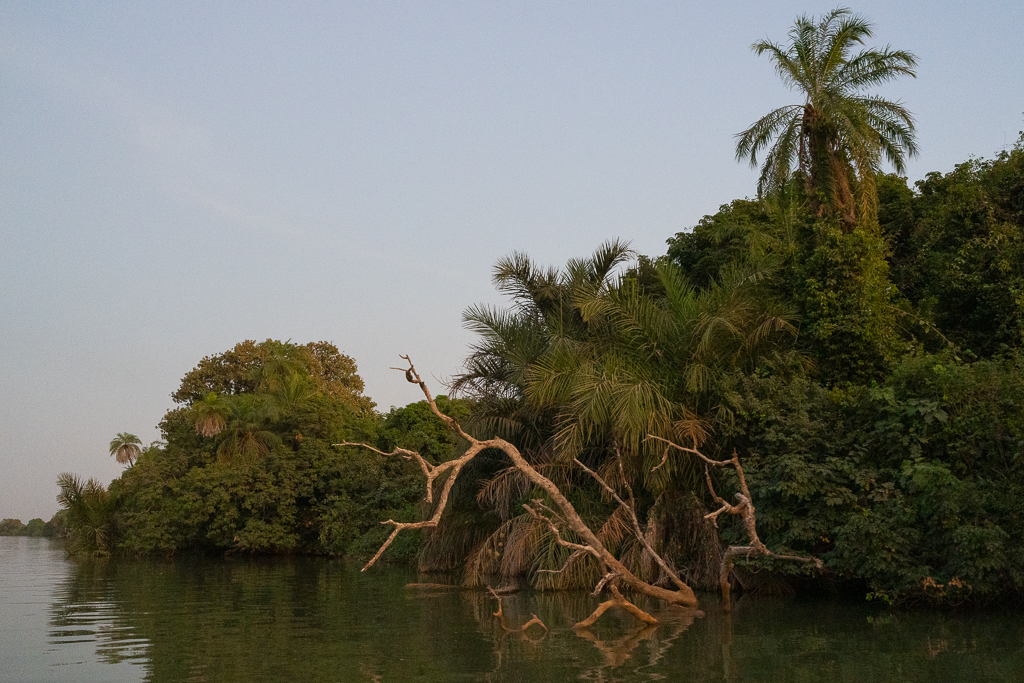
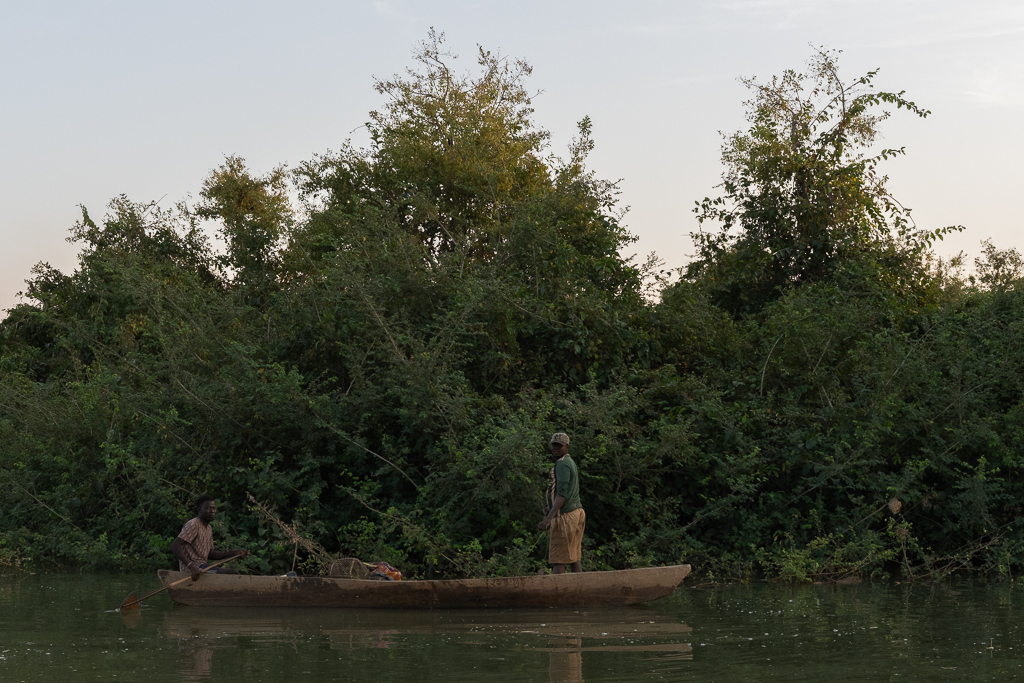
Since we wanted to see the hippos, we booked a 3-hour boat tour on the Gambia River.
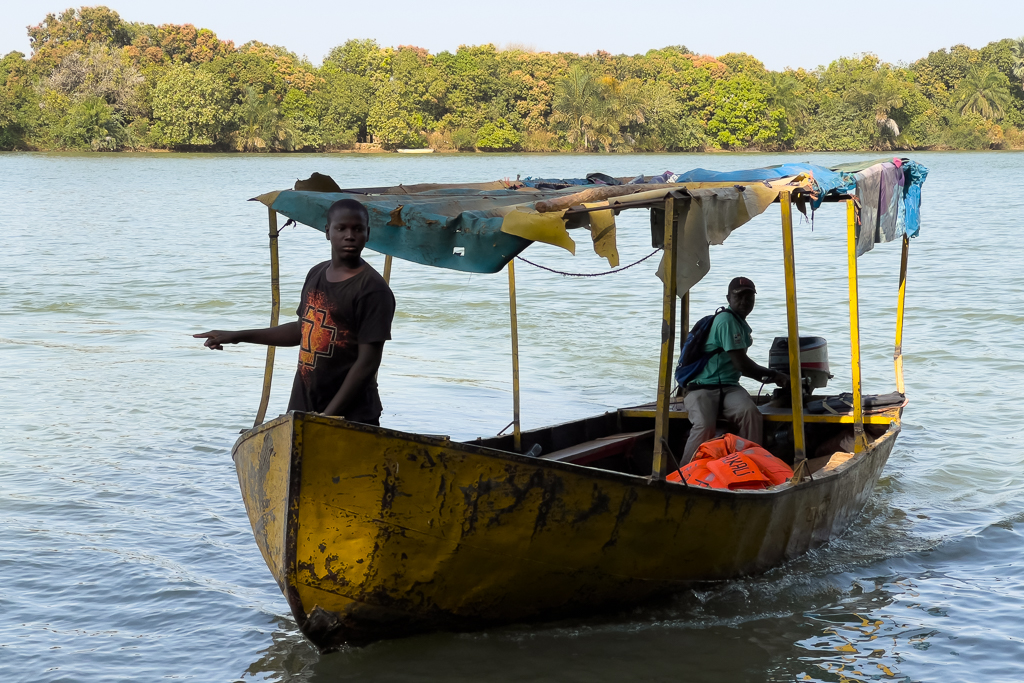
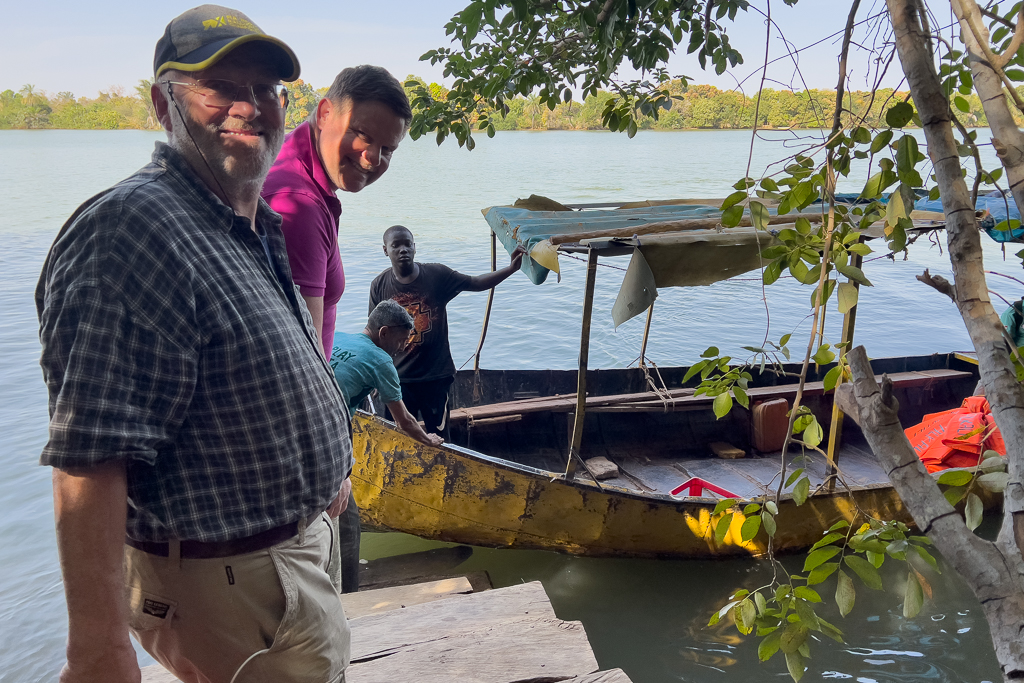
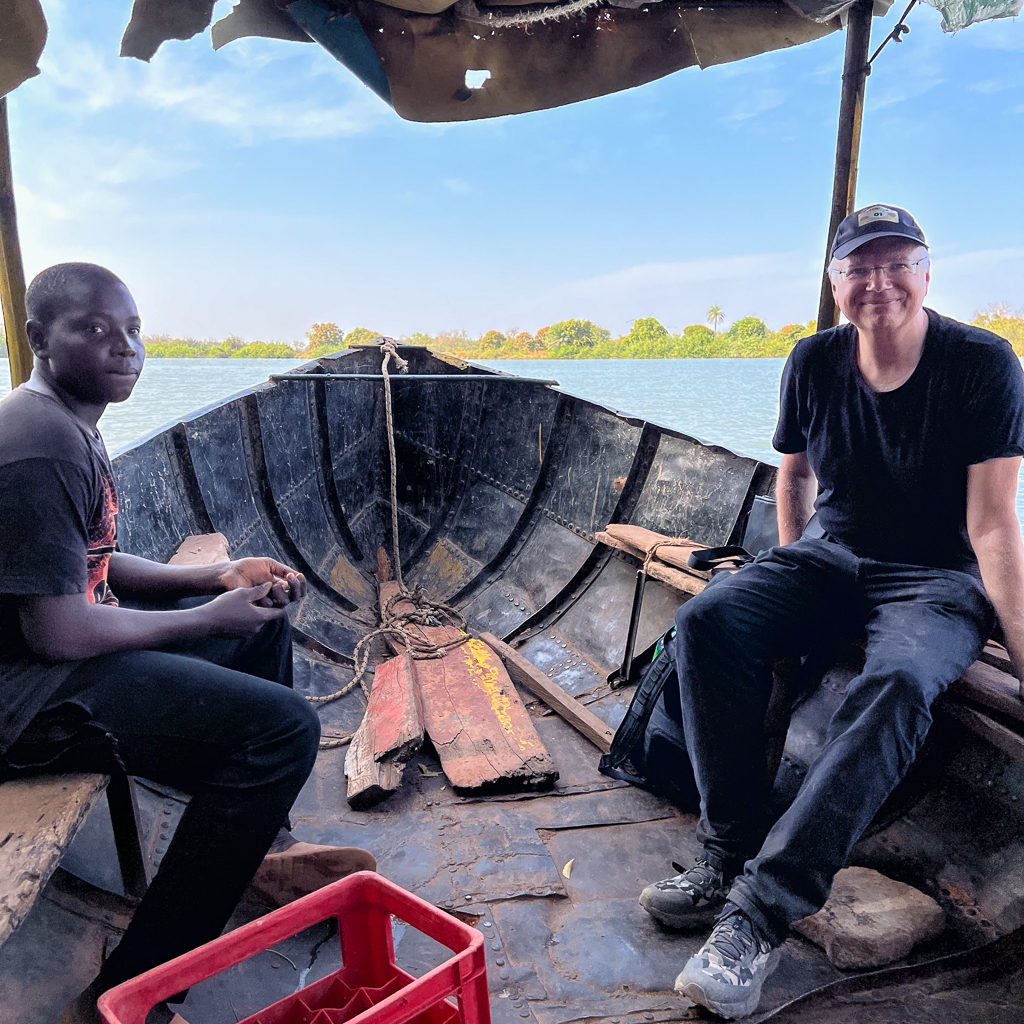
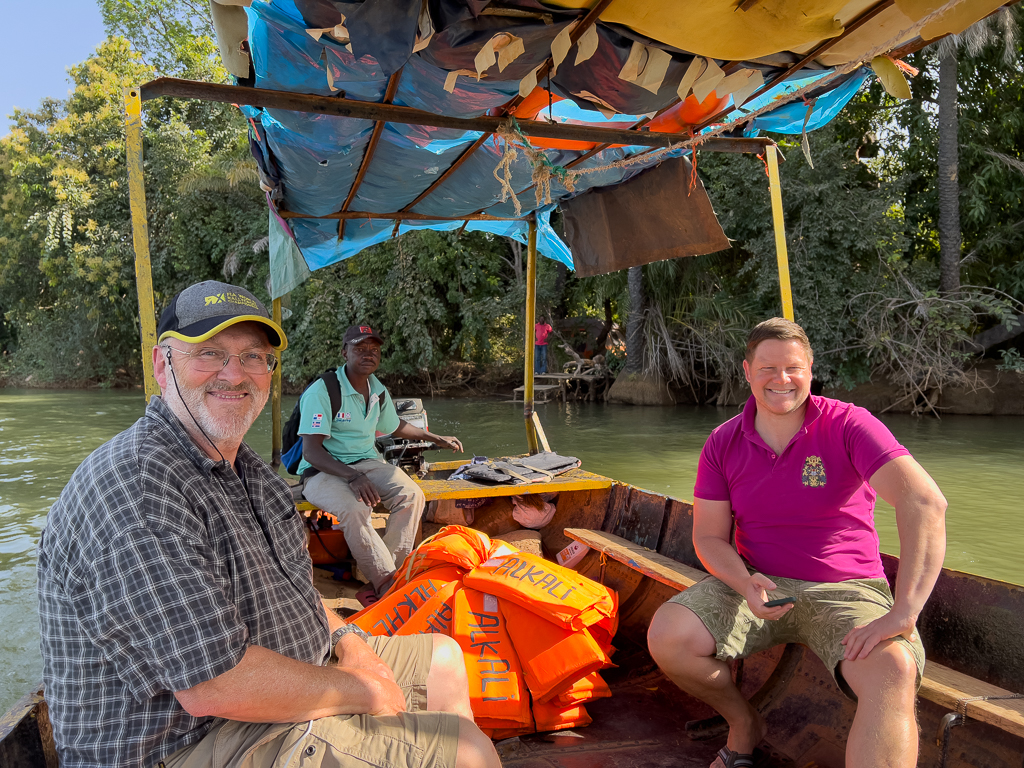
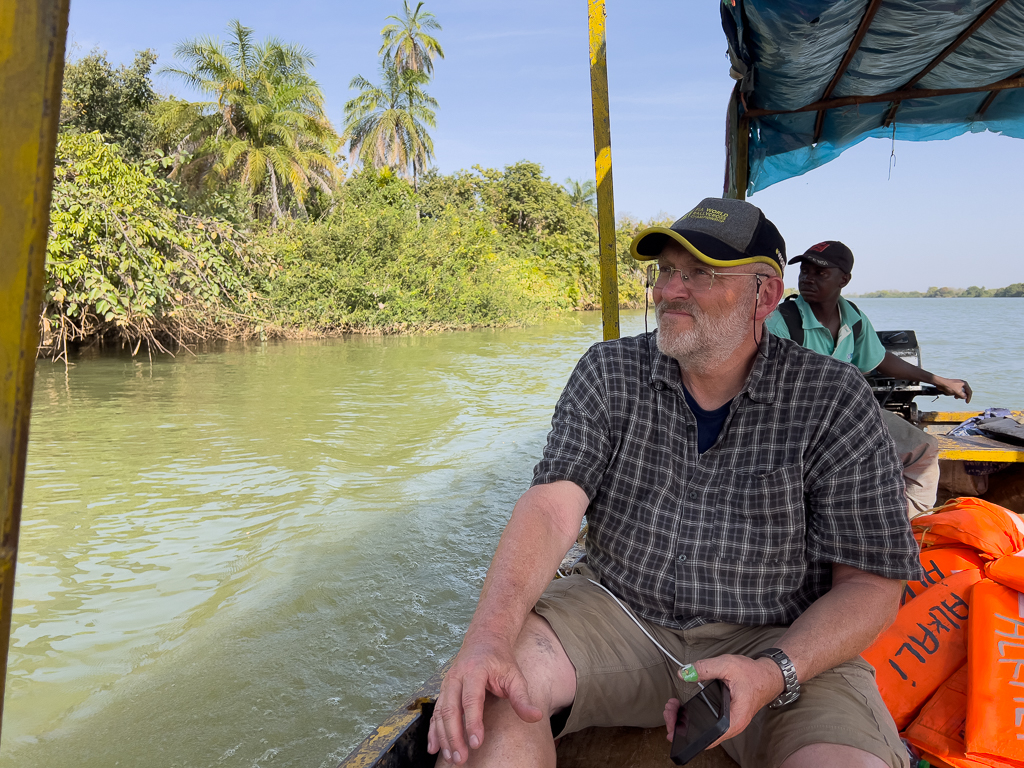
Sadly, we didn’t see any hippos. They told us that it was recently not easy to spot them. But it was a nice tour anyway. You get a different perspective on the jungle from the river, and we were able to see many beautiful birds as well as different types of monkeys. Since I didn’t bring any telephoto lens on this trip, they were all a bit far away for any good images.
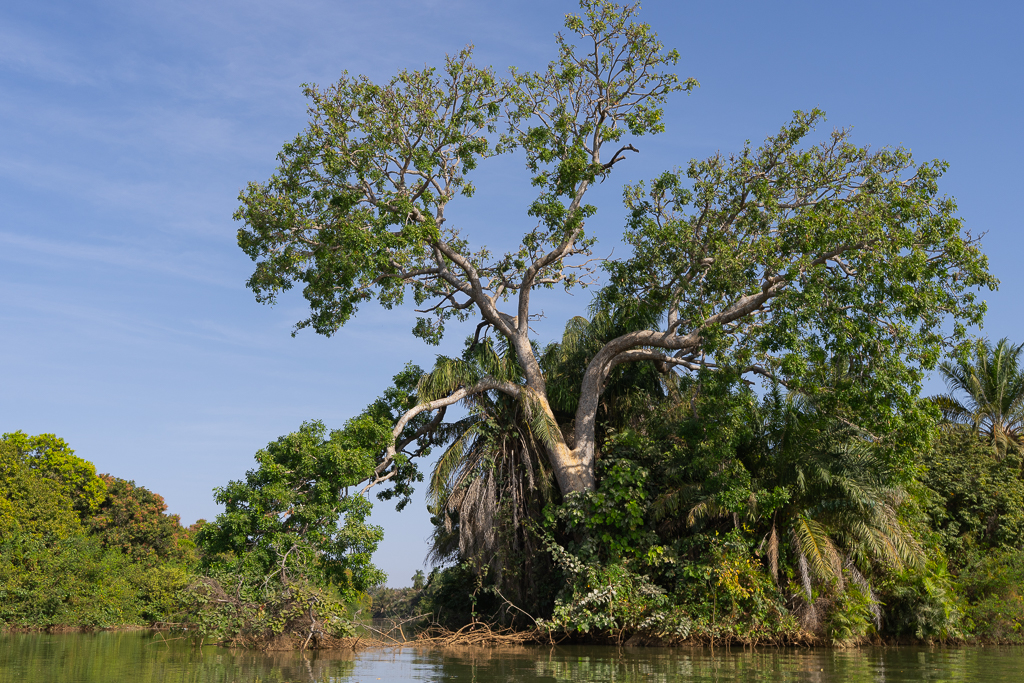
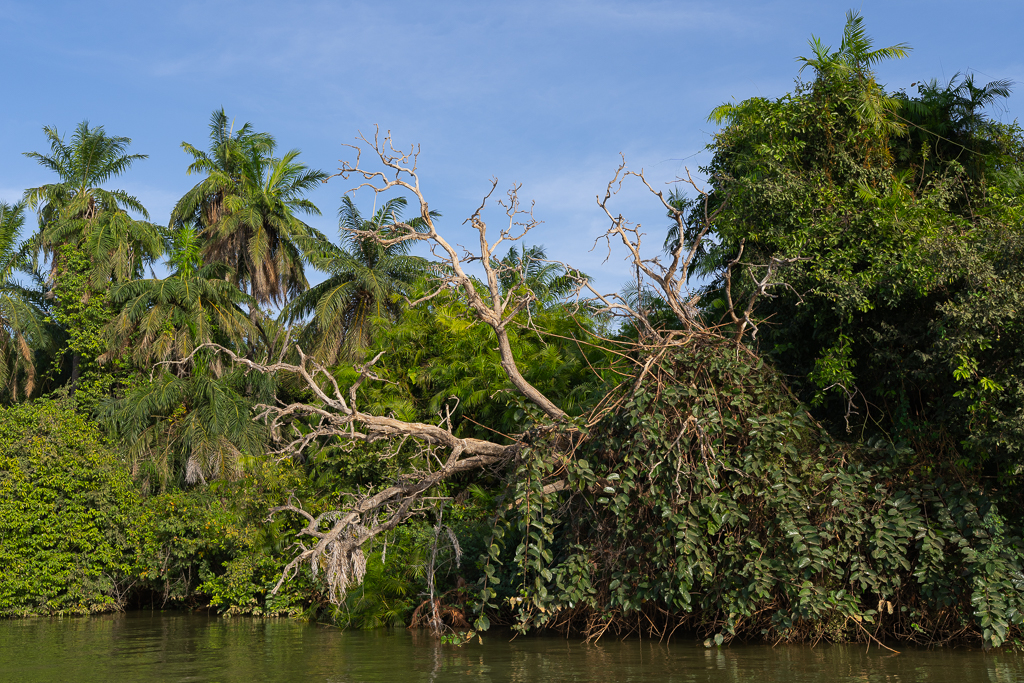
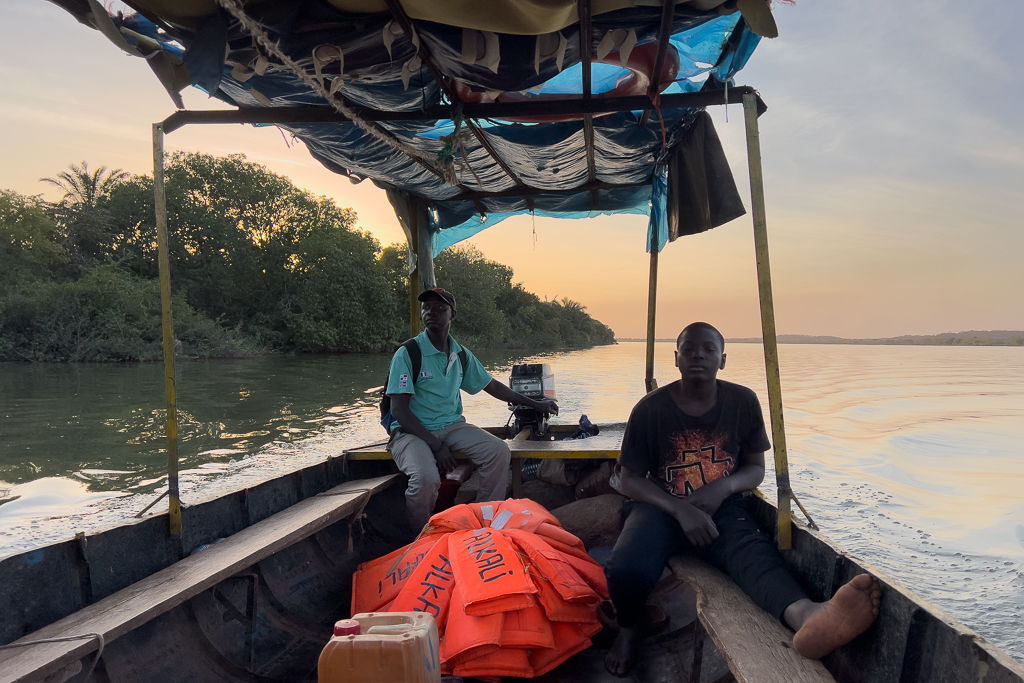
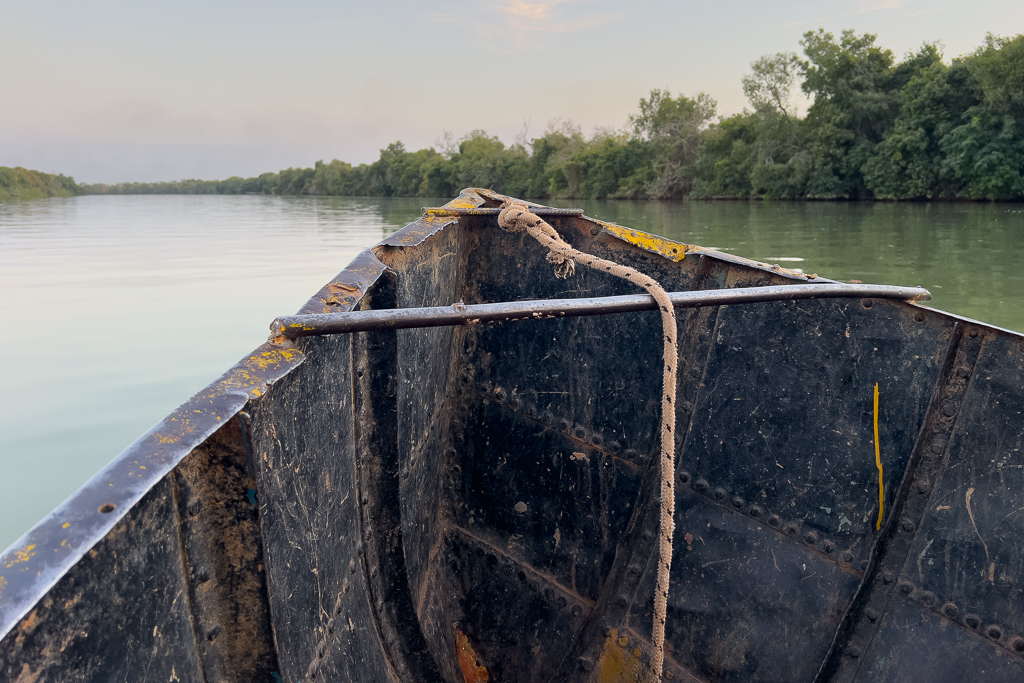
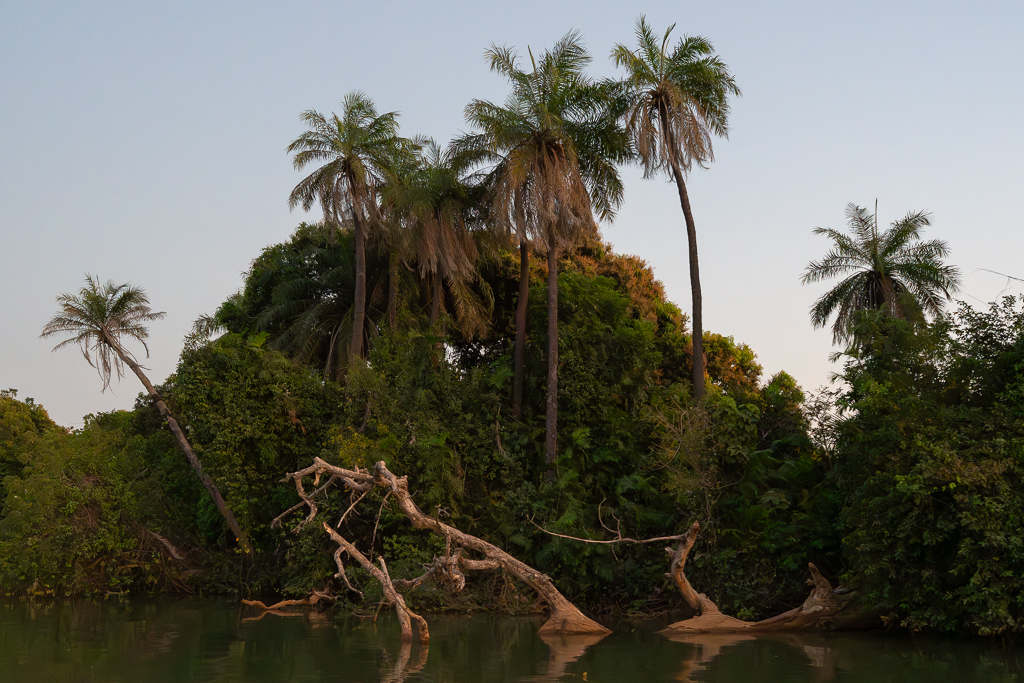
Just after sunset, we arrived back at the camp. We had dinner together and then went to bed early in the tents.
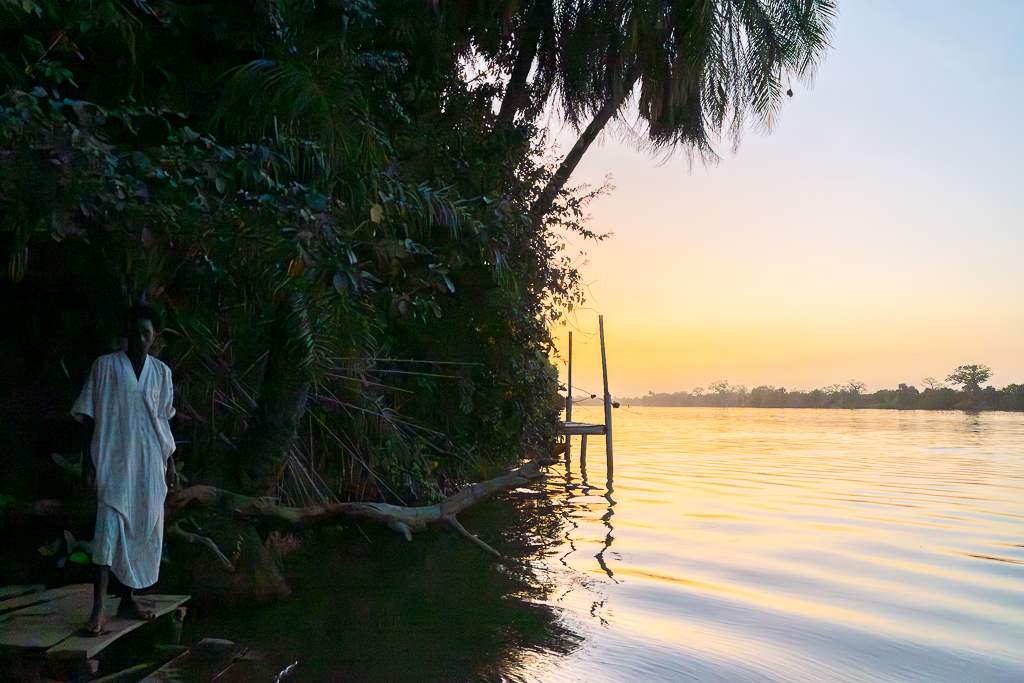
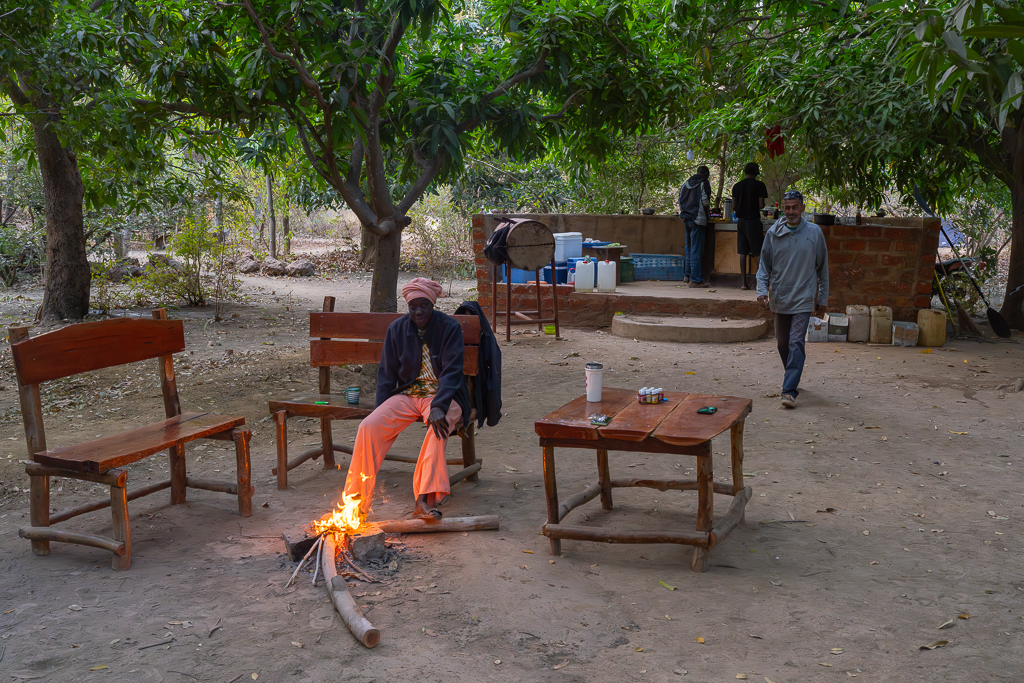
The next morning, Dave was warming himself at a campfire.
We were greeted by a spectacular sunrise.
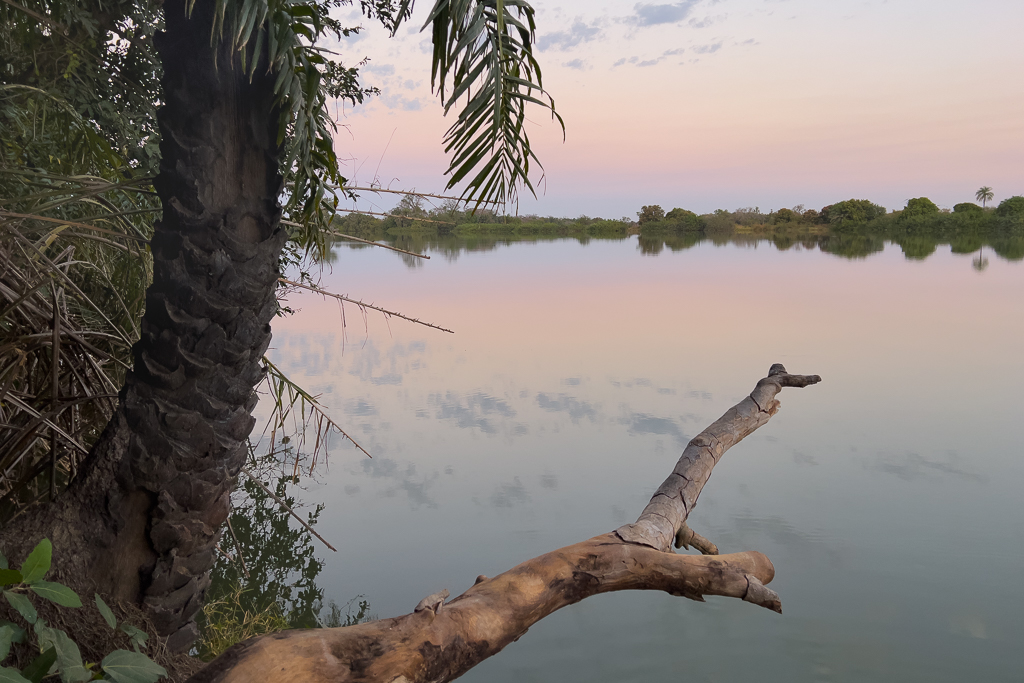
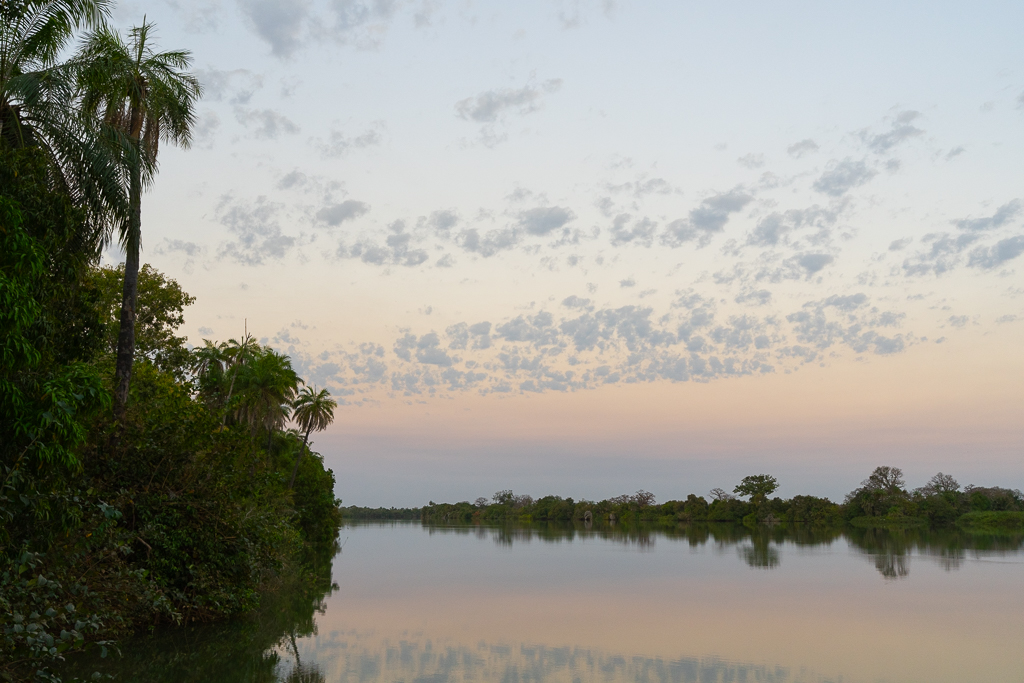
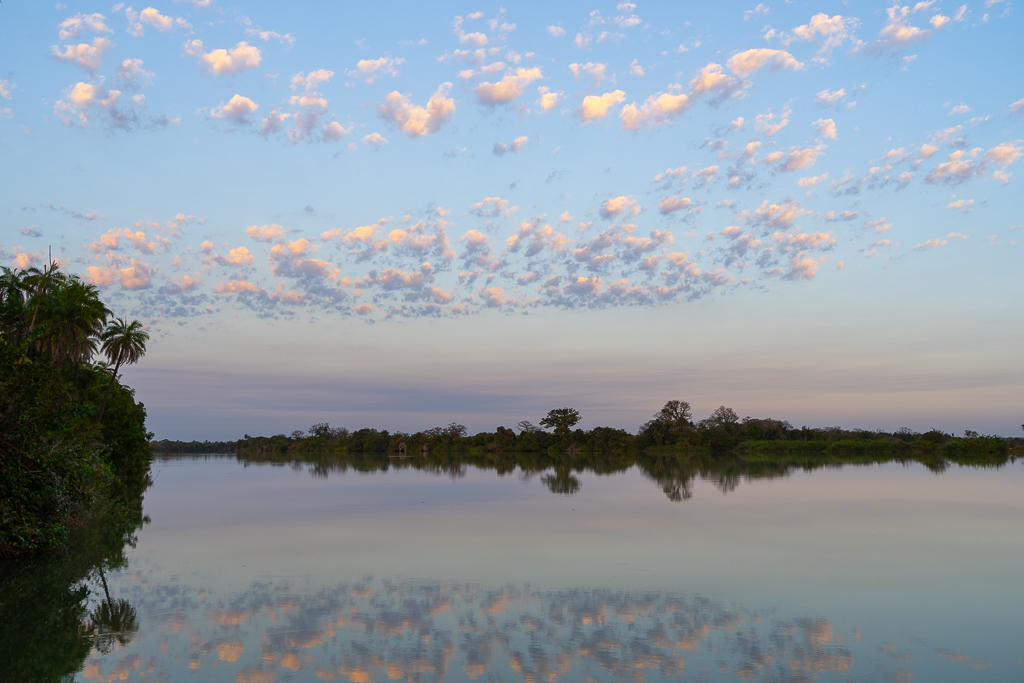
The calm early morning atmosphere at the Gambia River, with all the reflections, was mesmerizing.
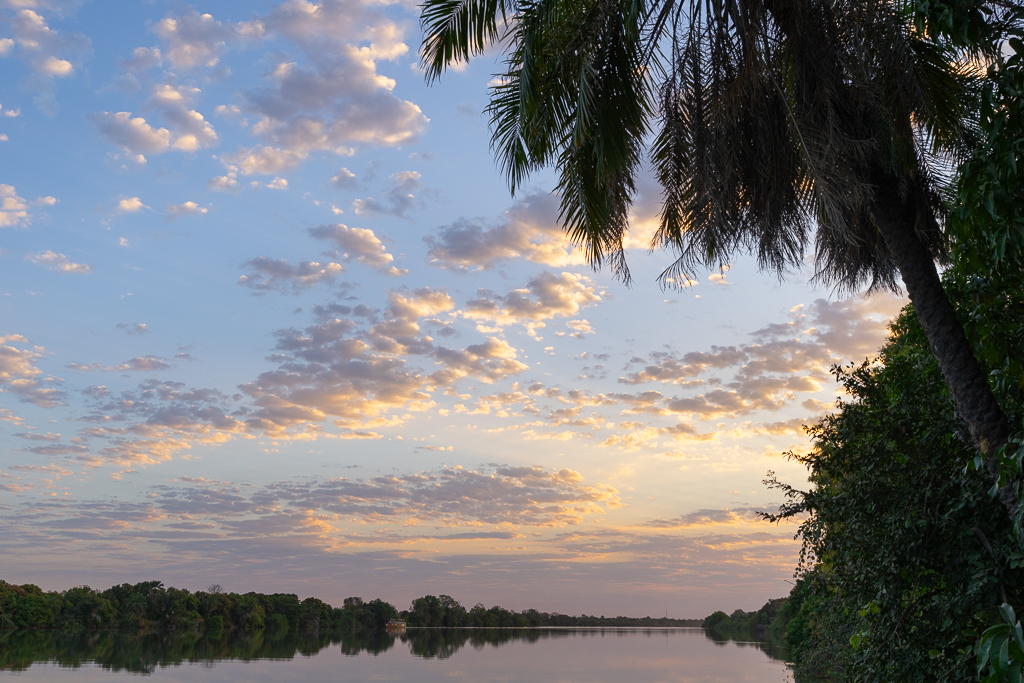
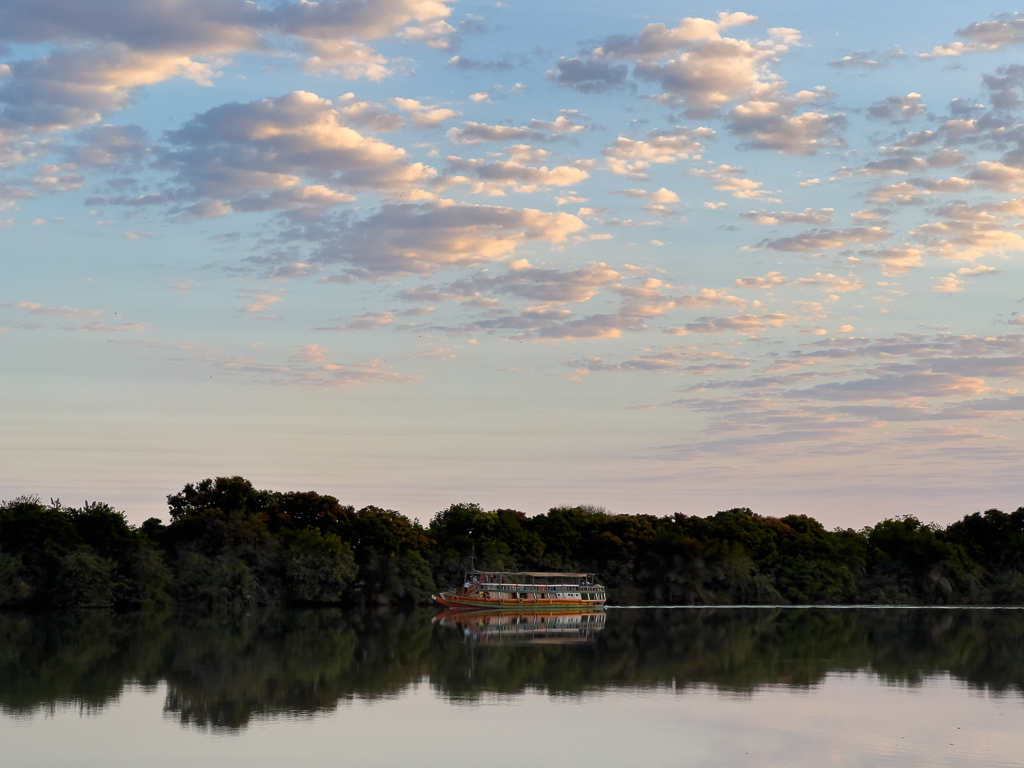
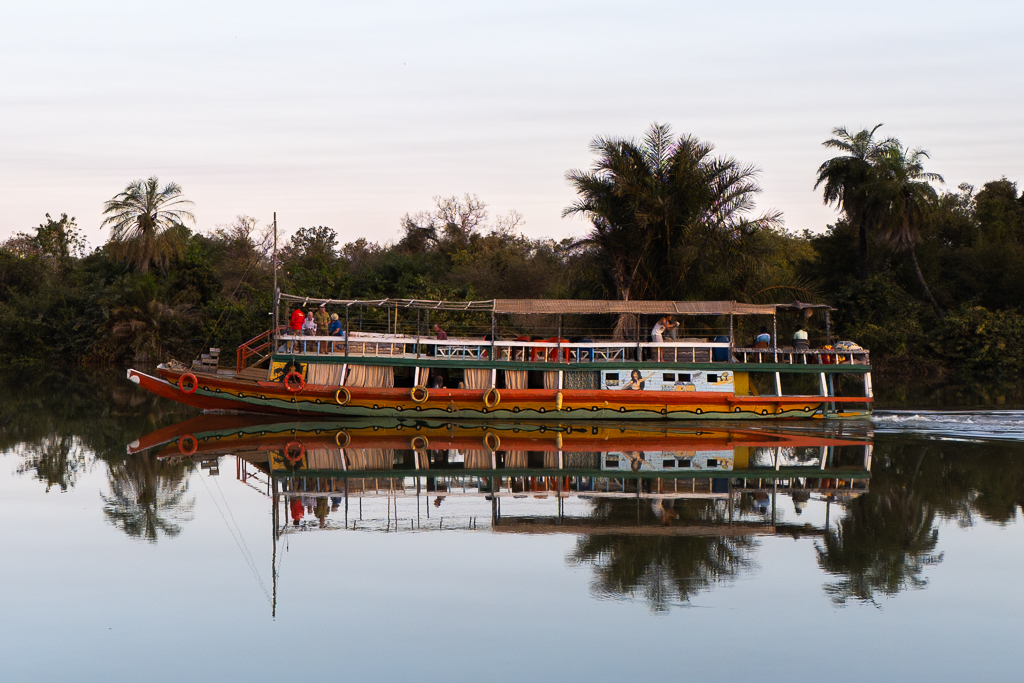
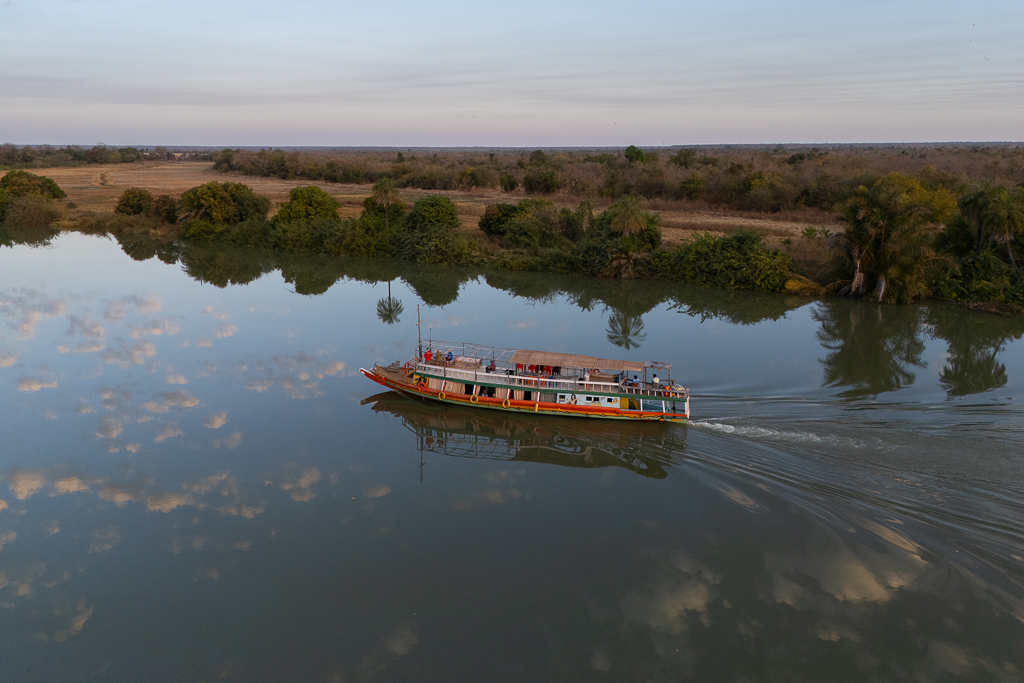
I put my drone in the air to get some good shots of the river at sunrise.
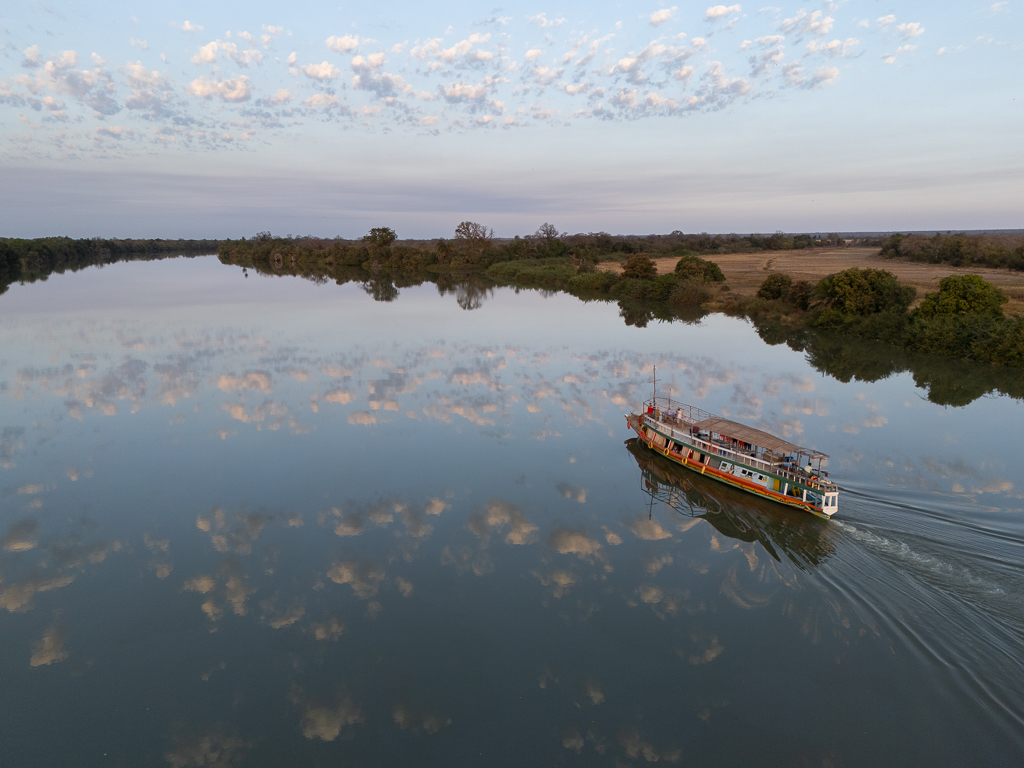
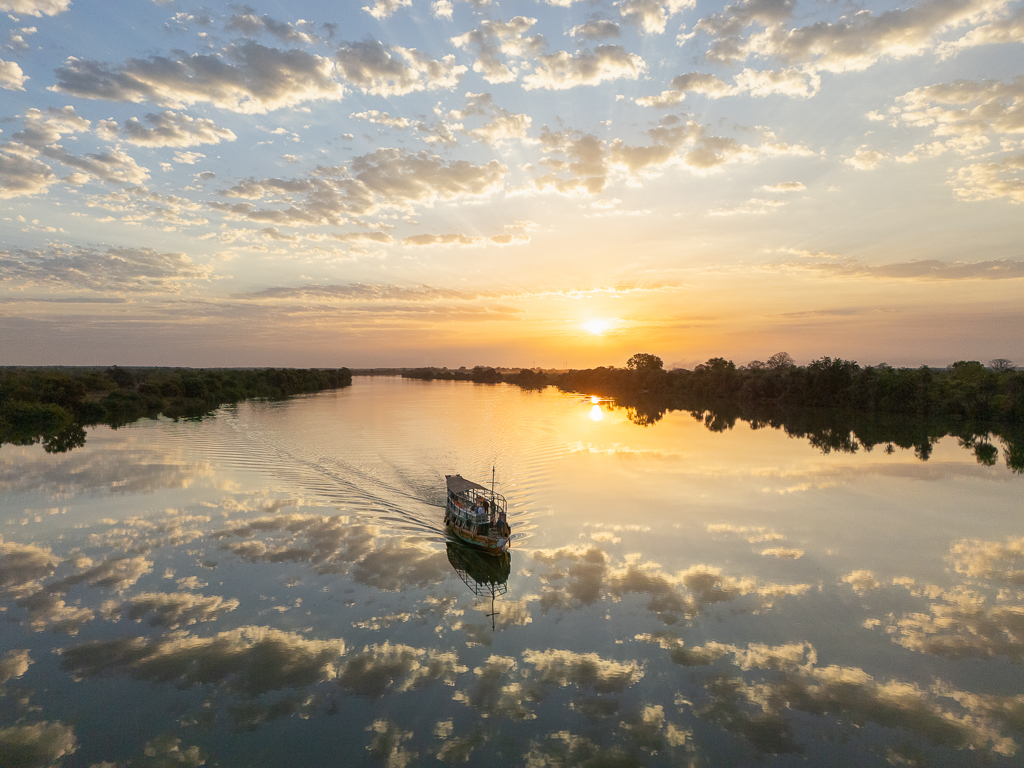
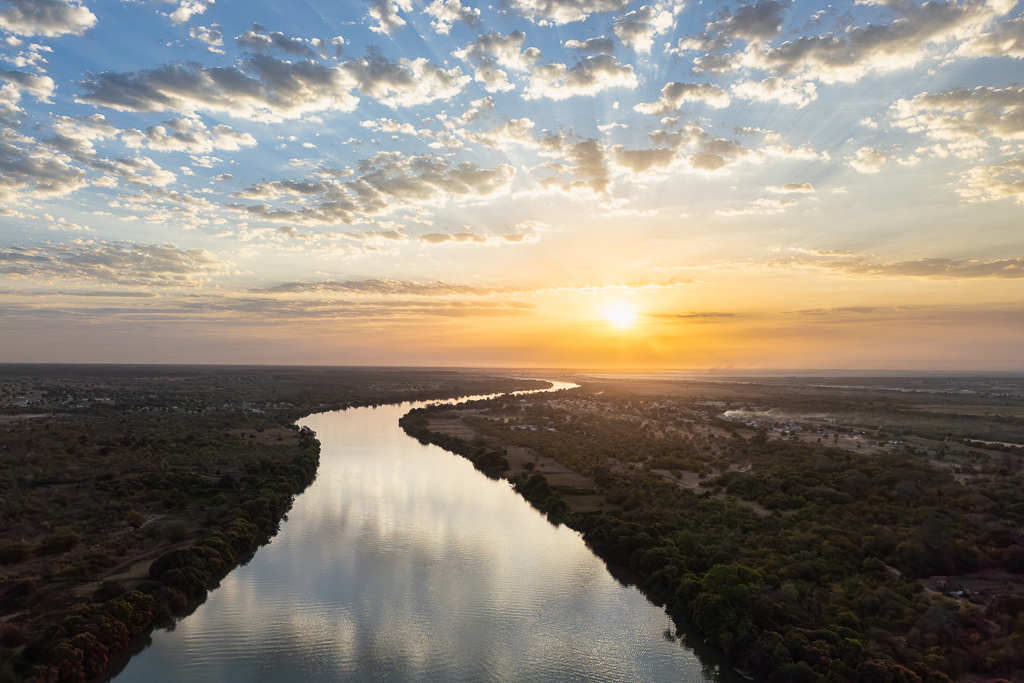
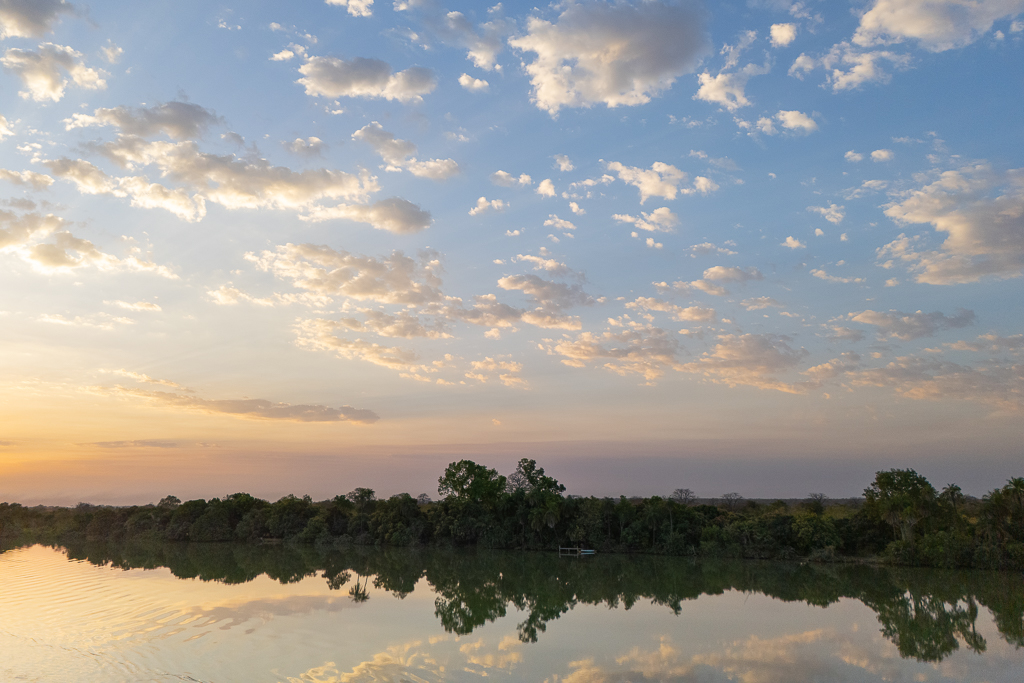
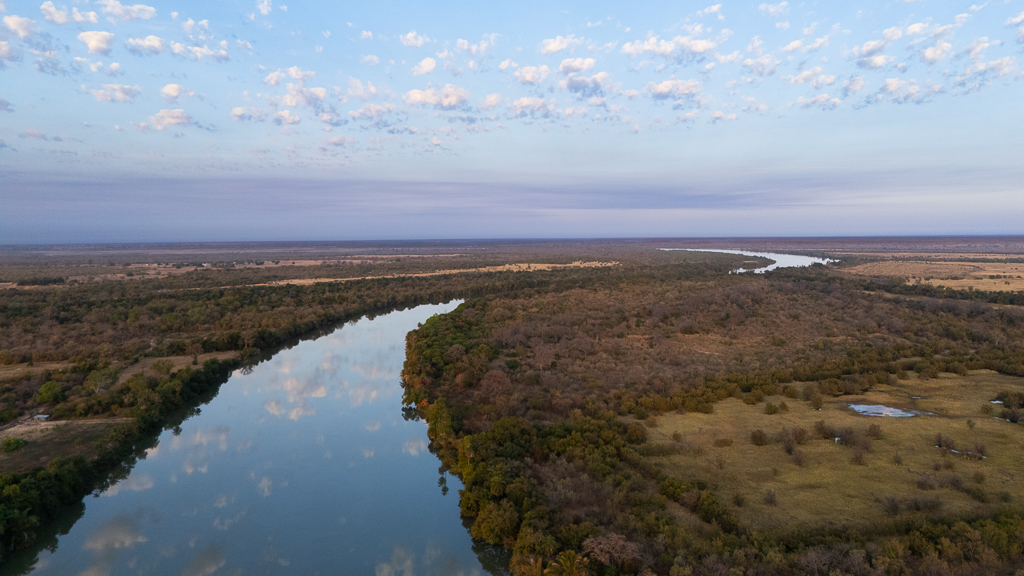
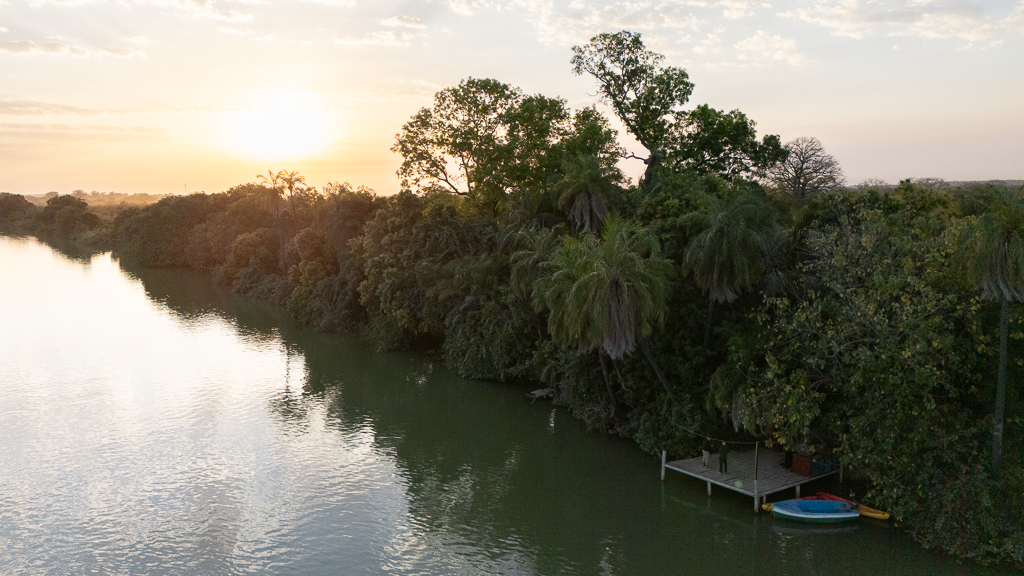
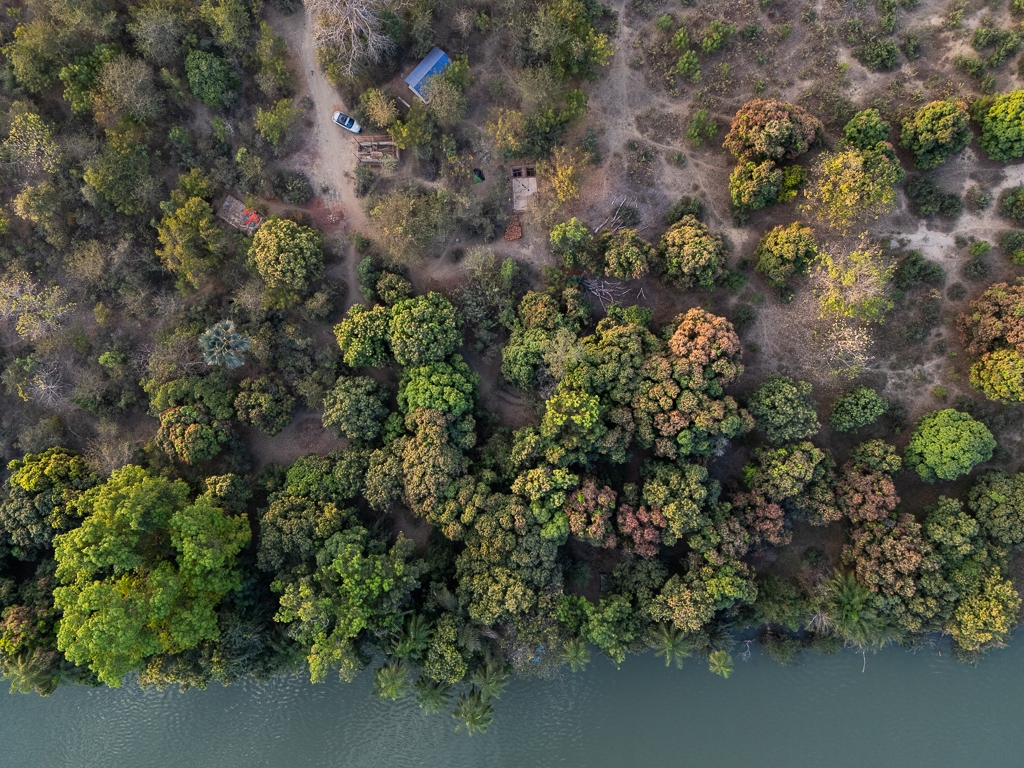
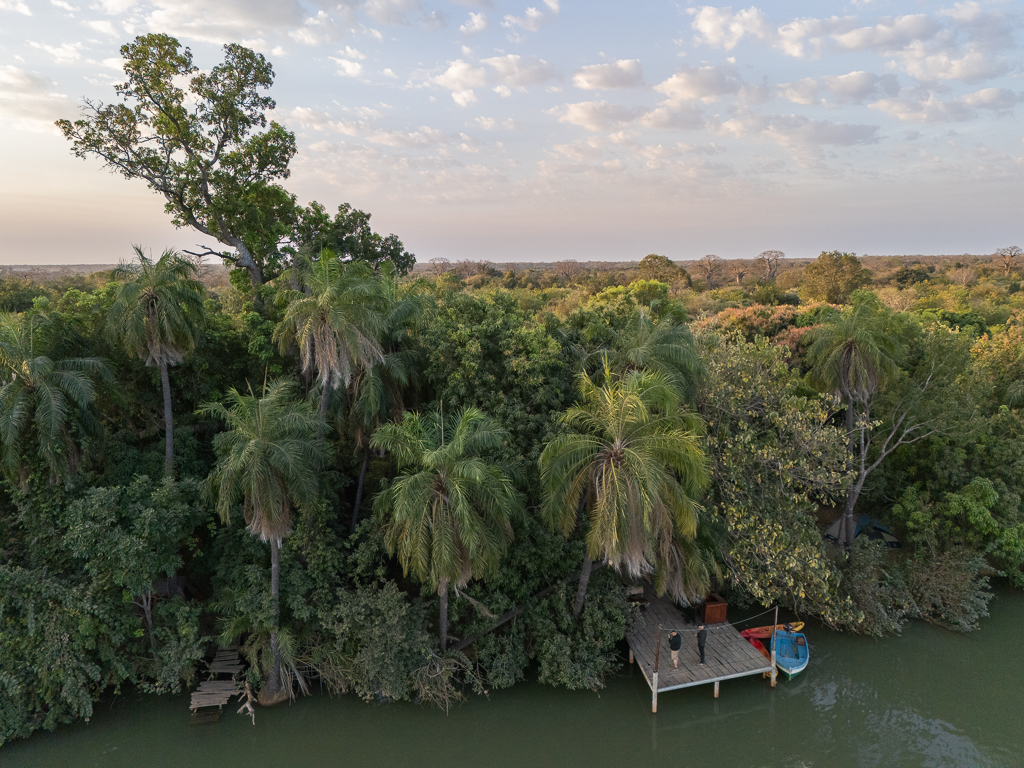
The aerial view also gives a good impression of the Hippo Bush Camp. At the top of the following image, you can see my Audi. Our tents were located under the trees at the edge of the river.
After breakfast, we drove back to the village of Janjanbureh.
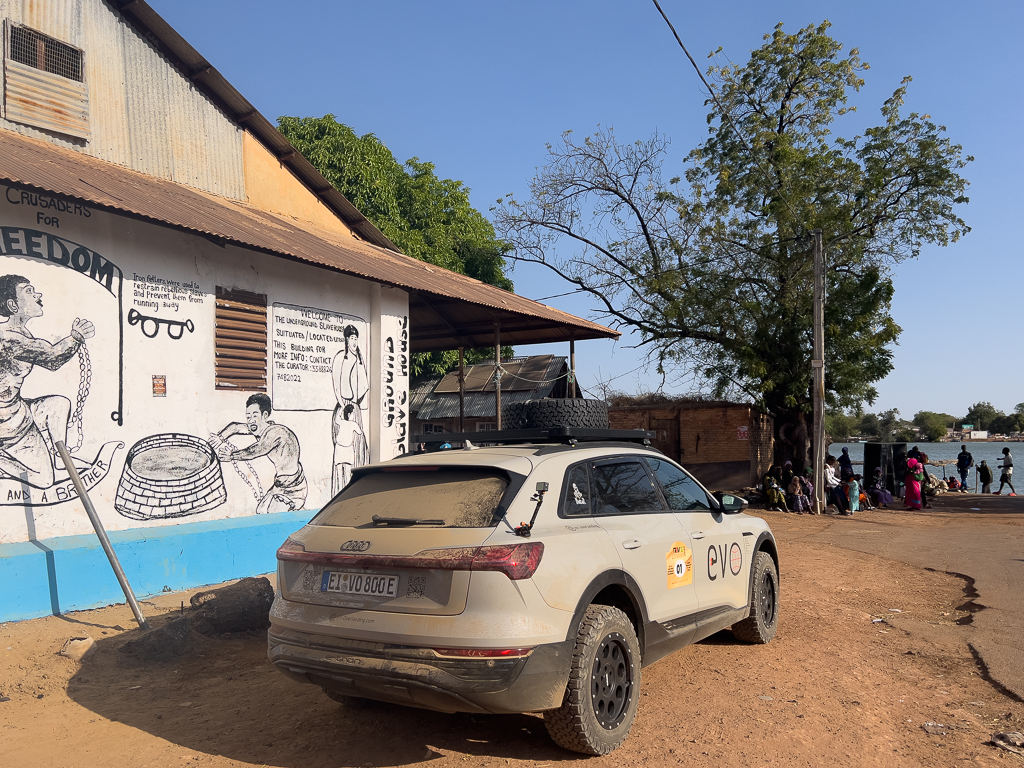
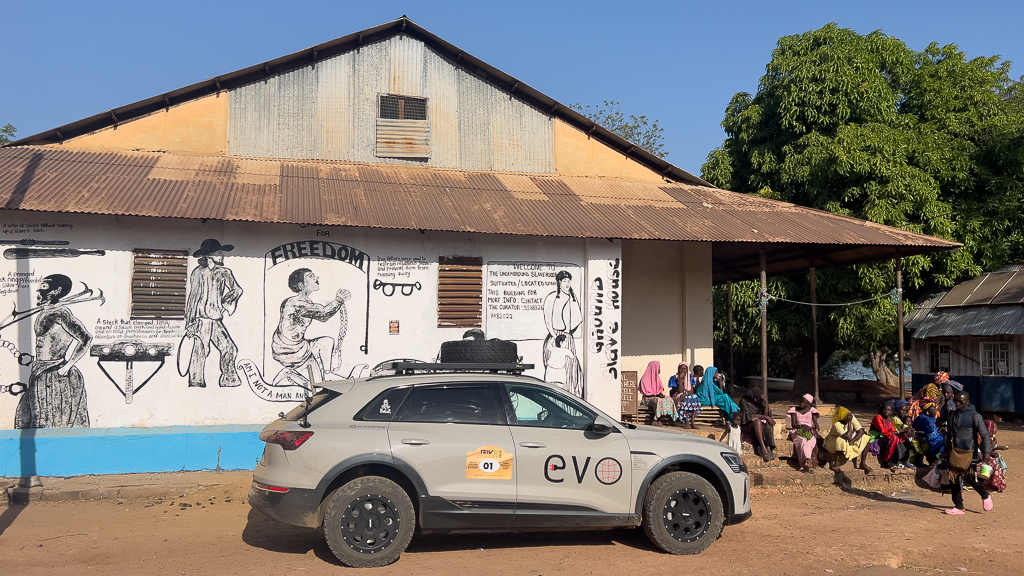
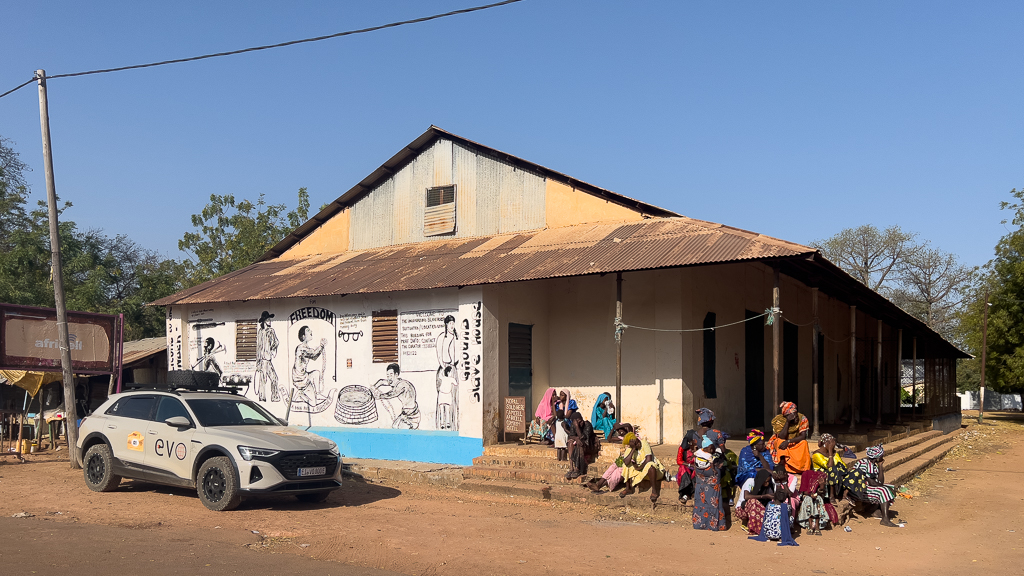
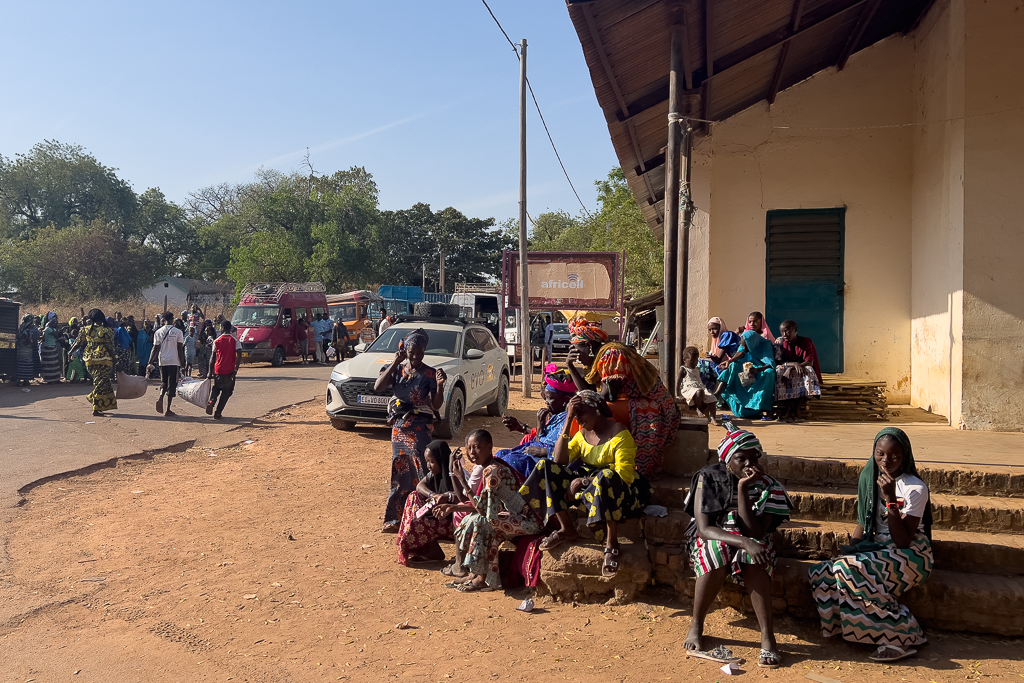
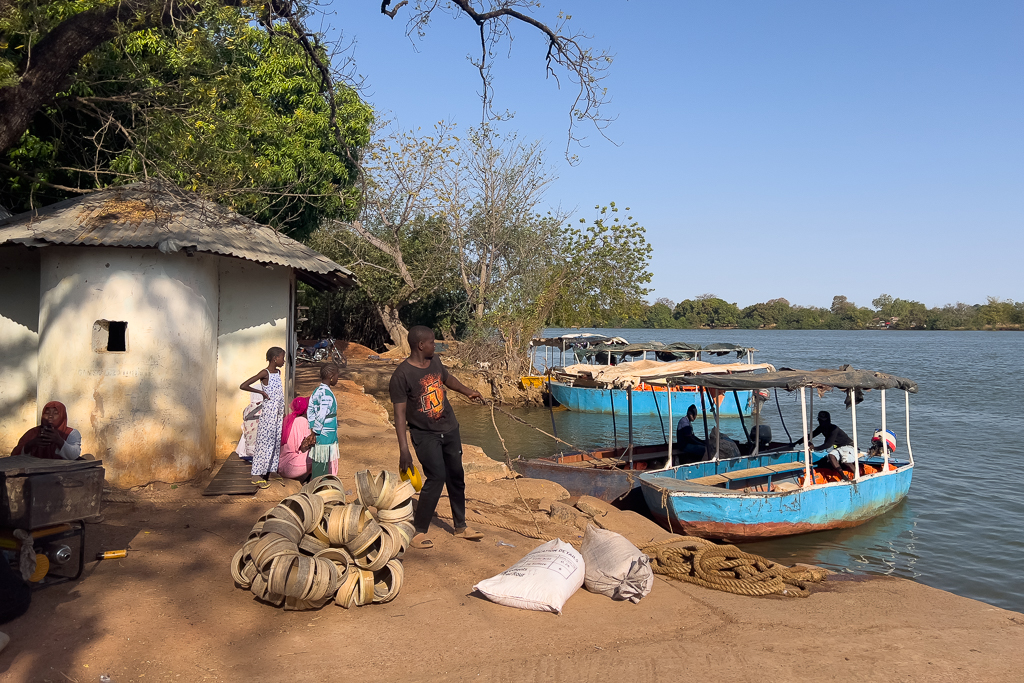
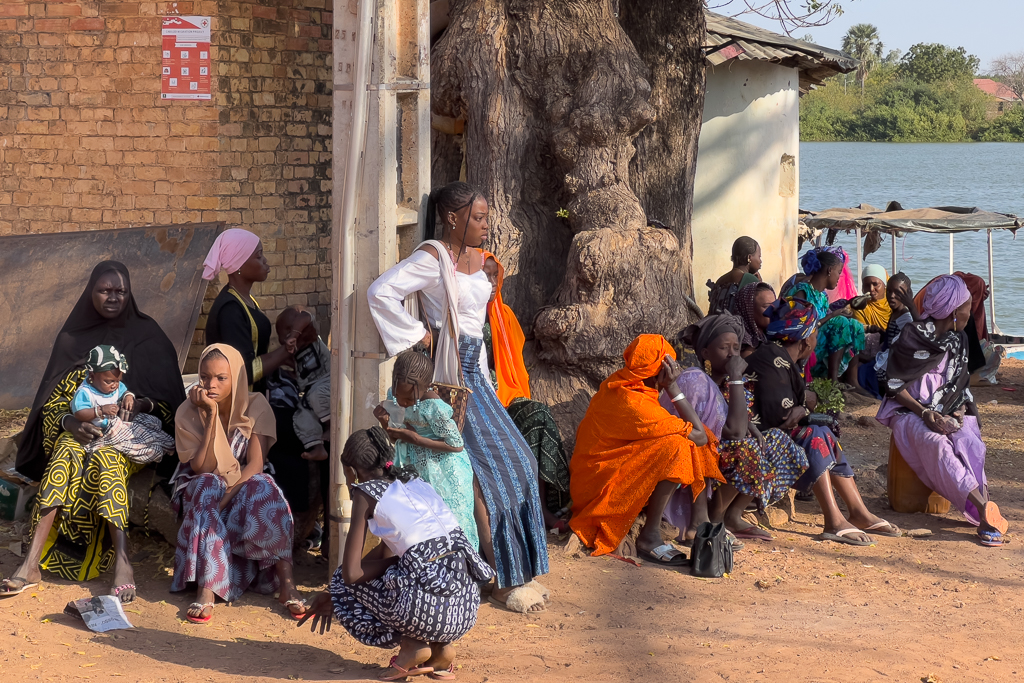
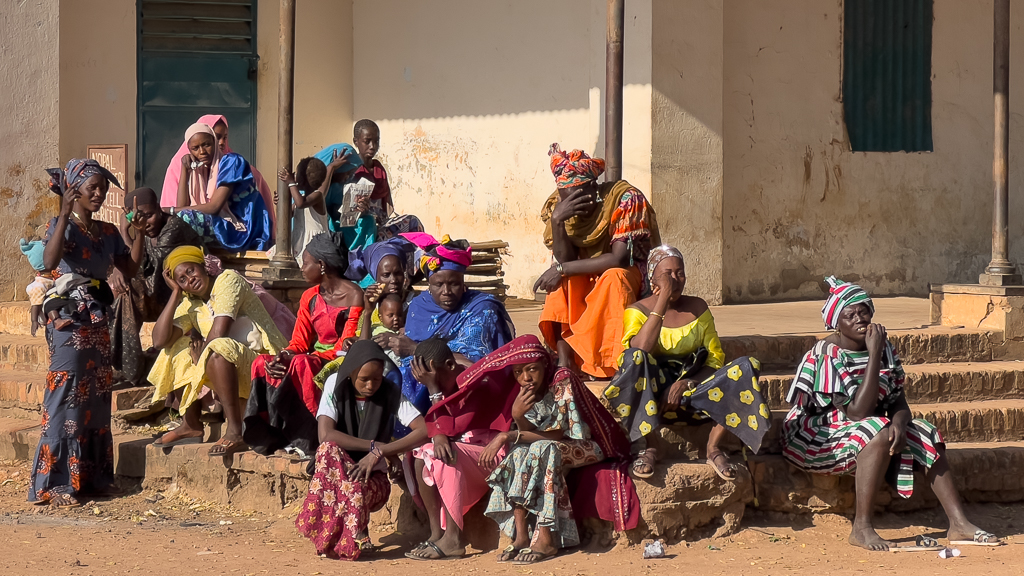
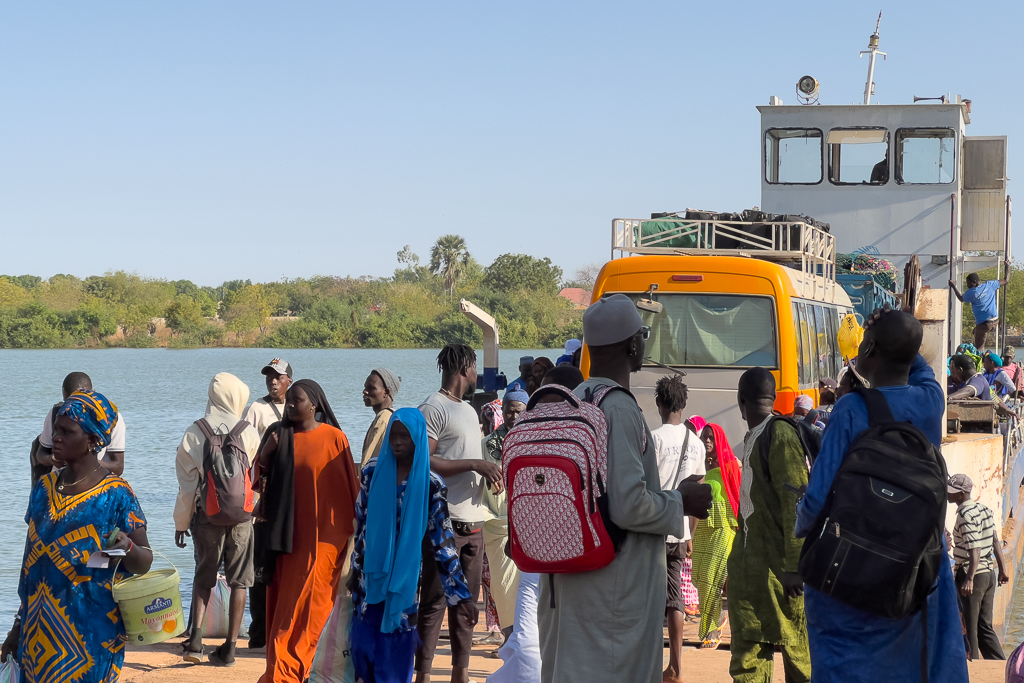
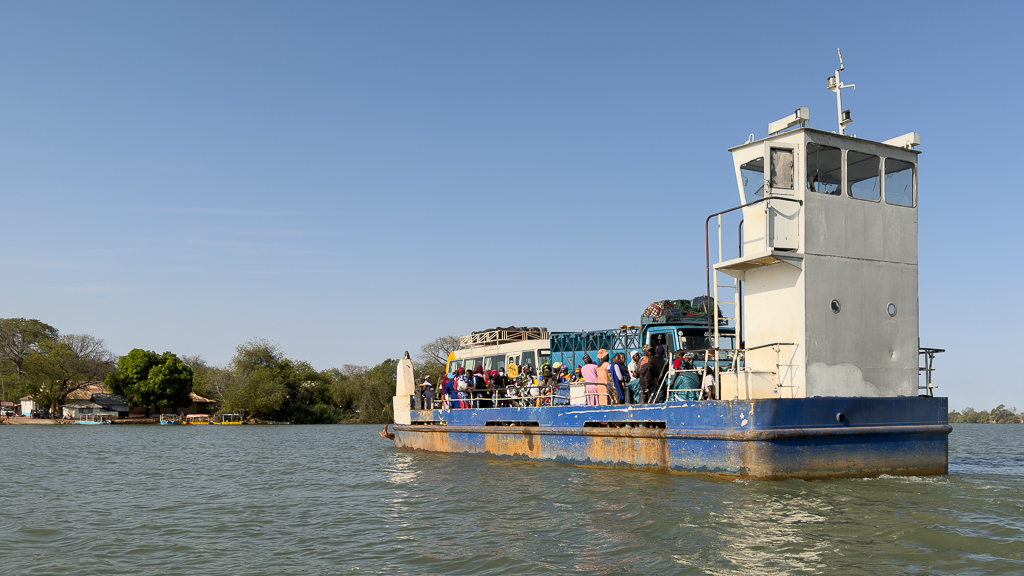
Our plan was to take a very small ferry across the Gambia River and drive back to Soma on the North Bank.
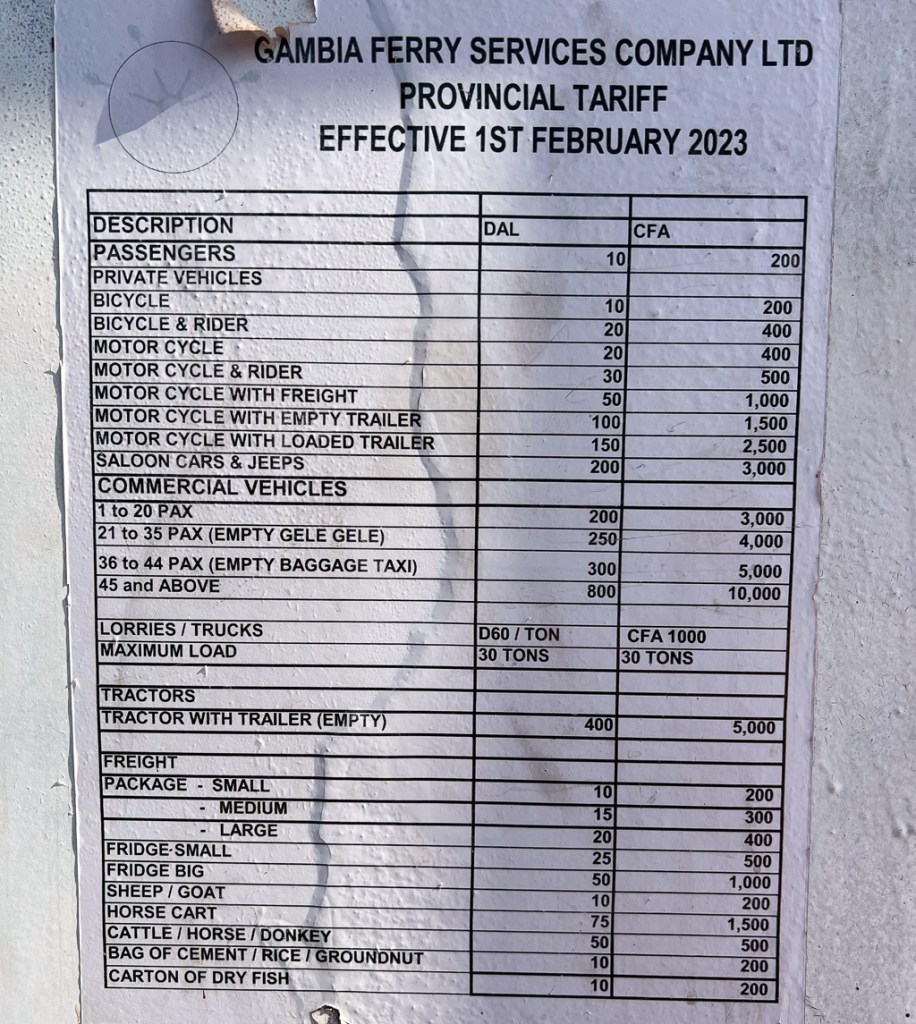
The following price list for the ferry gave us a first indication that this would be very different from any ferry ride in Europe. There were prices for sheep, goats, horse carts, donkeys, bags of rice, or cartons of dried fish.
We were able to catch the next ferry.
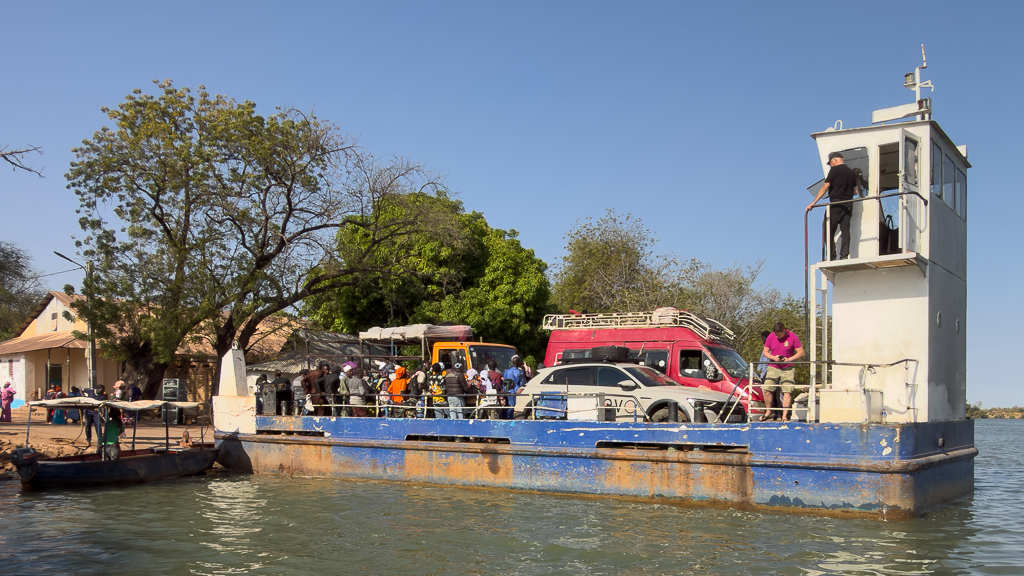
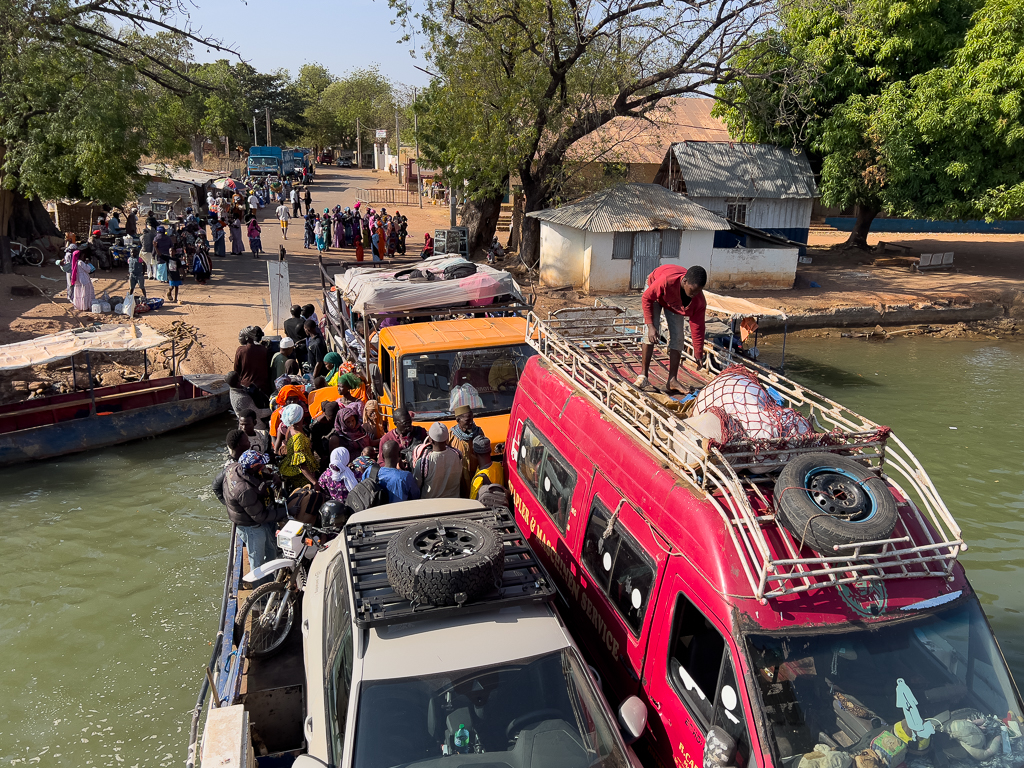
The loading of the ferry was indeed crazy.
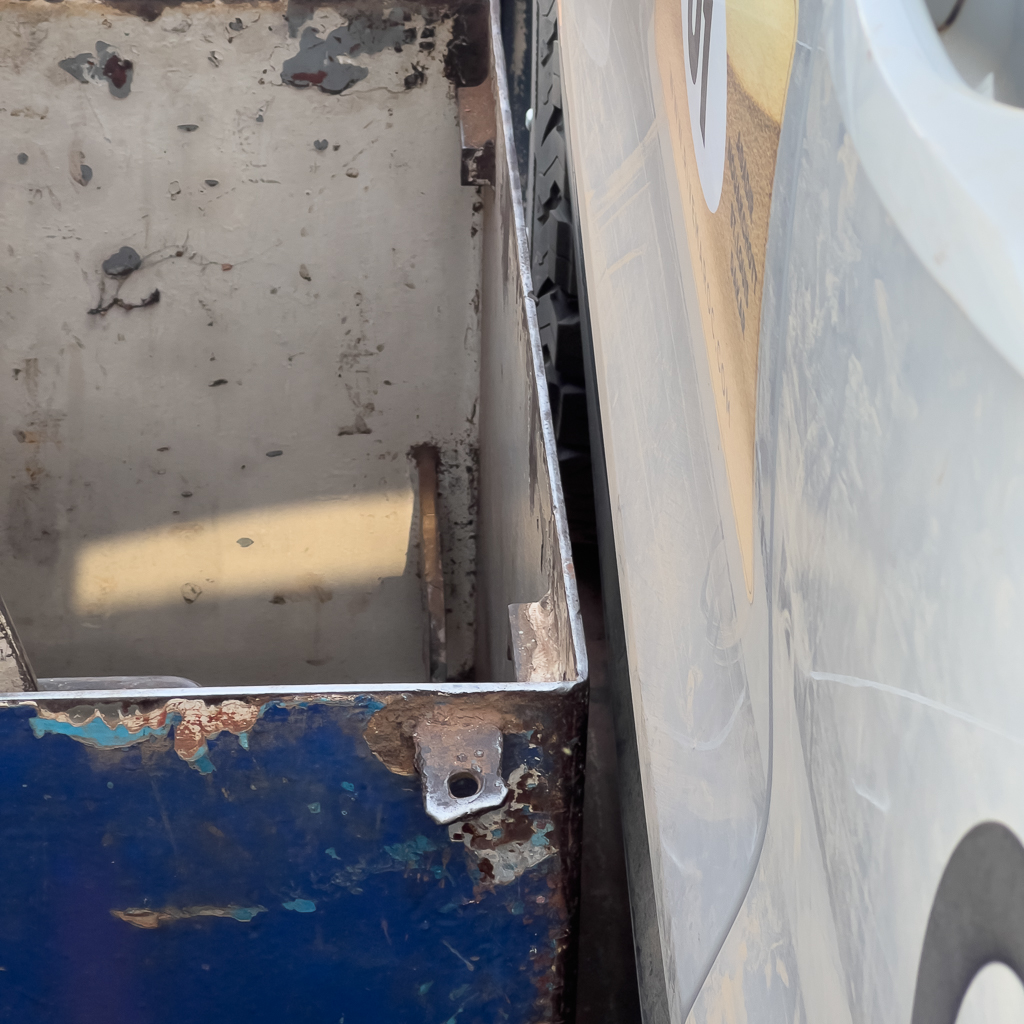
The cars were placed with literally just mm between them.
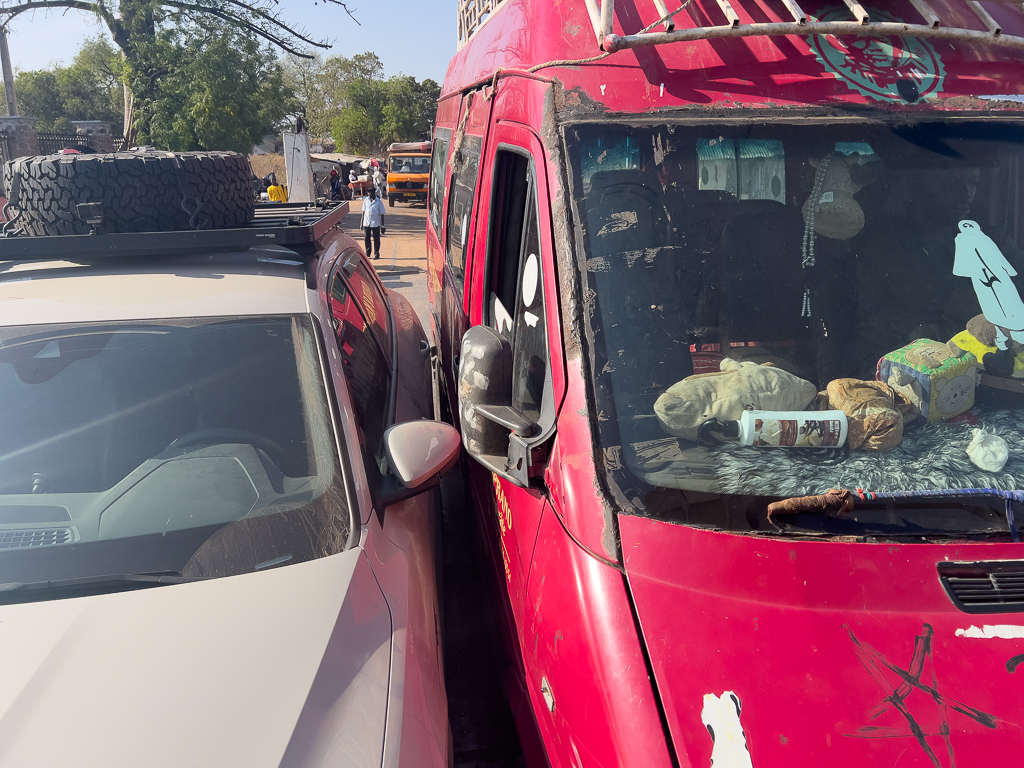
Since I couldn’t see anything from the inside, I had to 100% rely on the instructions of the people loading the ferry. But luckily, they knew what they were doing, and everything went well without any scratches to my car.
While loading the ferry, someone tried to lift a goat up to the roof rack of the van. It slipped and nearly fell into the river. The guy on the van caught the goat in mid-air in the last second.
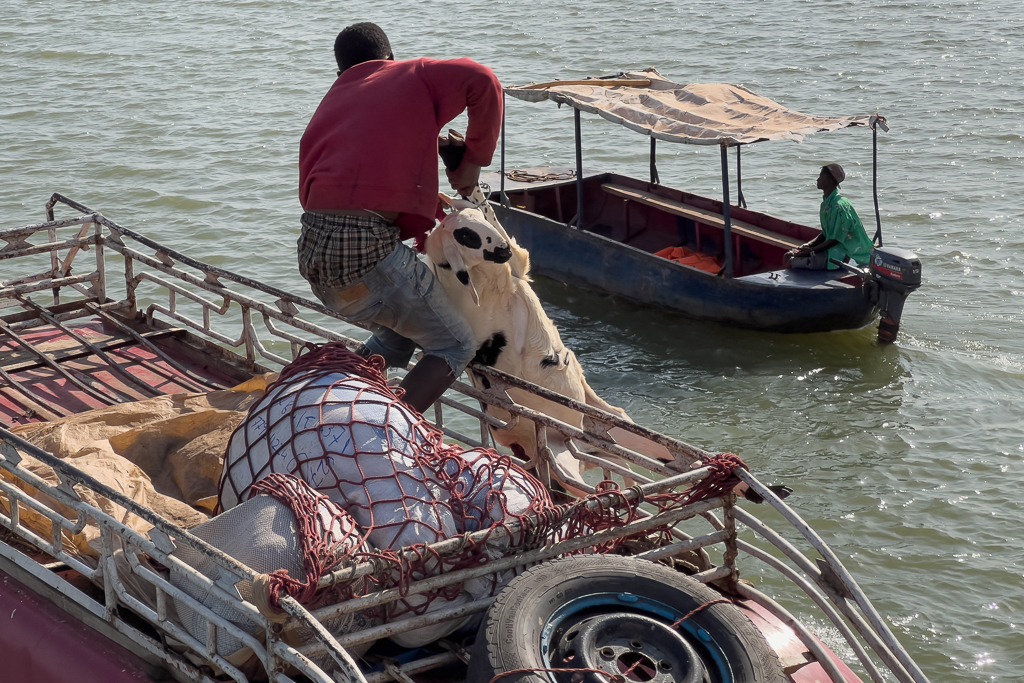
Then every remaining space between the cars was filled with pedestrians, and the ferry set off.
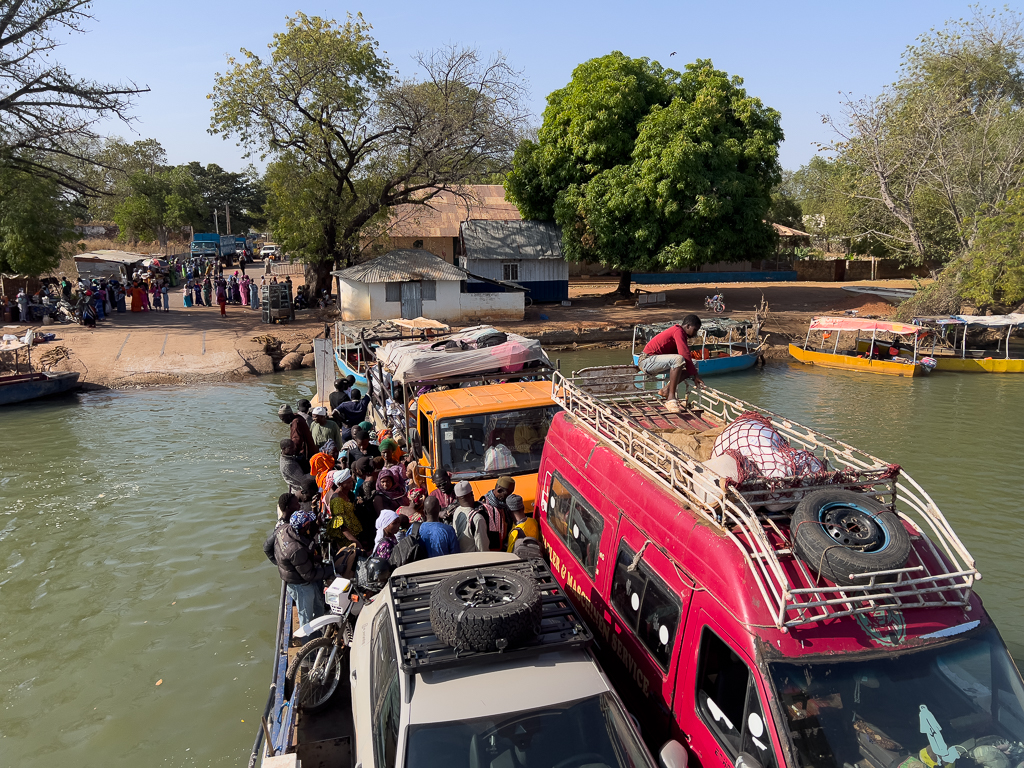
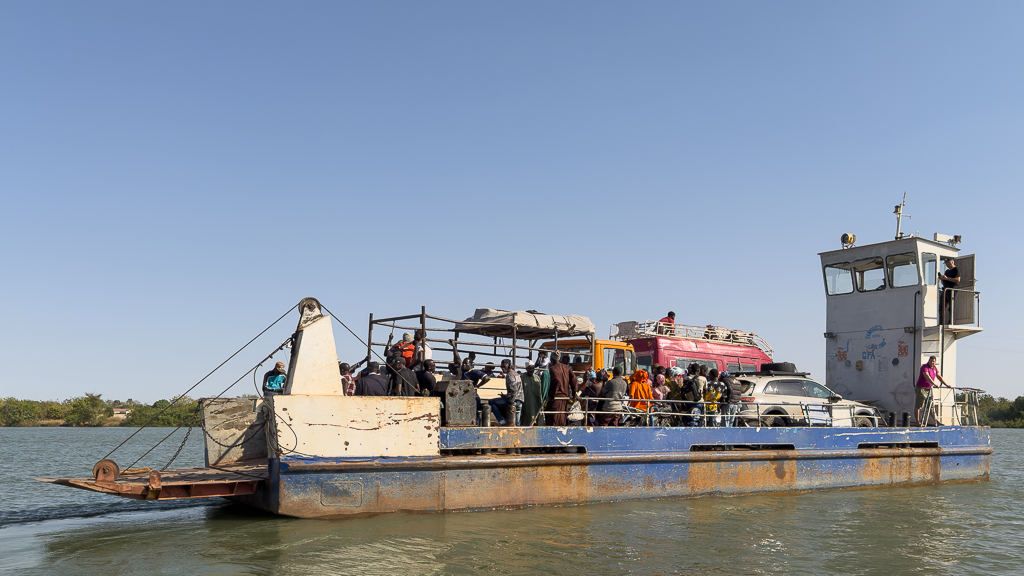
Just a few minutes later, we arrived on the other side of the Gambia River, and the unloading process started.
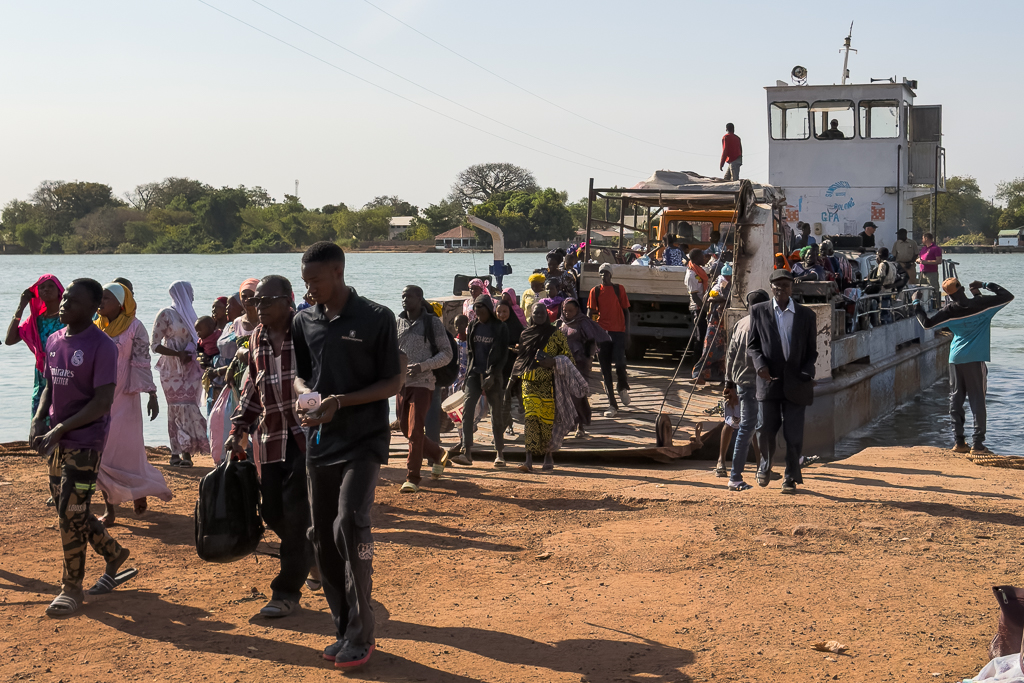
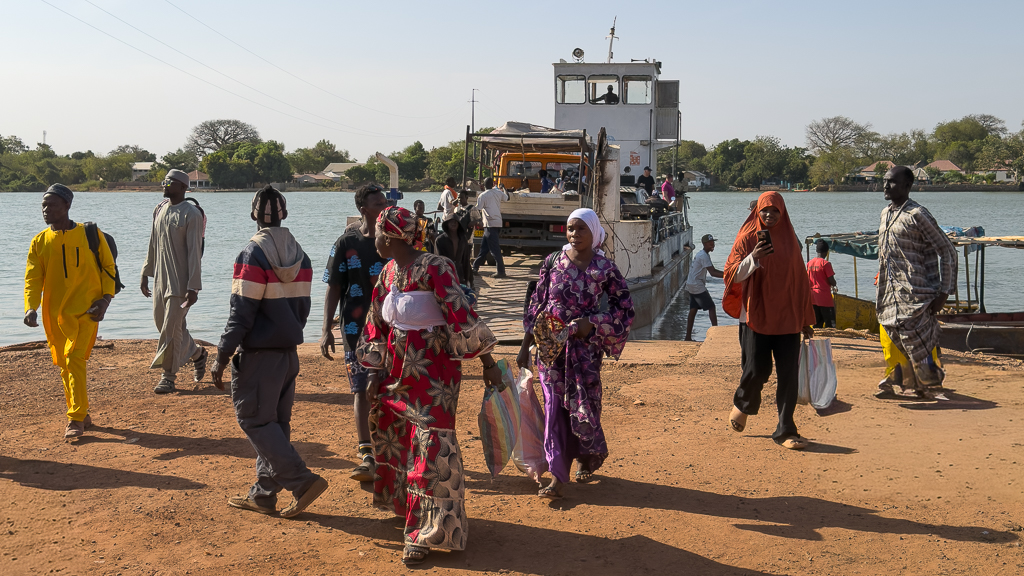
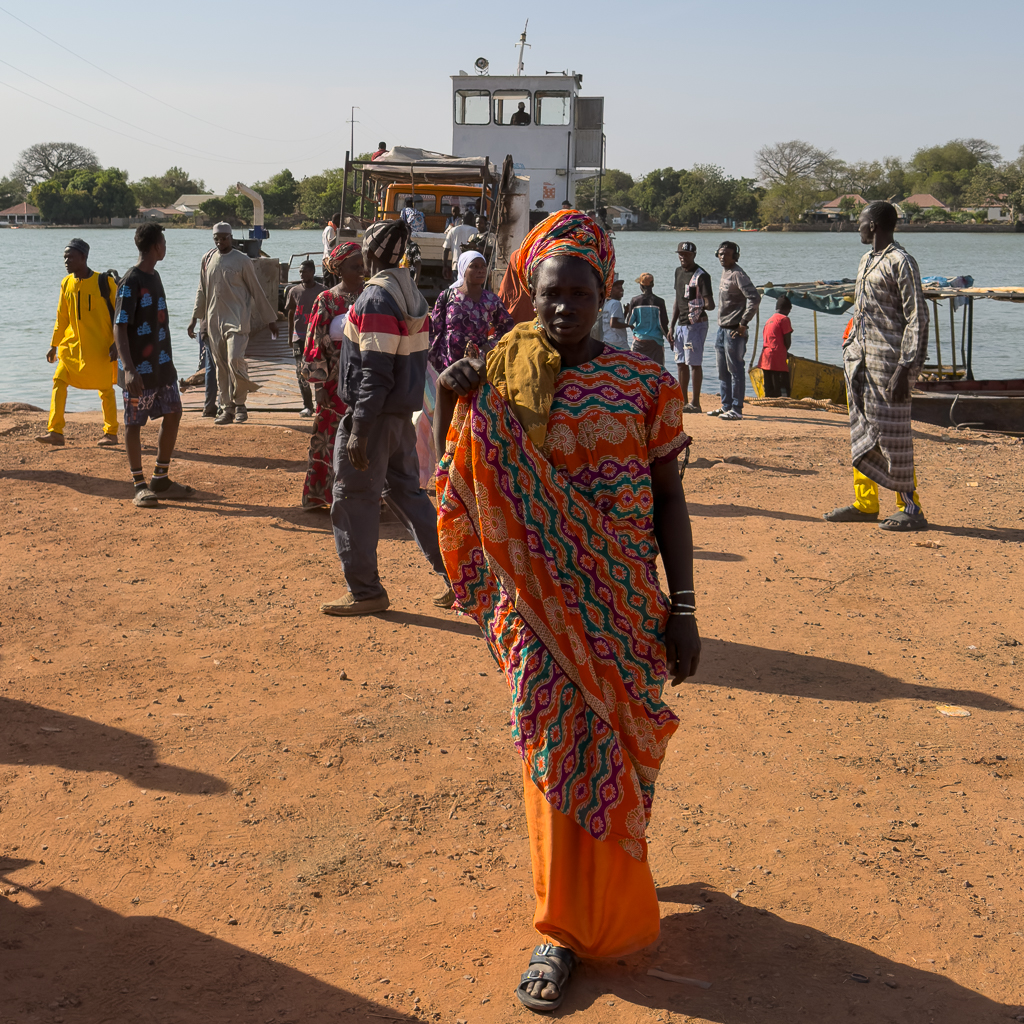
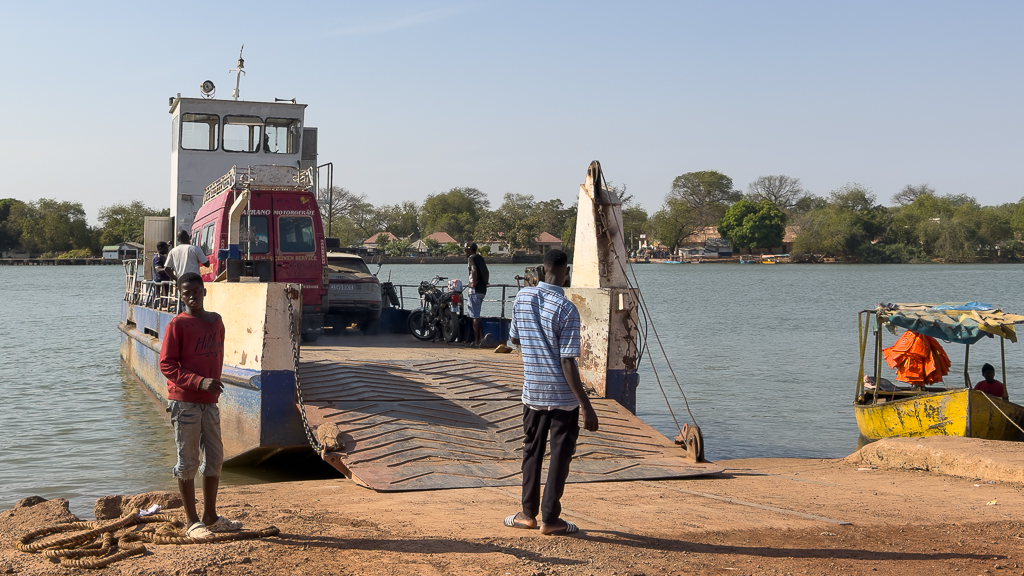
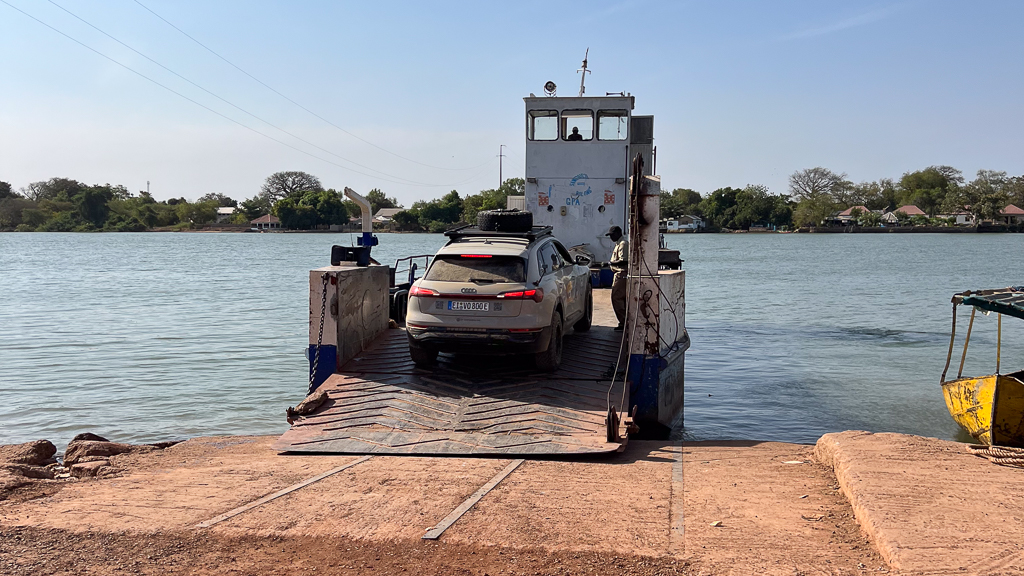
All went well. The ferry ride was definitely a crazy and slightly nerve-wracking experience. But I also really enjoyed it and would not hesitate to do it again.
Via the North Bank and Farafenni, we drove back to The Bridge Hotel near Soma. Besides countless checkpoints (all very friendly), it was an easy drive.
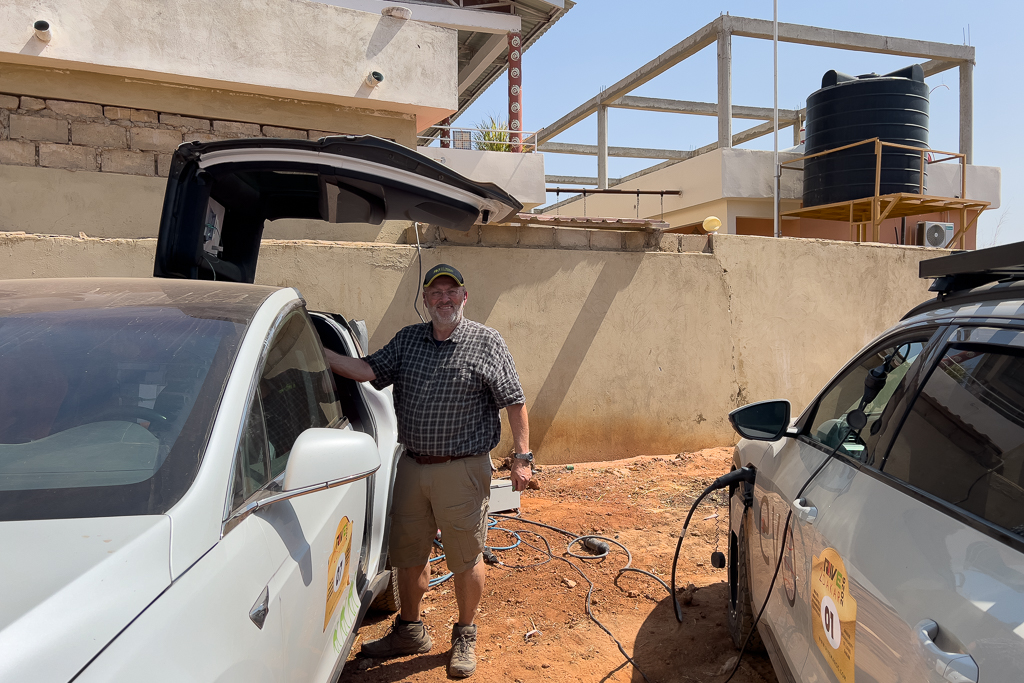
When we arrived at the hotel, the Tesla was already fully charged, and we could plug in the Audi again.
If you want to charge your car at The Bridge Hotel and don’t have the equipment or knowledge to connect directly to the power distributor, there is another option: in the kitchen of the restaurant, there are a couple of CEE 3-phase connectors.
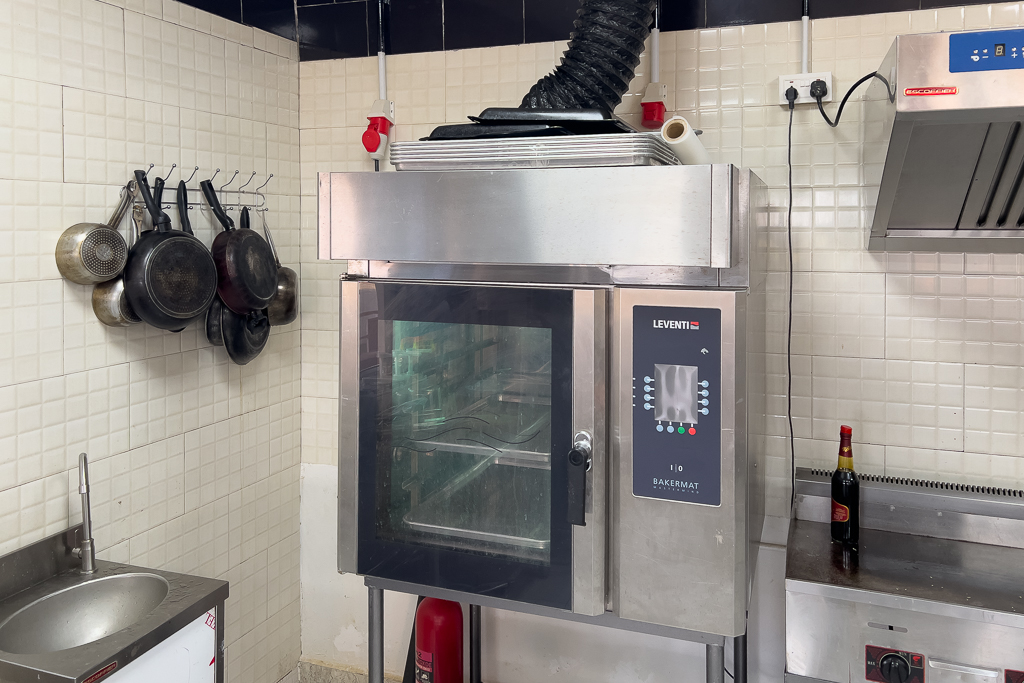
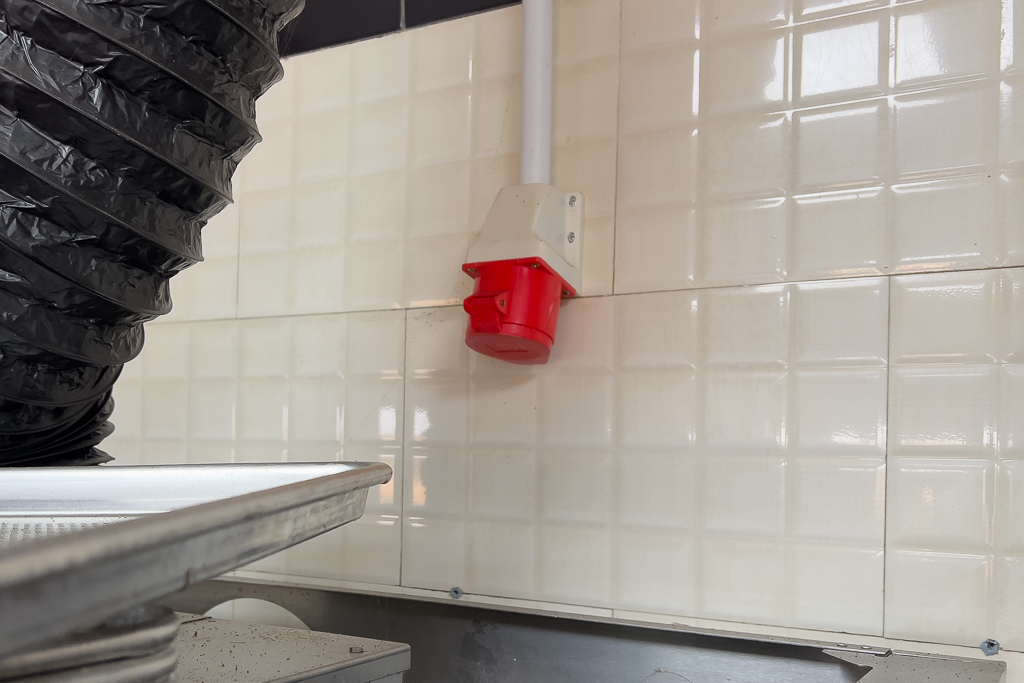
With a long enough extension cable, you should be able to charge from these connectors if you park your car directly at the hotel entrance. But you would need at least a 30m cable. We have added this place to PlugShare.
Since we were already back at the hotel in the early afternoon, Hans used the remaining day to get some work done and installed his 2-display setup in the hotel restaurant.
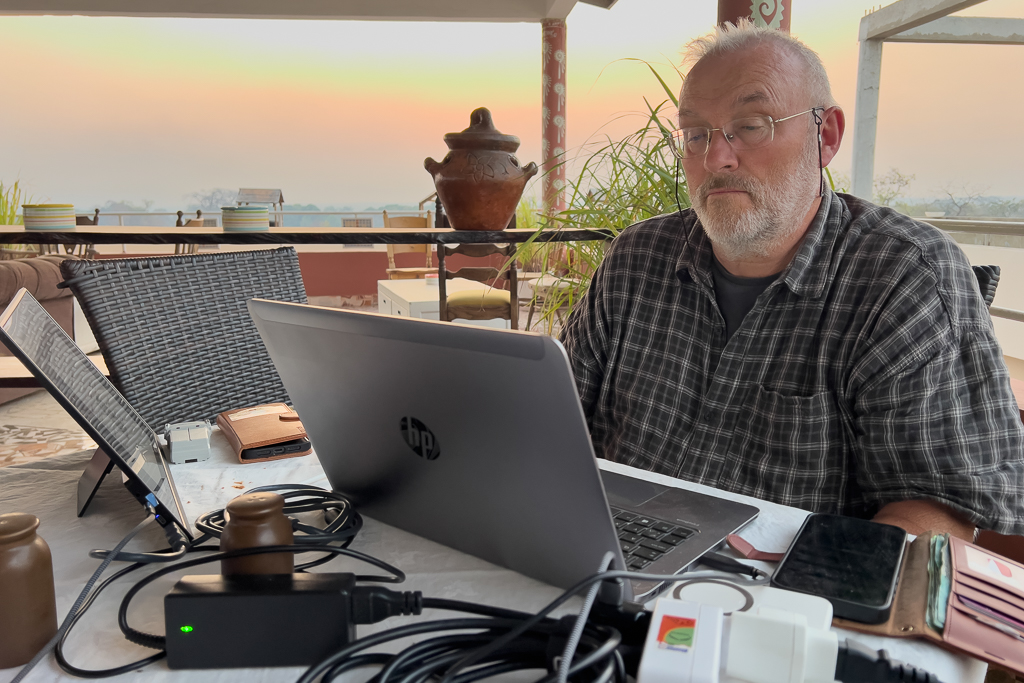
Since there were a couple of bushfires nearby, which led to a lot of smoke in the air, we had a spectacular sunset.
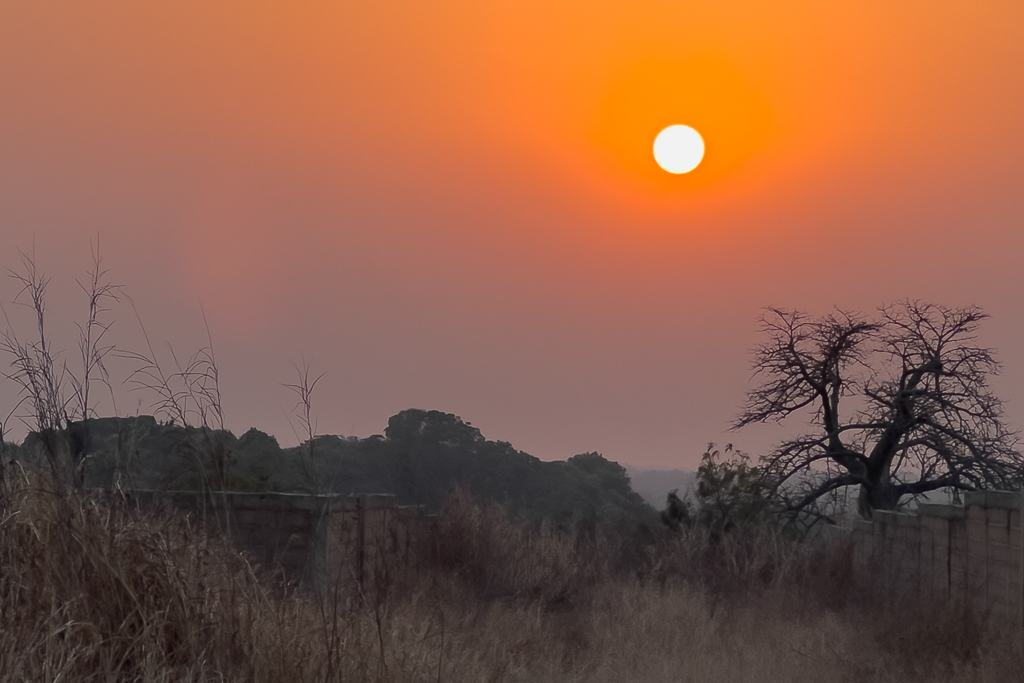
This was also the furthest point on our expedition. From now on, we will be driving back in the direction of Europe.
So far, I have driven 5416km and 118 hours on this trip. The average energy consumption of my Audi was 27.9kWh/100km. And the average velocity over the whole distance was 46km/h.
 EV Overlanding