
While waiting on our Passavant extension and on our EVs to be fully charged, we took a taxi to Saint-Louis to explore the city.
The taxi ride gave us a first impression of how different Senegal is compared to Mauritania.
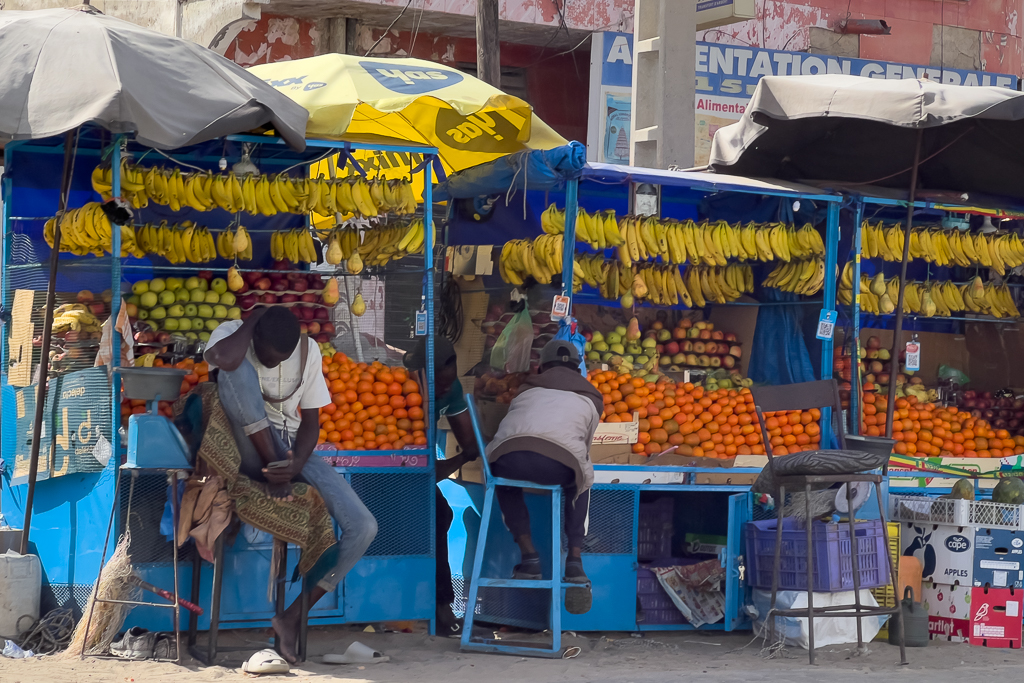
It’s far more lively and colorful, but also a bit more chaotic.
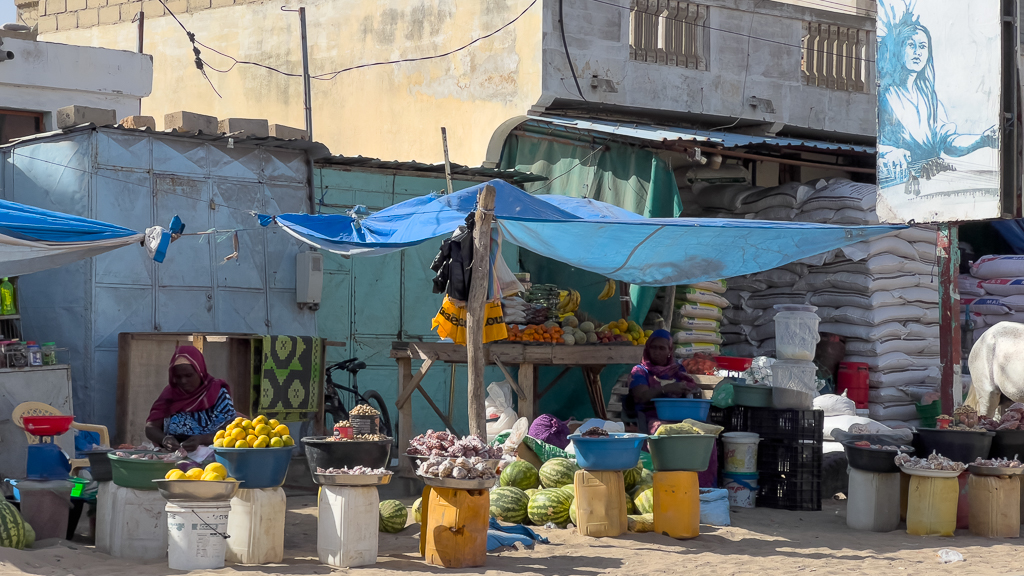
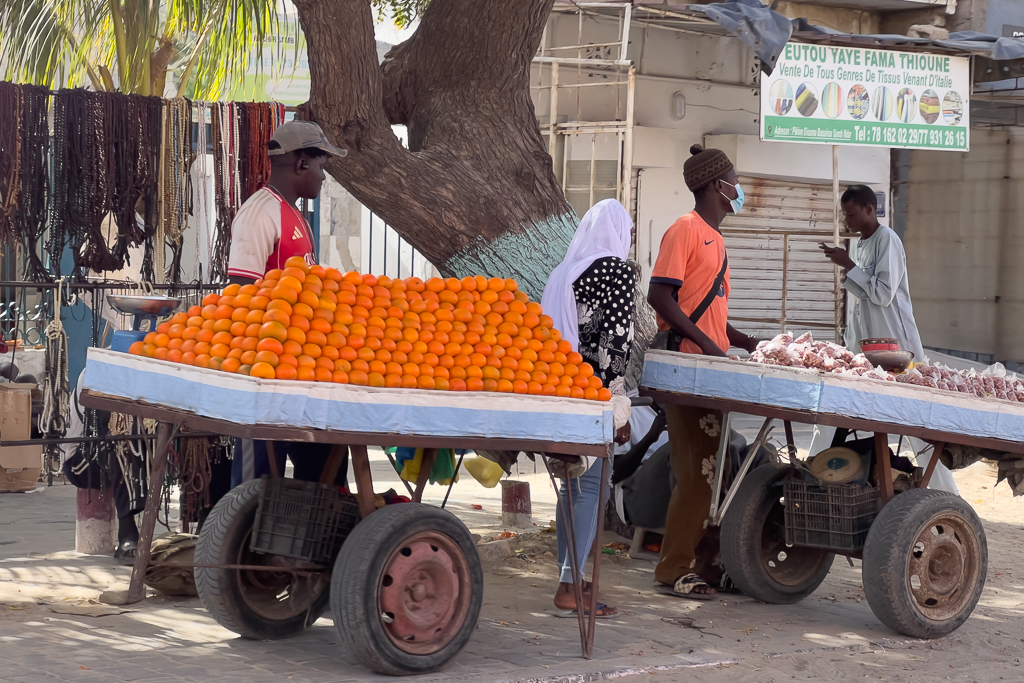
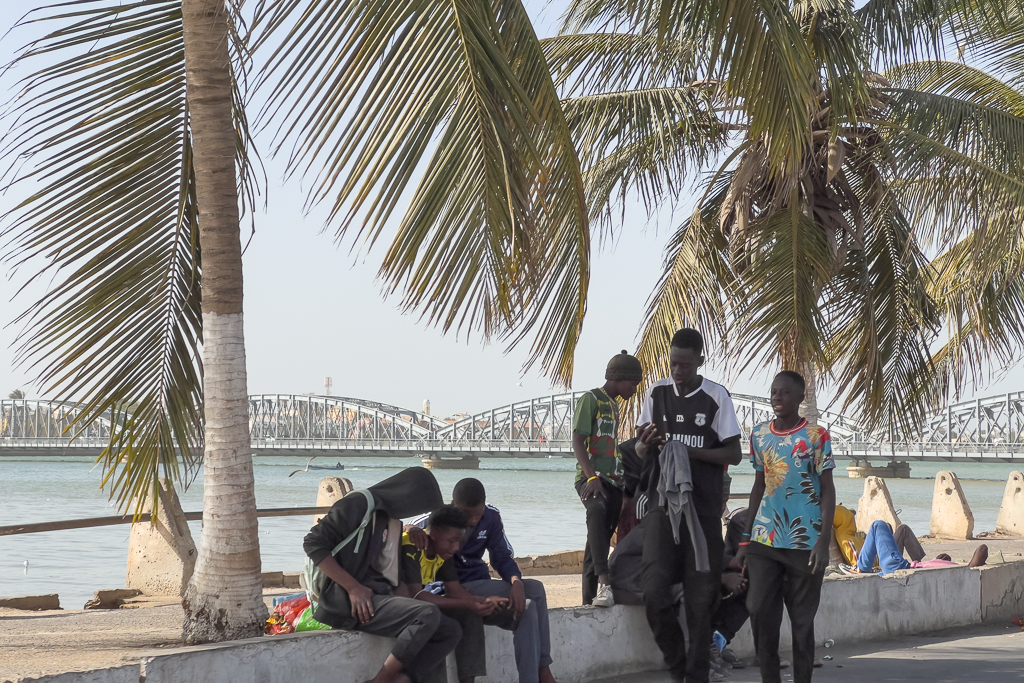
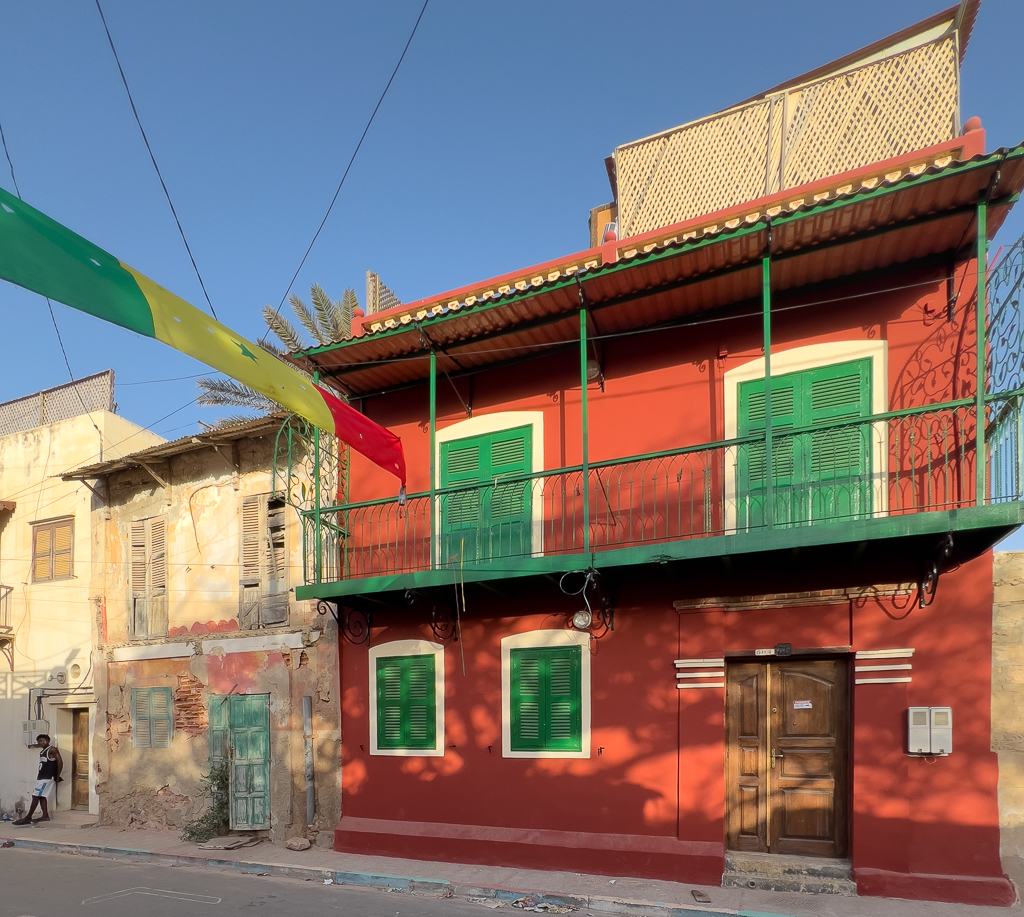
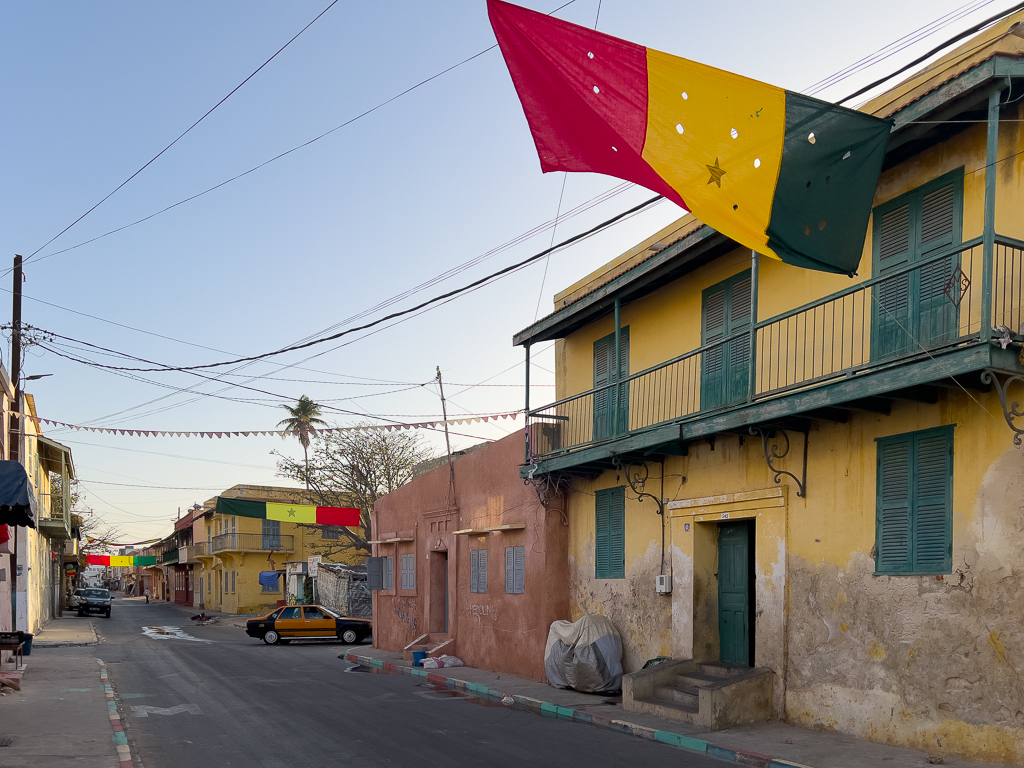
Saint-Louis was the capital of the French colony of Senegal from 1673 until 1902, and you can still find a lot of the colorful colonial architecture in the city center.
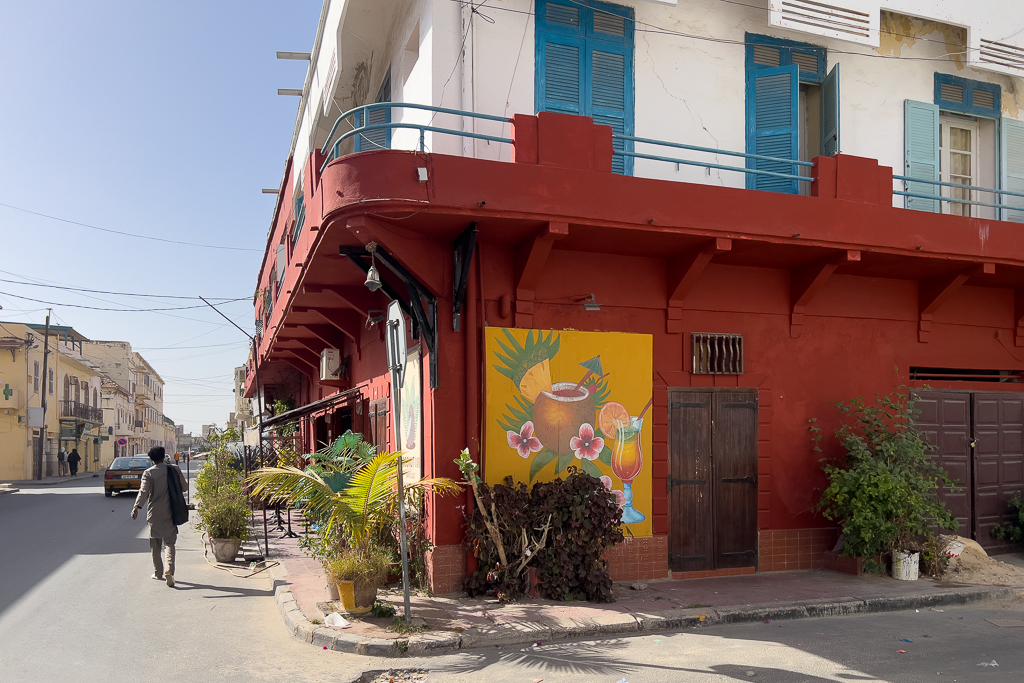
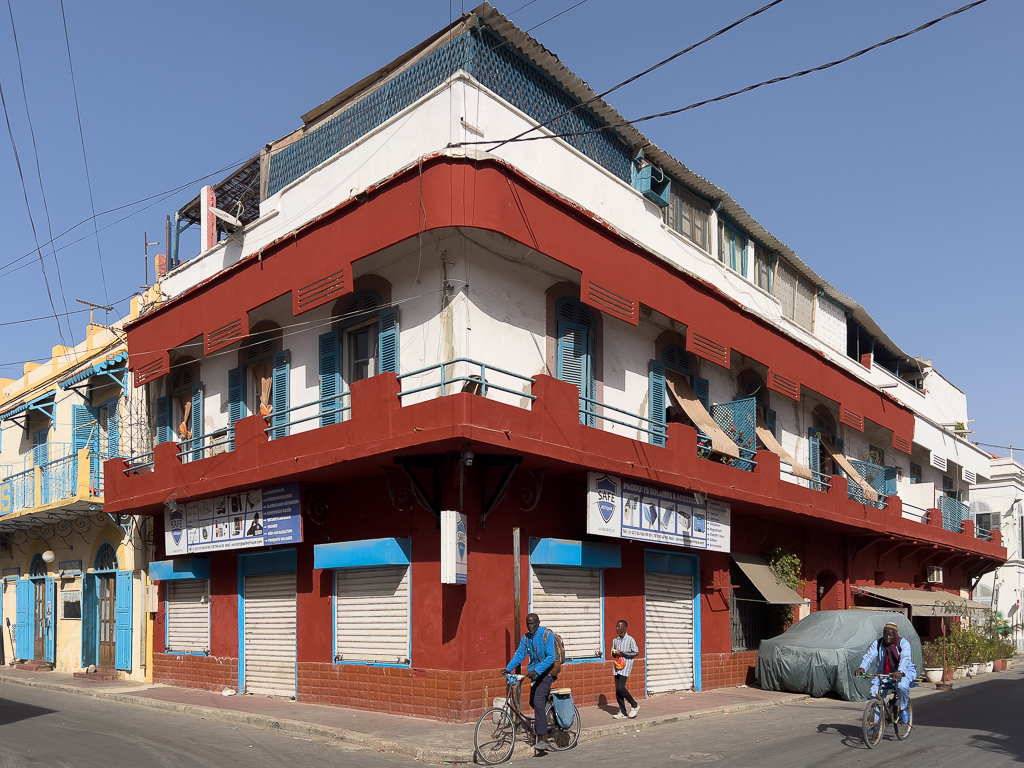
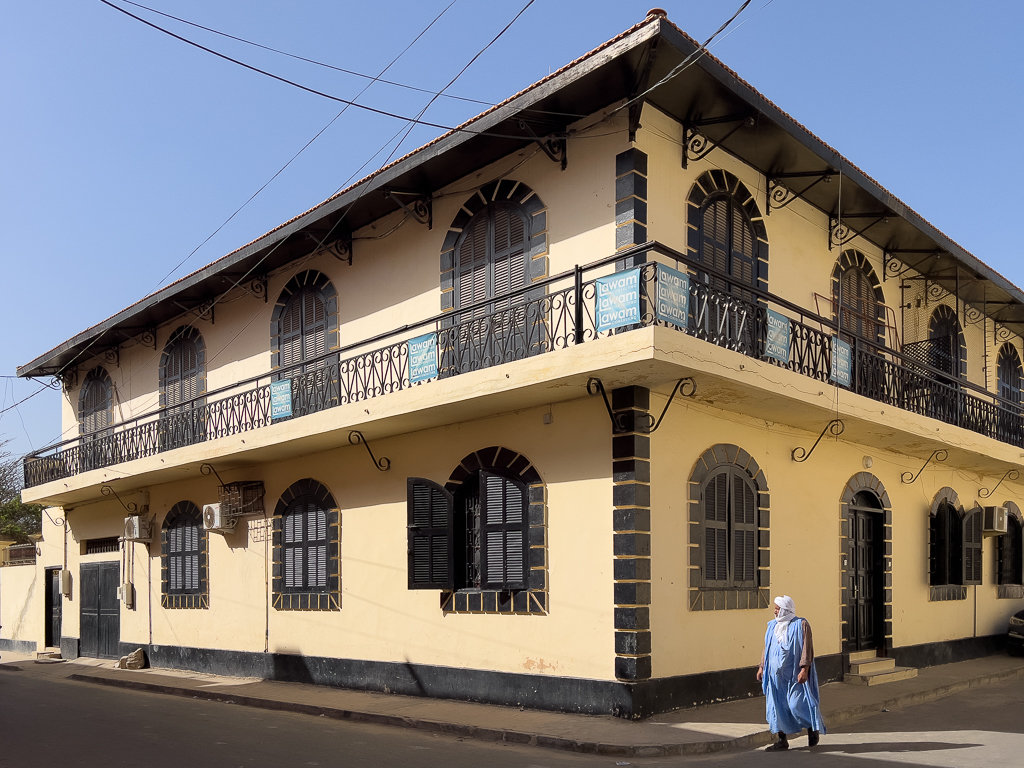
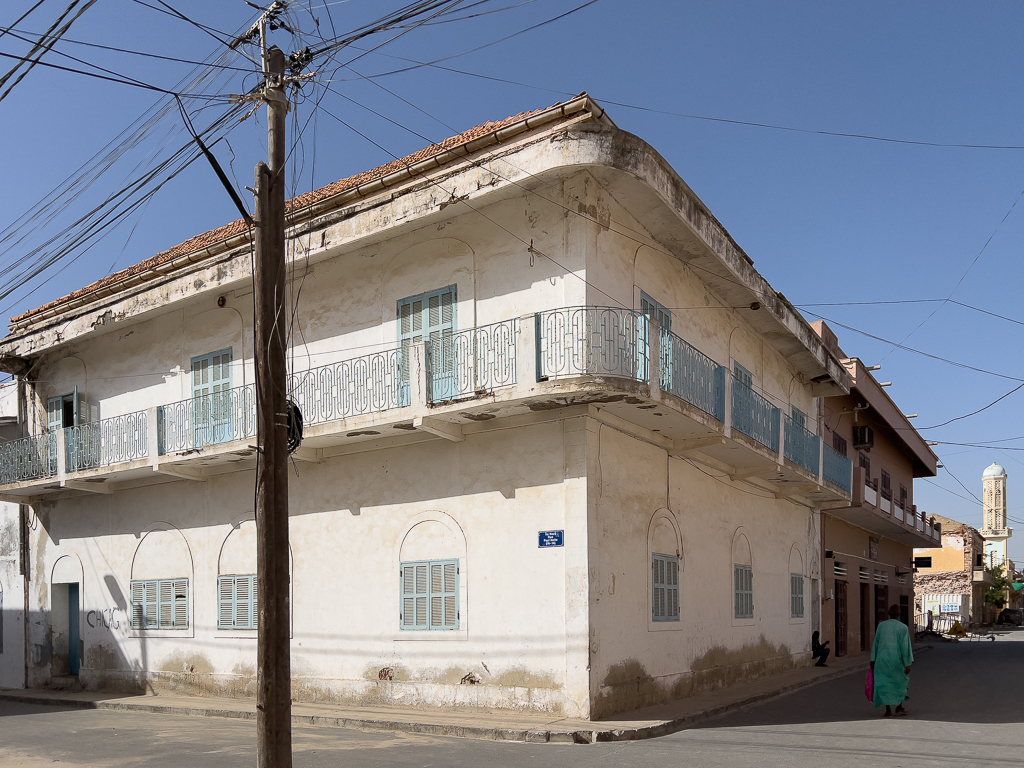
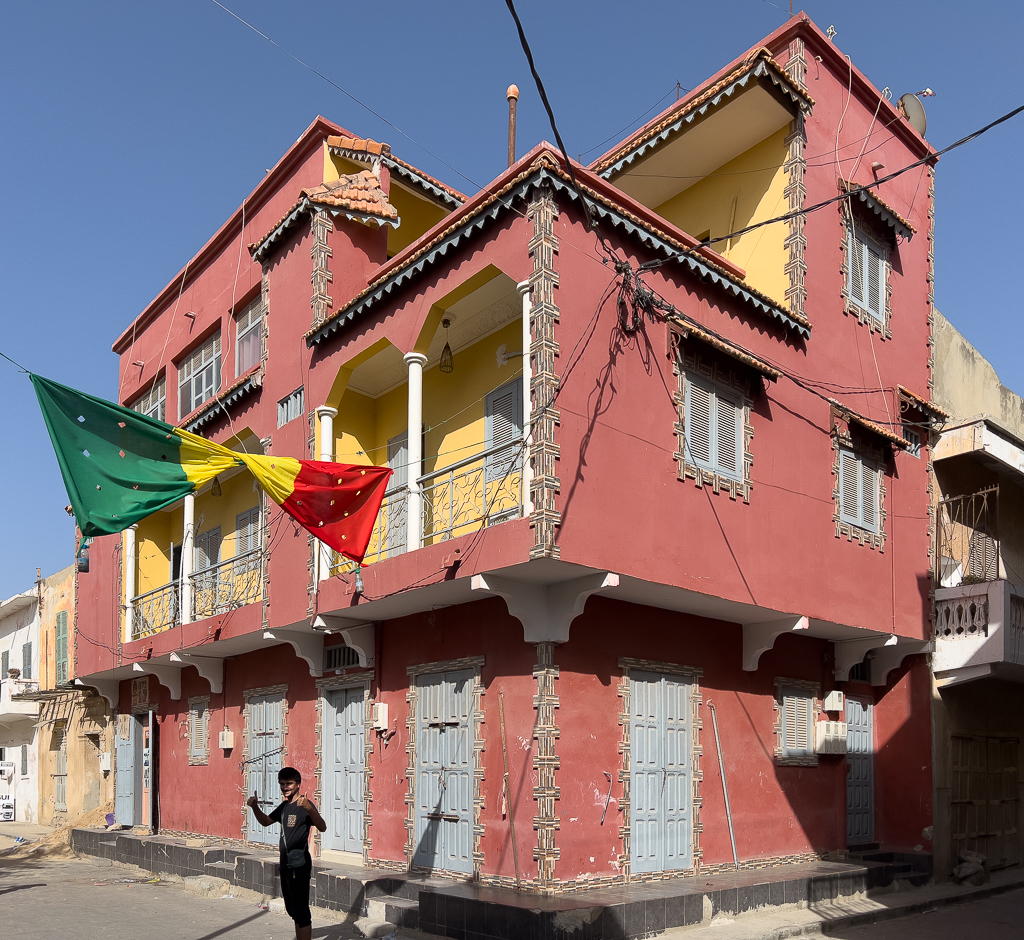
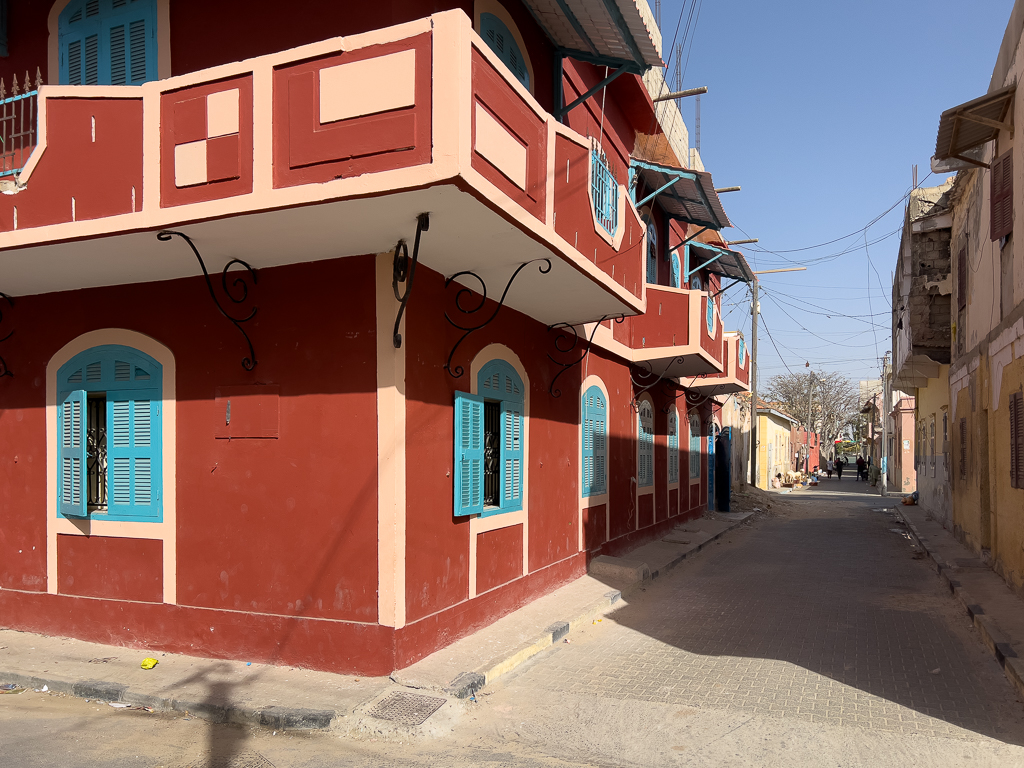
Since 2000, Saint-Louis is also a UNESCO World Heritage Site.
After tourism, fishing is still the most important economic activity in Saint-Louis.
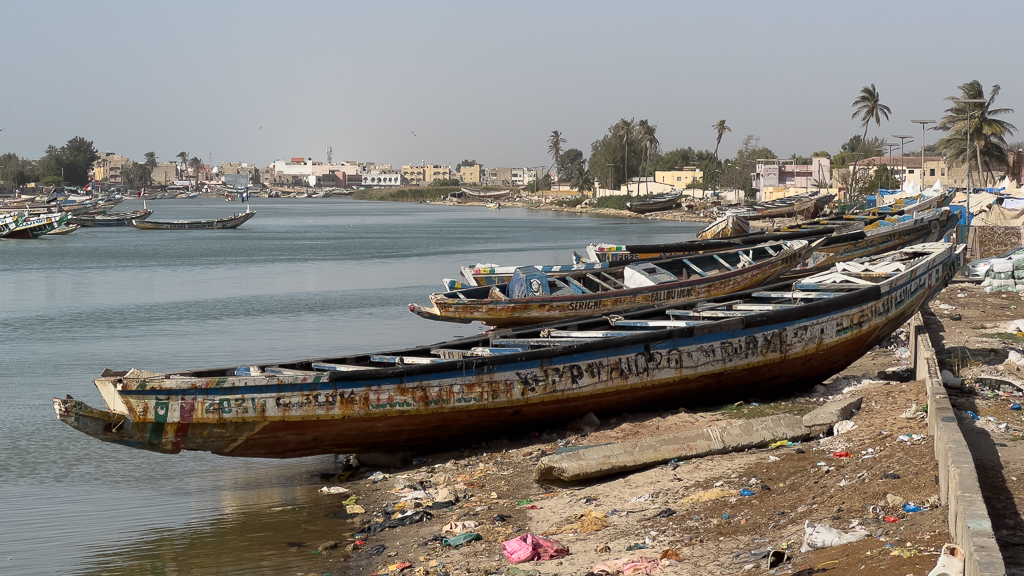
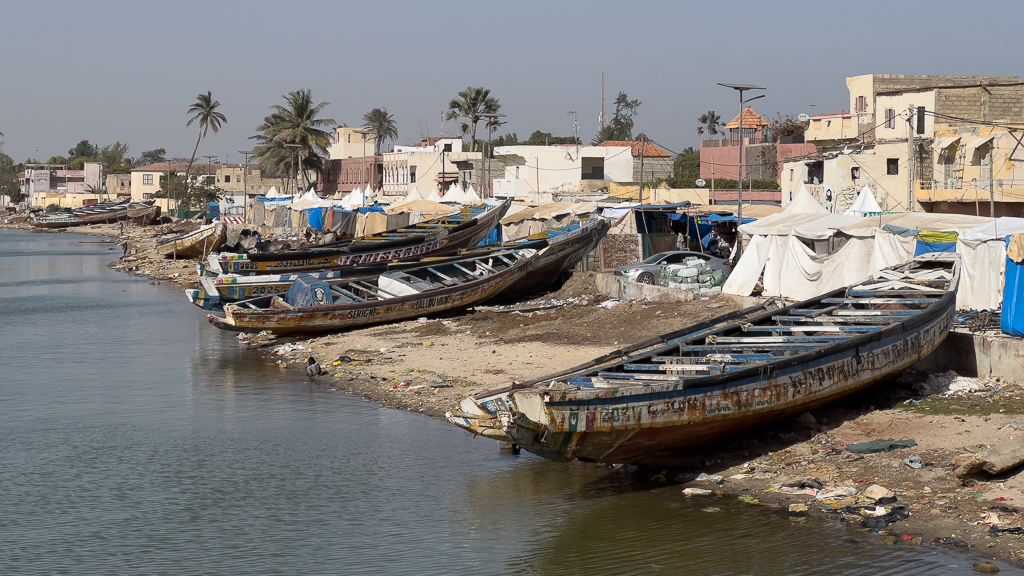
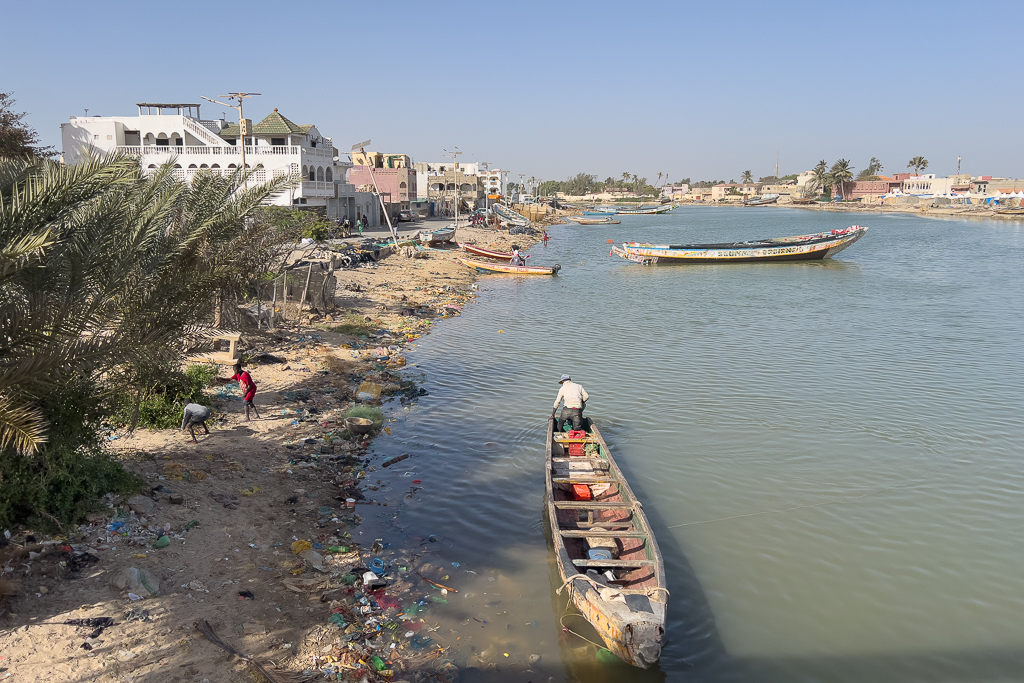
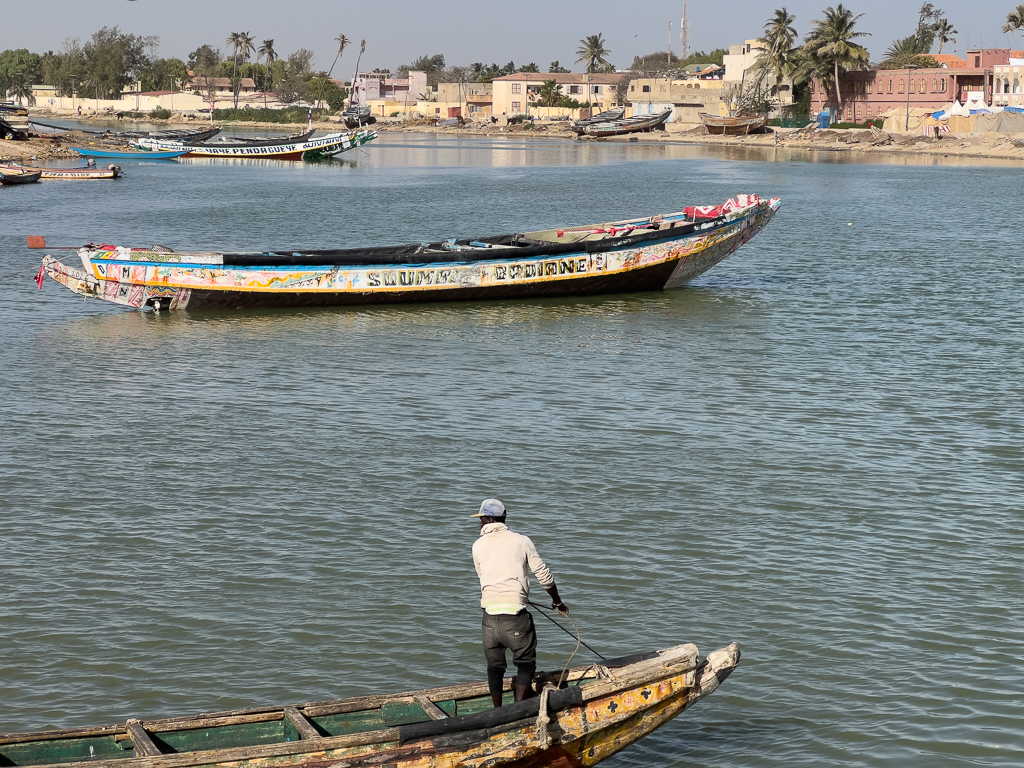
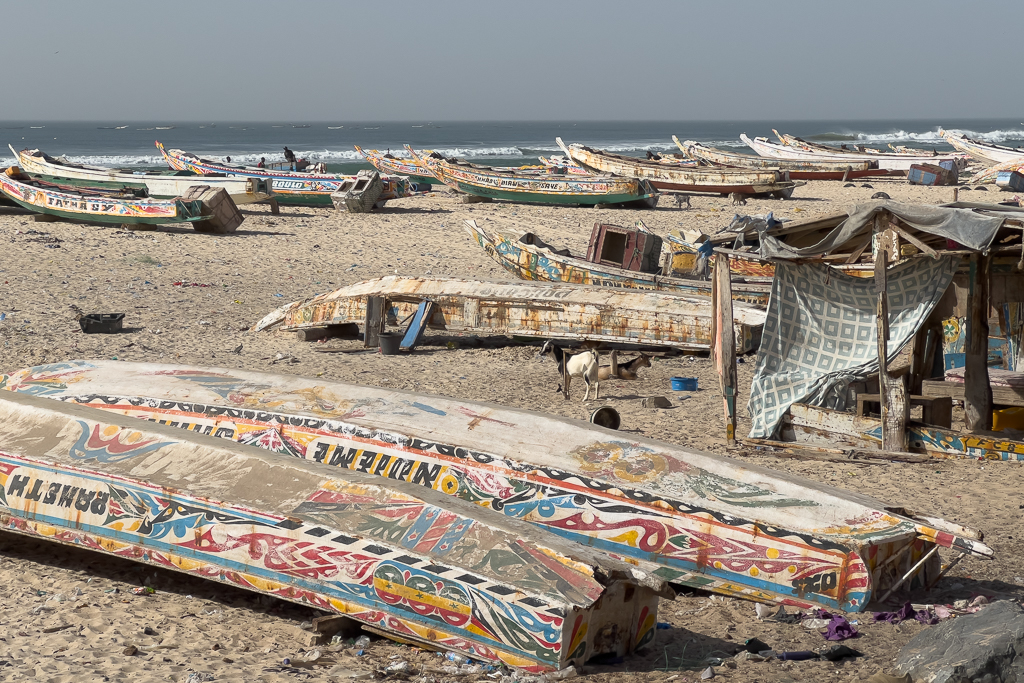
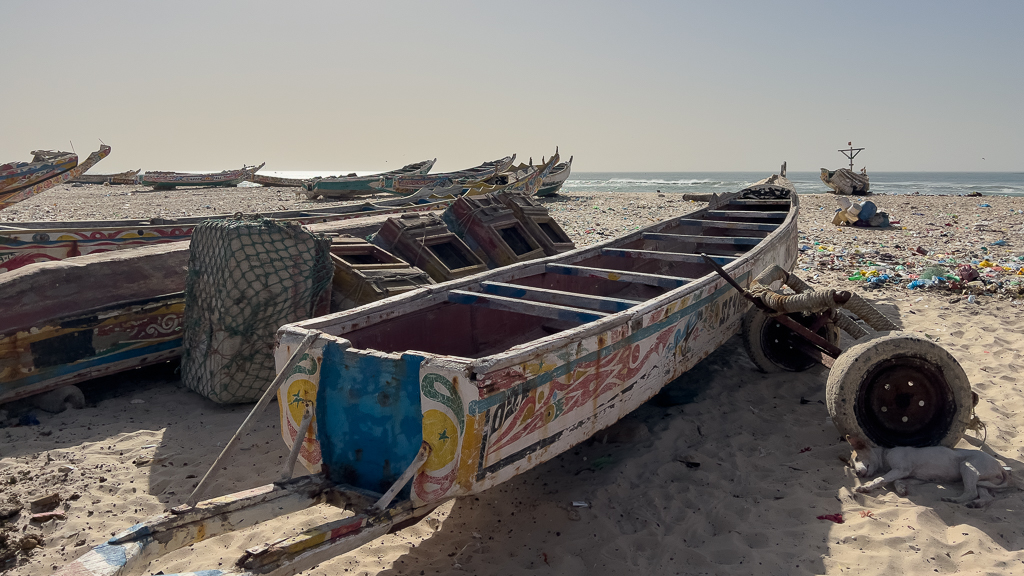
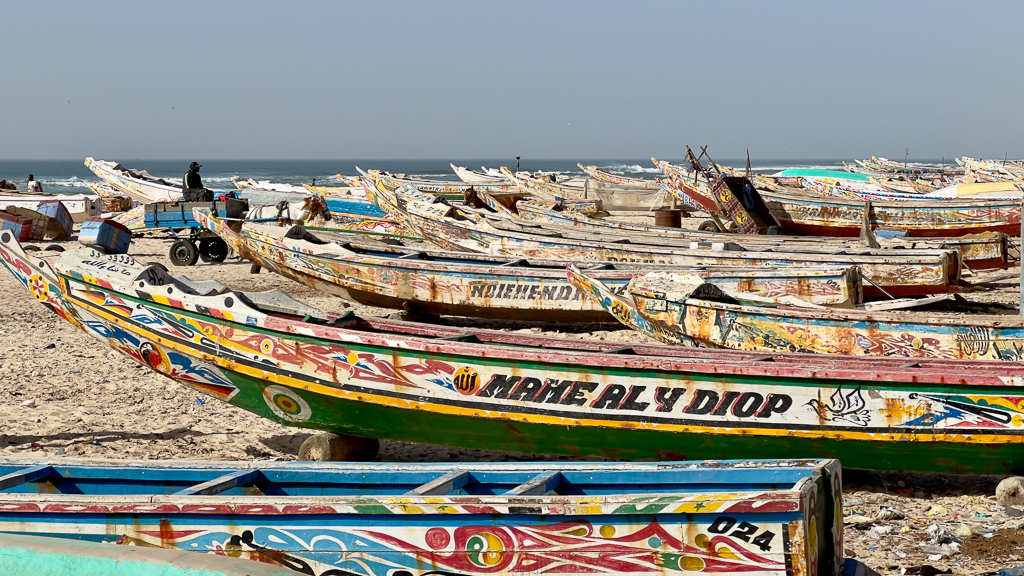
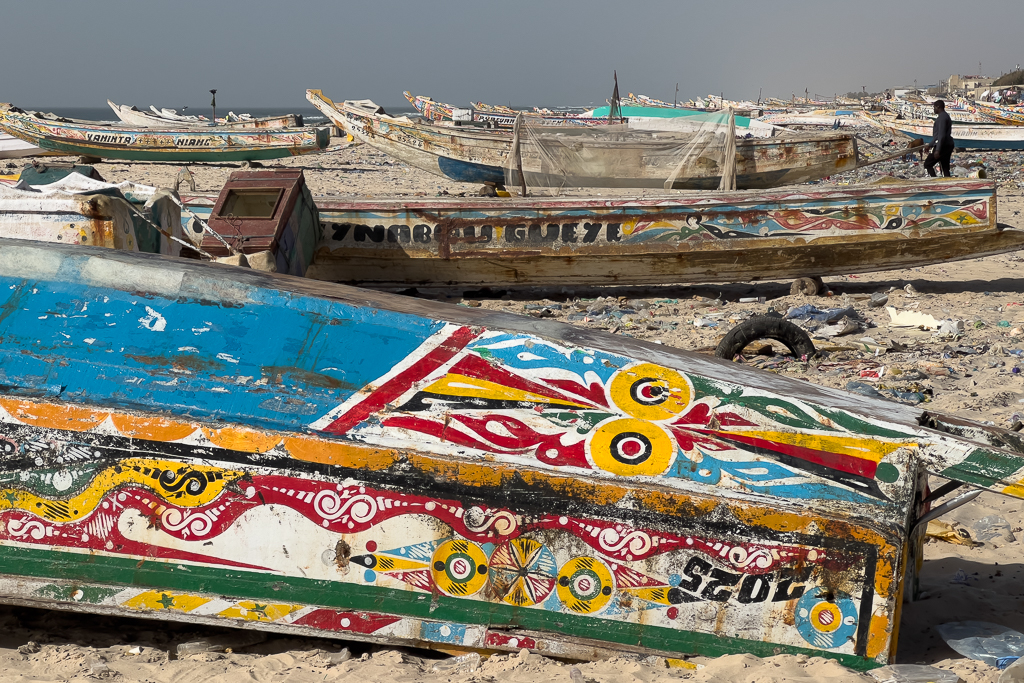
The colonial city center of Saint-Louis is nice and clean. But as soon as you leave this area, you are in a different world with tons of waste and poverty everywhere.
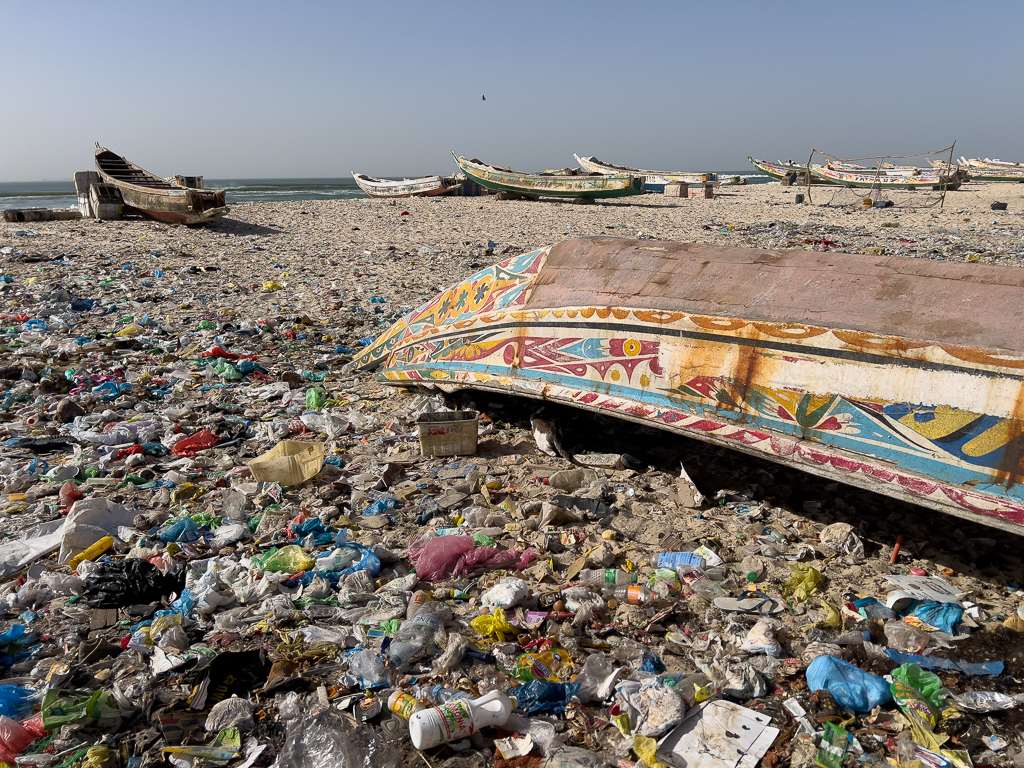
The surroundings near the beach looked like typical African slums. We were the only tourists there, and I wasn’t sure how safe this place really is. But everybody was very friendly to us.
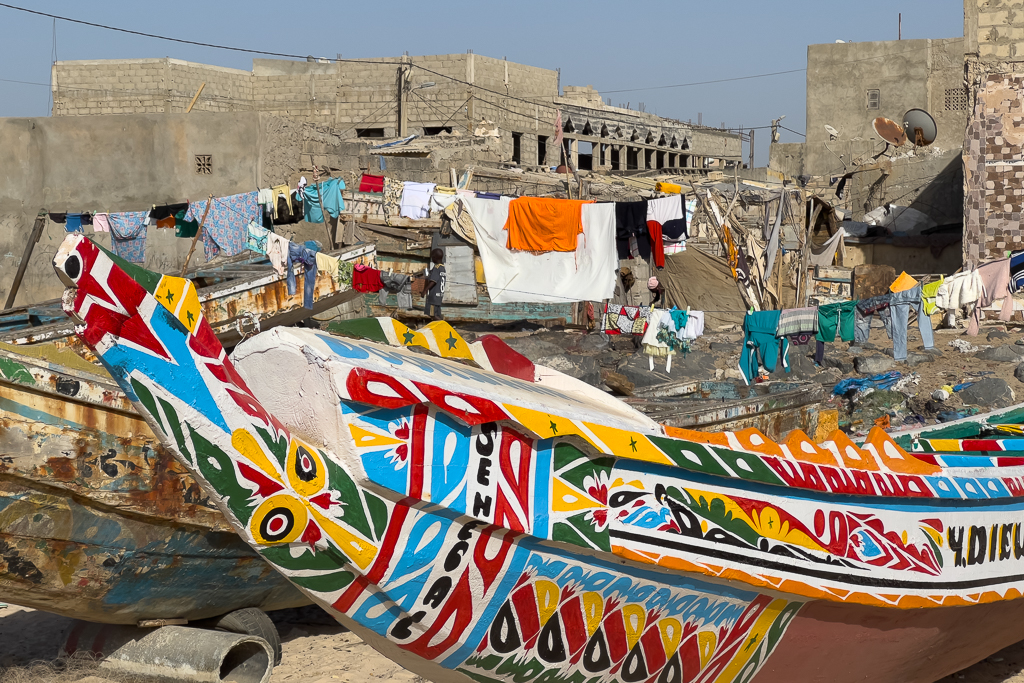
We explored the beach area a bit, but then decided that it might be better to return to the city center.
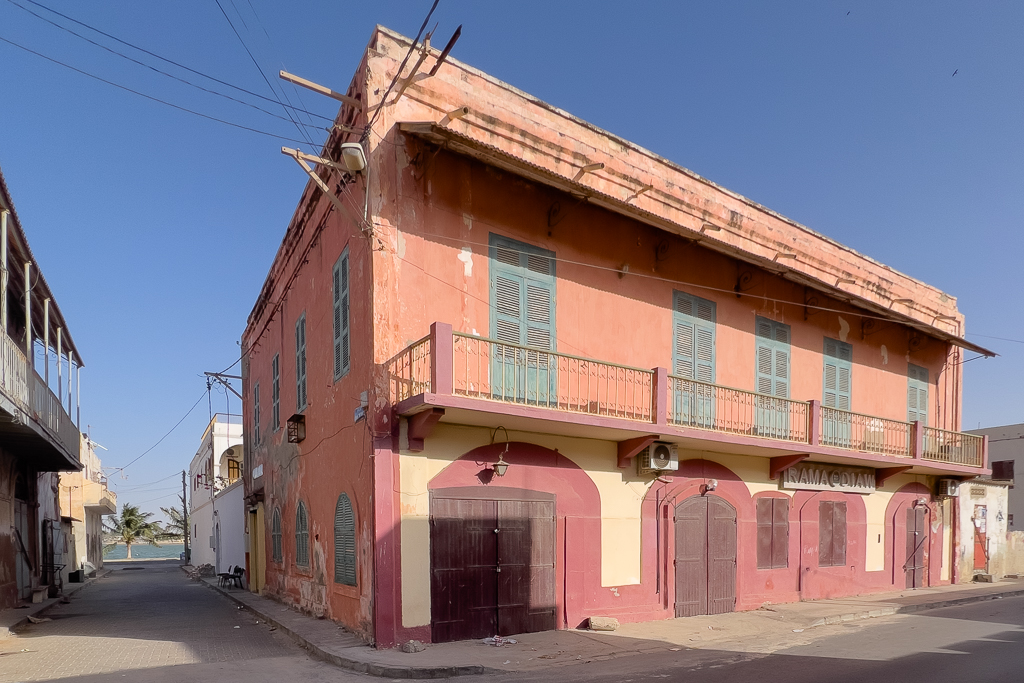
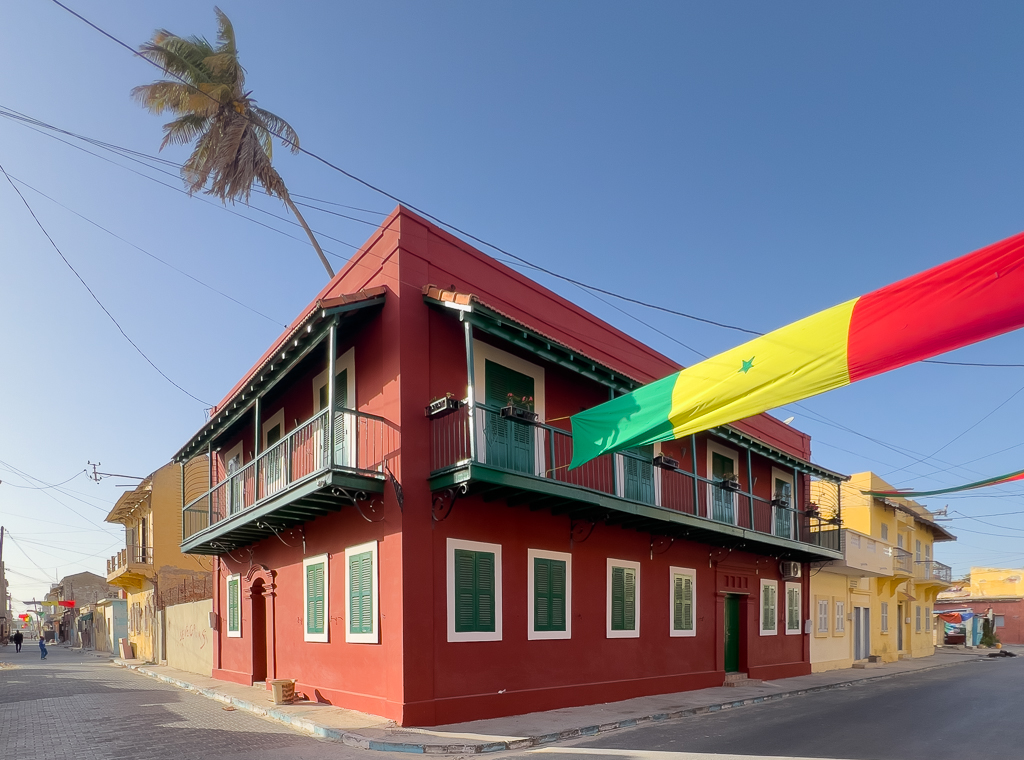
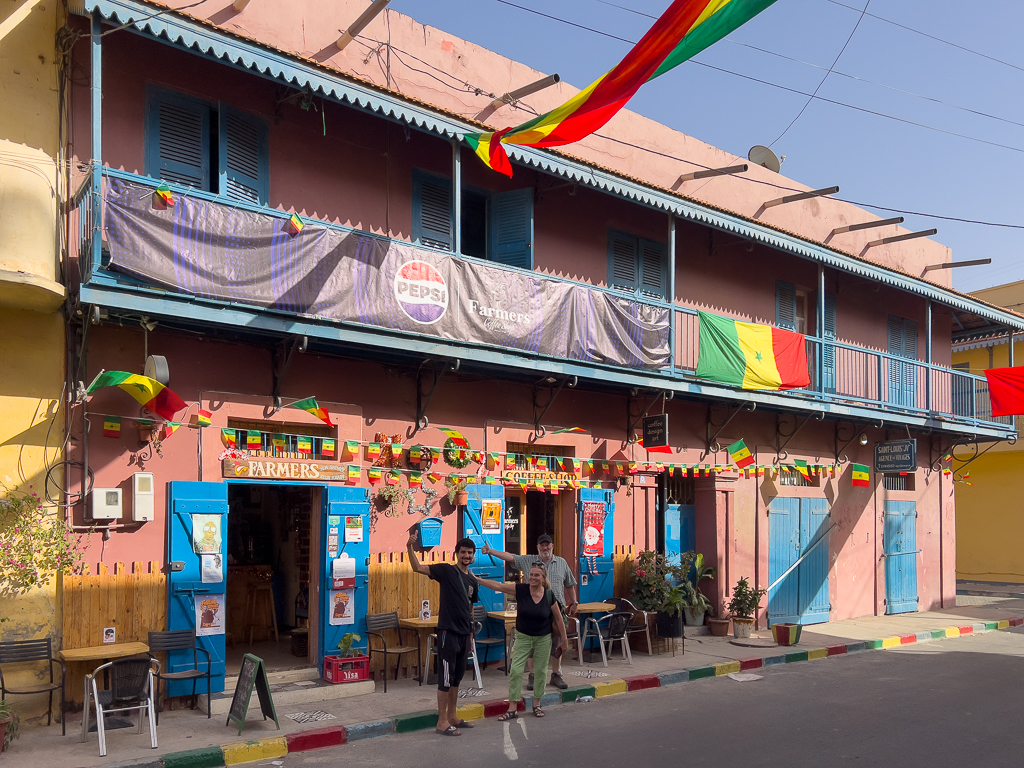
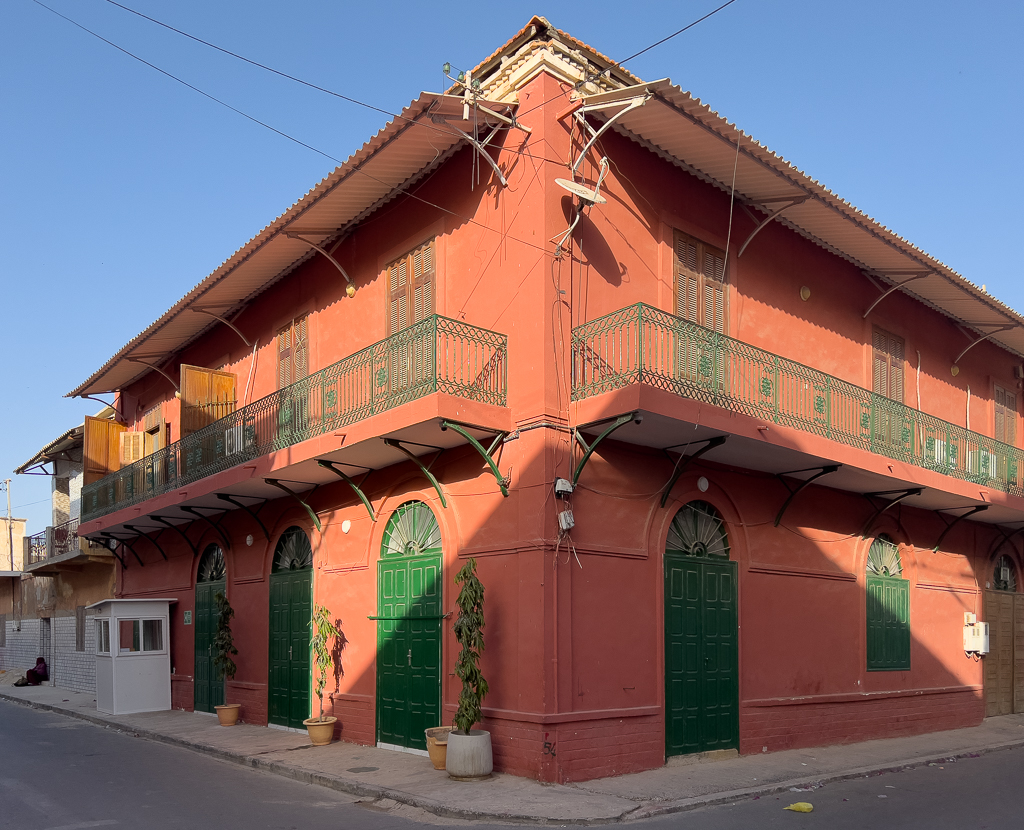
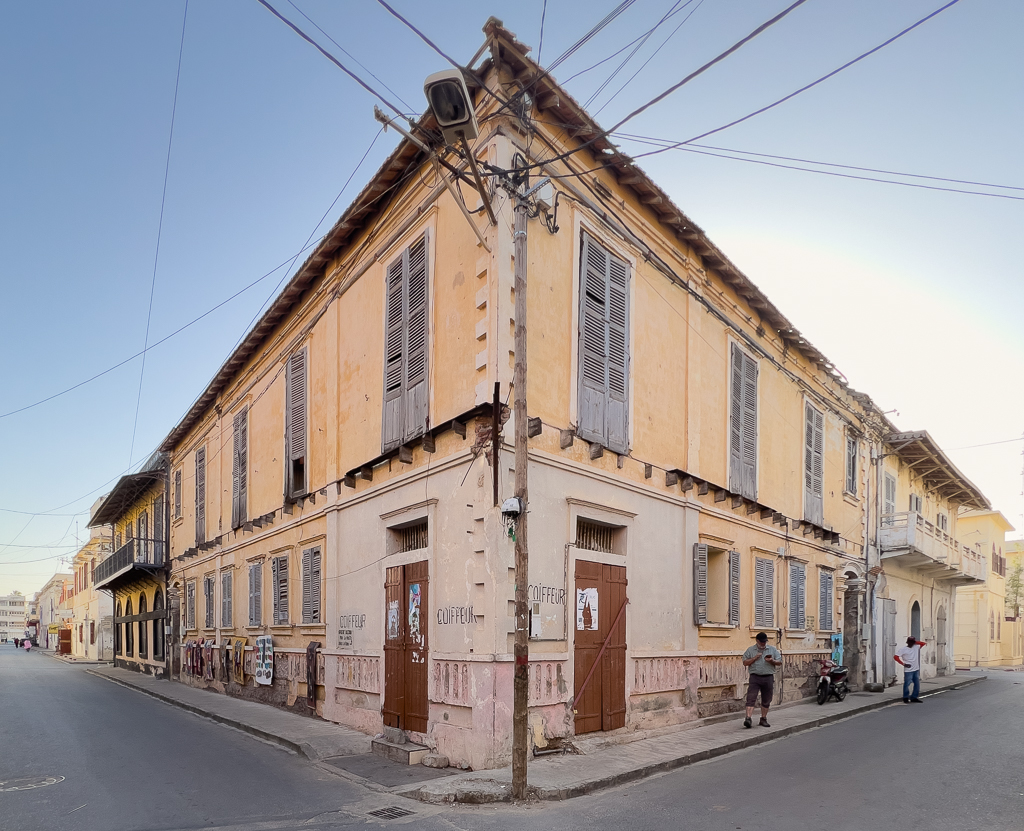
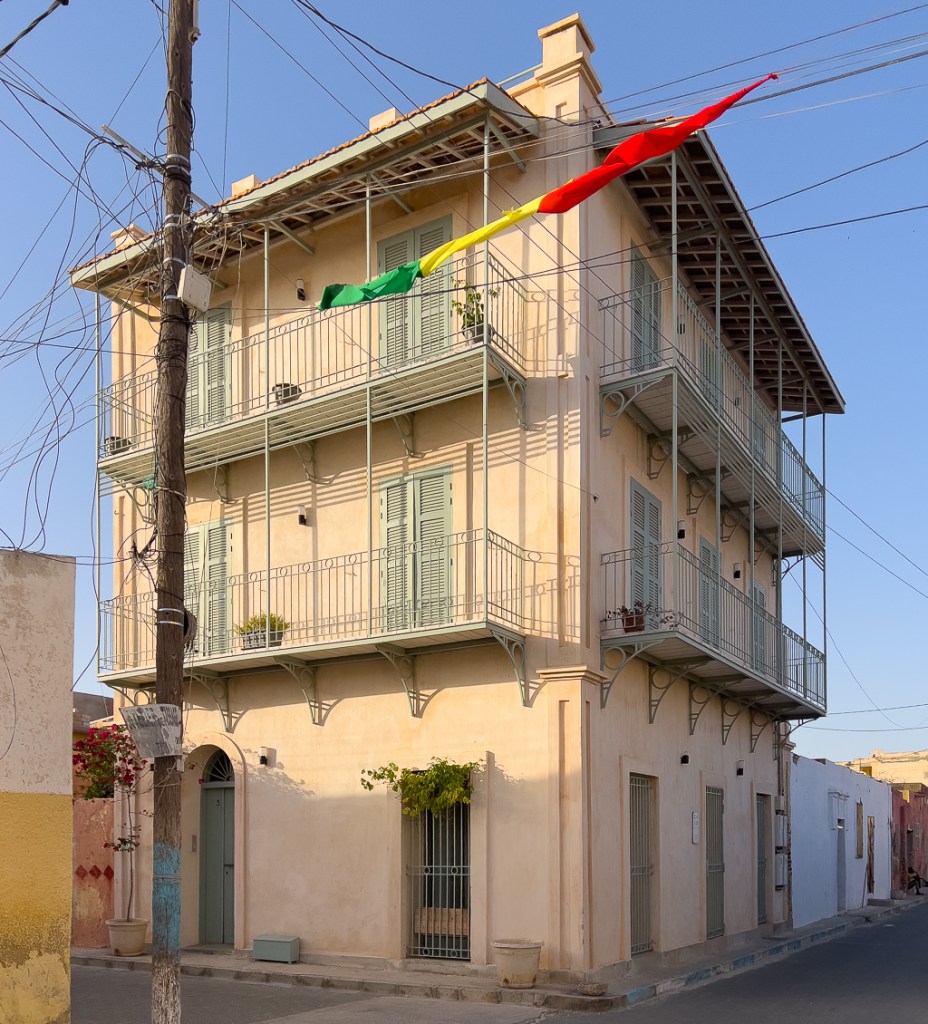
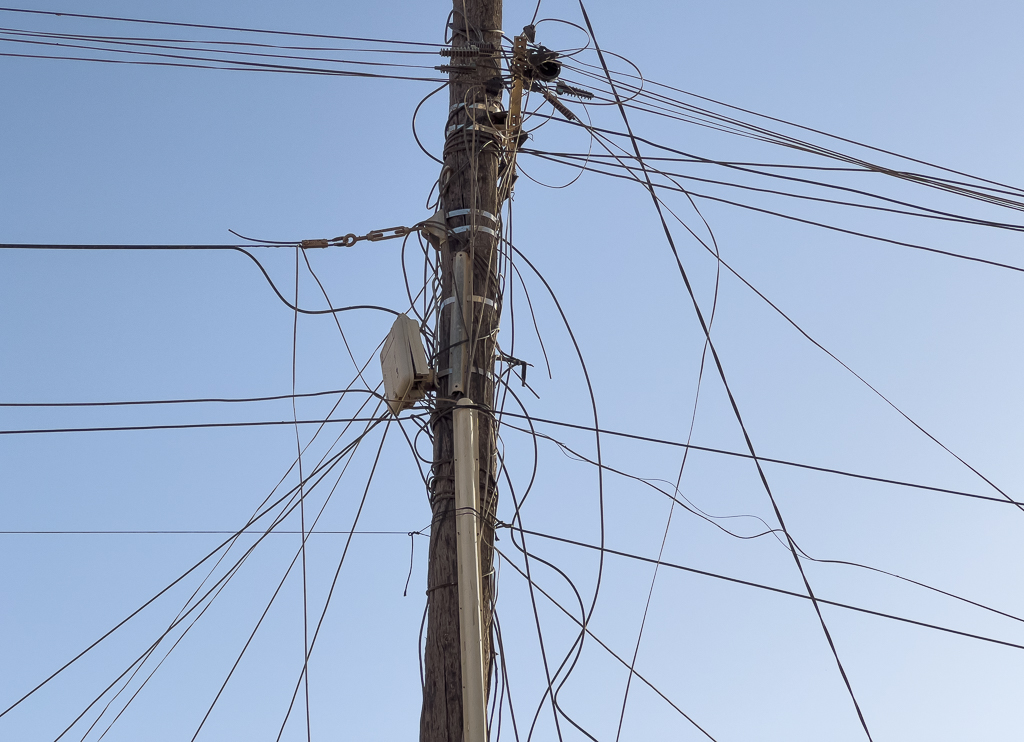
The electric infrastructure in the city doesn’t look too promising for fast charging of electric cars in the near future.
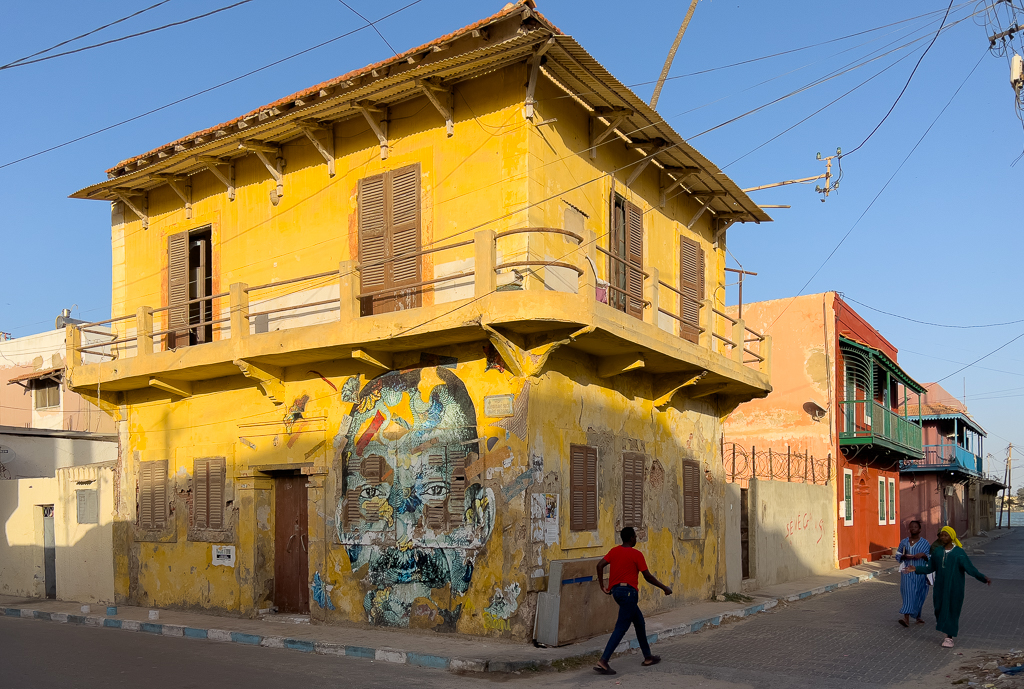
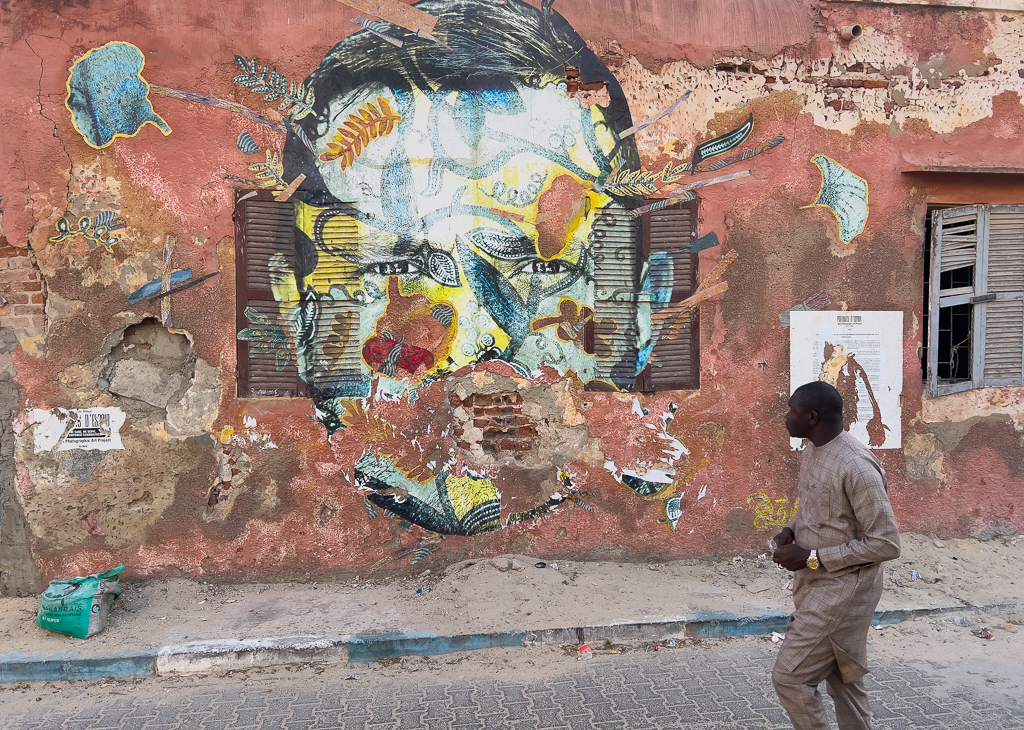
There were a lot of art and handicraft shops and exhibitions throughout the city.
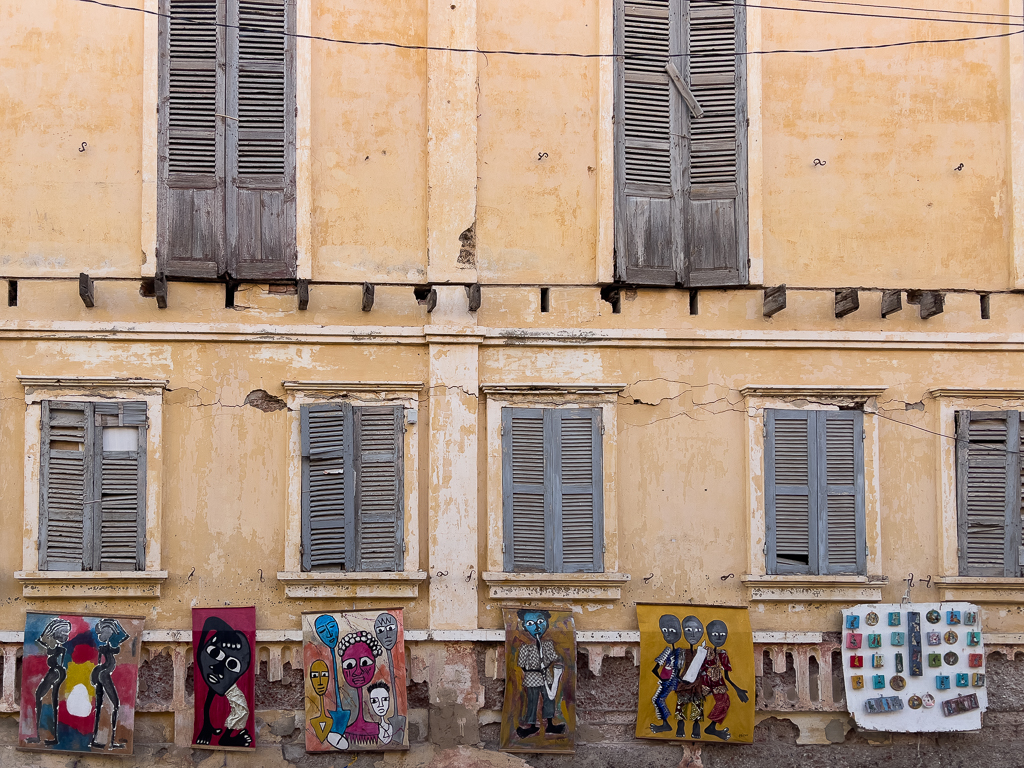
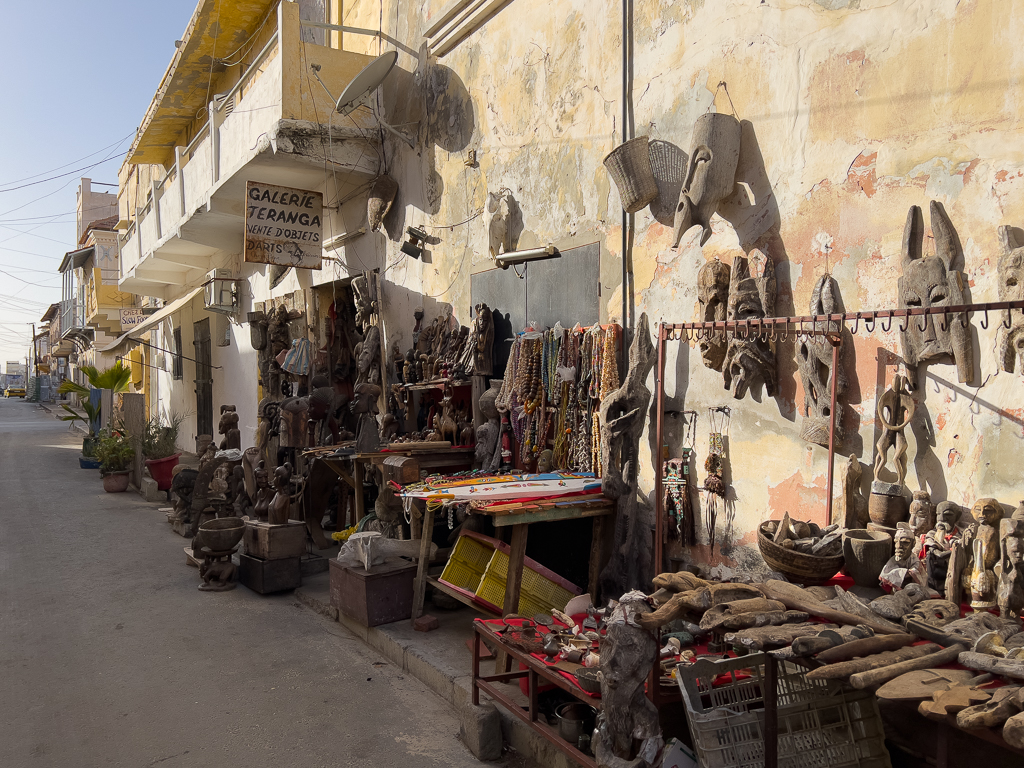
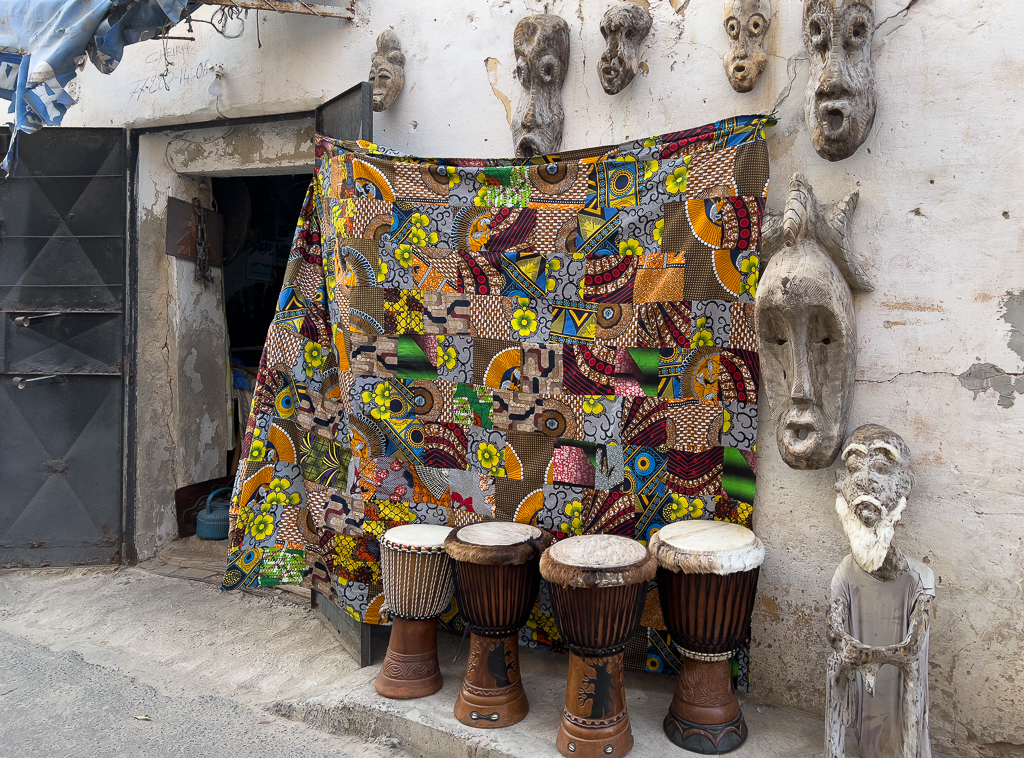
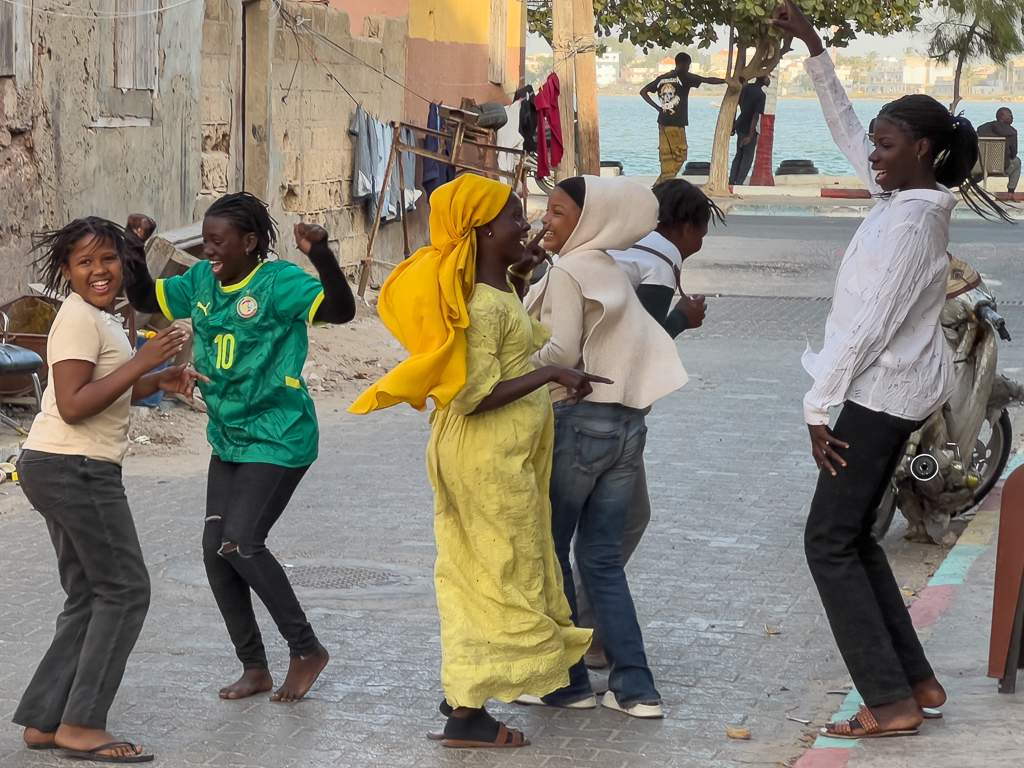
Senegal, and especially Saint-Louis, has a very special vibe. People dancing on the street or playing music are quite common. Completely unimaginable in Mauretania.
We finished our visit to Saint-Louis with a nice dinner in the Spanish Siki Rio restaurant.
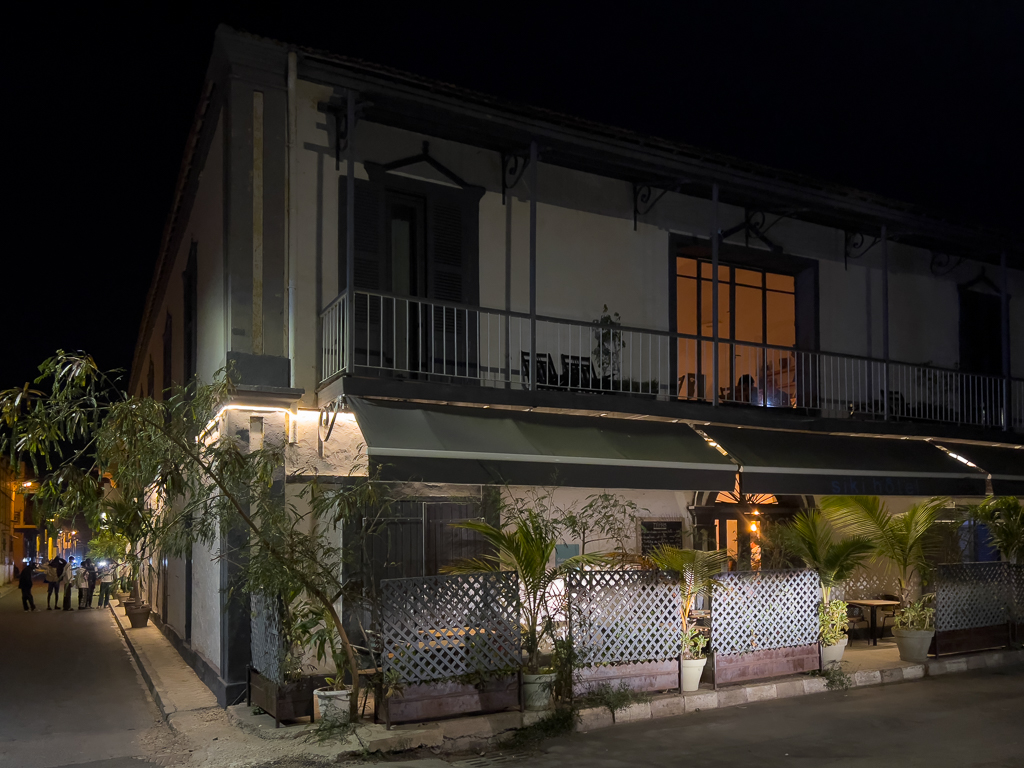
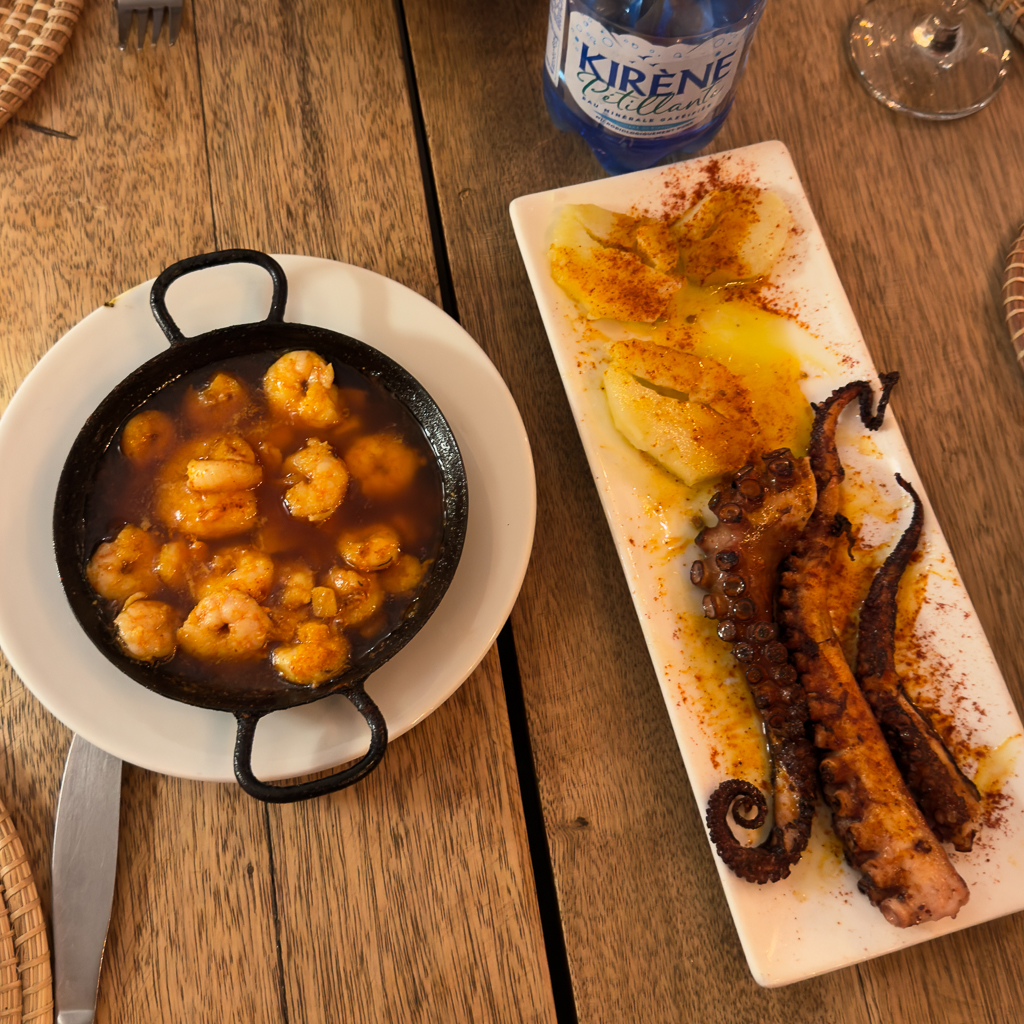
As appetizers, we had shrimps in garlic and octopus with paprika powder.
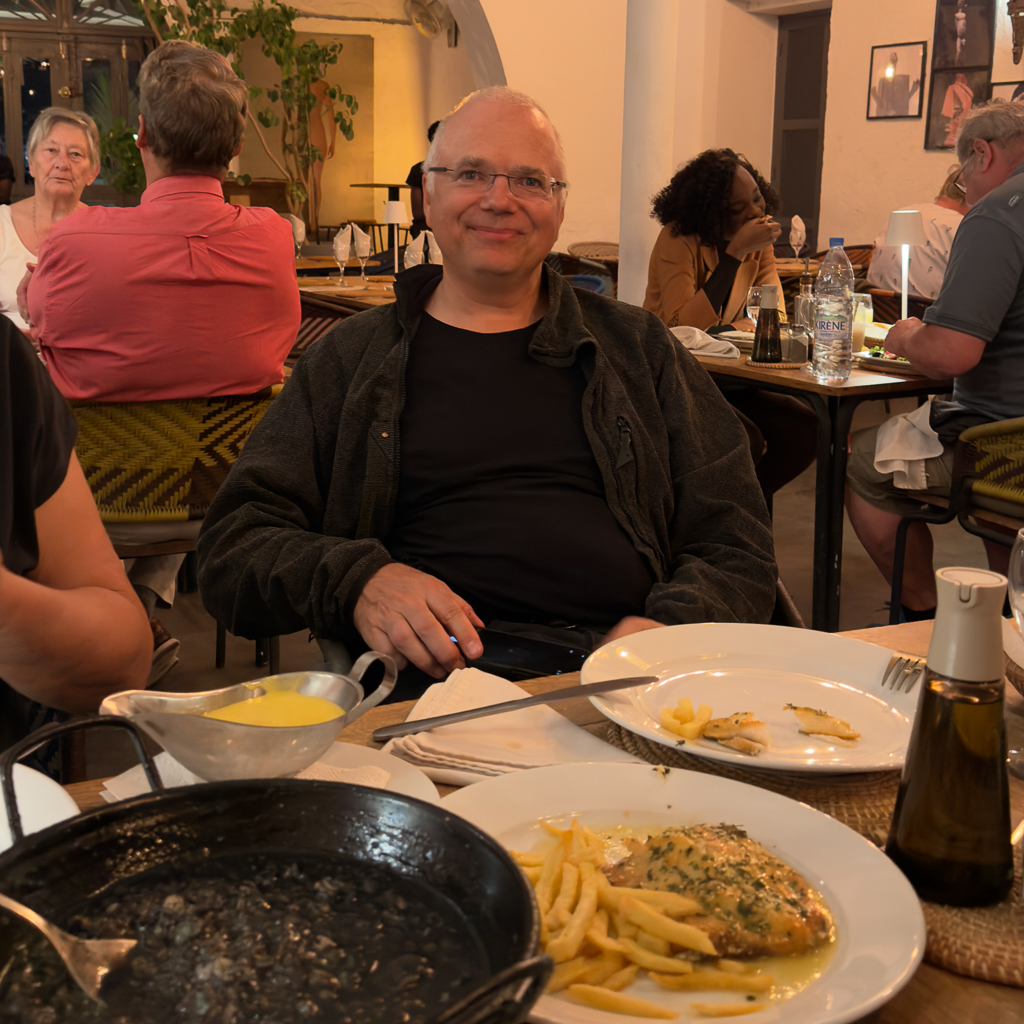
As main dishes, we had black rice with seafood and grilled fish. All very tasty.
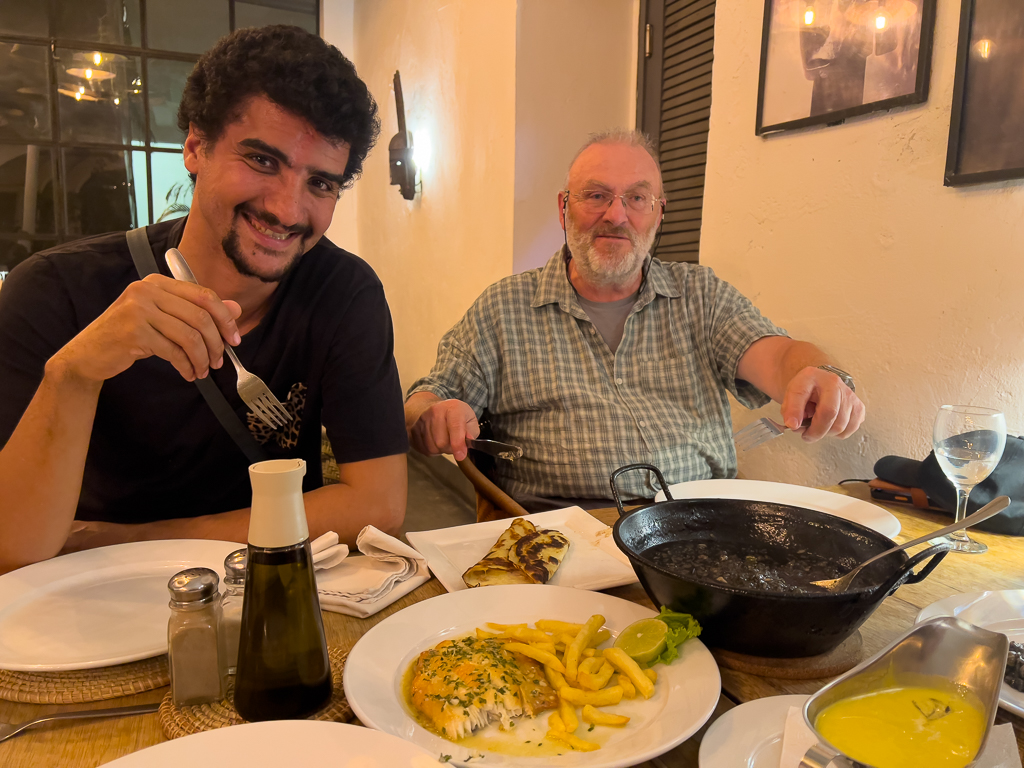
Funny story: Ayoub ordered crab and was somewhat surprised when a crepe arrived 🙂
For me, Saint-Louis was probably the most interesting city on our trip. I wouldn’t travel to Senegal just to visit Saint-Louis, but if you are in this area, you shouldn’t miss it.
 EV Overlanding