
Our plan for the day was to explore the Banc d’Arguin National Park. It was inscribed on the UNESCO World Heritage List in 1989 and is famous for its migratory and breeding birds. It provides a home for over a million migrant shorebirds from Europe, Siberia, and Greenland. Over 100 different bird species have been recorded in the NP so far.
The surrounding waters are also some of the richest fishing waters in Africa.
Only 500 people live in the NP. All of them are Imraguen tribesmen using traditional methods for fishing.
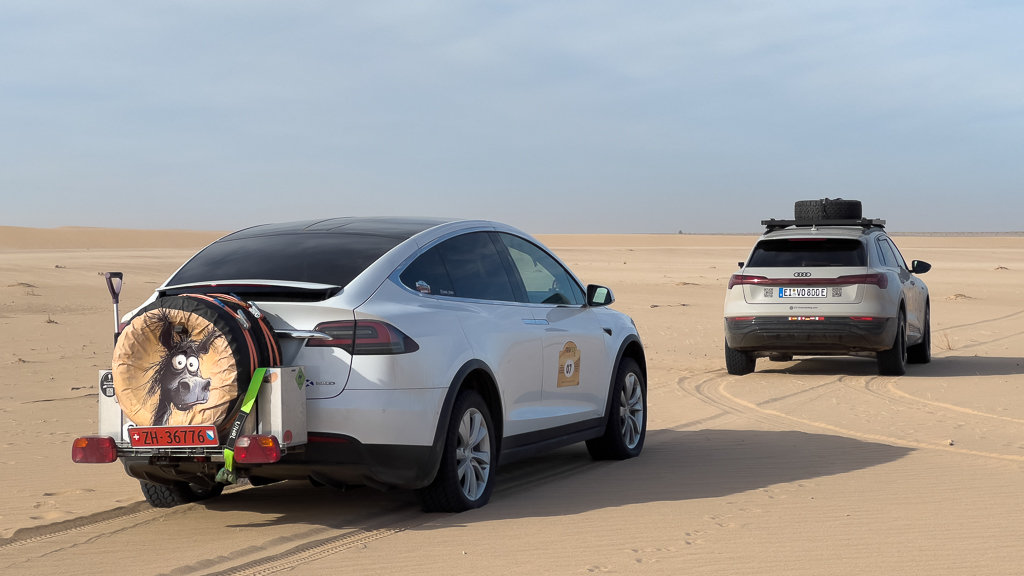
As soon as we left Chami, we were driving through soft sand. Reducing the tire pressure was a must to avoid getting stuck.
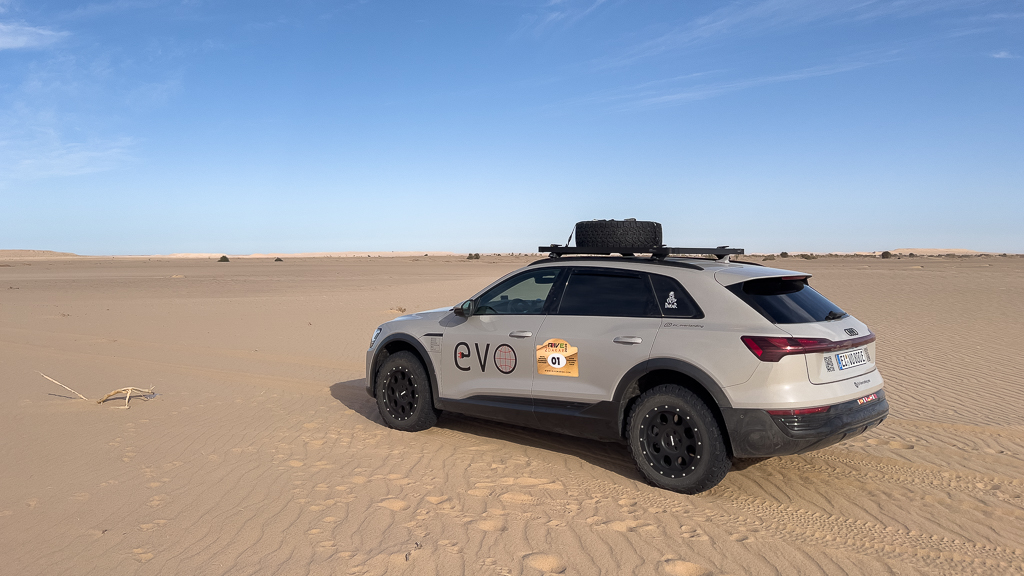
Sometimes this is still not sufficient, as Hans quickly learned. He stopped at a soft section because the car in front of him was suddenly breaking. In soft sand, there’s a huge difference between a moving car and one that has already come to a full stop. As long as a car is moving and you keep pressing the gas pedal, you can get through most soft sections, especially with the high power of modern electric cars. Our cars have between 450 and 600 horsepower, which helps tremendously in this situation.
But as soon as a car has stopped and you try to get it moving again, it’s a completely different situation. All the power won’t help you there.
The first thing that Hans tried was to further reduce the tire pressure. Normally, we reduce the tire pressure on the rear tires from 3.5bar to 2.0-2.5bar in sand (a bit less on the front tires). But in case you are stuck, it makes sense to go down to 1.5bar or even 1.0bar.
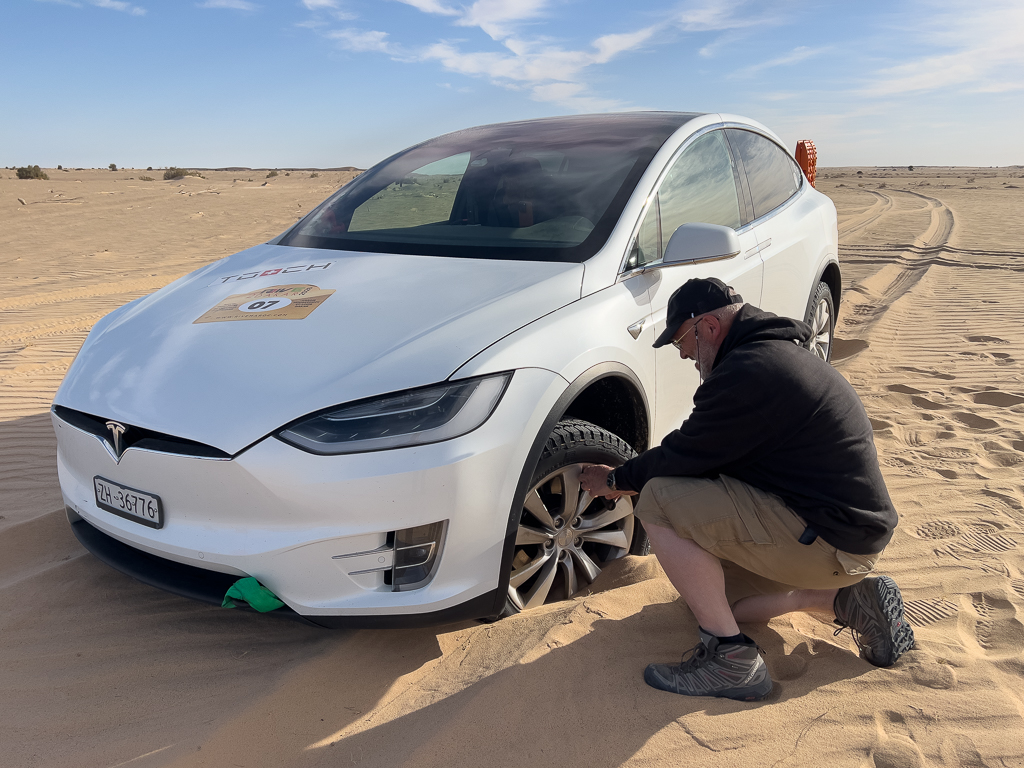
Next, Hans was using his recovery boards, trying to get the Tesla unstuck. He also used his shovel to remove all the sand next to the wheels.
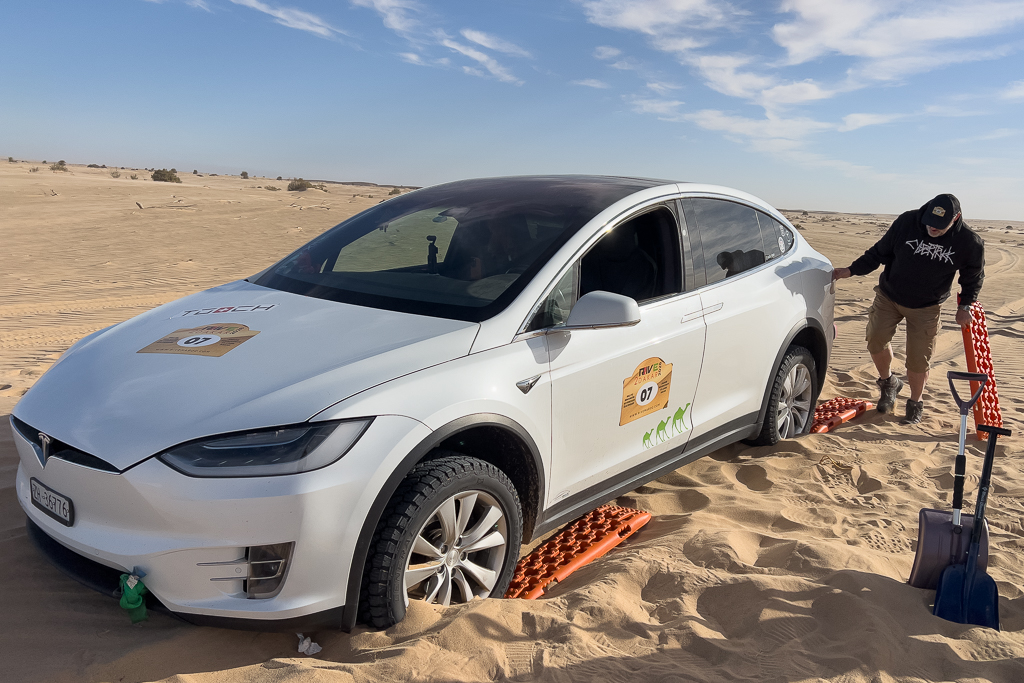
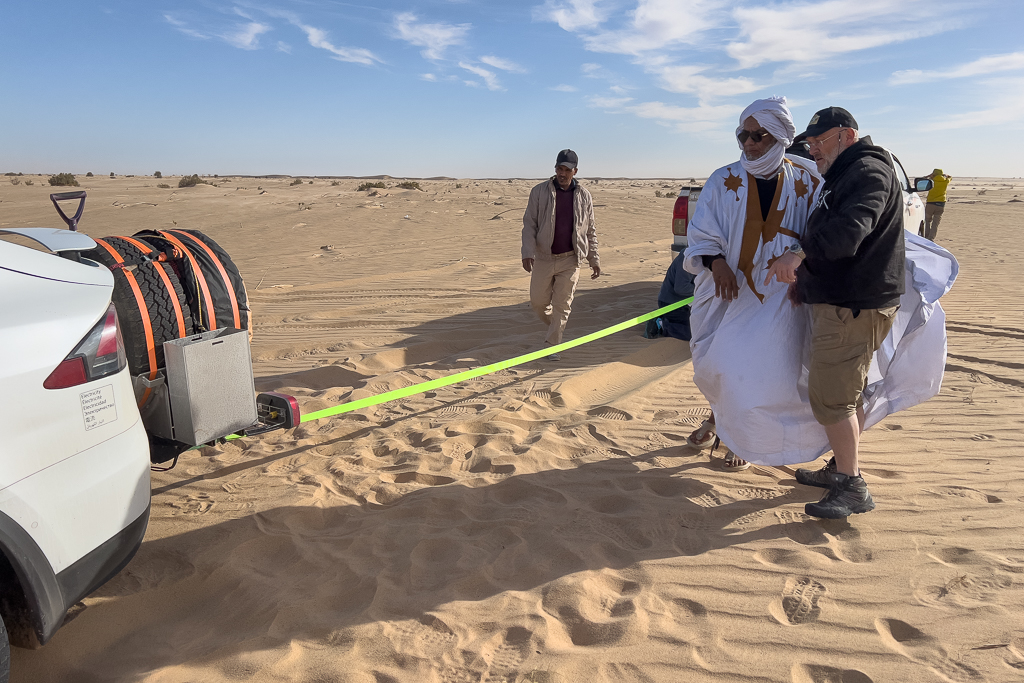
But it wasn’t sufficient. At least not for a quick recovery. Since we were accompanied on our exploration through the national park by local chief and guide Boa, we used his Hilux truck to pull the Tesla out of the sand.
Afterwards, we continued to the coast without any further problems.
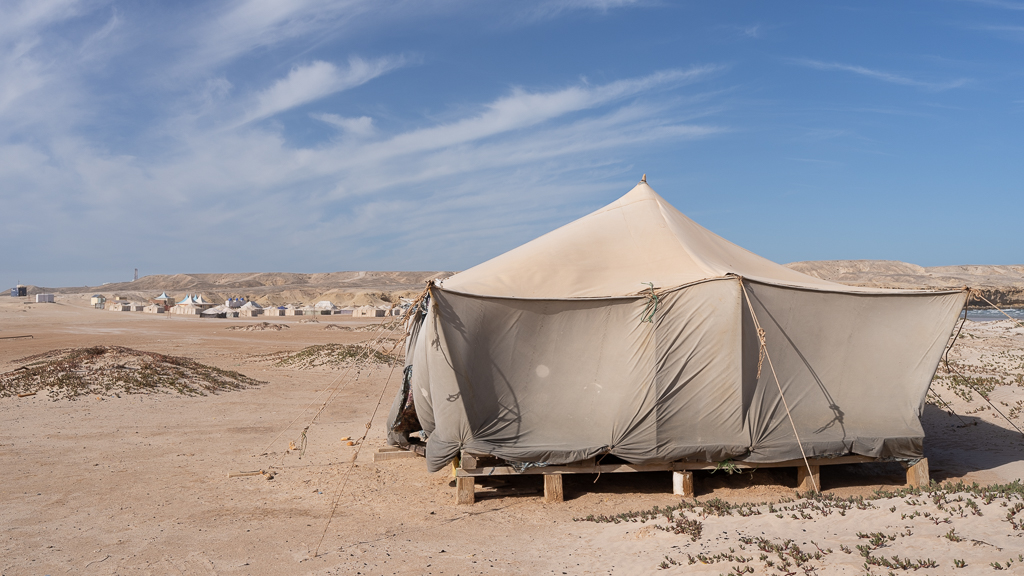
At the beautiful beach near the Arkeiss fishing village, we stopped for a lunch break.
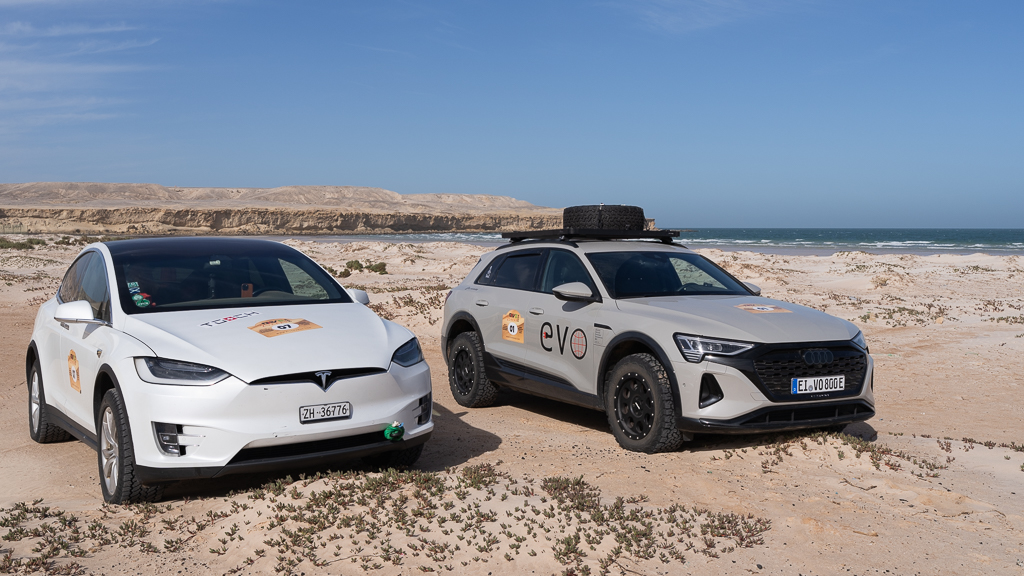
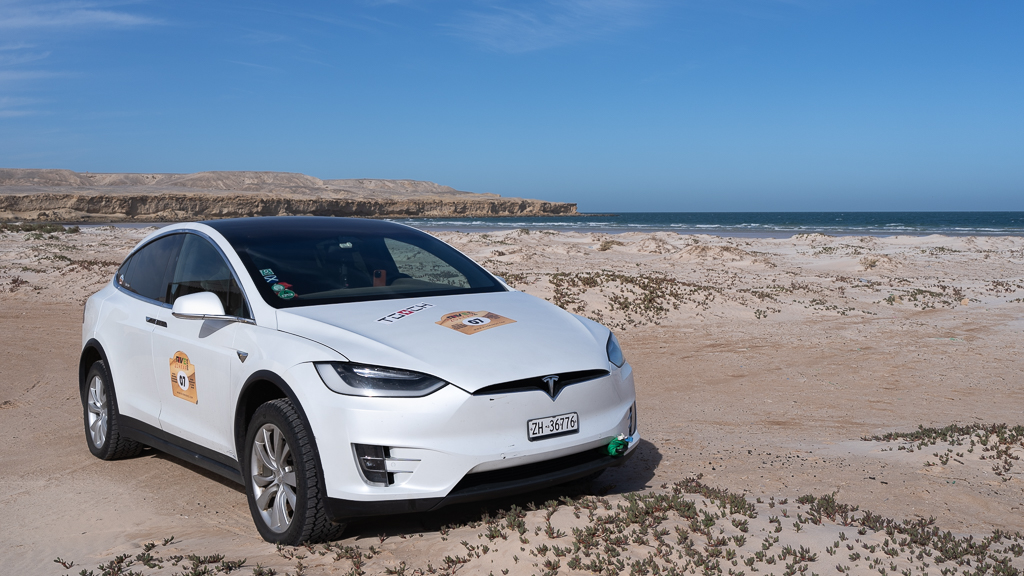
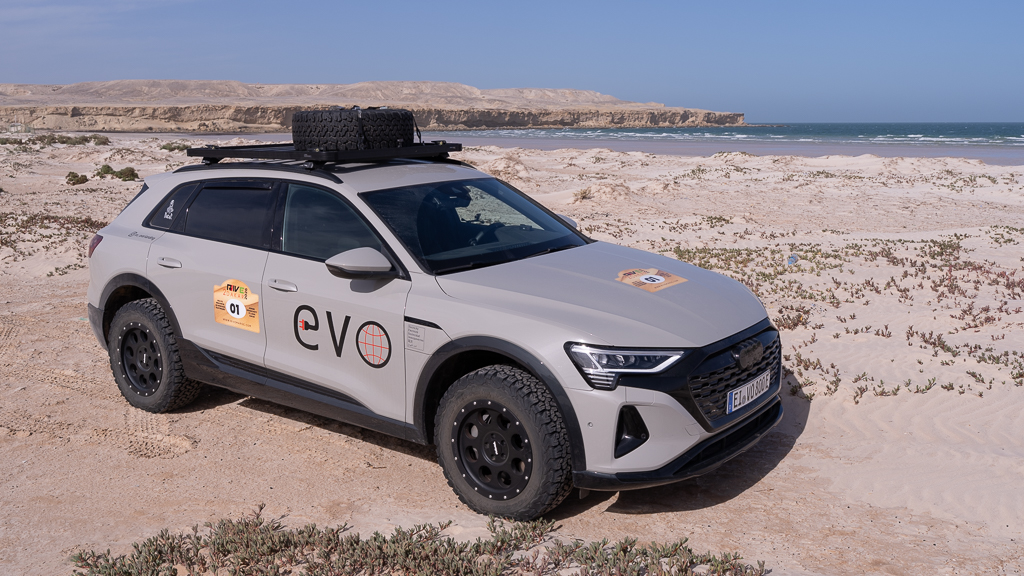
A couple of fishermen live in this area, and you can officially camp here with your car or even rent a tent.
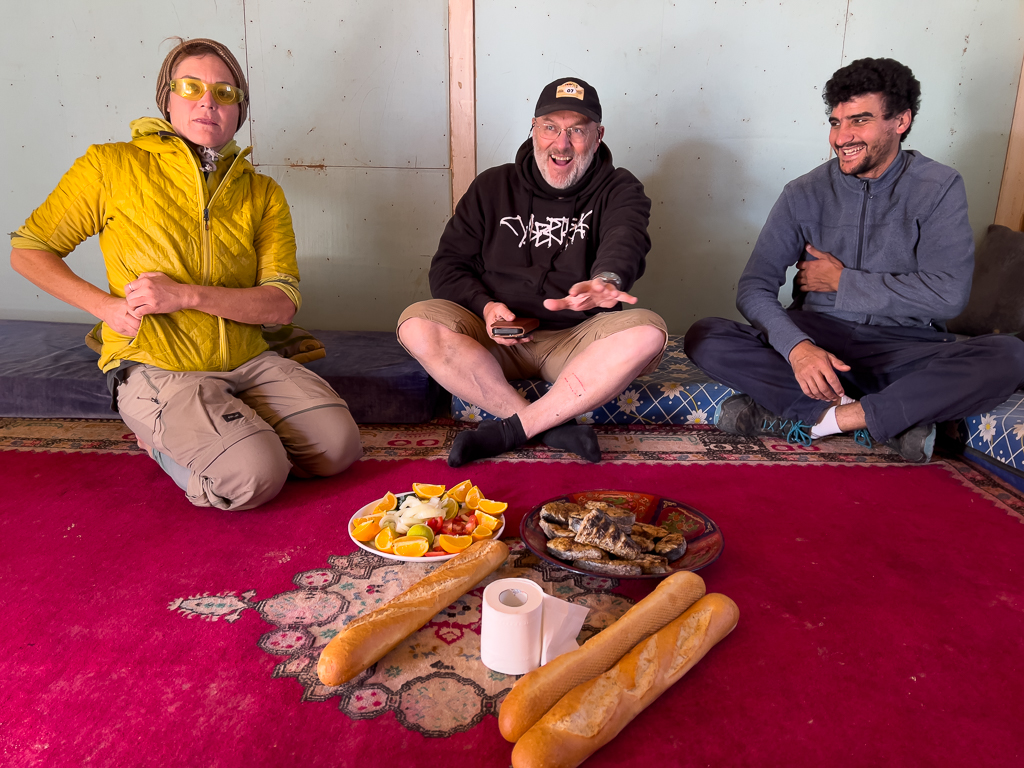
We got some fresh fish and bread from the fishermen for lunch.
Boa, the local chief and our guide on that day, was very interested in our electric cars. I offered him to join me as a copilot in my Audi for the next section, which he happily accepted.
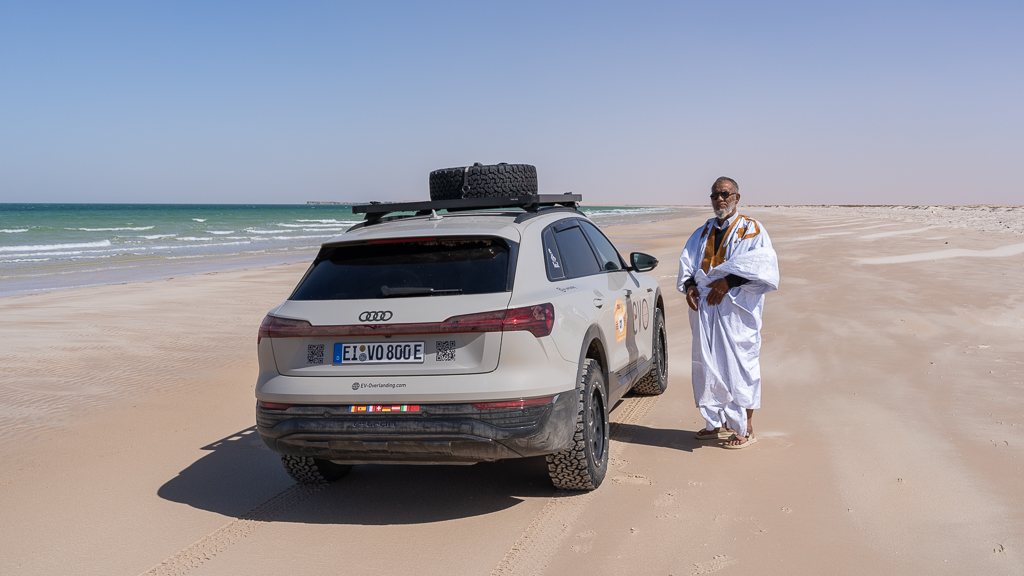
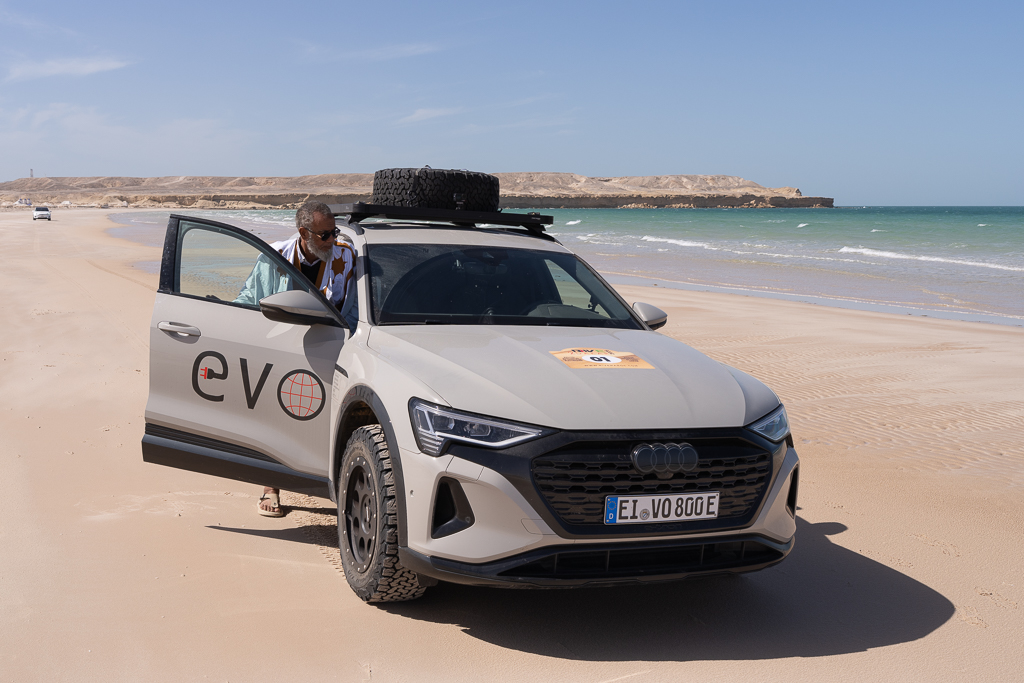
He wanted us to drive along the beach to the next cape. I did what he told me, but profoundly avoided any contact with the salt water, since I didn’t want any corrosion on my car.
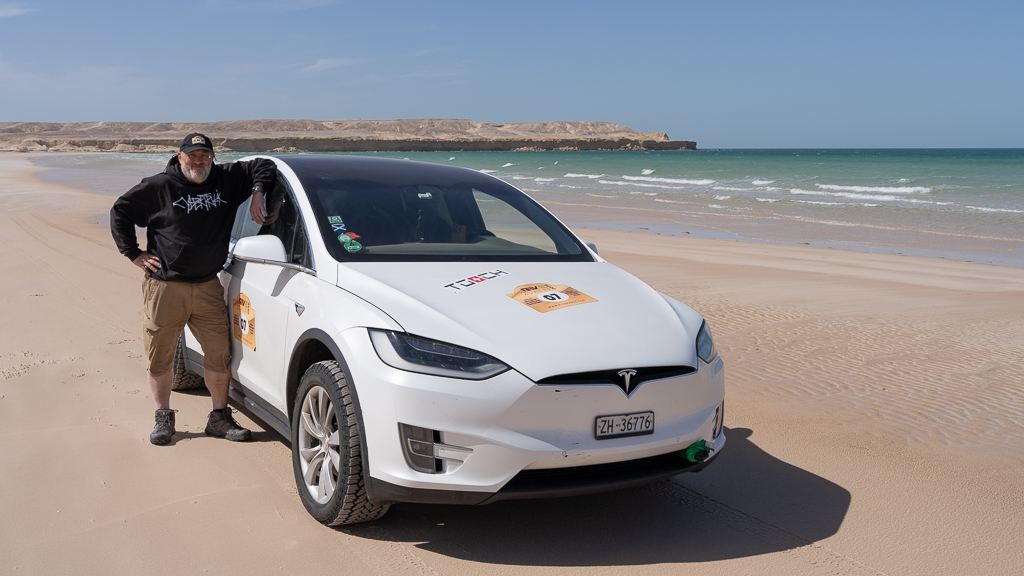
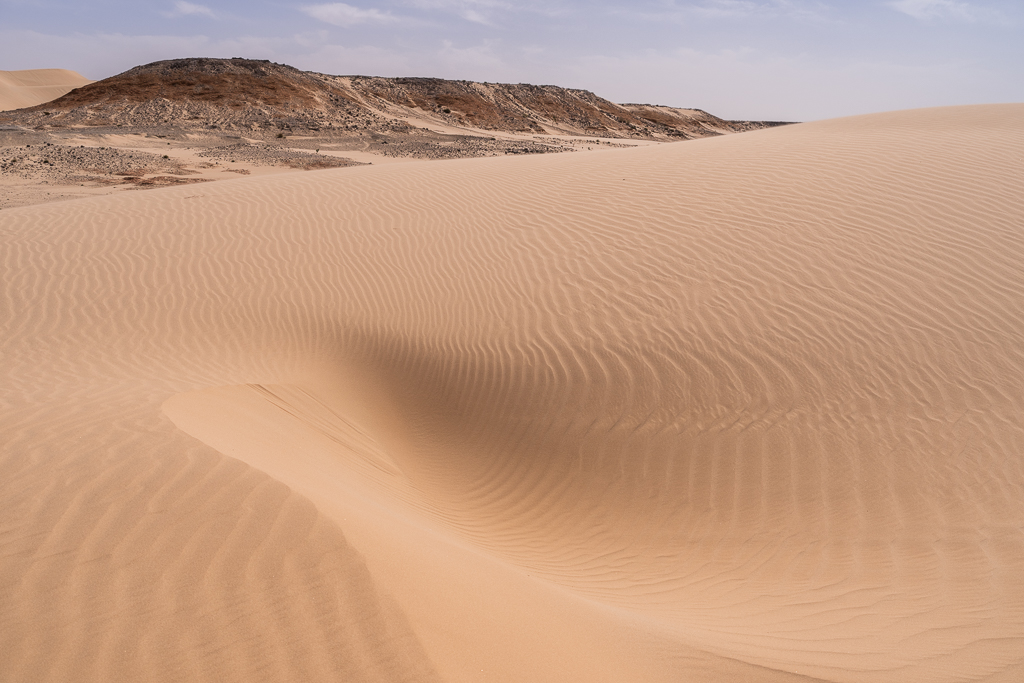
Next, he led us to a really spectacular and challenging dune section. There were no tracks anymore, and we were just driving across a sea of sand.
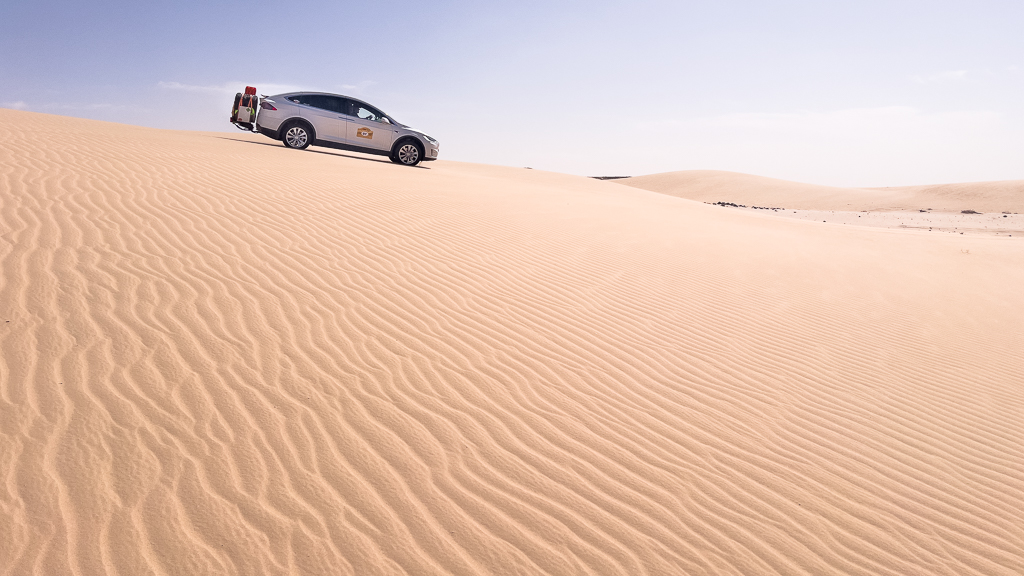
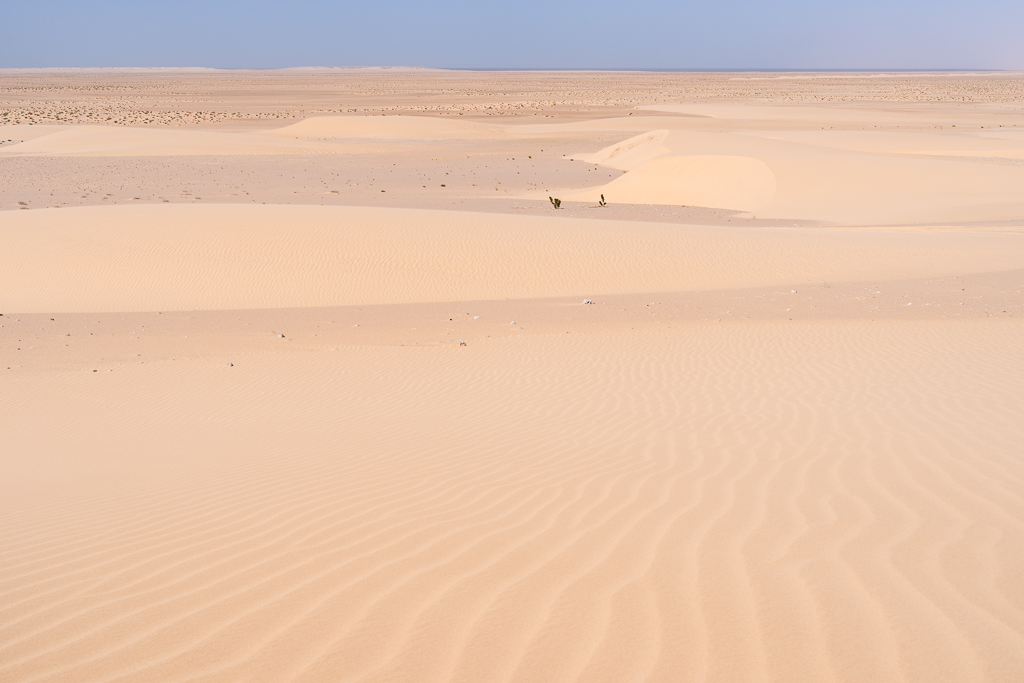
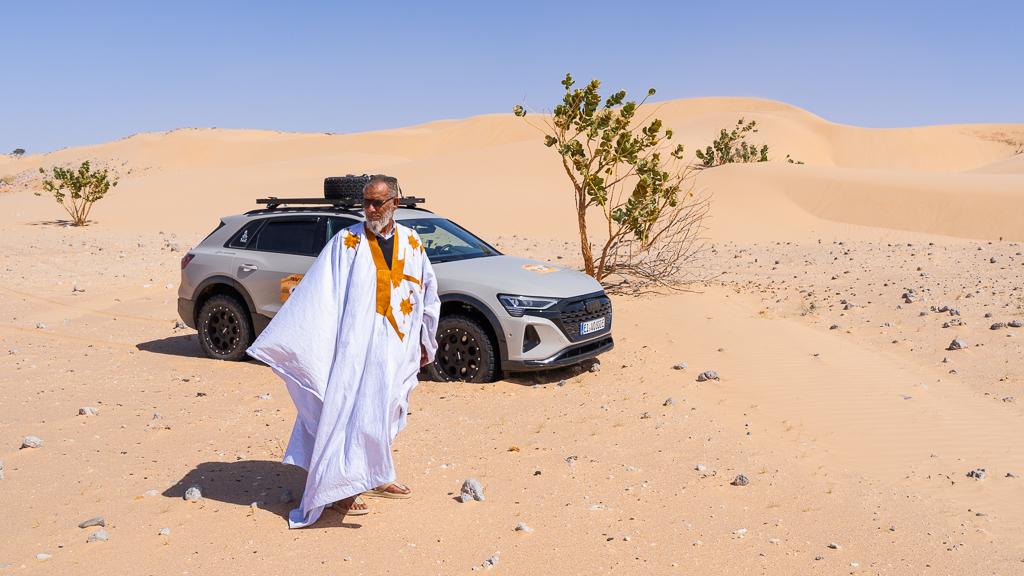
The landscape was absolutely stunning there.
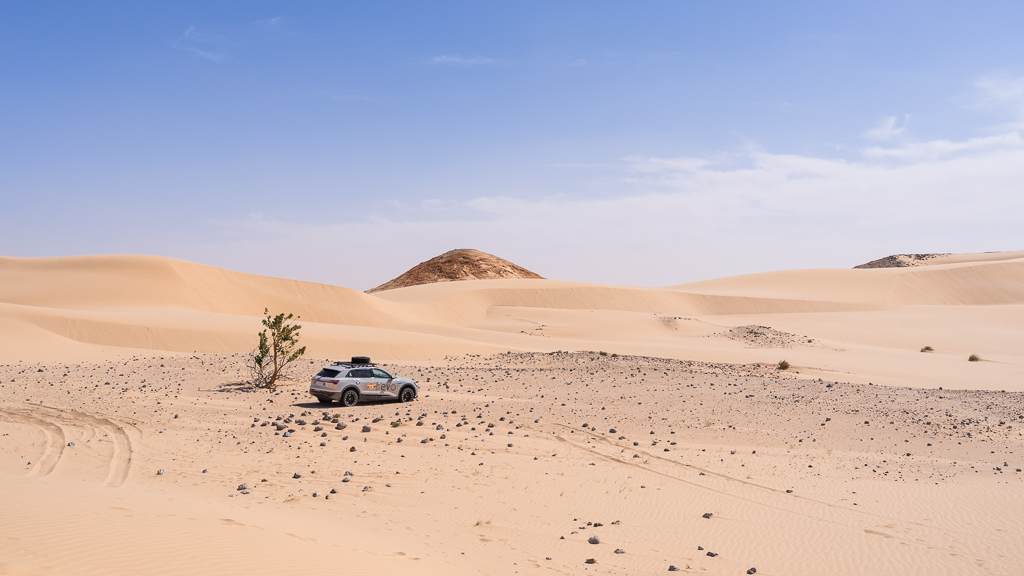
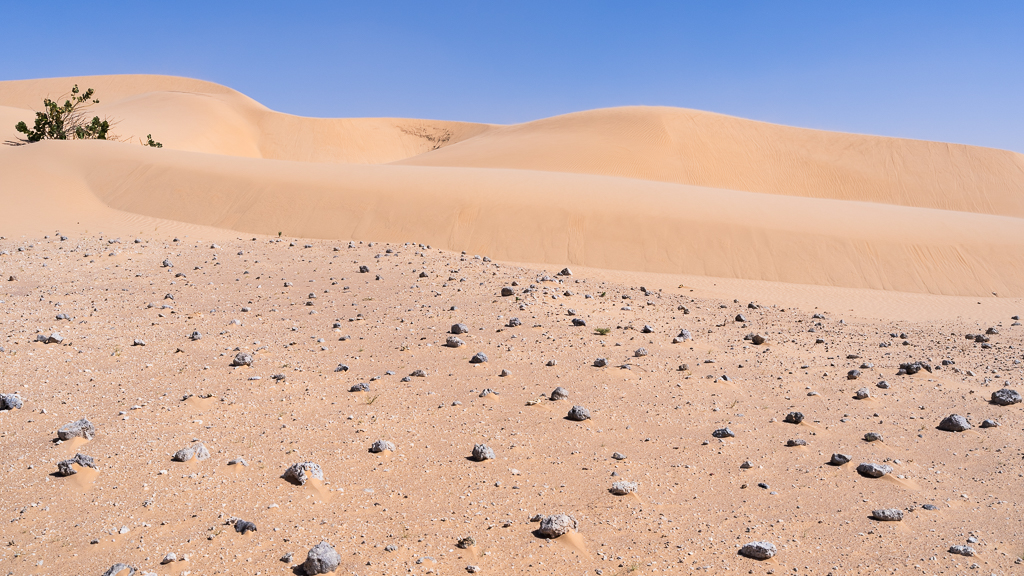
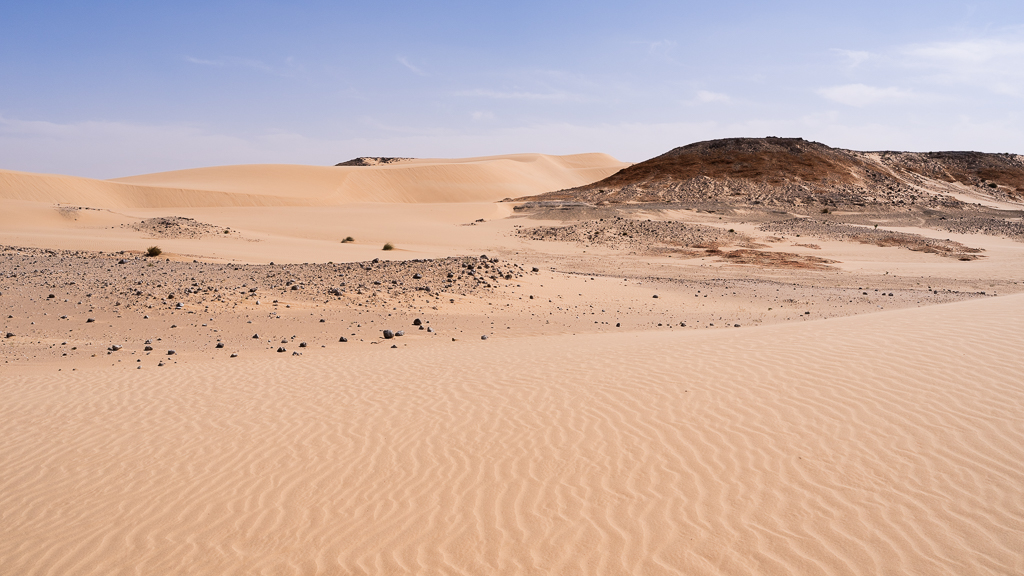
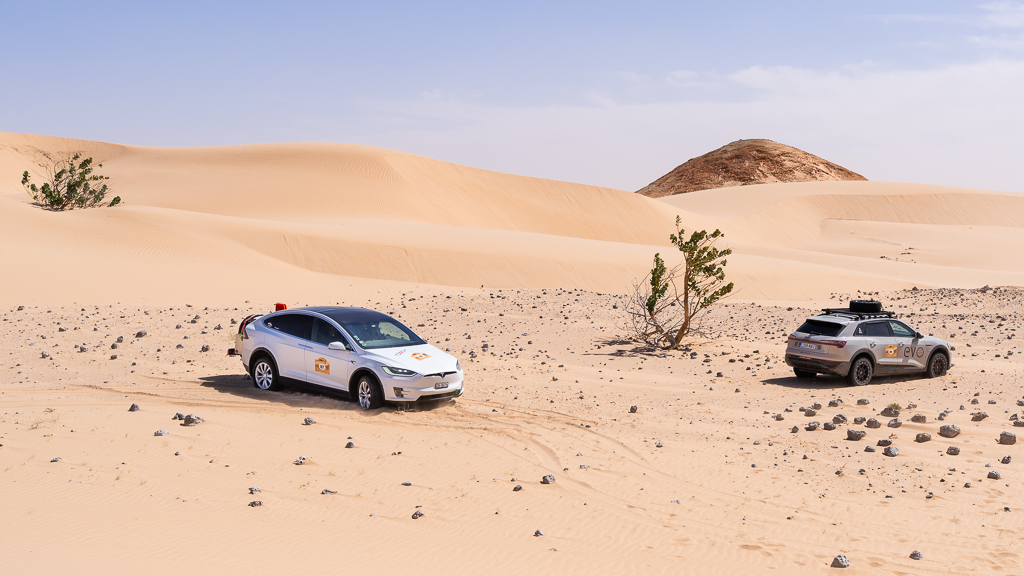
Then he wanted us to drive over a very steep dune.
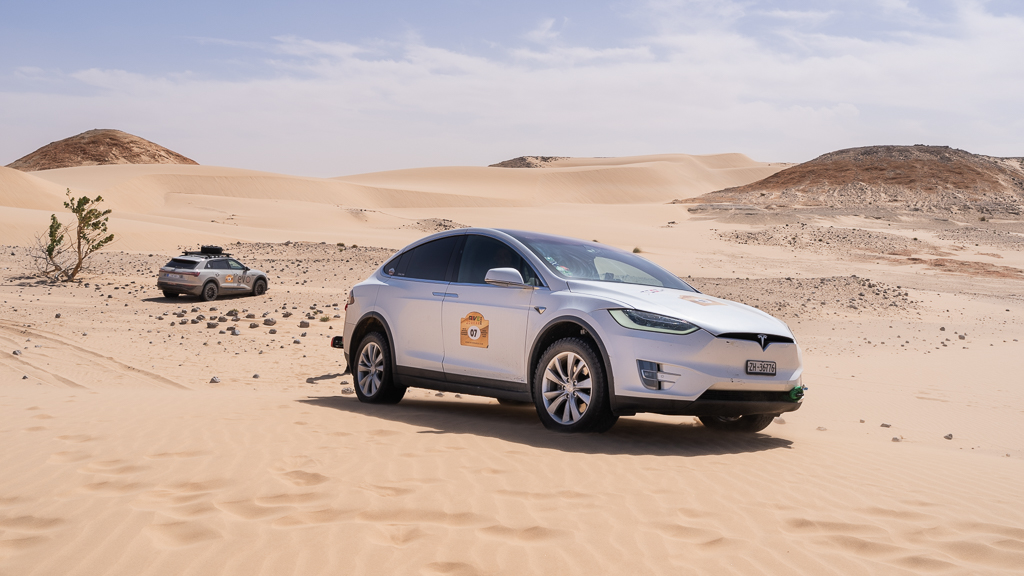
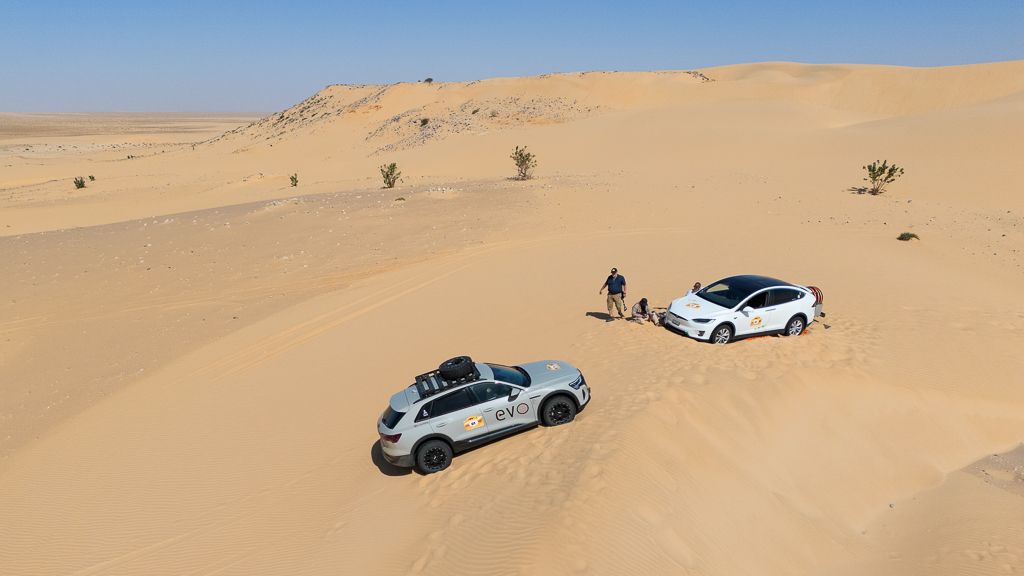
Hans stopped a little bit too early before reaching the dune crest (because he couldn’t see the other side of the dune due to the steep inclination) and got his Tesla stuck again.
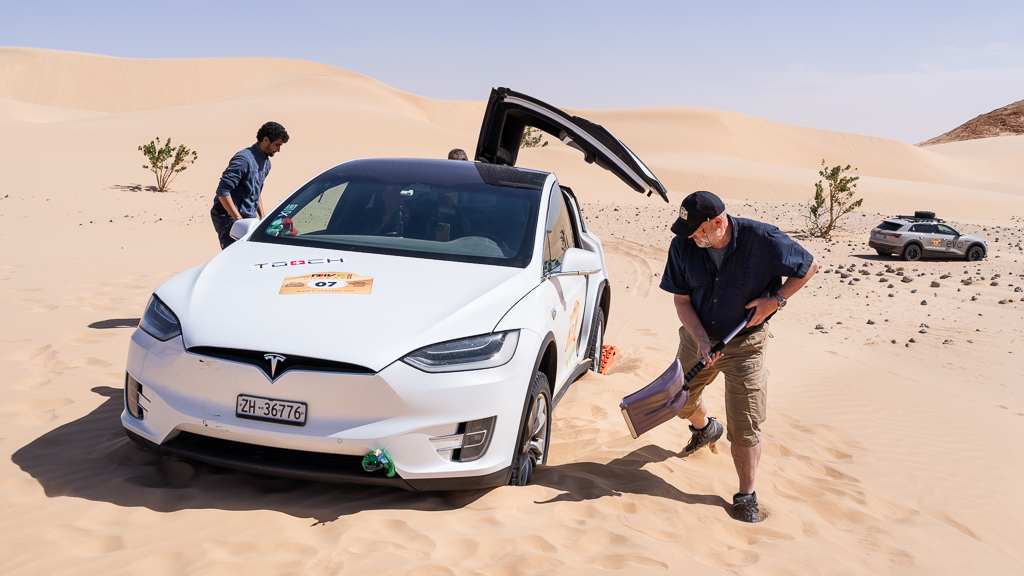
Shovels and recovery boards were used again.
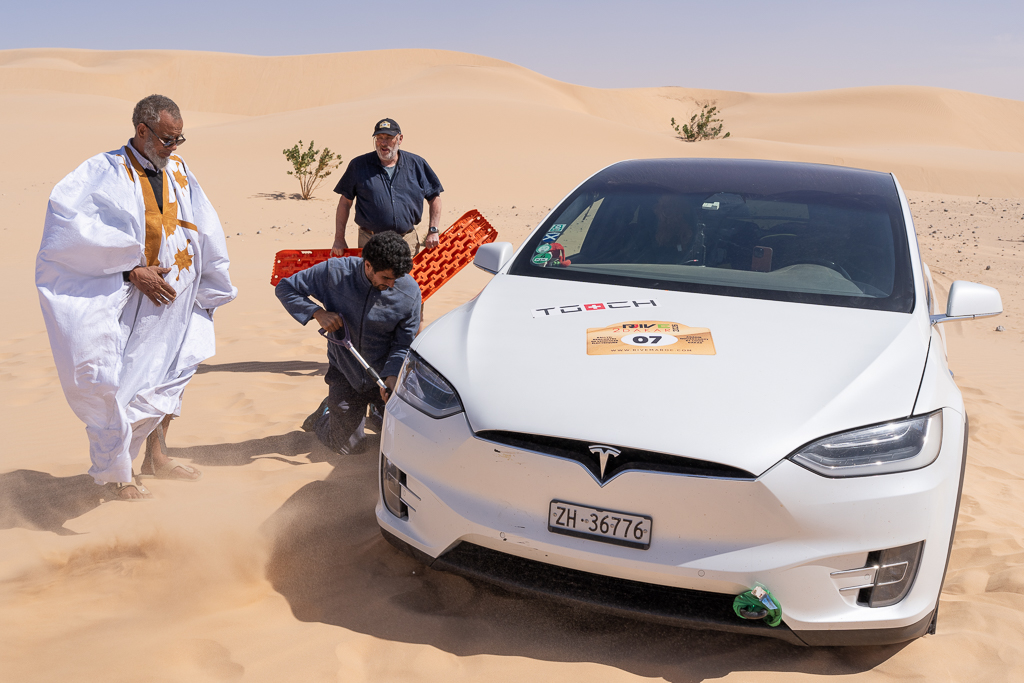
One big problem was the behavior of the sand. The surface of the dune was pretty hard, but as soon as you destroy this crust either by driving through or by walking, it gets immediately extremely soft.
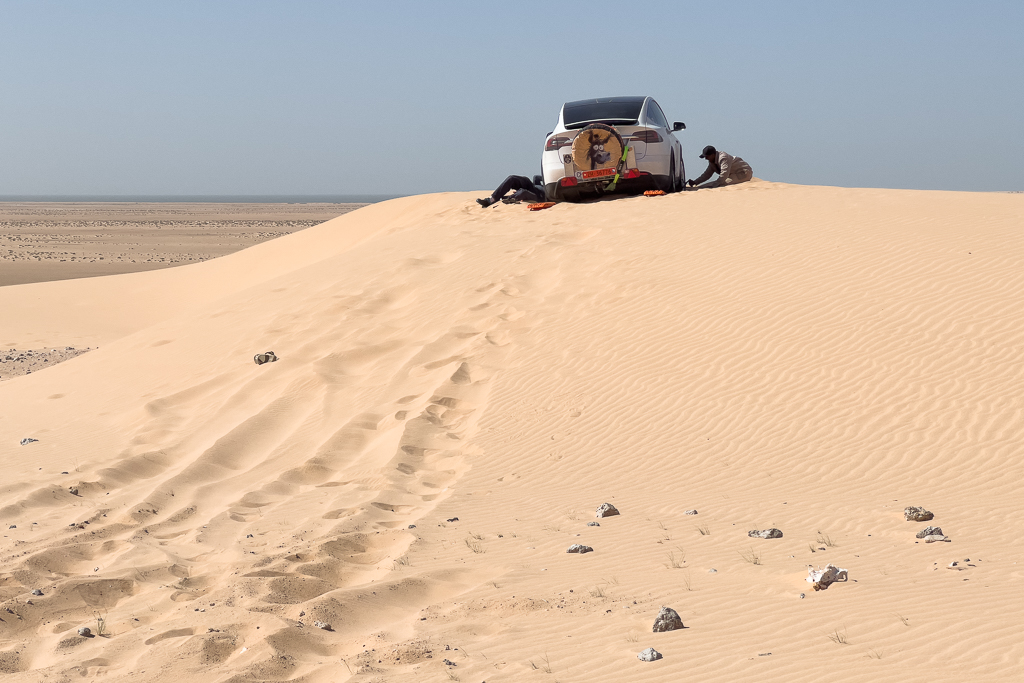
I’ve never experienced this kind of extremely soft sand on any of my trips to Namibia or Morocco in the past. I learned a lot of new things on this day about different types of sand and how to read the sand.
Due to these very challenging conditions, all attempts to get the Tesla unstuck with the usual methods weren’t successful.
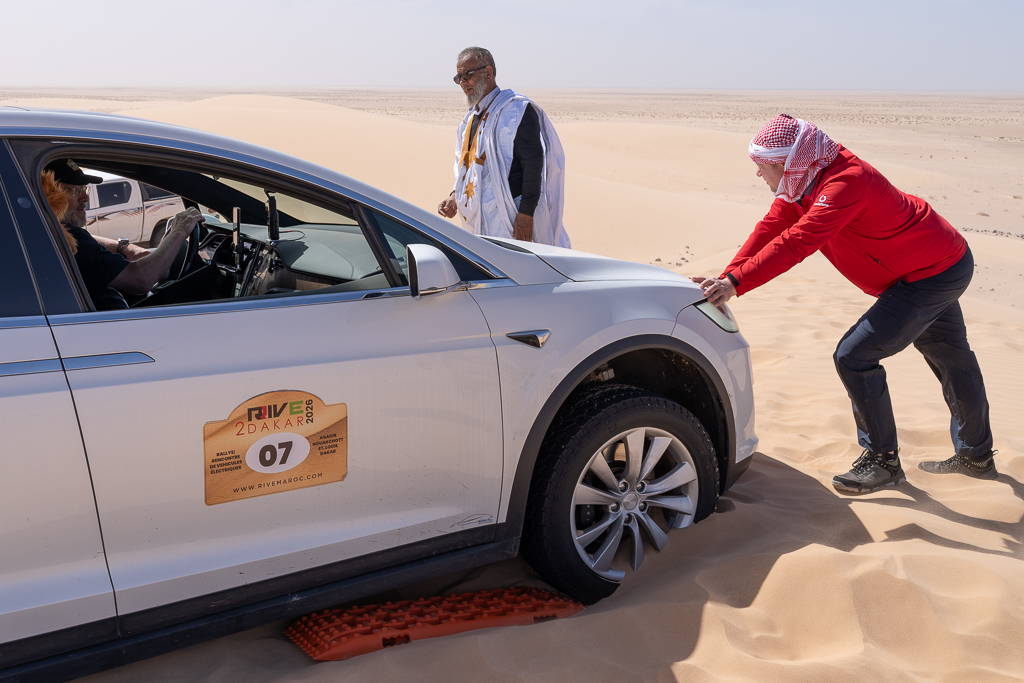
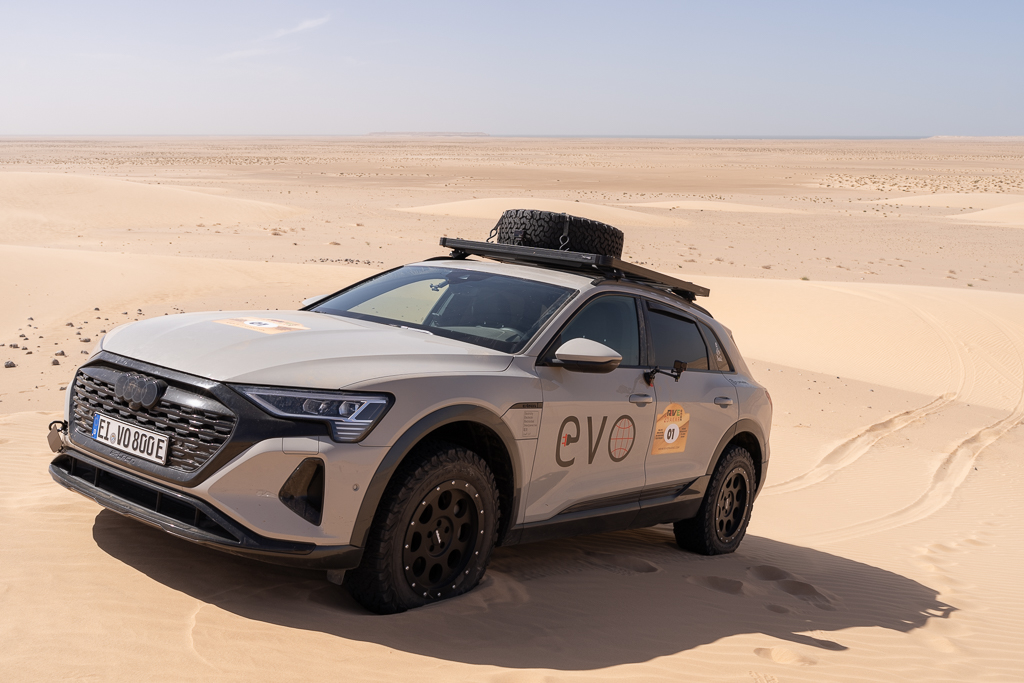
I even tried to pull the Tesla down the dune with my car using a recovery strap. But the result was that my Audi also got stuck. The sand was just too soft and deep.
I was able to recover the Audi by myself using just a shovel. But it took some time, and I had to reduce my tire pressure to 1bar to get out.
The next attempt was to drive around the dune with my Audi and try to pull the Tesla over the crest from the other side.
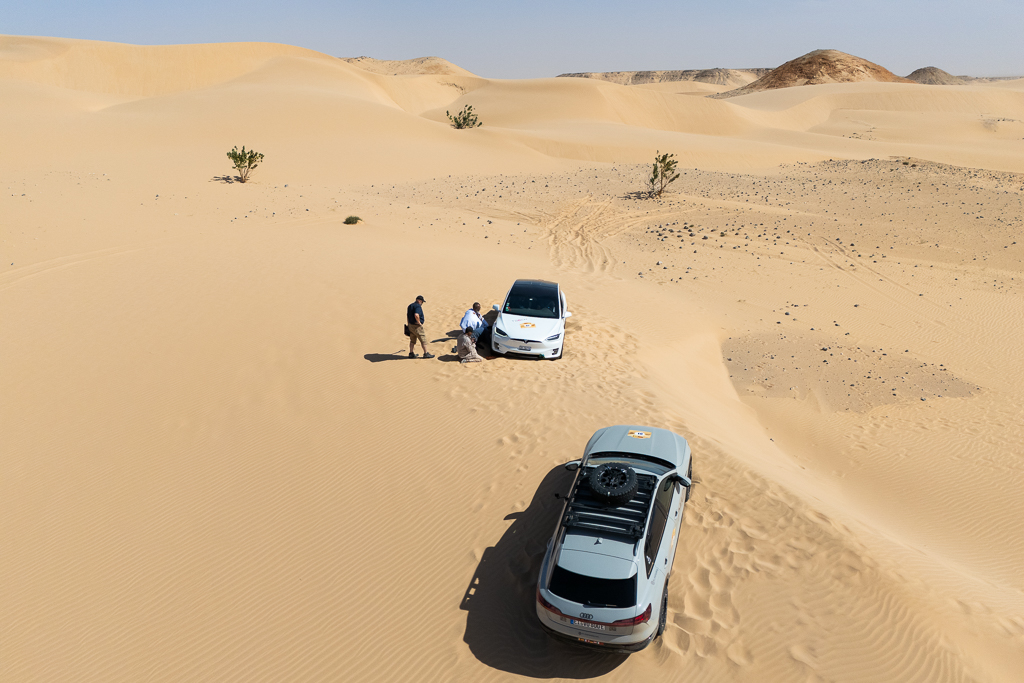
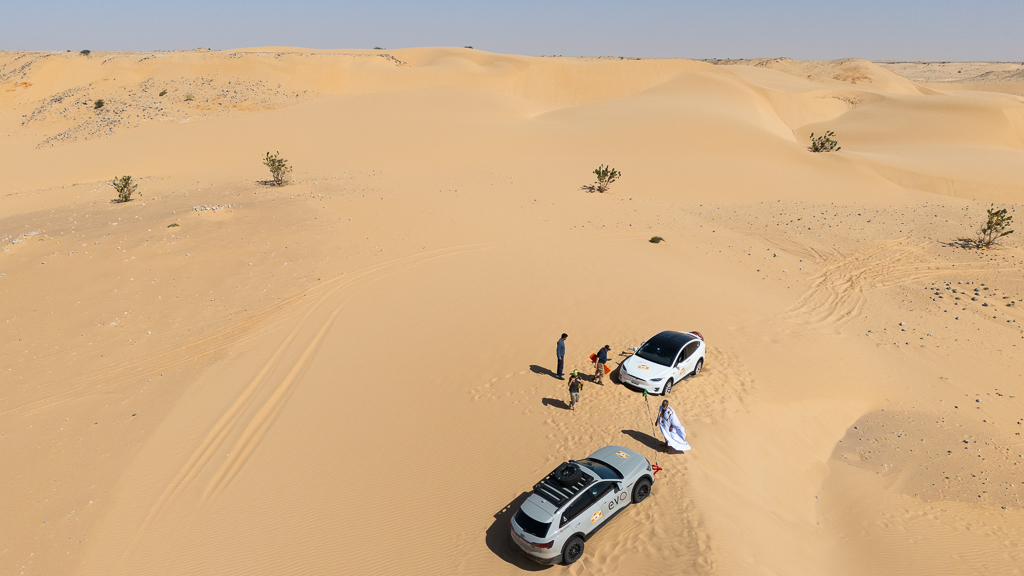
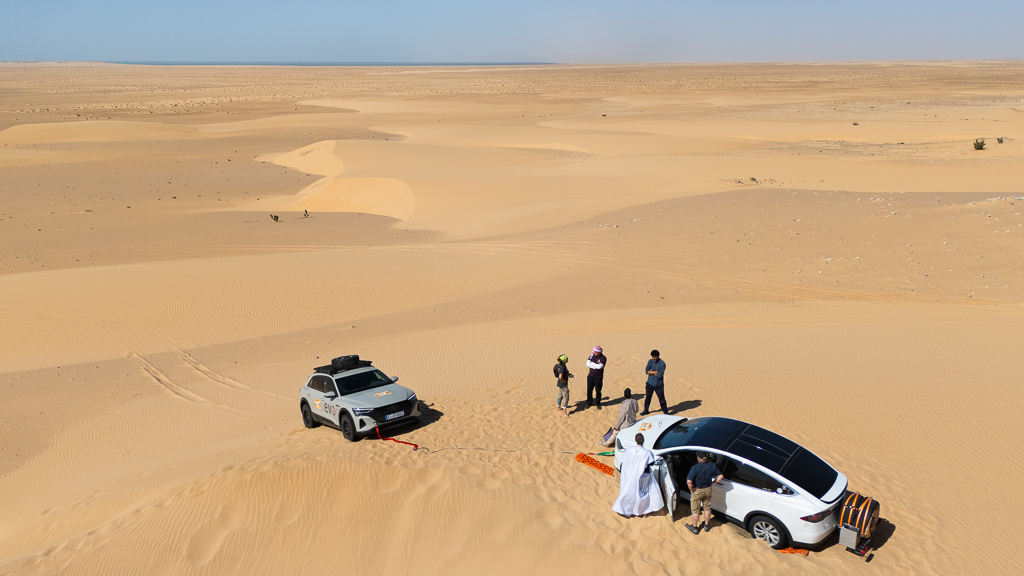
Luckily, it worked. Due to the steep inclination on the other side, I was able to gain enough momentum to pull the Tesla easily over the crest.
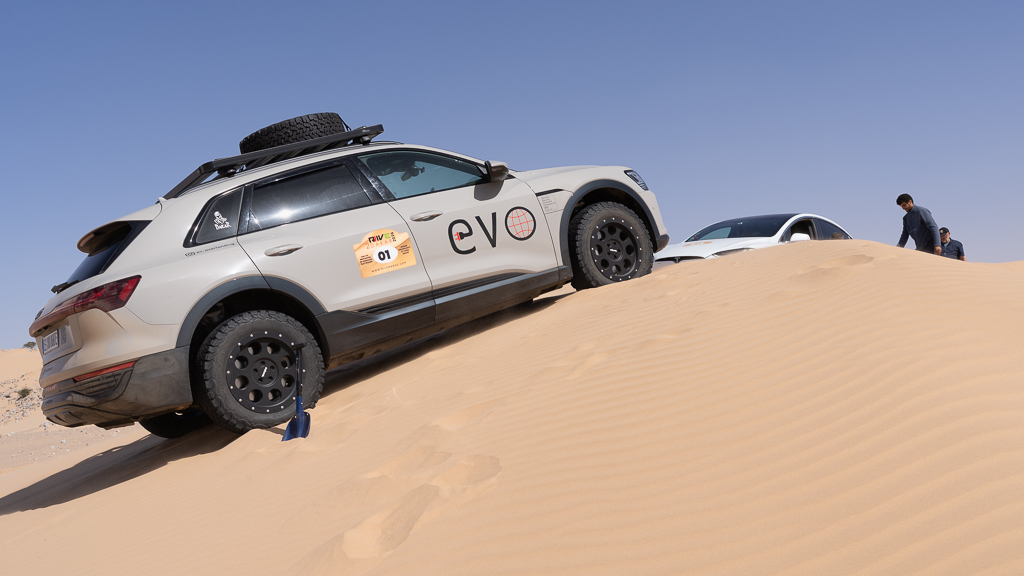
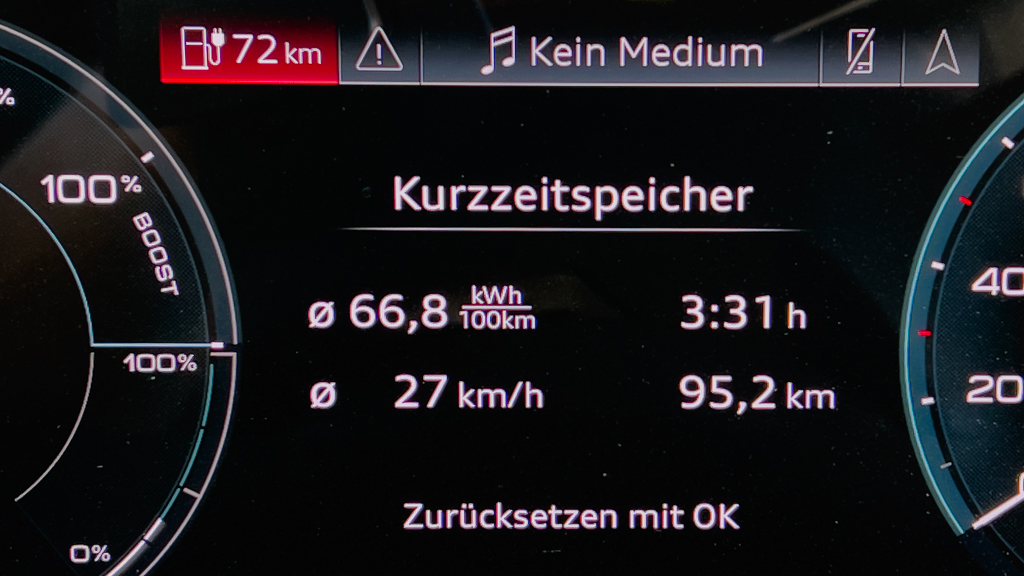
After this adventure (where I also learned a lot about recovery in soft sand), we slowly returned to Chami. Altogether, we drove 95km through sand on that day, and the average energy consumption was 66.8 kWh/100km. This means under these conditions, my car has a range of only 150km. For many offroad tracks, this is still sufficient, but there are limits, and you have to plan accordingly (or use solar for charging along the way if you want to do more extreme routes).
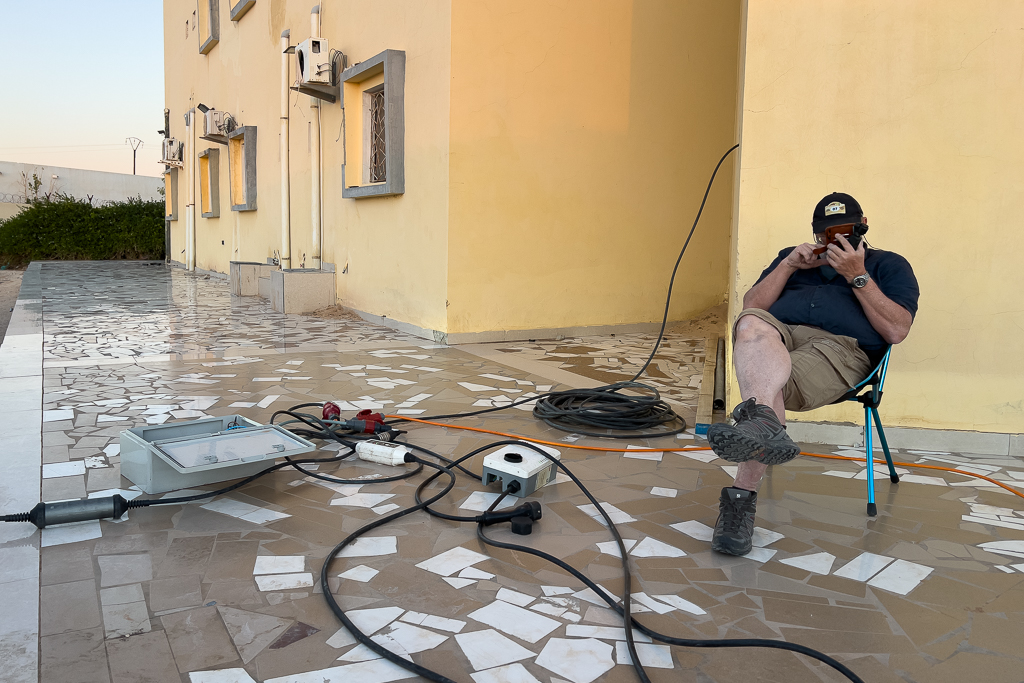
Back in Chami, we spent another night at the Hotel Gouffa while charging our cars.
In the evening, we walked through Chami to find something to eat.
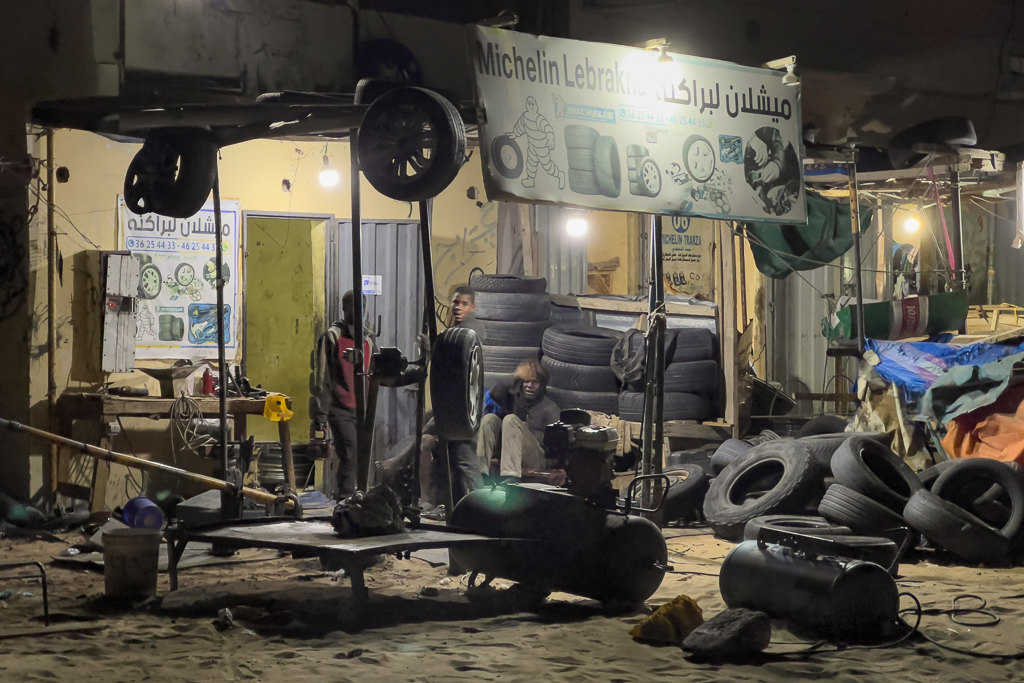
It wasn’t that easy. Most of what we saw would have been too risky for our untrained Western stomachs. And getting a serious case of diarrhea with our tight schedule and upcoming border crossings would be a real nightmare. Better be careful than sorry. In the end, we got some chicken in a fast-food-style imbiss, and all went well.
I absolutely loved the Banc d’Arguin National Park. The landscape, the dunes, the coastline, the solitude. Just perfect. Therefore, I made the plan to spend two more days in this NP on our way back to Europe to explore it a bit more thoroughly.
 EV Overlanding
sehr beeindruckend!