
The next morning, we left our camp in El Ouatia in the direction of Laâyoune.
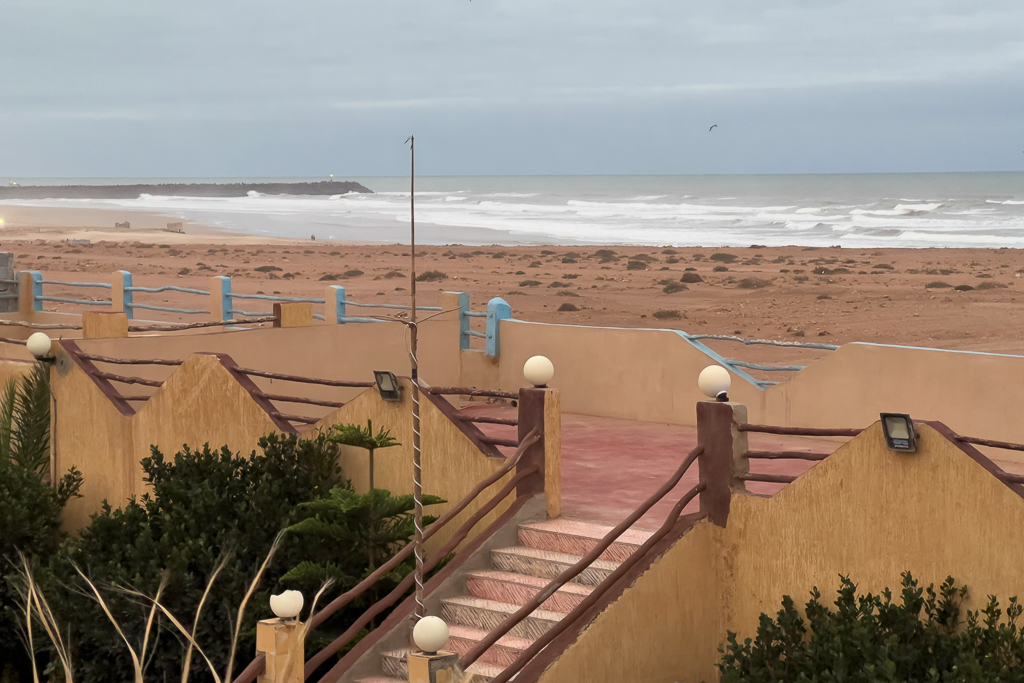
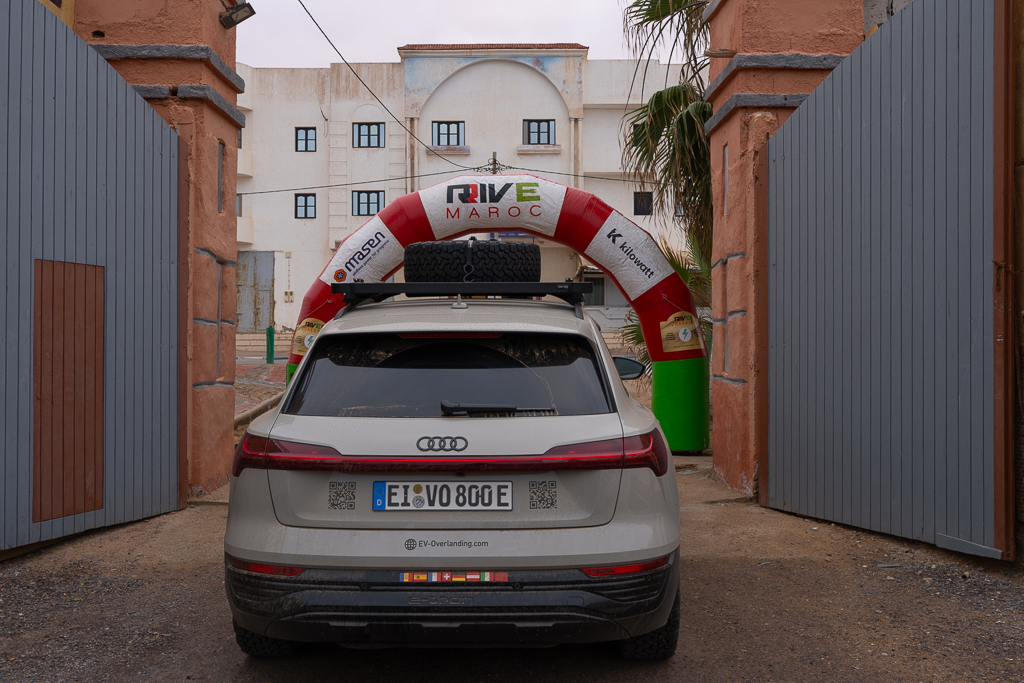
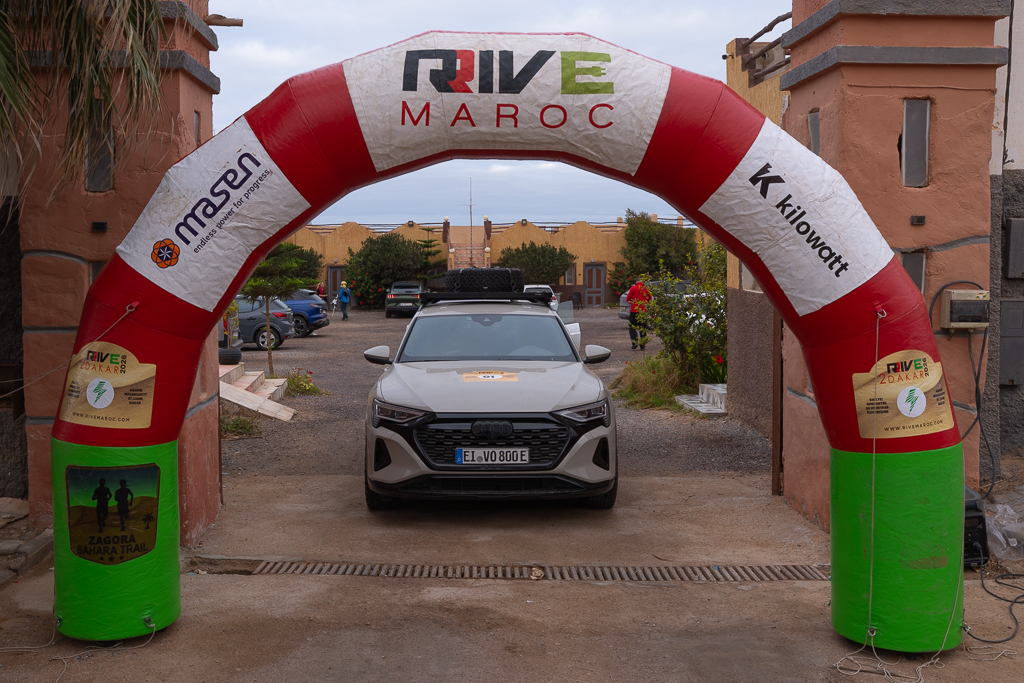
After some driving, we stopped for a short break at a gas station.
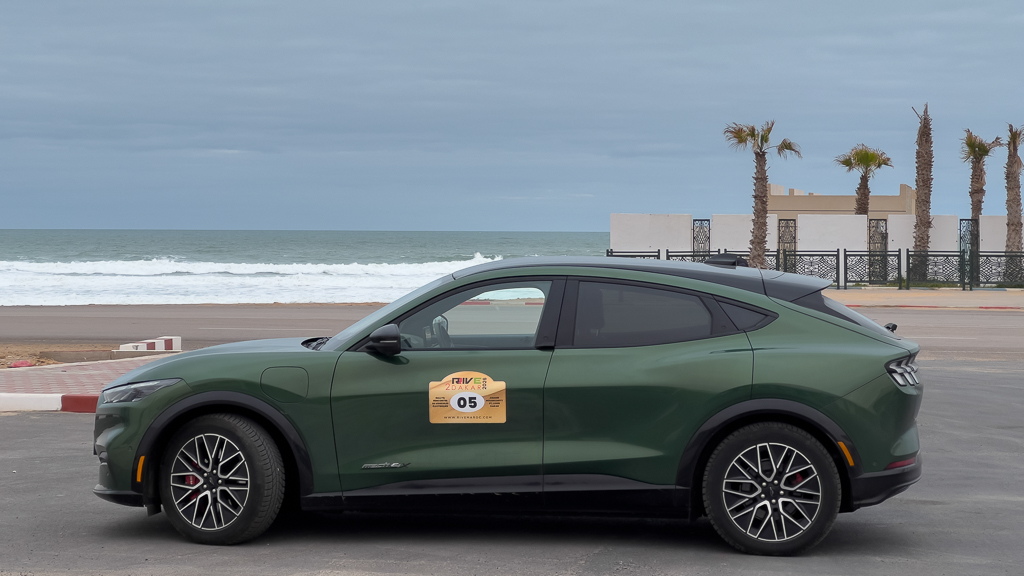
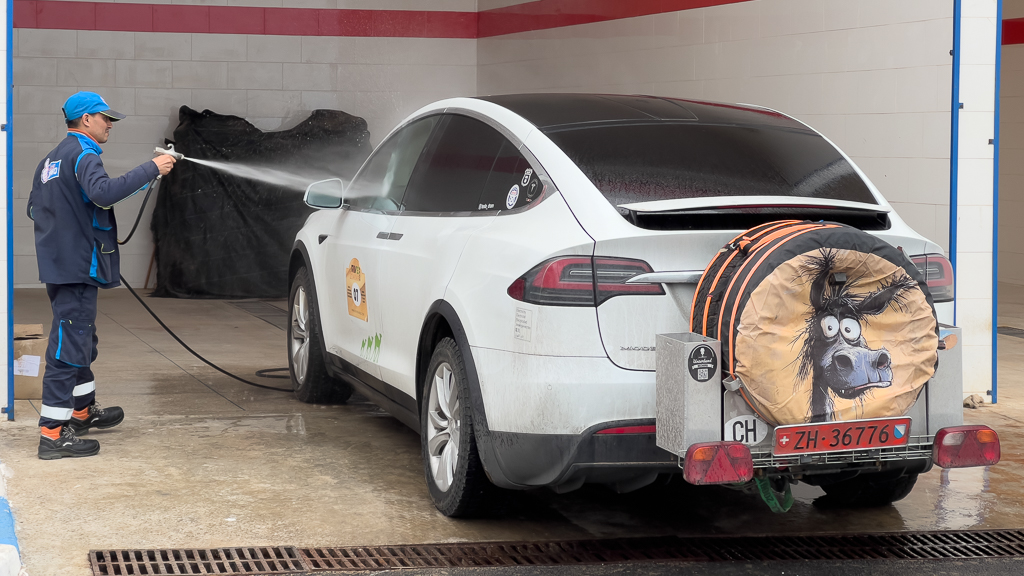
We used this break to clean our cars.
Next, we visited the Khnifiss National Park.
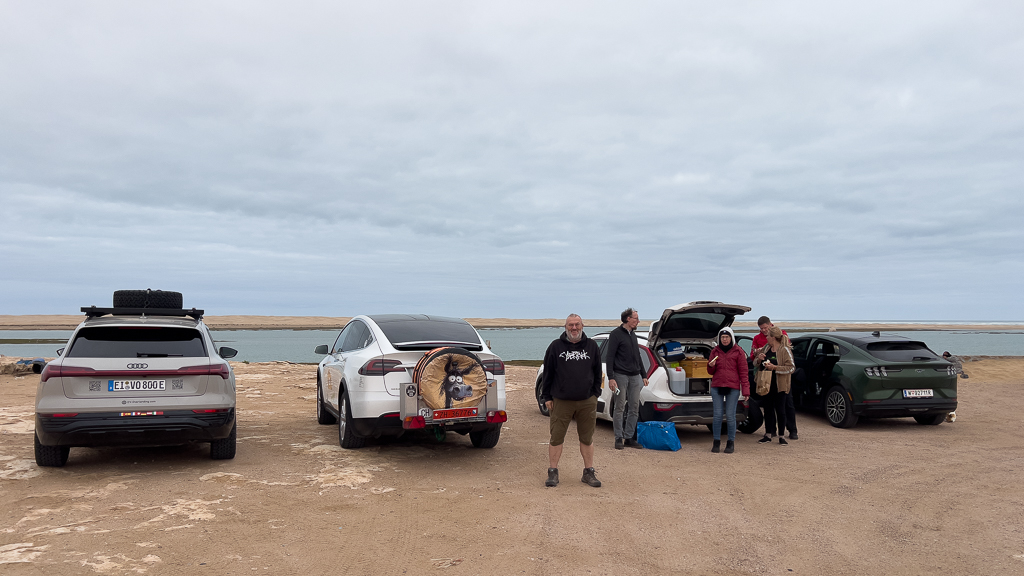
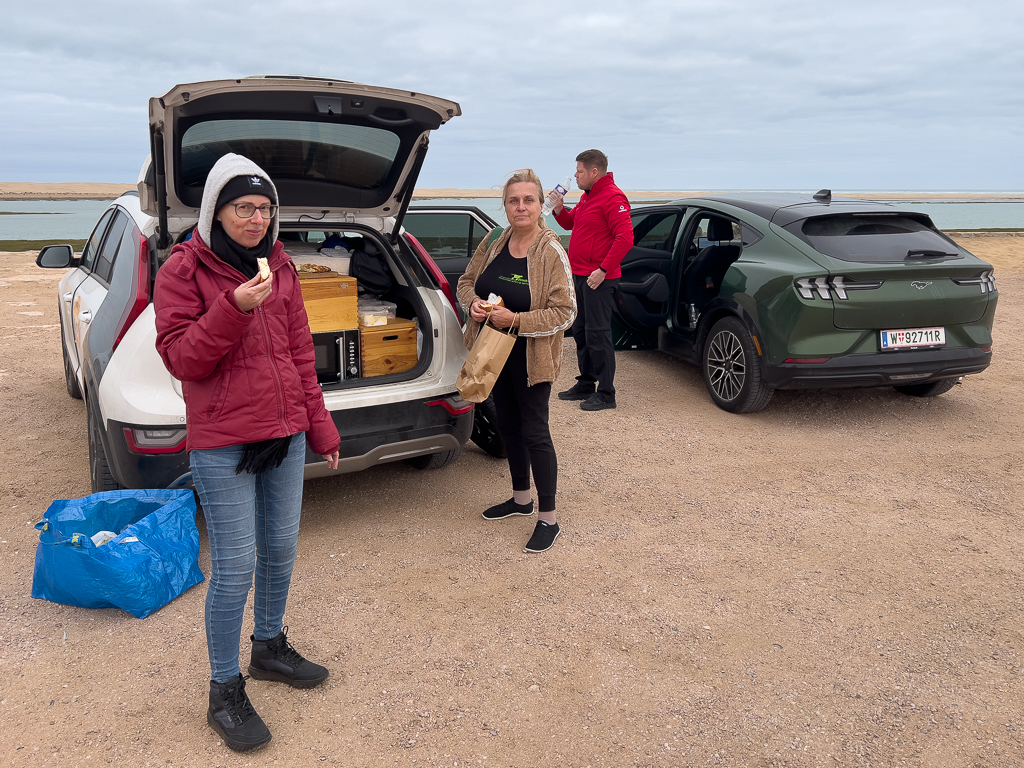
It was created in 2006 to protect the wetlands and coastal dunes. The lagoon in the National Park is an important bird breeding ground. About 20,000 birds stay there in the winter season.
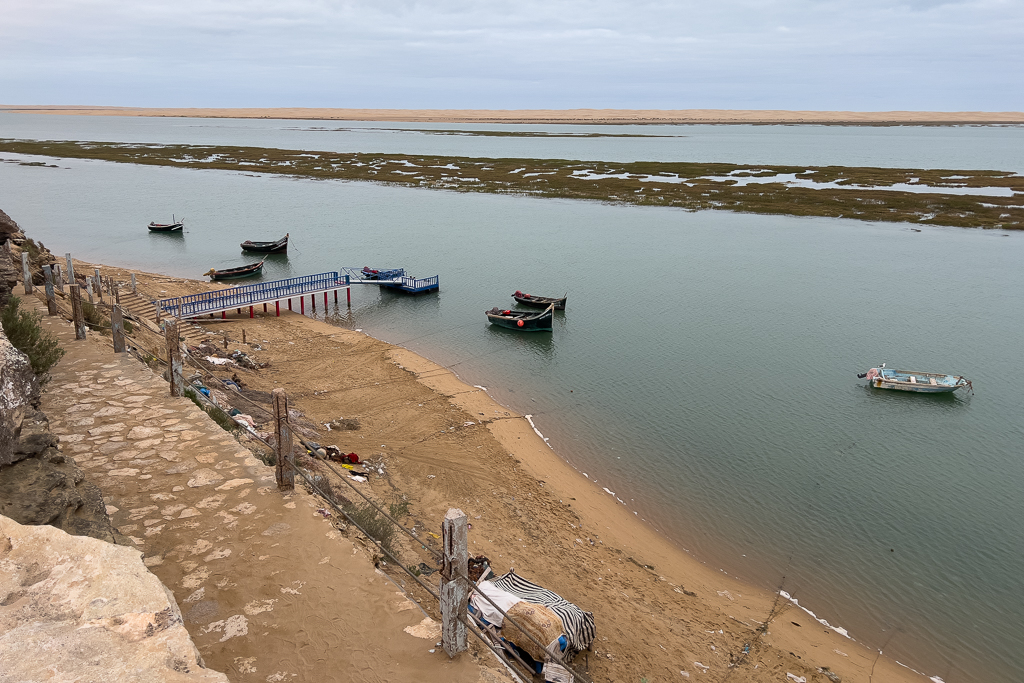
Next, we stopped in Tarfaya, the capital of the province, with a population of about 8000 people. Until 1958, Tarfaya was a Spanish colony.
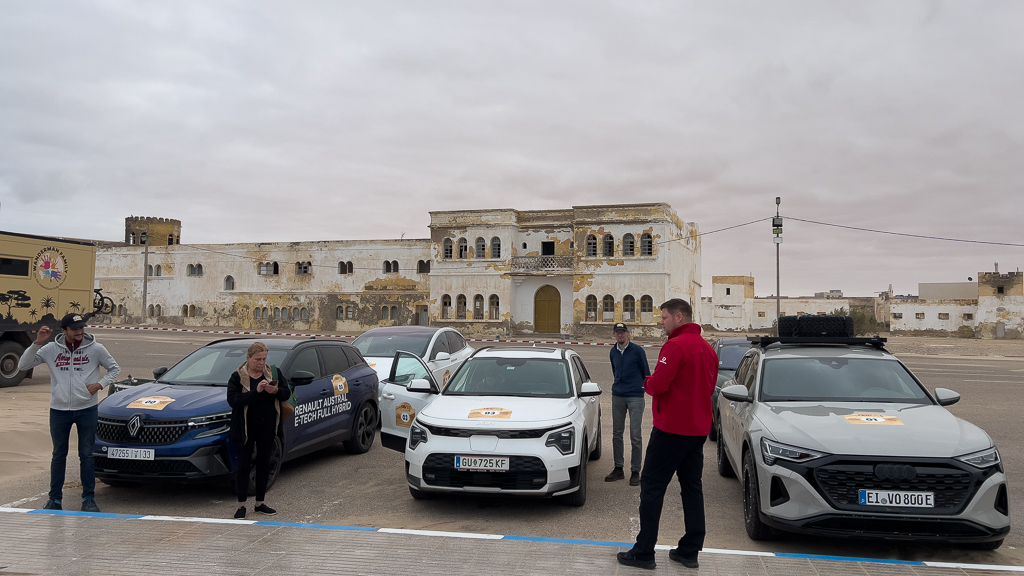
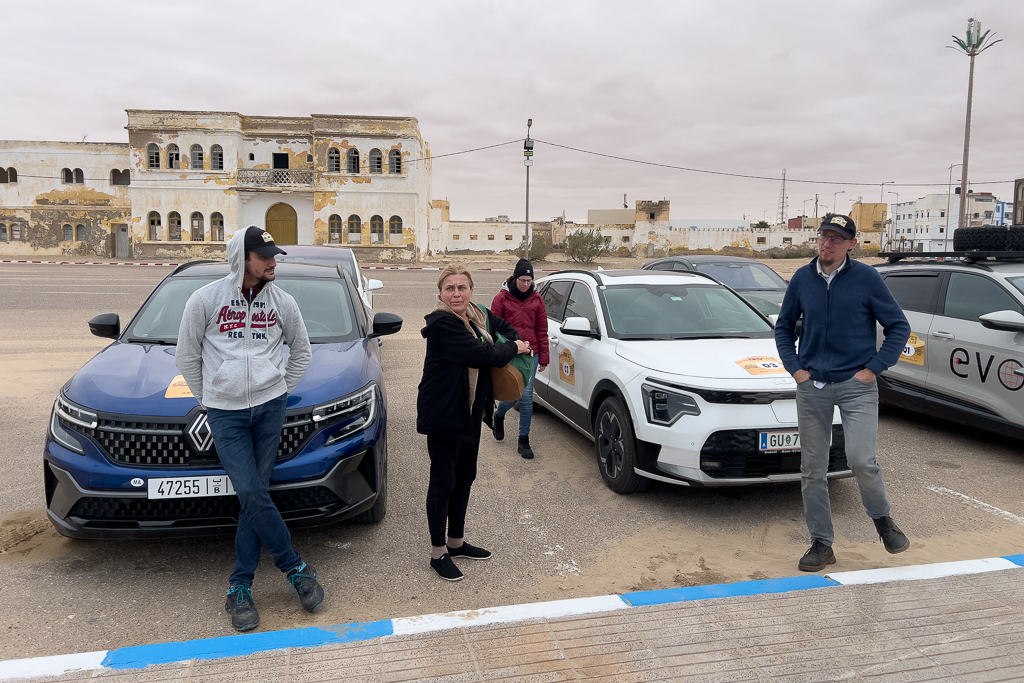
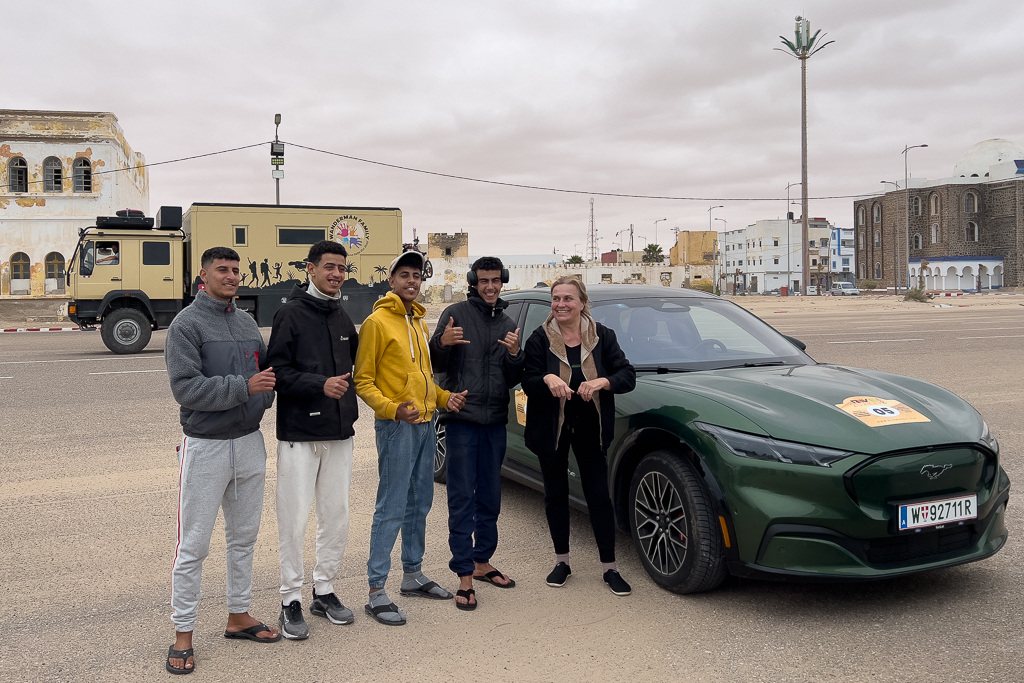
Doris had fun with the local teenagers. They loved the Mustang.
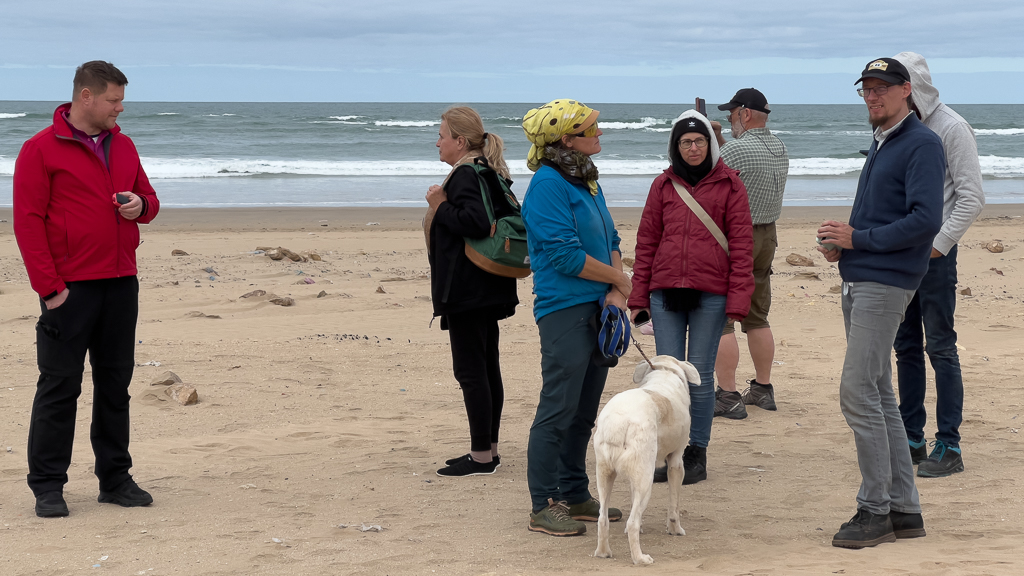
We briefly explored the beach of Tarfaya. Some on foot.
And some with their Tesla.
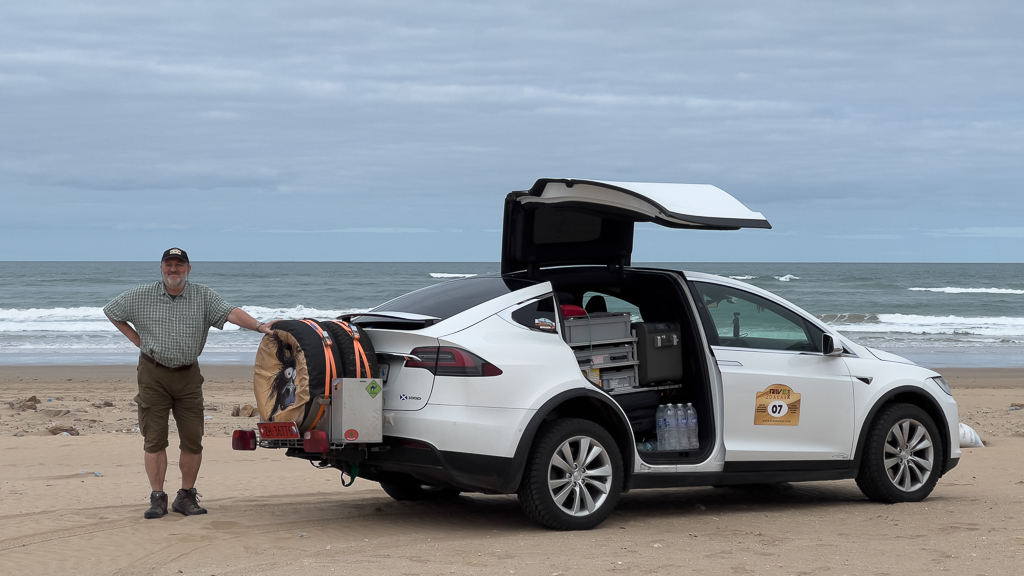
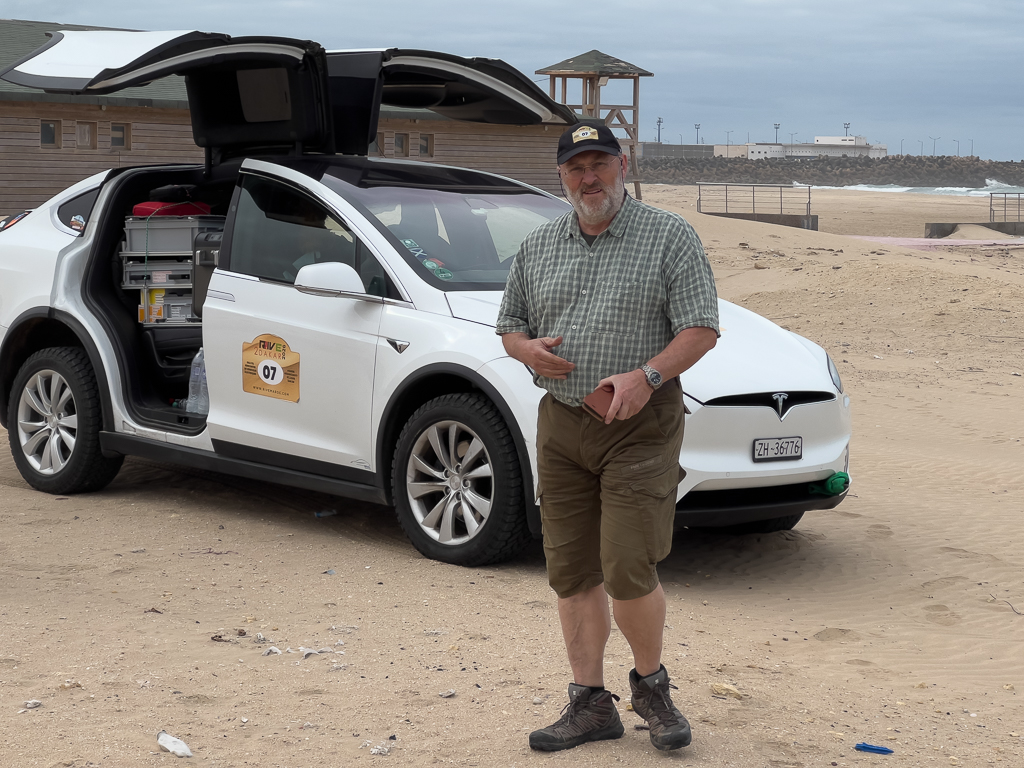
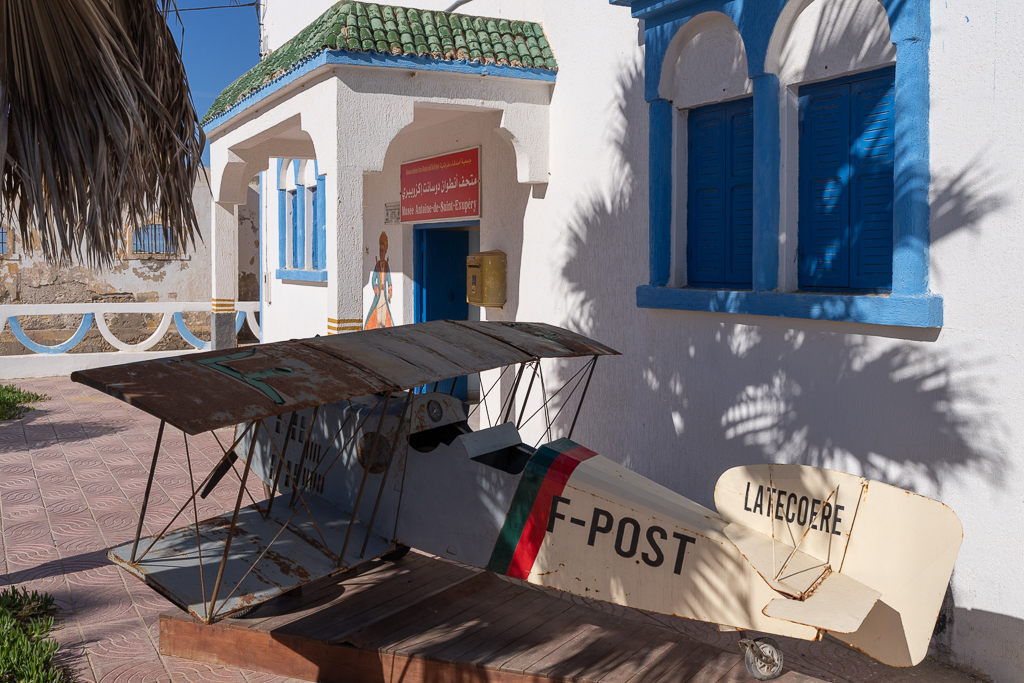
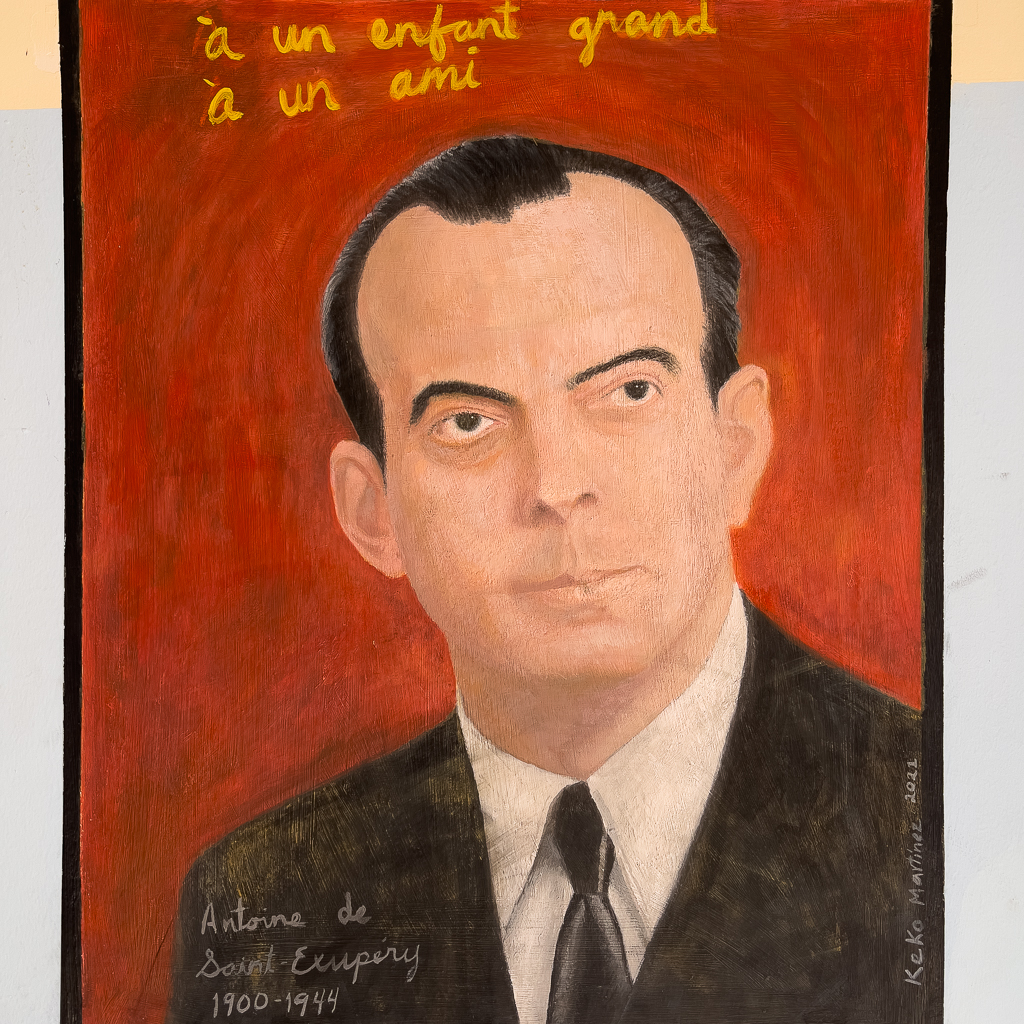
At Tarfaya beach, you can find a monument dedicated to Antoine de Saint-Exupéry.
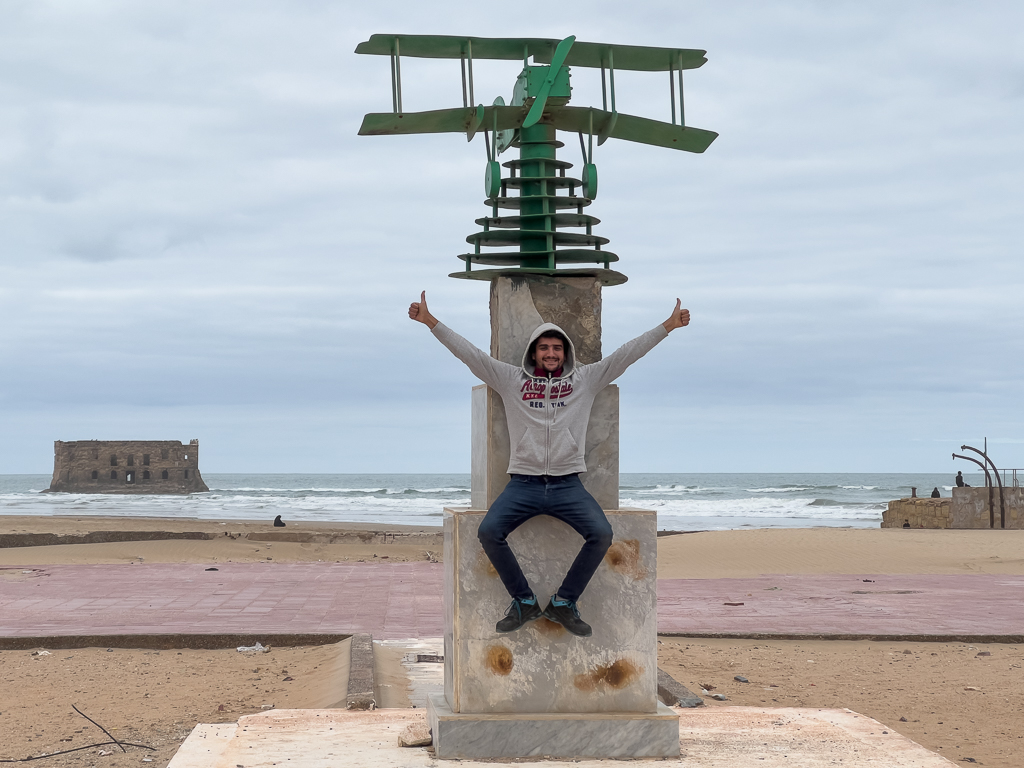
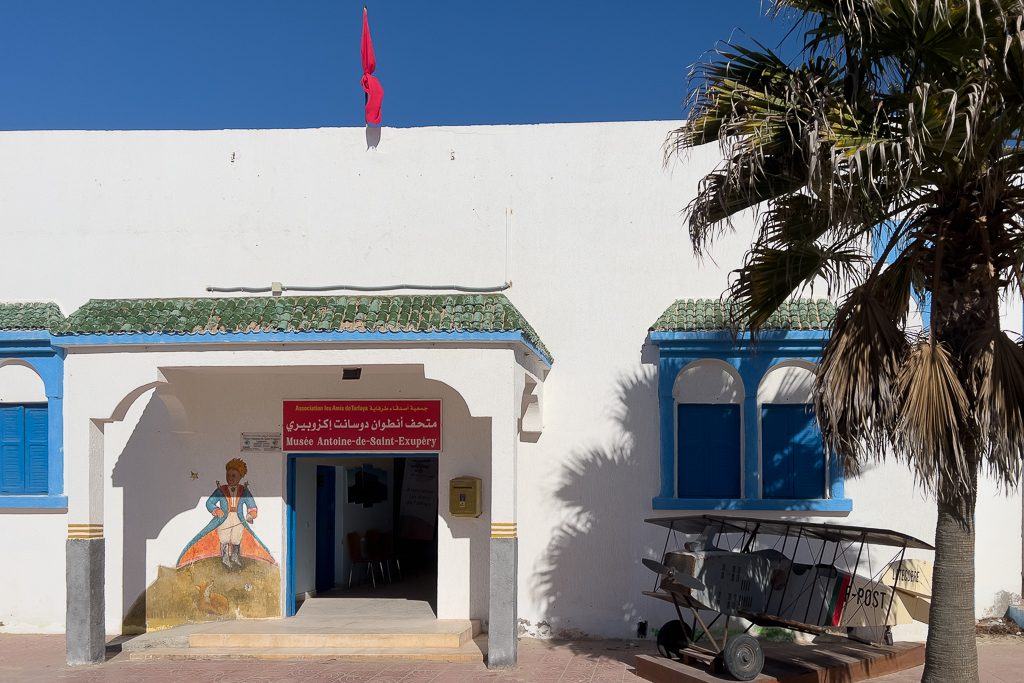
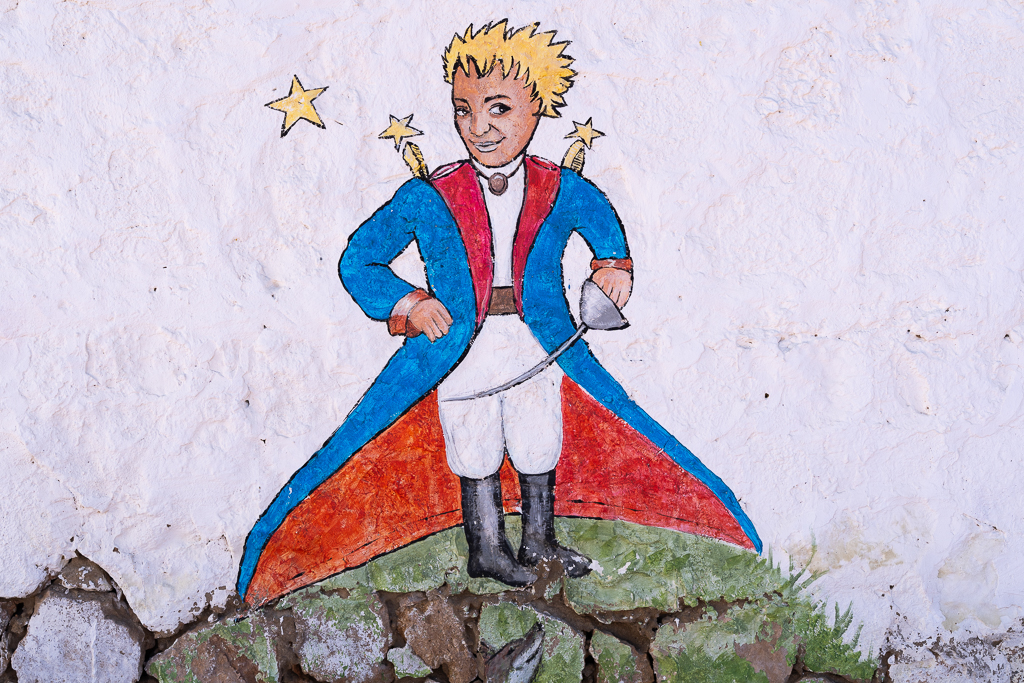
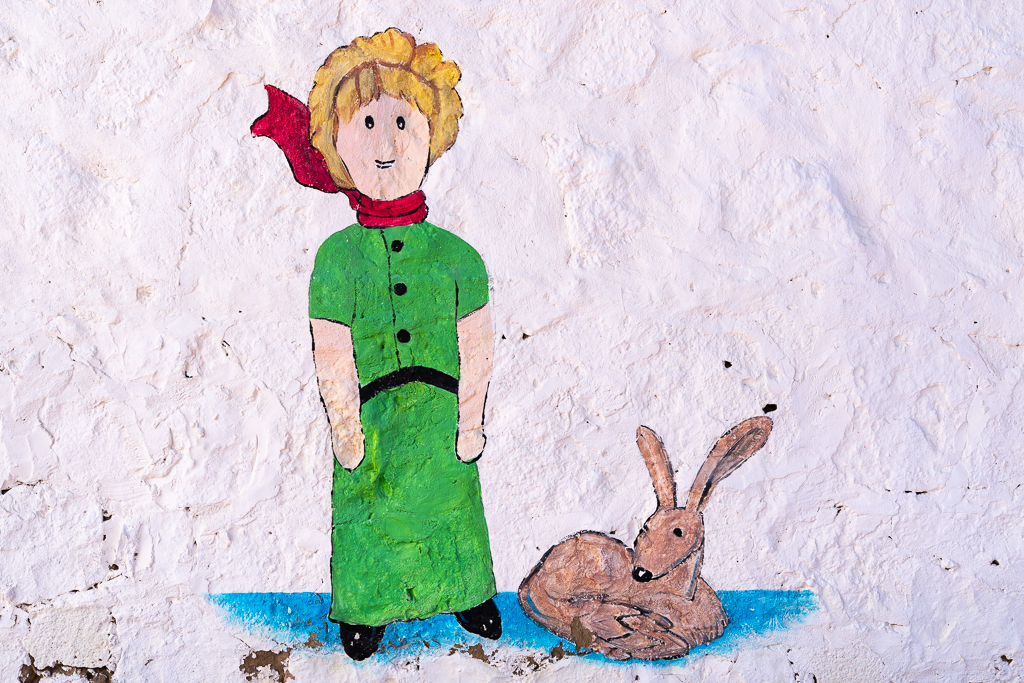
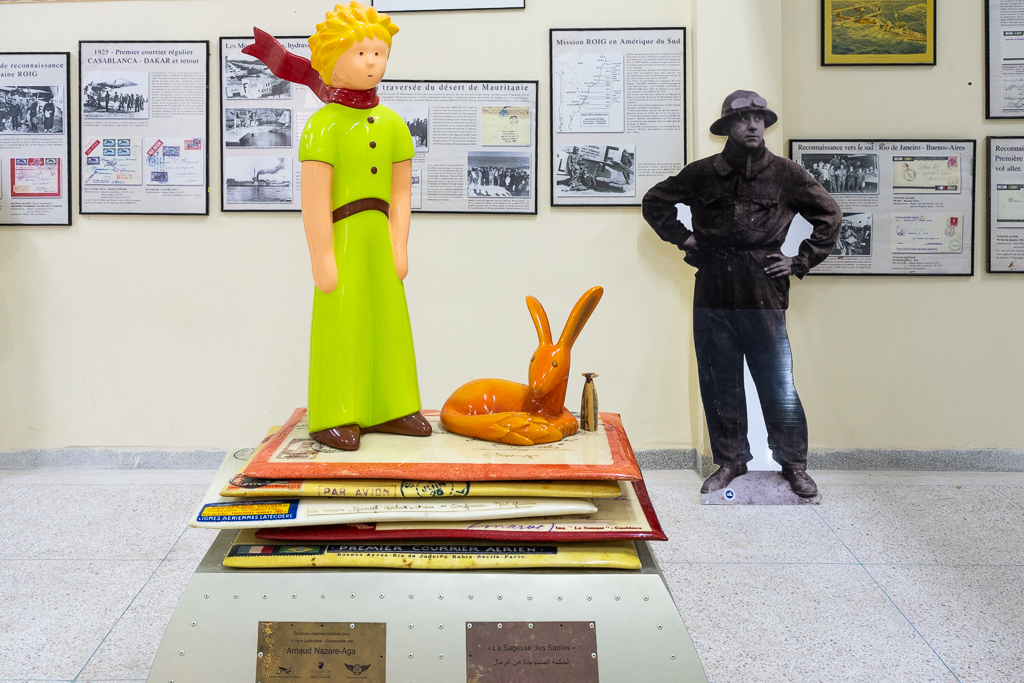
The famous French writer and aviator lived in Tarfaya for two years (1927–1928) before writing his masterpiece, The Little Prince. Antoine de Saint-Exupéry served in Tarfaya as station manager during his career as an airmail pilot.
In 2004, a museum about Antoine de Saint-Exupéry was opened in Tarfaya.
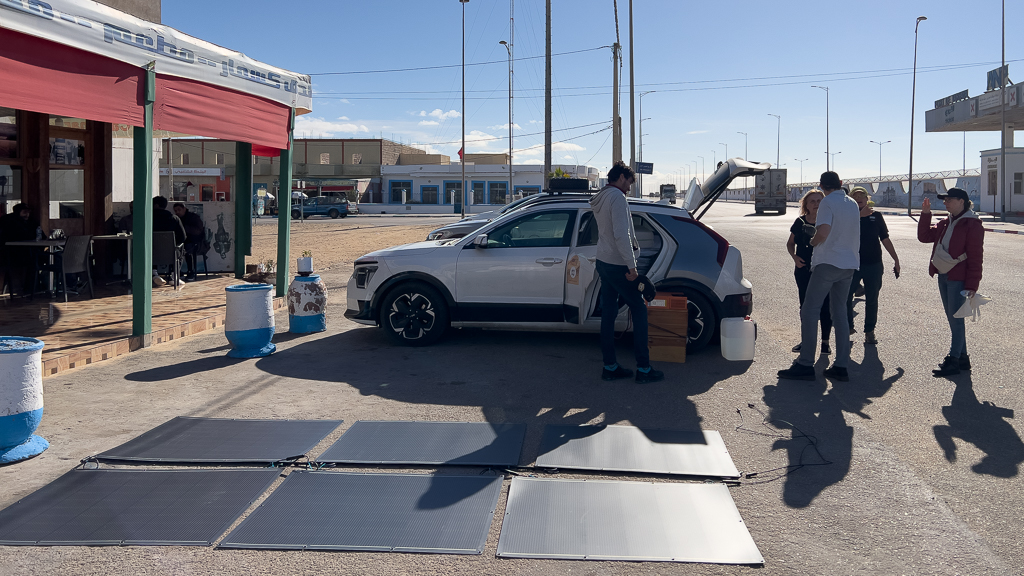
Friedwart was carrying 36 solar panels (200W each) in his Kia to be able to solar-charge on the trip to Dakar. He used our lunch break in Tarfaya to test his solar setup with a subset of panels. With 6 panels, it was working as expected.
After lunch, we continued to Laâyoune.
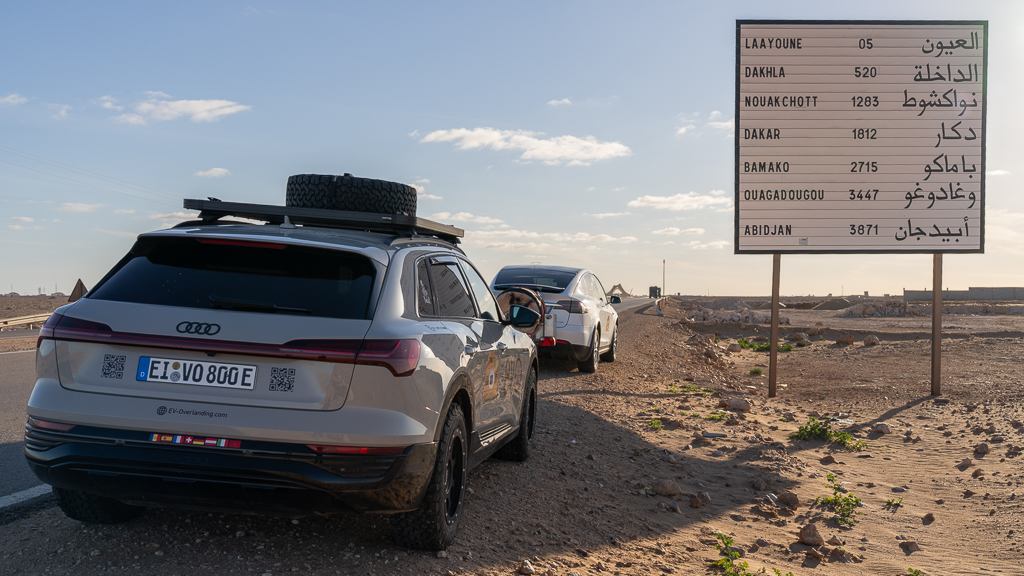
It’s now 1812km to Dakar. We are coming closer.
In Laâyoune, we stayed at the Hotel Noon.
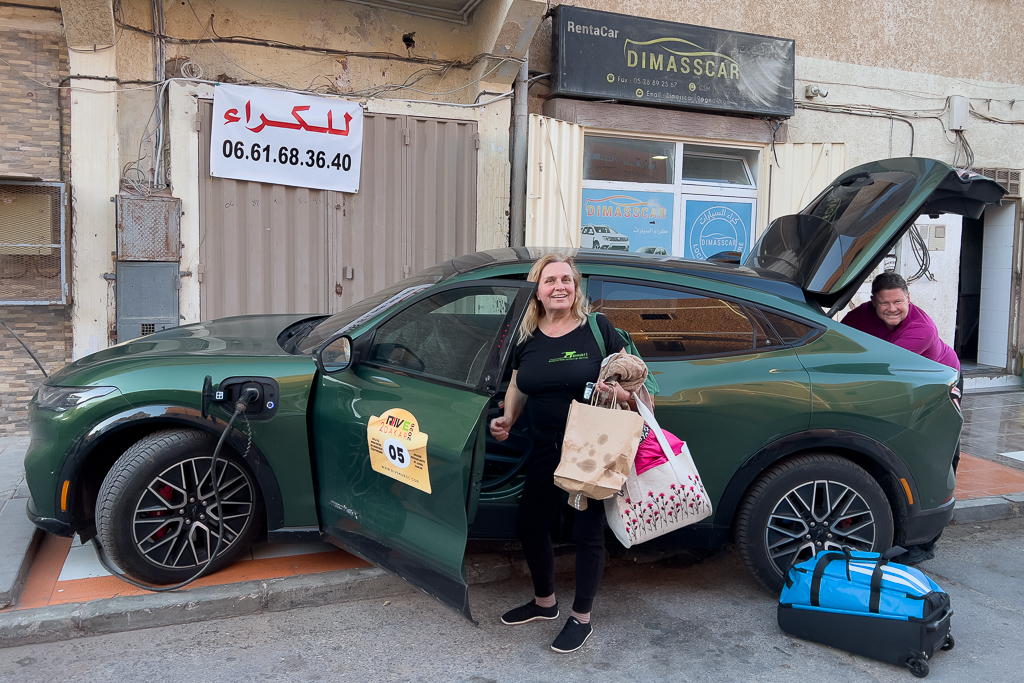
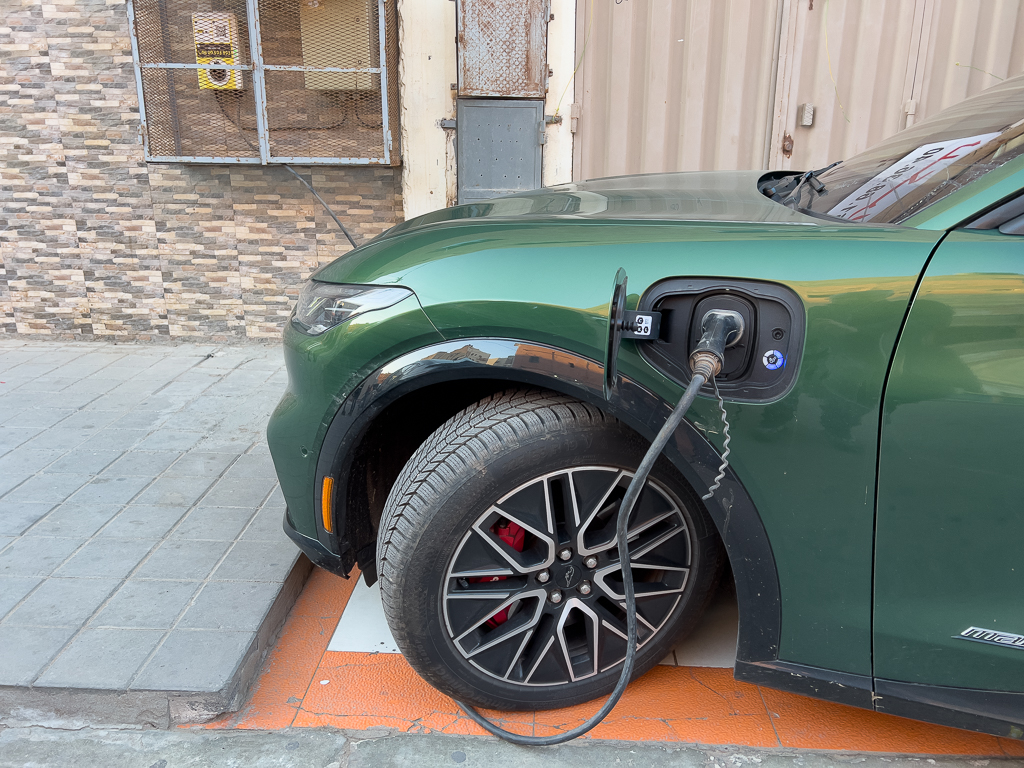
There is a Type 2 Kilowatt charger (22kW) at the hotel, where we plugged in the Ford Mustang.
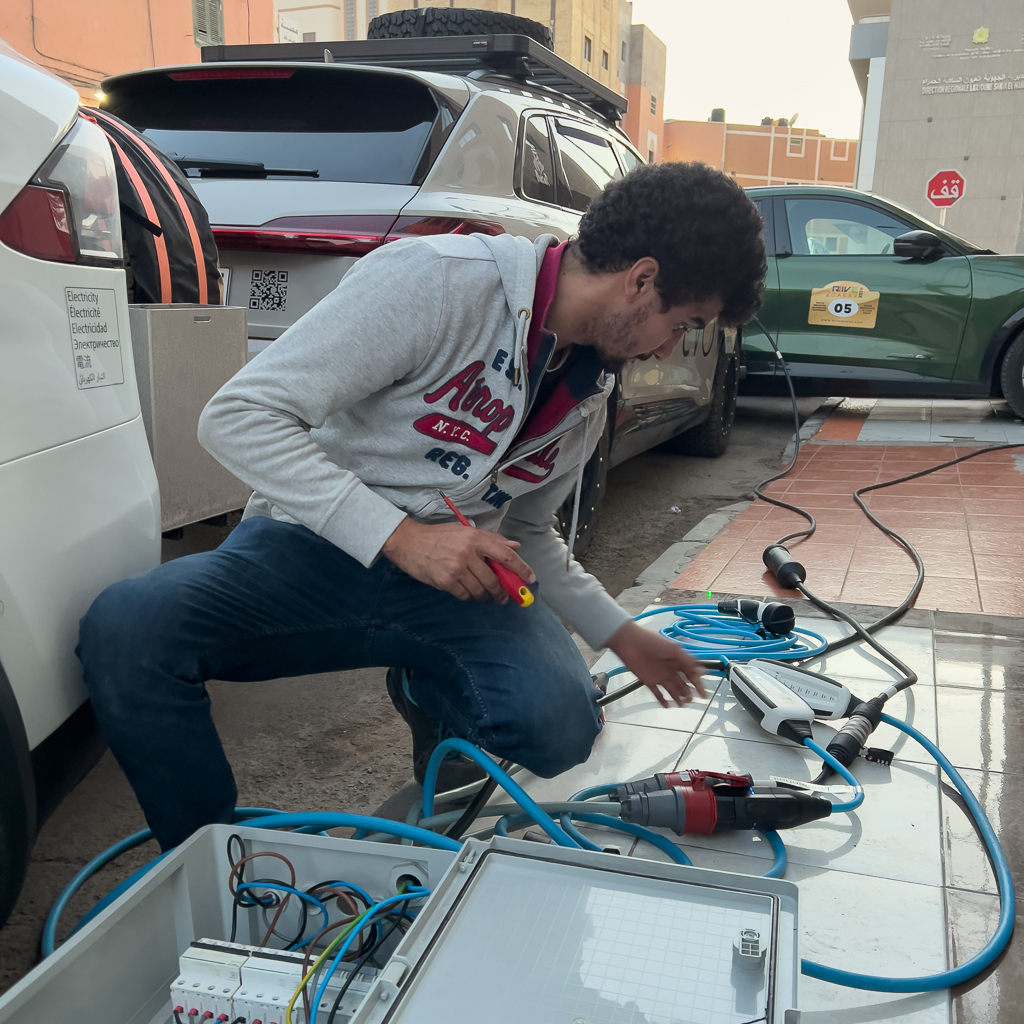
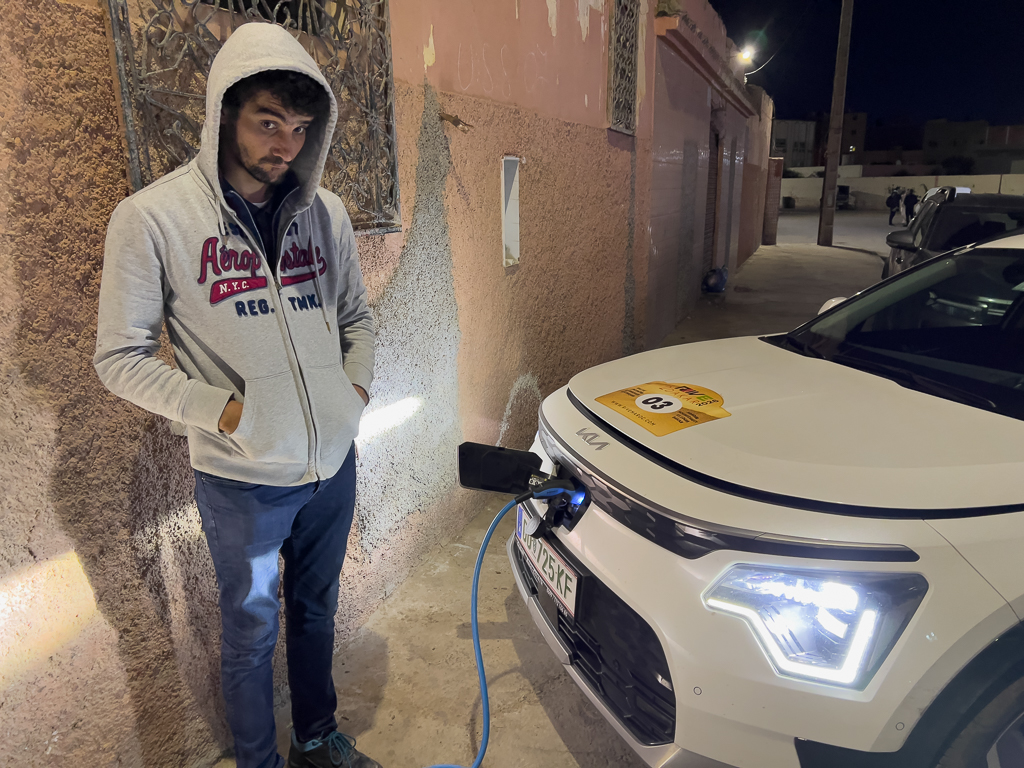
The surroundings of the hotel were not very nice. Beggars approached us while we set up the charging equipment for the other cars. But sadly, there isn’t a good alternative for charging in Laâyoune at the moment. Silvia and Ayoub have planned to check out potential alternatives on their way back to Morocco.

 EV Overlanding