
The Adventure Southside at Lake Constance is one of the largest overlanding, off-roading, and adventure travel conventions and trade fairs in Europe.
This year was its 10th anniversary, and for the first time, there was also a small focus on EVs. But compared to all the other activities around huge expedition trucks and the Ineos Grenadier EVs are still an exotic minority in this overlanding bubble. But it’s a starting point, and I’m convinced that the overlanding world will look different in 10 years. And I like the change.
I’ve spent two days at the convention and will give you a quick impression of the event in the following sections. My focus was mainly on EVs. If you are interested in other topics of the convention, many other bloggers are covering these parts.
Trade Fair
During the weekend, about 15,000 people visited the event, and over 300 exhibitors presented their products on an area of 45,000 m². In the exhibition area, you can find a wide range of accessories and gadgets for overlanding, including rooftop tents, winches, and coffee machines.
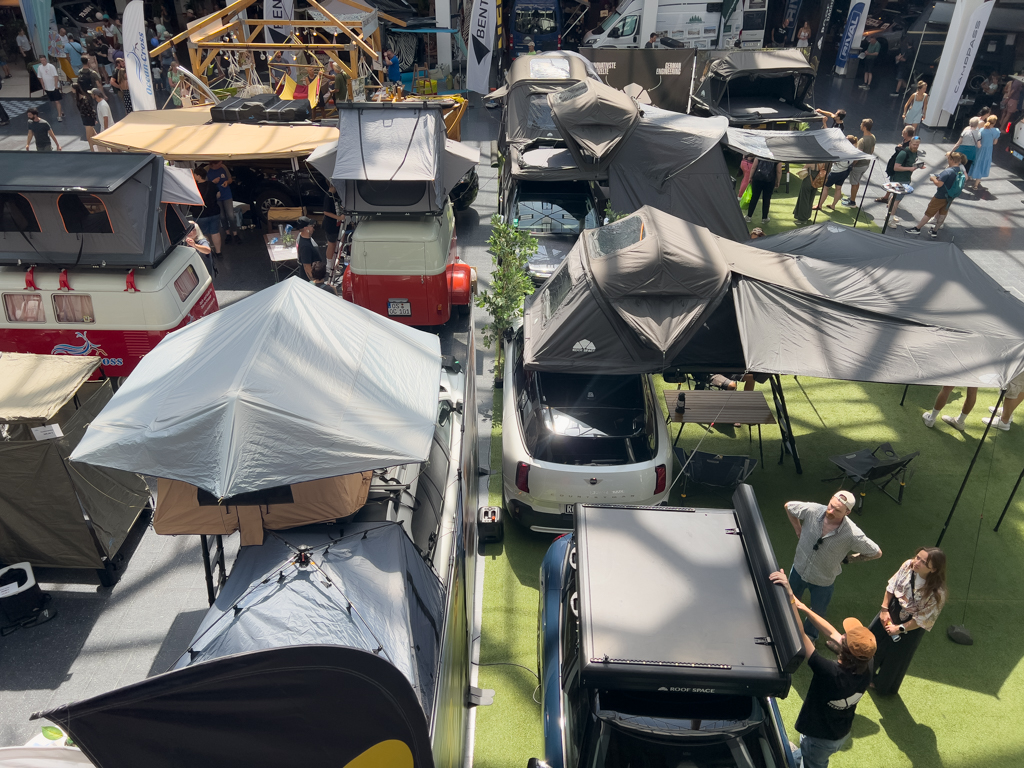

I mentioned coffee machines because the only two items I bought at the fair were a high-quality manual coffee grinder and a compact stainless steel espresso machine for use on camping stoves.
Smart Adventure Tour
The first interesting EV find was a Smart #5, prepared for an offroad adventure trip through Albania, Montenegro, and North Macedonia.
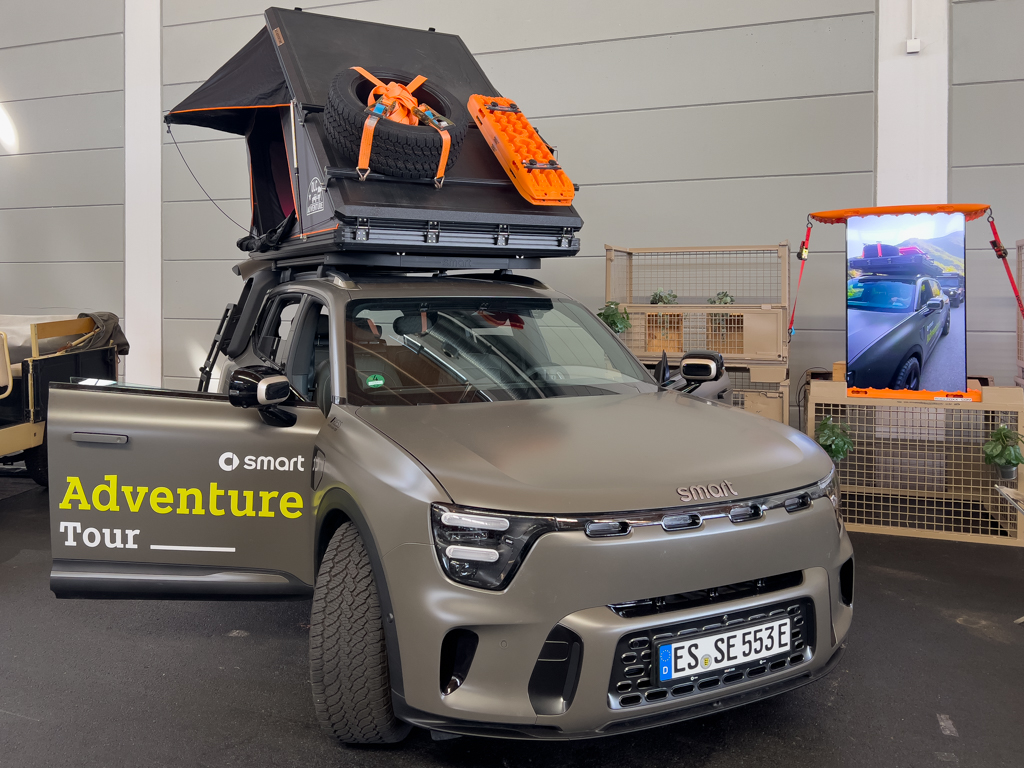
The main modifications were a roof rack, a roof-top tent, and 255/50R19 General Grabber AT tires on Delta rims.

In addition, a medium-sized power pack, a huge EcoFlow fridge, and a Nespresso coffee machine were stored in the interior. Recovery boards and a spare tire were mounted on top of the rooftop tent. The maximum dynamic roof load of the Smart is 100kg, which is 25kg more than my Audi Q8 e-tron allows.
The battery size of the Smart is 94 kWh, and the average energy consumption with the AT tires and the rooftop tent is 25.9 kWh/100km (according to the information at the booth, WLTP is 19.9kWh/100km). Not bad. My Audi needs at least 30 kWh with a similar setup. It can charge with up to 400 kW (peak) DC and 22 kW AC and allows vehicle-to-load of 3.3kW 230V AC.
The ground clearance of the Smart #5 is 19.7cm, and the wading depth is 50cm, which is sufficient for most of the offroad tracks in Europe and Iceland. ESC and traction control have 5 offroad modes to choose from: Adaptive, Sand, Snow, Mud, and Rock.
Smart will soon publish a film about the trip through the Balkans with three of these Smarts.
ID.Buzz from Thousandlanes
Next, I visited the ID.Buzz of Kerstin. She has an interesting blog called thousandlanes.de about travelling with EVs and eCamping. Her identically named YouTube channel is also worth a look.

Her ID.Buzz has some interesting modifications. At first glance, you immediately recognize the Front Runner roof rack with the recovery boards and the 400W solar panels in front of the car. A closer look reveals a self-built and functionally furnished interior with lots of storage space, a kitchen with an induction cooker, a toilet, a bed, a 64-liter fresh water tank, and a large fridge. To not drain the HV battery with the fridge and induction cooker, a 3.6 kWh EcoFlow Delta Pro power station was added (which can be recharged with the external solar panels or via a Type 2 charger).
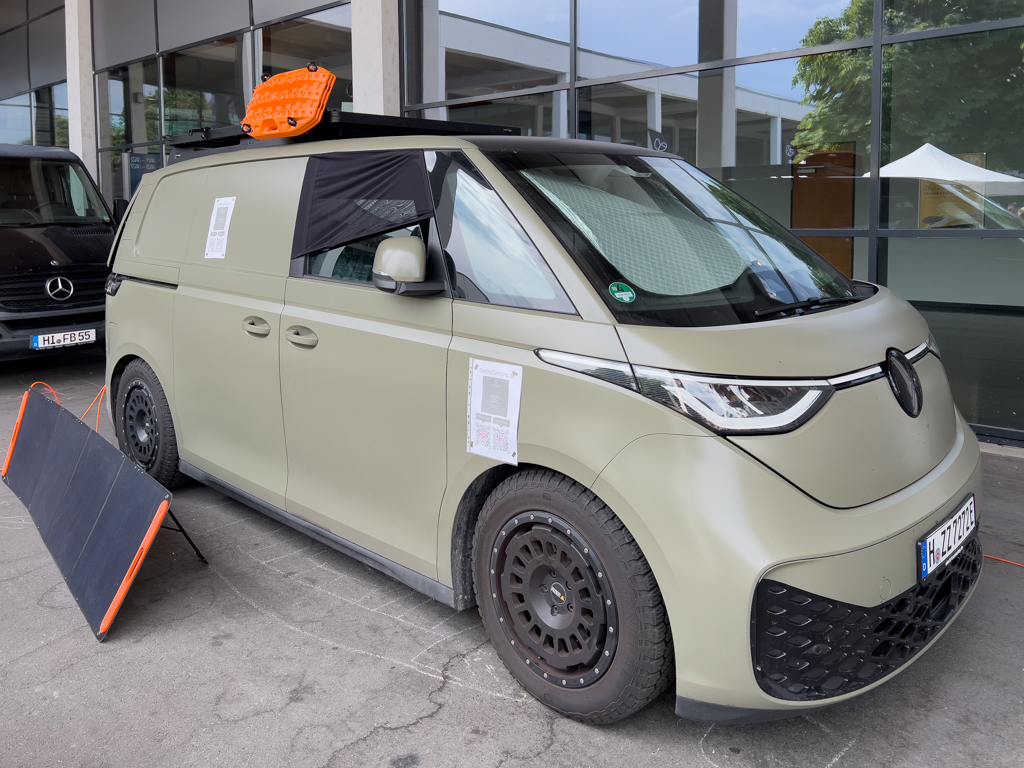
The mounted tires are General Grabber AT3 on 18-inch Twin-Monotube-Projekt rims. The AT3 tires are a very good choice for mixed onroad and light offroad usage.

Last but not least, this ID.Buzz has an air suspension from Streetec, which could lift the vehicle on the front axle by +3.5cm (from factory level) and on the rear axle by +0.5cm. In addition, the Streetec air suspension has an auto-level function, which could help tremendously in camping situations. When the car is stopped, the air suspension can go up to +6.5cm and down to -13cm (from factory level). Enough to compensate for any uneven ground.
The complete Streetec air suspension modification costs about 7850€. So it’s definitely not cheap.
Silberform Mercedes G conversion to electric drive train
Something completely different can be found at the Silberform booth. They are offering the conversion of a Mercedes G 461 to an electric drivetrain.
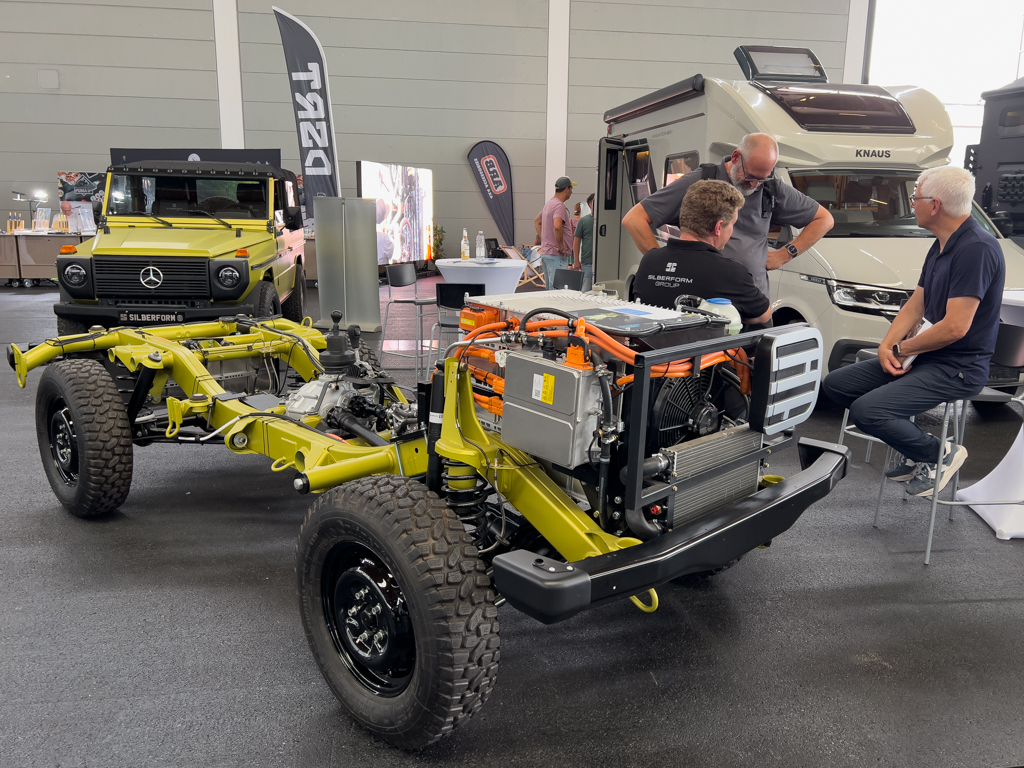
It’s an interesting concept that keeps the standard axles and differential locks of the G and just adds an 180kw electric motor and an 82 kWh battery. That way, the awesome offroad capabilities of the G are fully retained. The drawback of this concept is a less-than-great efficiency due to high losses in the drive train.
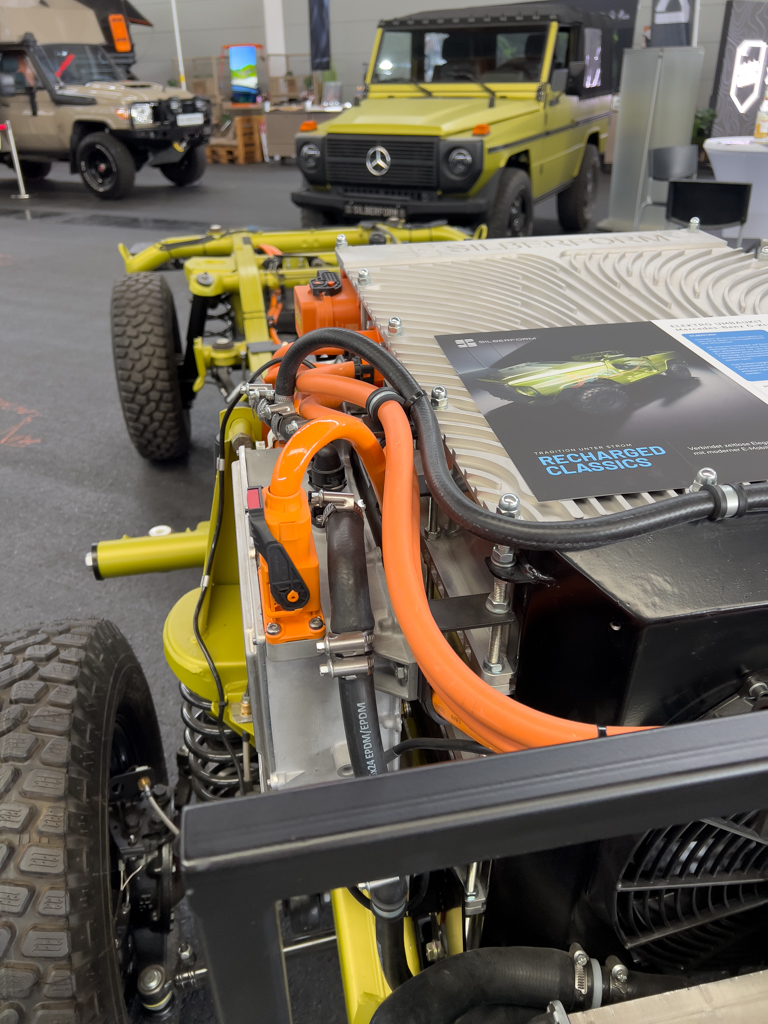
The larger part of the battery is located in the engine bay, and a smaller part is behind the rear axle. Currently, the modification costs more than 100,000€. But Silberform is working on bringing down the costs in the next iteration.
Pistenkuh
Sabine and Burkhard Koch (the Pistenkuh team) are well-known in the overlanding community.

They have explored many parts of the world using various expedition vehicles and regularly publish high-quality track books of interesting regions. These books include detailed descriptions of the tracks as well as downloadable GPS tracks. I’ve used their Western Alps, Balkan, Morocco, and Pyrenees track books in the past and can highly recommend them. You can get them on Amazon or directly from their website.
I had a quick chat with Burkard at their booth and was positively surprised that he liked the idea that his books are now also used for EVs to explore remote tracks in Europe and North Africa. Sadly, not everyone is as open to EVs in the overlanding scene as Burkhard.
Rive Maroc
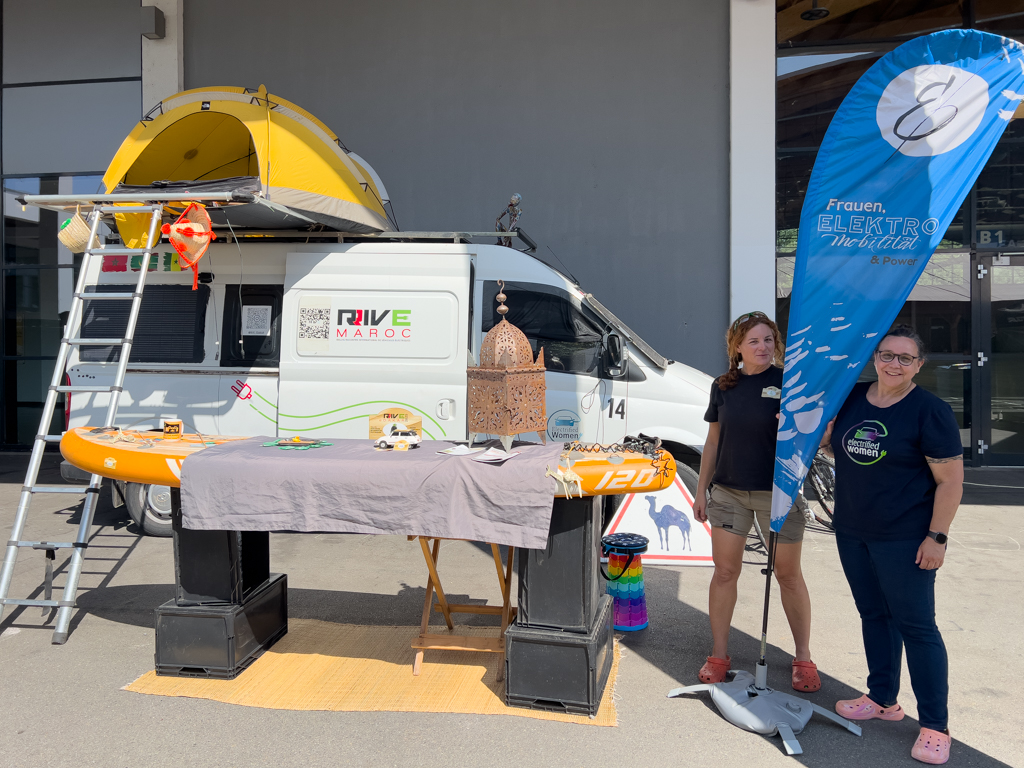
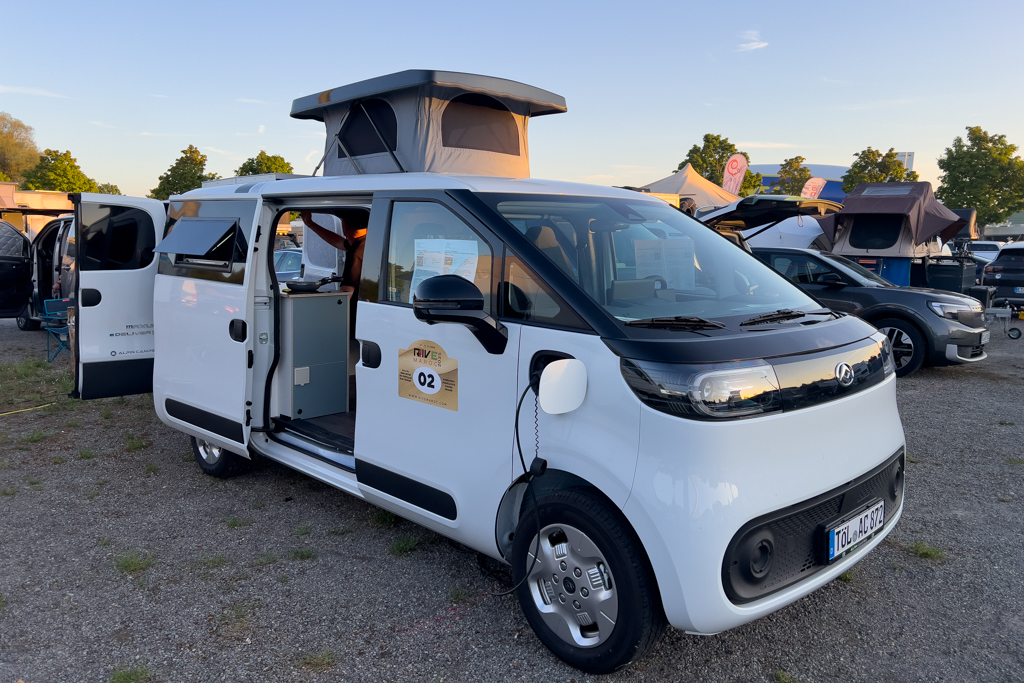
Silvia, the organizer of the Rive Maroc Rallye, was presenting her Maxus EV80 van and was looking for interested parties for the 2025 Rive Maroc Rallye in October and the eDakar expedition in January 2026. If you think this could be something for you, contact her at rivemaroc.com. I participated last year in the Rive Maroc and really liked the experience.

Presentations
In addition to the exhibitions, there were also many presentations throughout the weekend about different topics. I joined a couple of them and learned new things about Iran, the Arabian Peninsula, and the Silk Road through Central Asia. All these destinations are on my to-do list for the future.
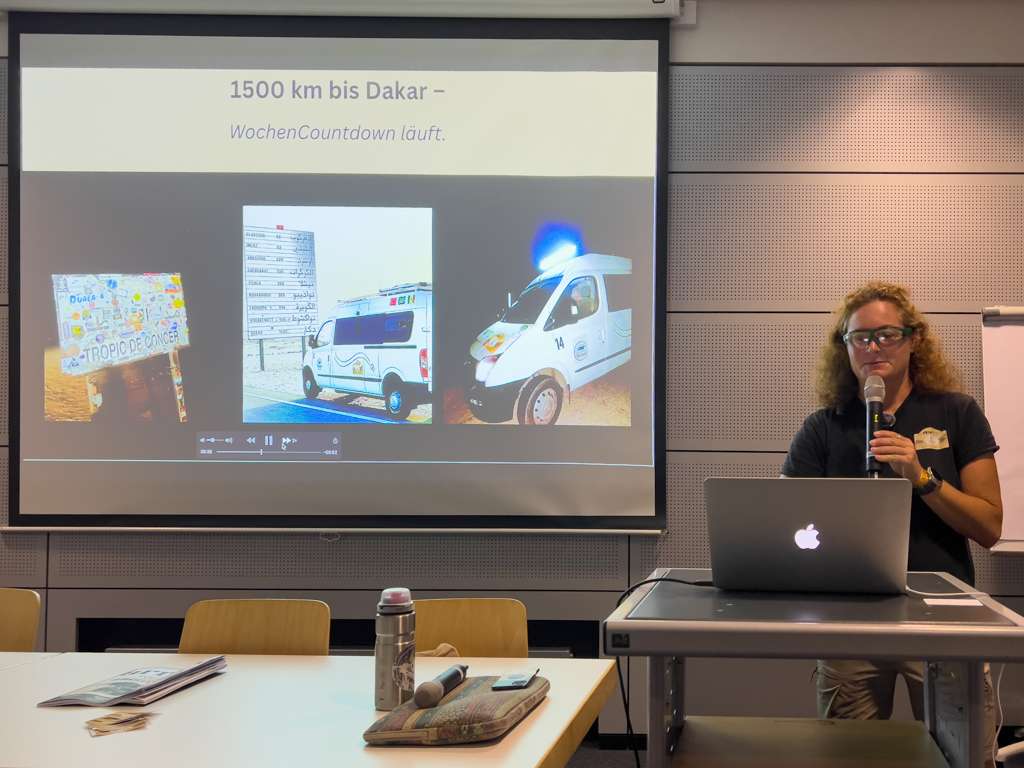
Silvia from Rive Maroc held an interesting presentation about her expedition to Senegal and Gambia with an electric van. She was partially charging her van with solar panels, which she carried in her car. I had the chance to record the whole presentation with my camera and will soon publish it on my YouTube channel.
Camp Area
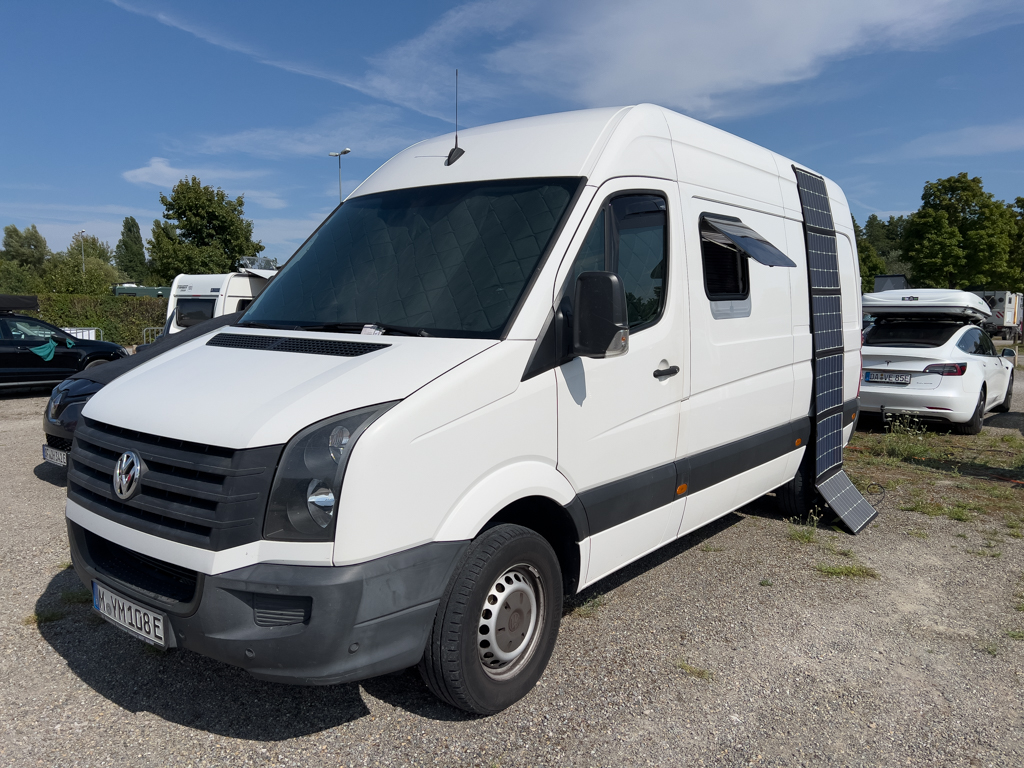
There was a large camp area at the event where you could spend the night in your vehicle. Walking through the camp area is highly recommended since it is also a showcase for highly modified overlanding vehicles, from simple self-built Sprinter vans to huge MAN Kat1 expedition trucks.
This year, there was for the first time also a separate area for EV campers. About 20 EVs stayed during the weekend at this camp.
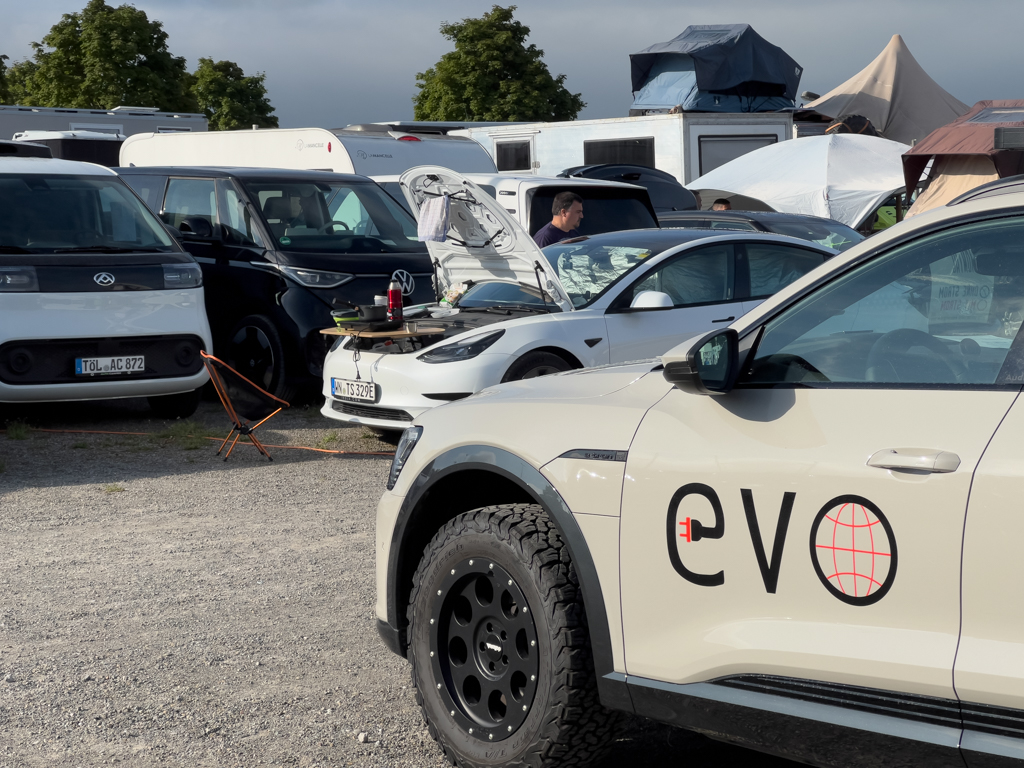


During the first night, my direct neighbor was Christian from @busroadtrips. We had chatted via social media in the past, but it was the first time we met in real life. He is driving an ID.Buzz through Europe, including some challenging offroad tracks in the Western Alps.

He is well known for his #BULLILOVEstories project, where he has now spent more than 226 nights in his ID.Buzz and visited 43 countries with it.

We talked a lot about our experiences on offroad tracks in Europe and the pros and cons of different vehicles and modifications. I thoroughly enjoyed the exchange with Christian.
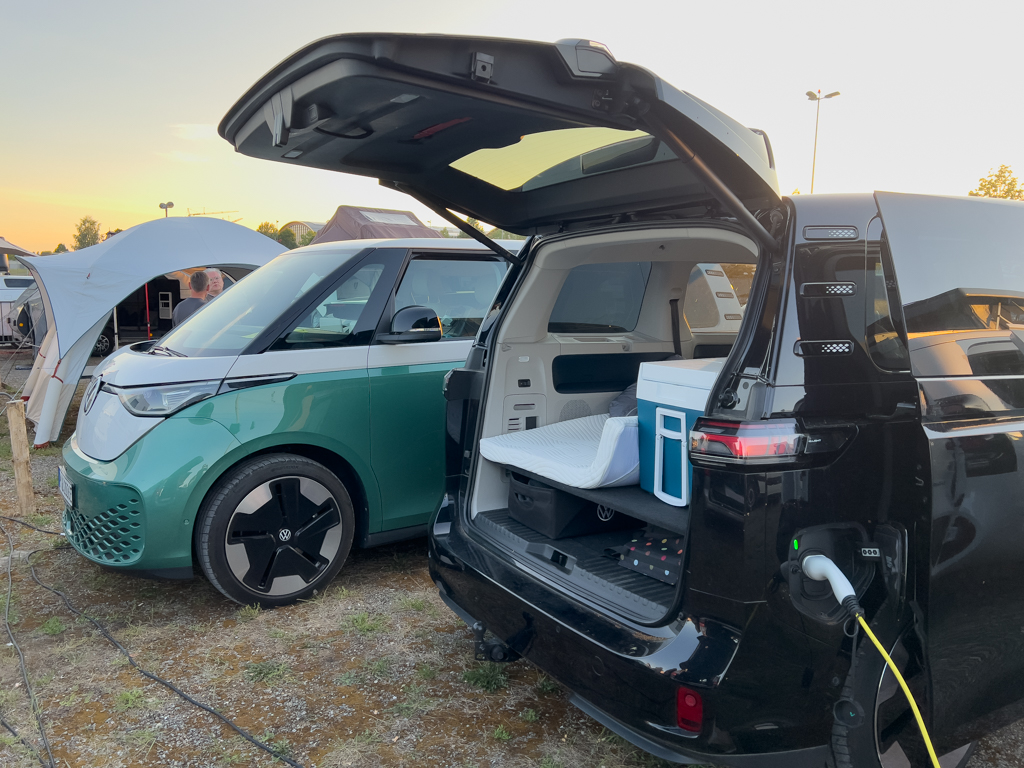
In the past, the e-camping scene was dominated by Tesla vehicles. Interestingly, this time, the ID.Buzz was the most common EV in the camp area. And for a good reason, in my opinion. With some minor modifications, it’s a great vehicle for adventure travel.

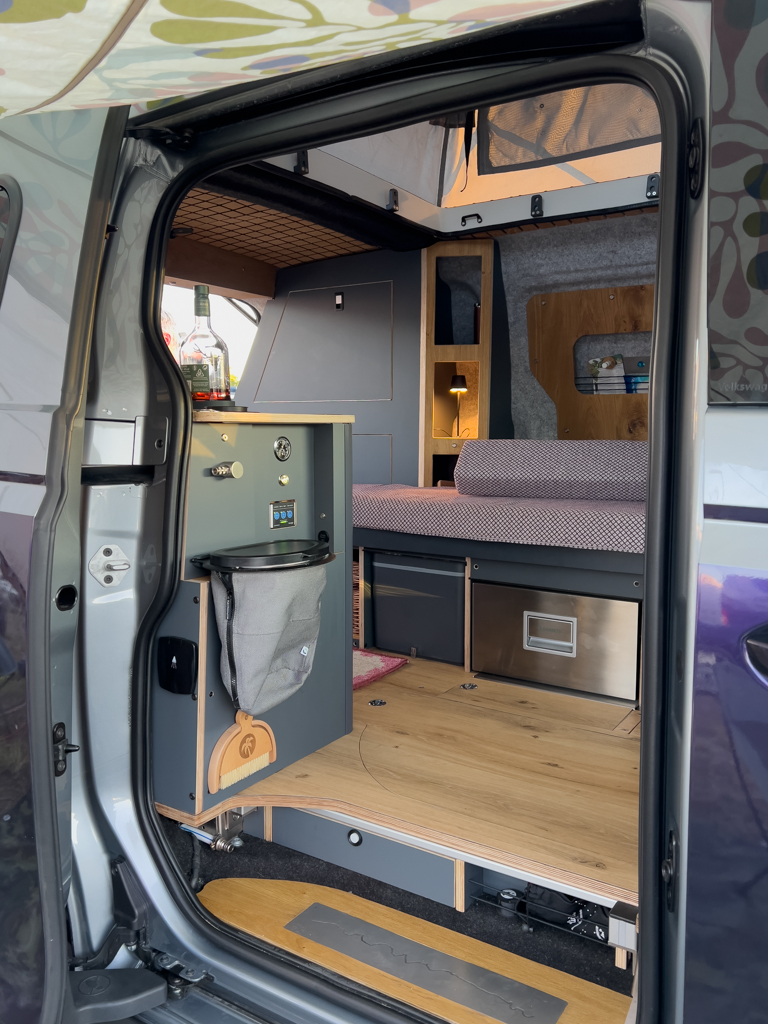
A very special ID.Buzz was the one from Gerhard Meier. He built the complete interior by himself in many hours. The finish and attention to small details is very impressive.

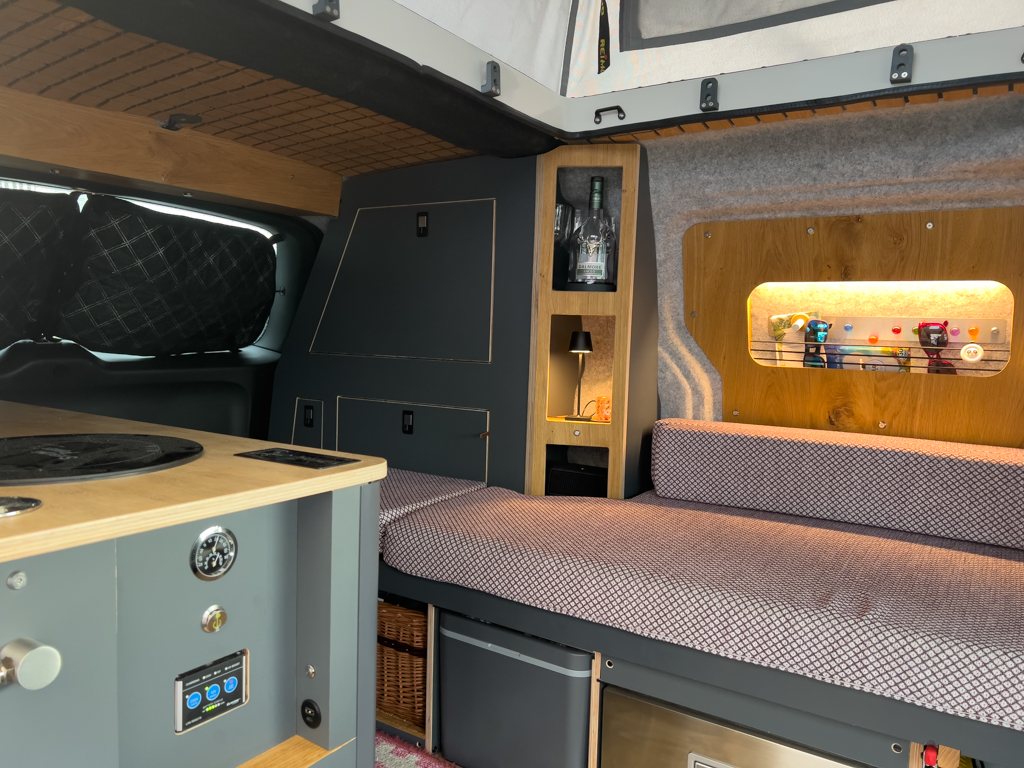
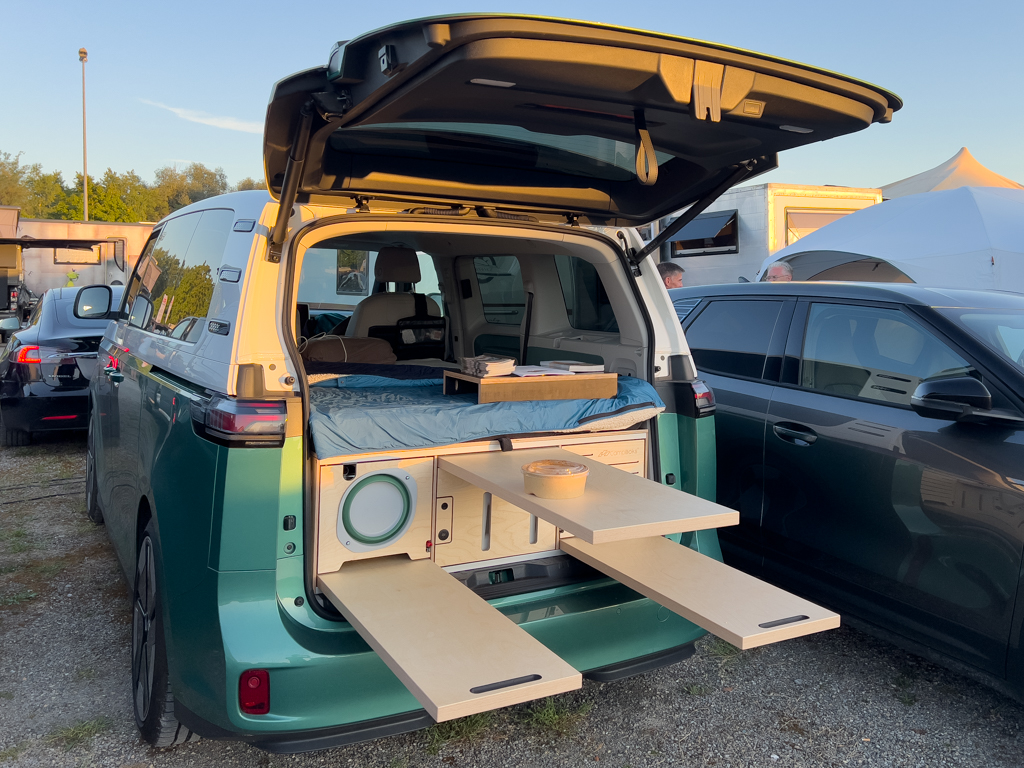
The following ID.Buzz had the CampBoks Pro interior set. It can be mounted in just a few minutes without any drilling. It is beautifully crafted and costs around 8000€.

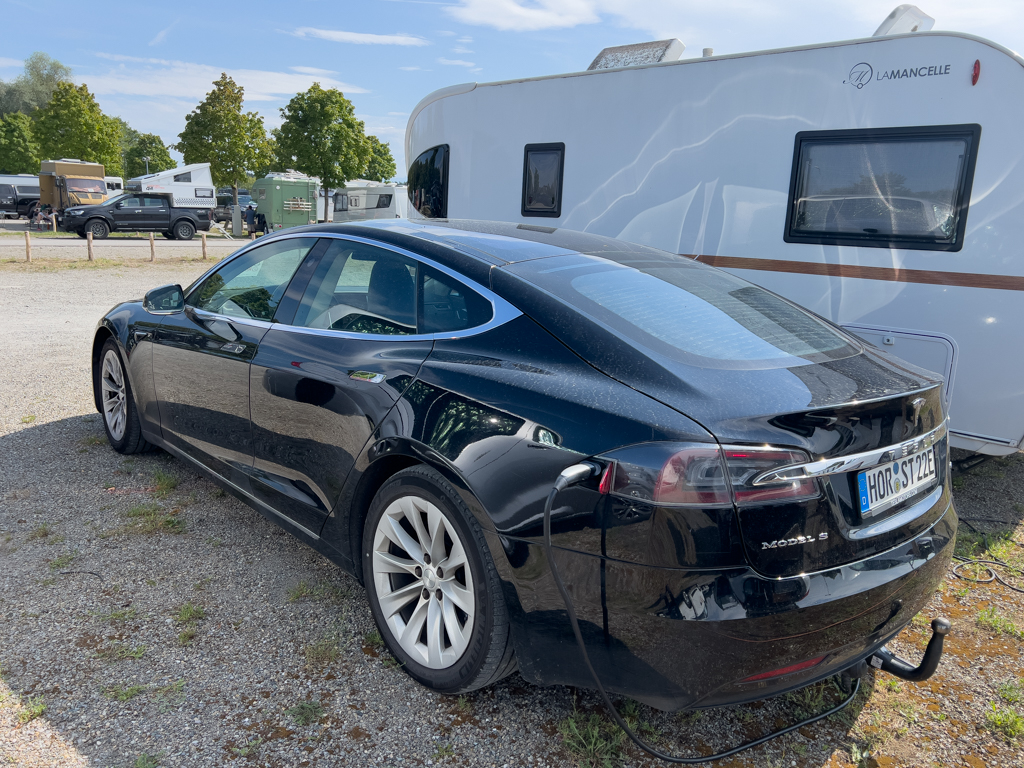
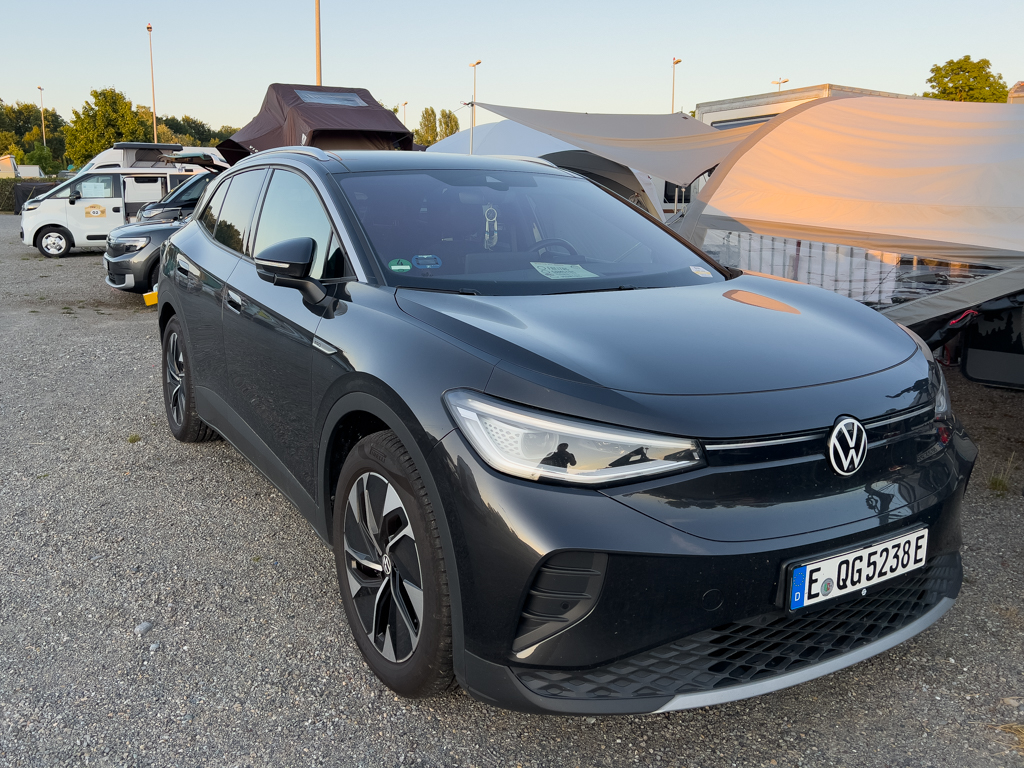
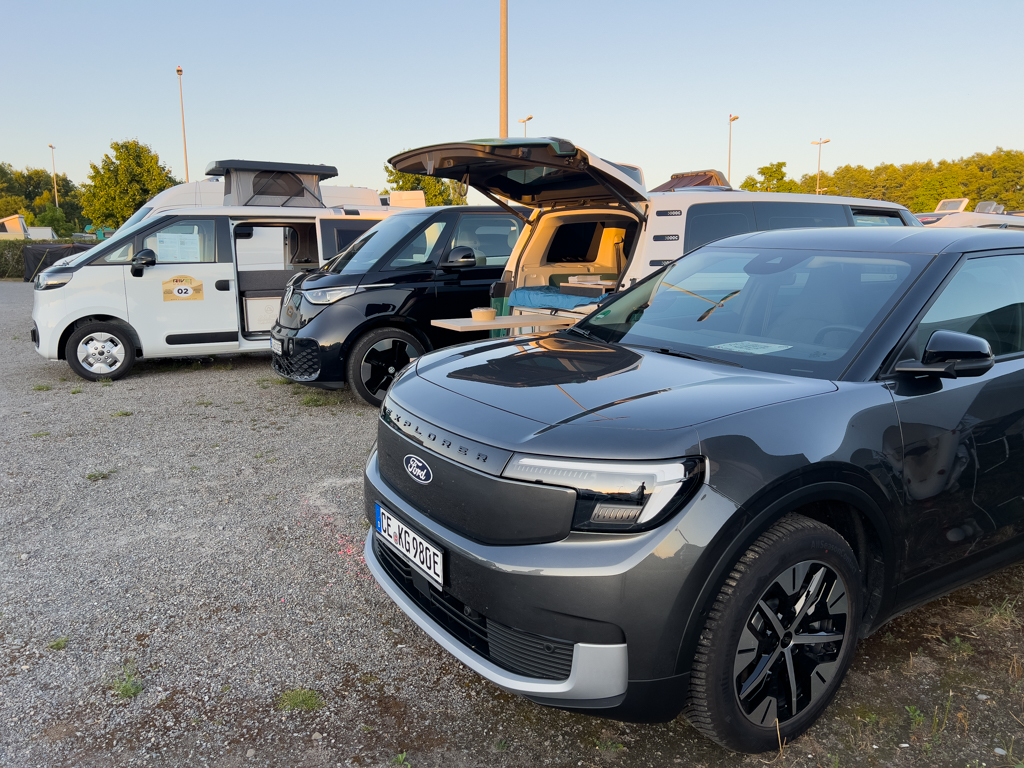
Other vehicles that could be found in the e-camp area are a Maxus with an Alpine camper setup, a couple of Teslas with rooftop tents or inside sleeping setups, a Polestar with a rooftop tent, an ID.4 with a trailer, a Ford Explorer, a Renault Zoe, and a couple of electric vans from Toyota, VW and Ford.







If you didn’t want to cook for yourself, food trucks were offering different options in the camp area.

In the evening, a rave bus and live music provided a good atmosphere.

Altogether it was a great weekend. EVs are still an exotic minority in the overlanding scene, but the scene is growing, and many new interesting electric vehicles for adventure travel will arrive on the market in the coming years. It’s only the beginning, and it’s great to be a part of it.
 EV Overlanding