
After the official end of the Rive Maroc Rallye in Quarzazate, three teams decided to drive back to M‘Hamid and try the challenging desert crossing from M‘Hamid via the Lac Iriki to Foum Zguid along the Erg Chegaga dune field. The Erg Chegaga is the largest sandy desert in Morocco and belongs to the northern part of the Sahara. The track is about 160km long and as far as I know it has never been driven with an electric vehicle. To be on the safe side we will take a local guide to lead us through the remote desert.
Sadly, a few km before M‘Hamid the Swiss team with their Tesla Model X discovered that one of their tires was seriously damaged (probably as a result of the many offroad tracks we drove during the last days).

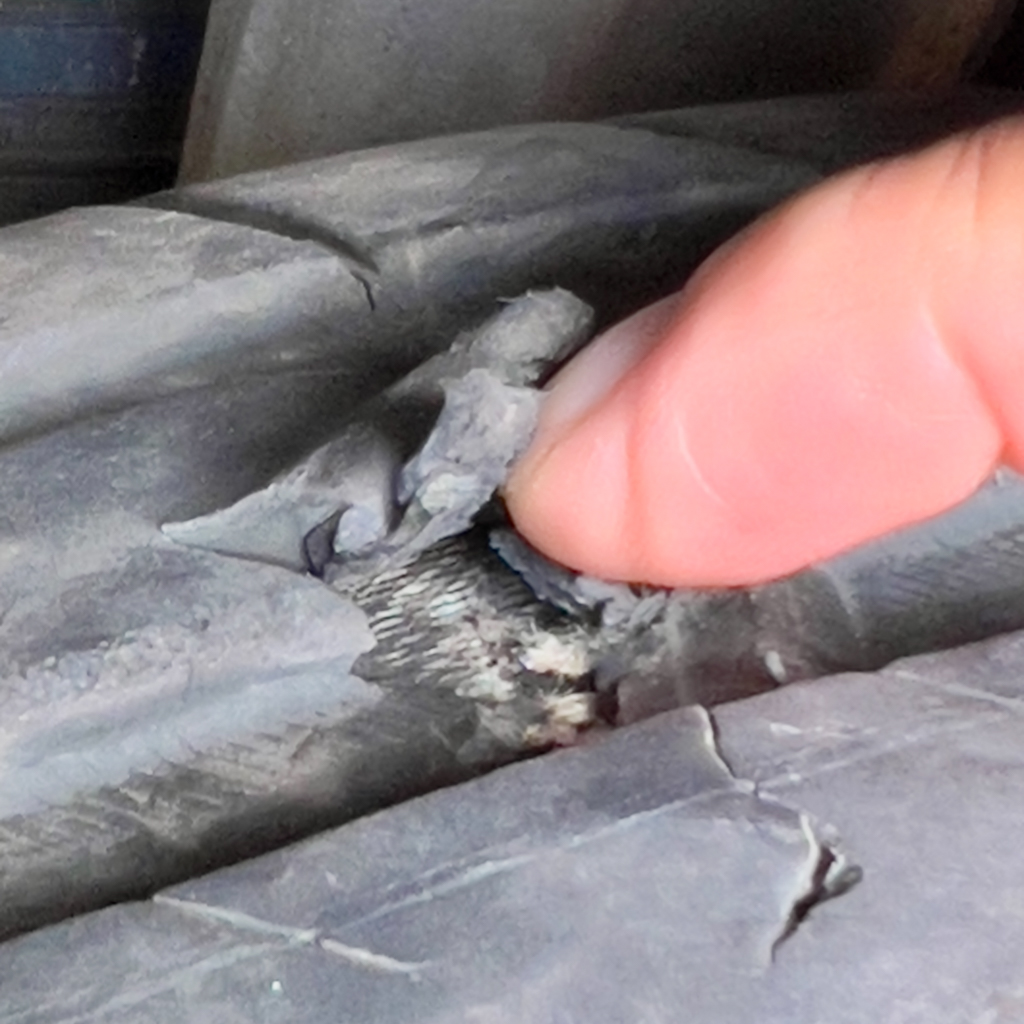
They went back to Zagora trying to find a new tire in that size. My fingers were crossed that they would find a solution and would be back the next morning in M‘Hamid.
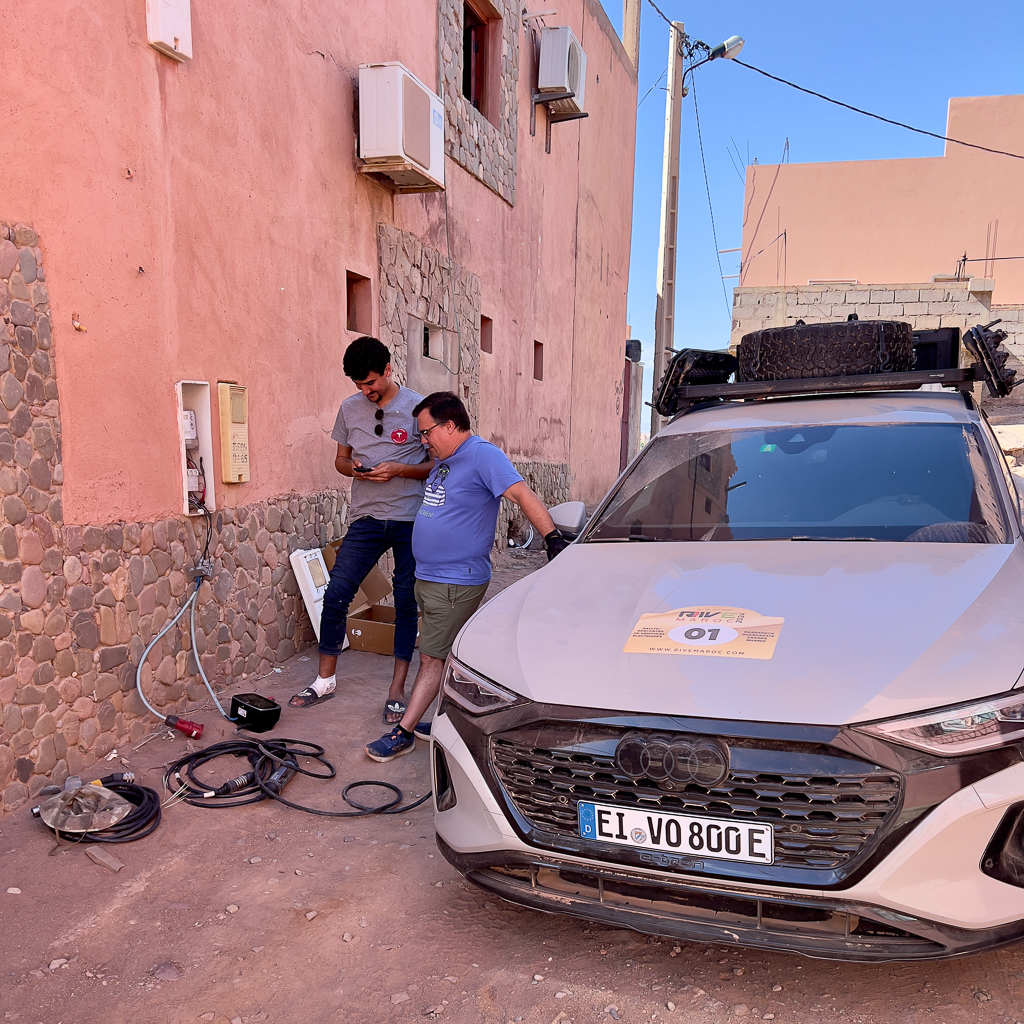
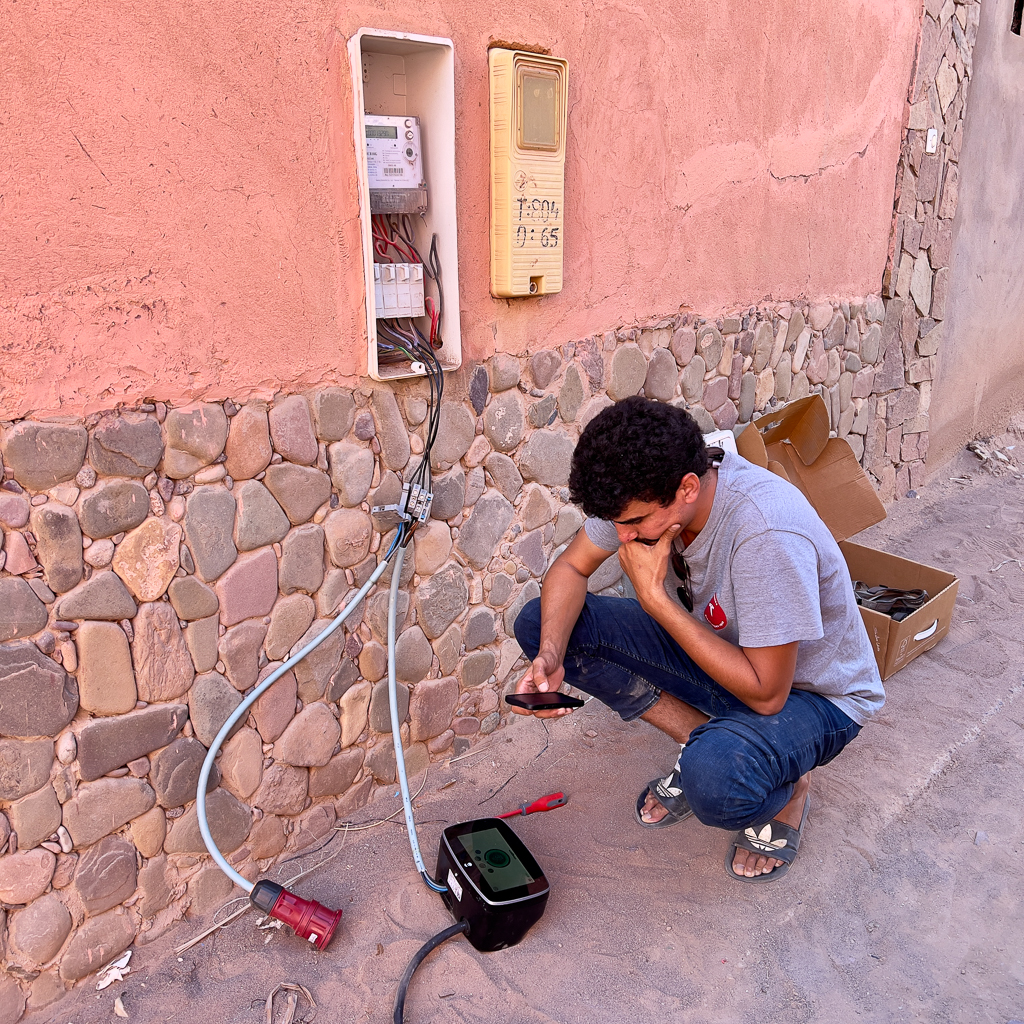
In the meantime, I was charging my Q8 e-tron at the 22 kW AC charger at the Sbai Palace in M‘Hamid while enjoying the lovely Riad.

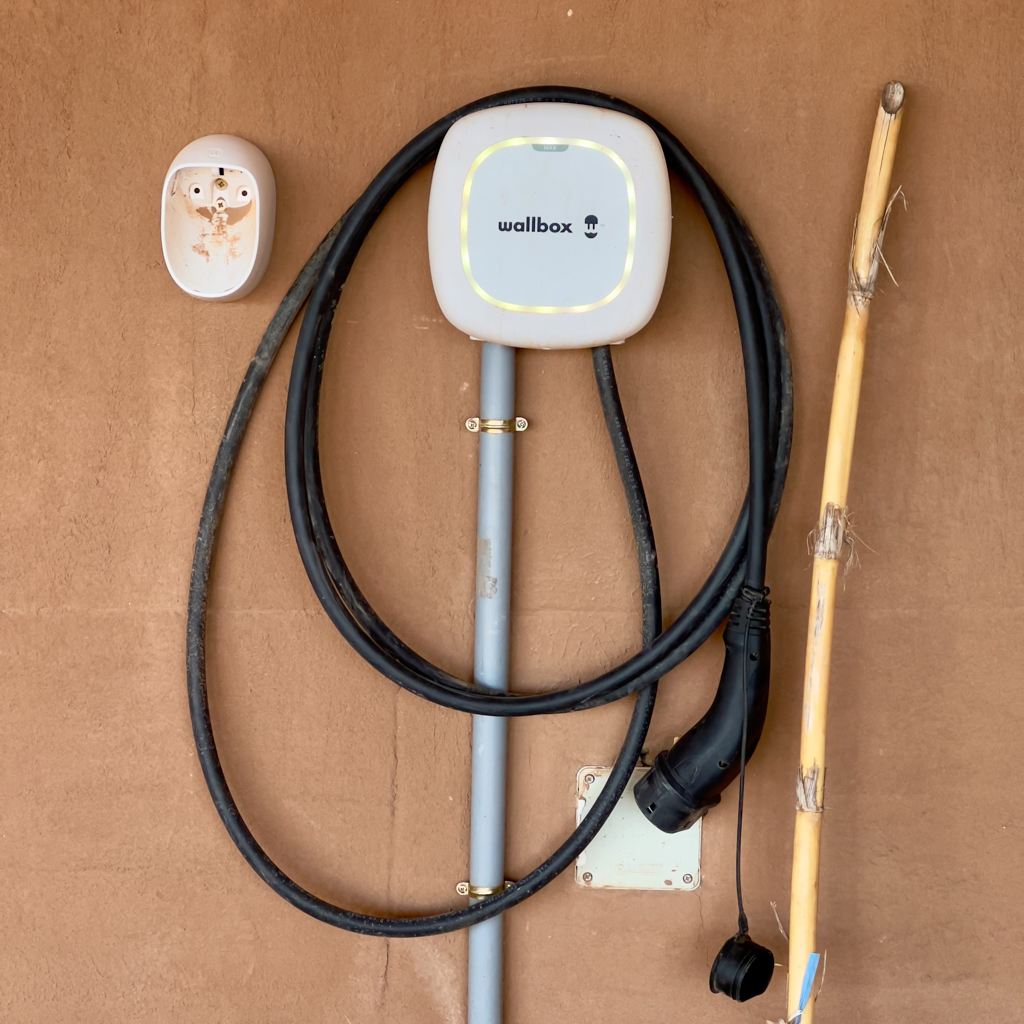
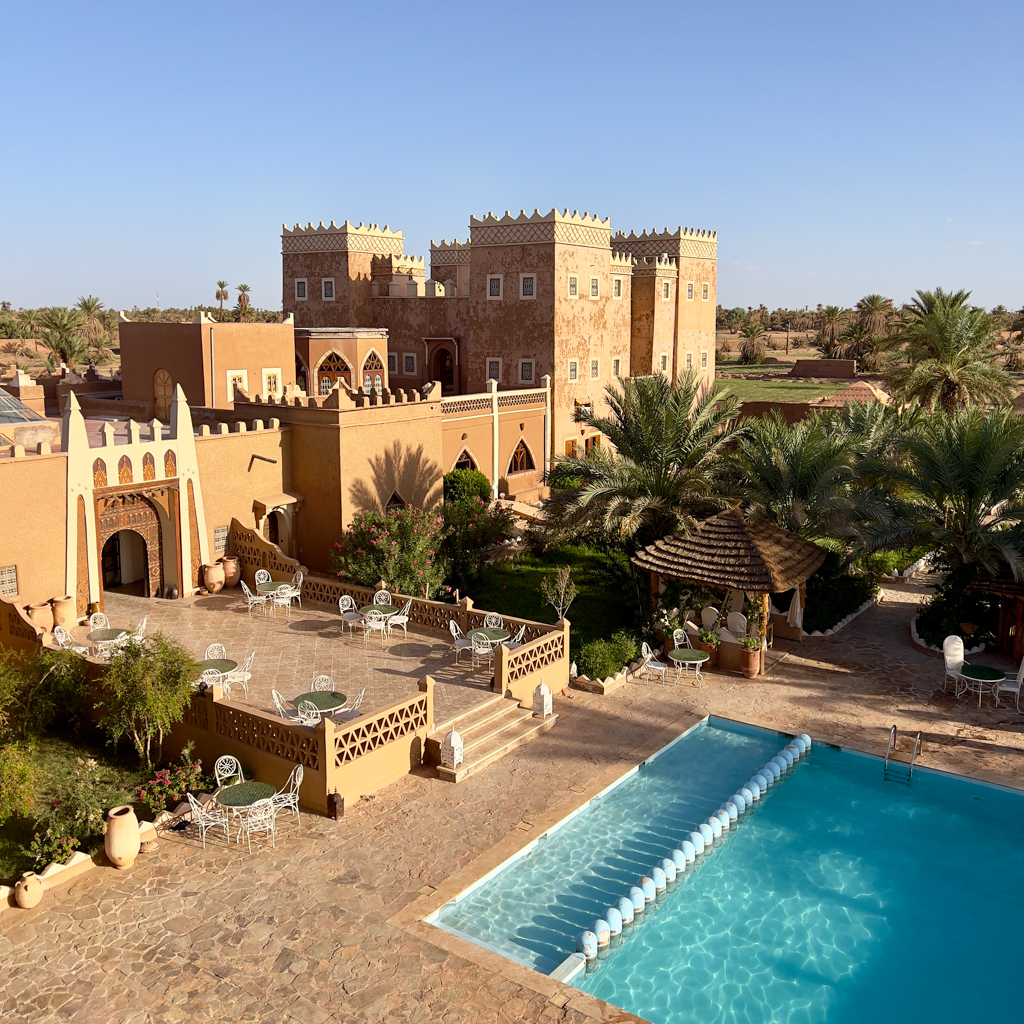


The Norwegian team arrived in the late evening with their Model S at the Sbai Palace. Sadly, Hans and Tom with their Model X hadn’t found a new tire in Zagora and decided to slowly drive home with their damaged tire. I think it was a wise decision considering the challenging conditions in the desert.
So our Lac Iriki desert crossing was now reduced to only two EV teams: John Otto and Mira with their Tesla Model S and myself with the Audi Q8 e-tron. Here you can check out the YouTube channel of John Otto and Mira.
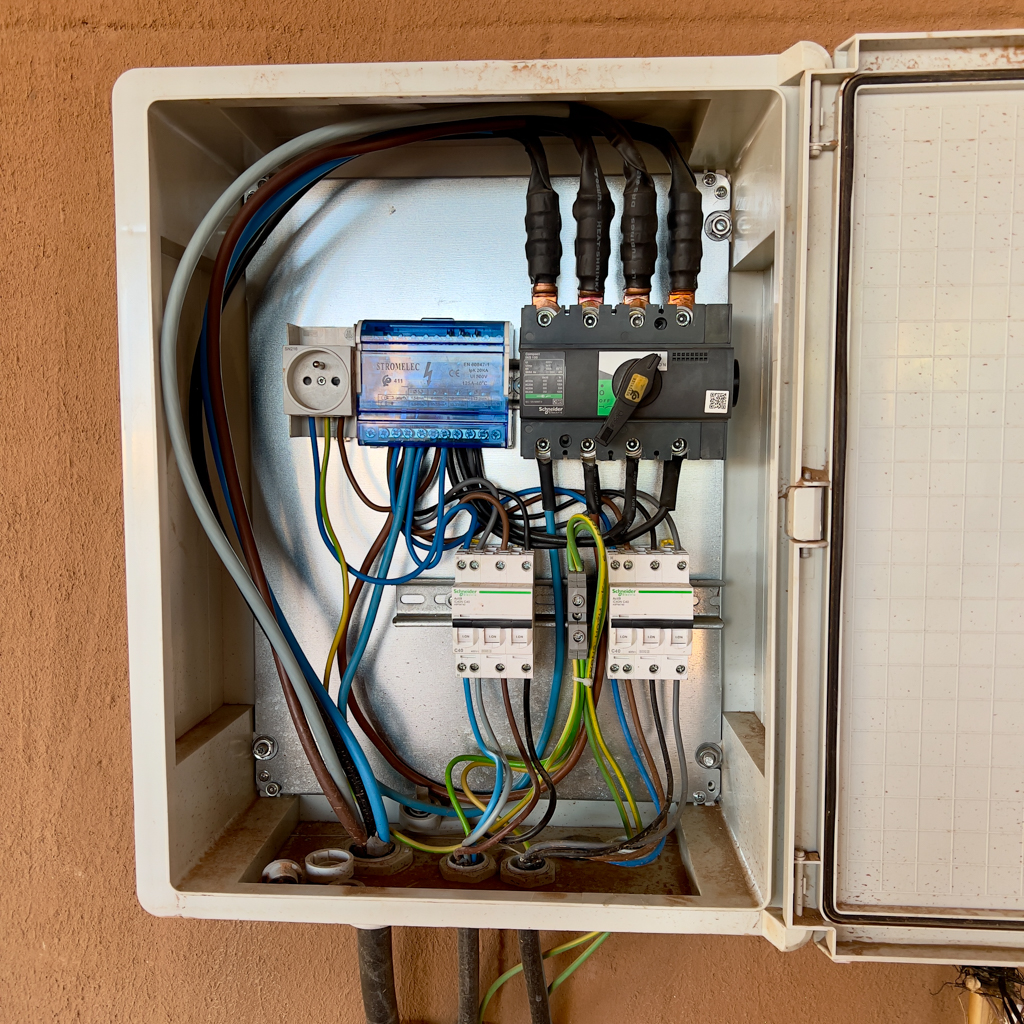
Since we wanted to start our tour around 10:00 a.m. we thought that it might be a good idea to charge to 100% in the early morning to reduce the stress for our batteries. It turned out, that wasn’t a good idea at all. I was just on my way to my car to connect it to the charger in the early morning when all lights went off and the whole hotel went dark. There was a power outage in the whole area and it was completely unclear how long it would take to fix it.
With some telephone instructions, I even tried to reset the transformer station.
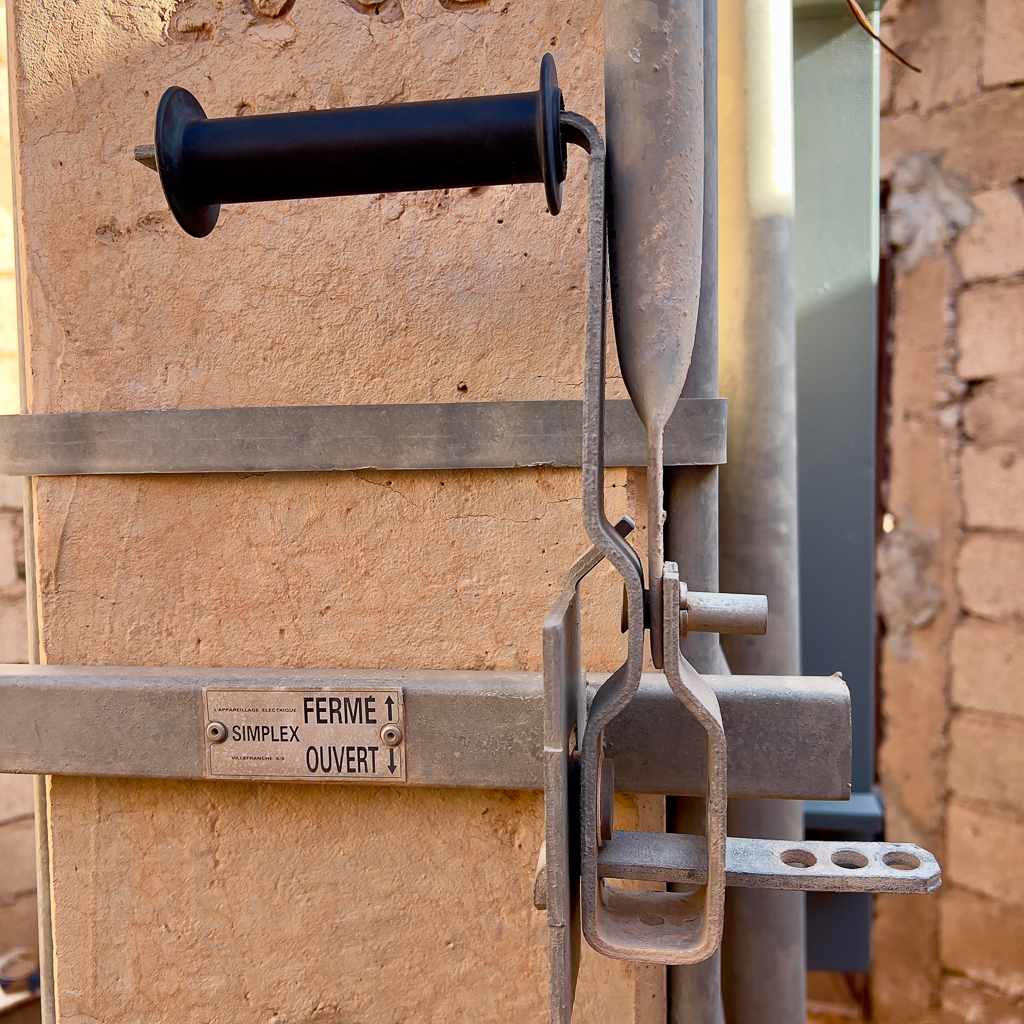
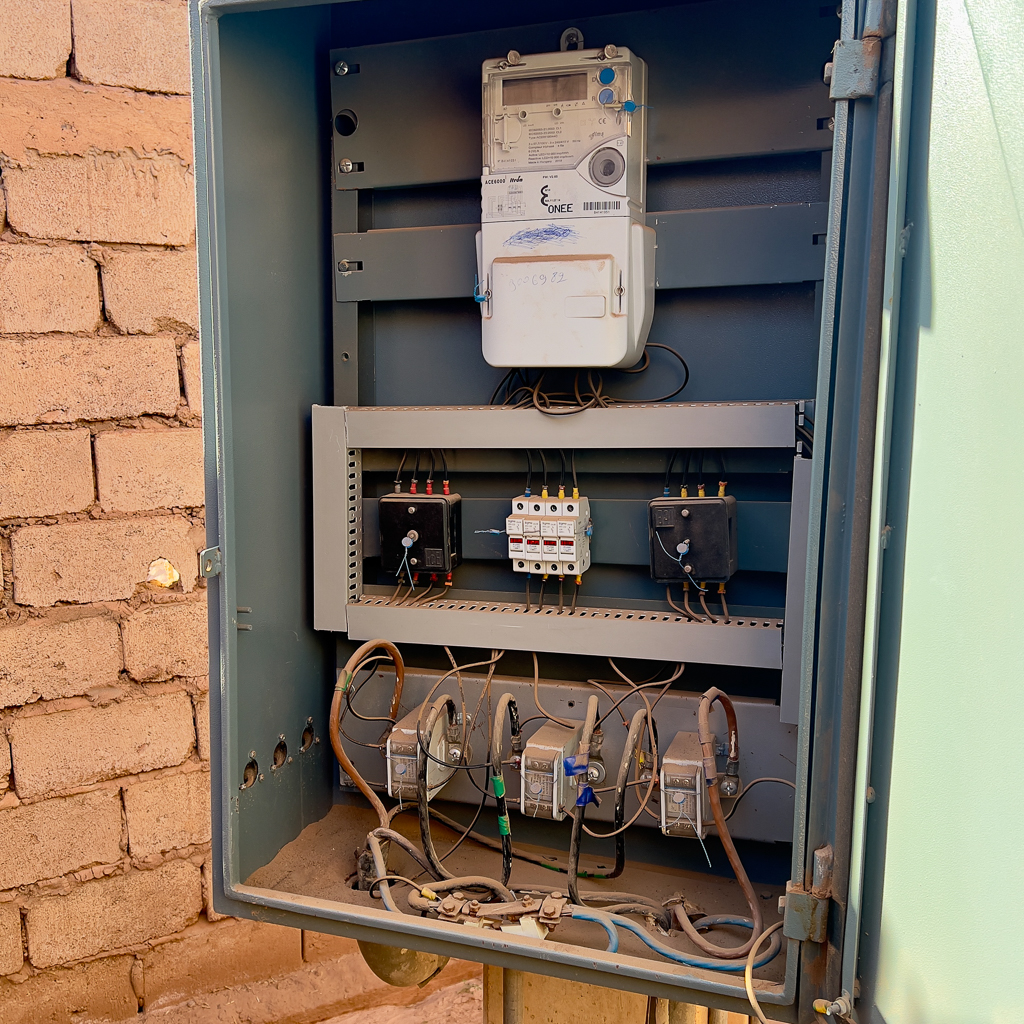
Sadly it didn’t help. The whole region was without electricity.
We waited until 10:30 a.m. and then decided to take the risk and start without fully charged cars. The Tesla was at 75% and the Audi at 90%.
The whole distance across the desert will be around 160km. But completely unknown is the energy consumption in soft sand. It will be high for sure. And there will be lots of sand.
Will we manage to reach Foum Zguid? We will find it out. Worst case we would have to tow both vehicles out of the desert.


In the afternoon we reached our camp for the night at the Erg Chegaga not too far from the Lac Iriki.


We decided to camp directly in the dunes and sleep in our cars instead of using the tents in the official camp.
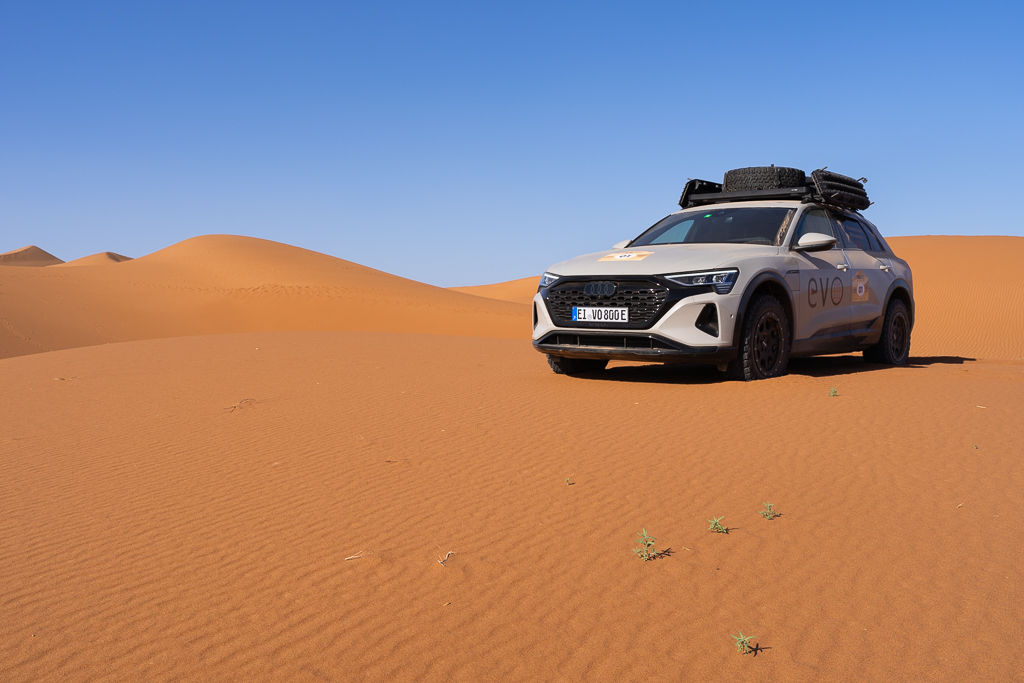


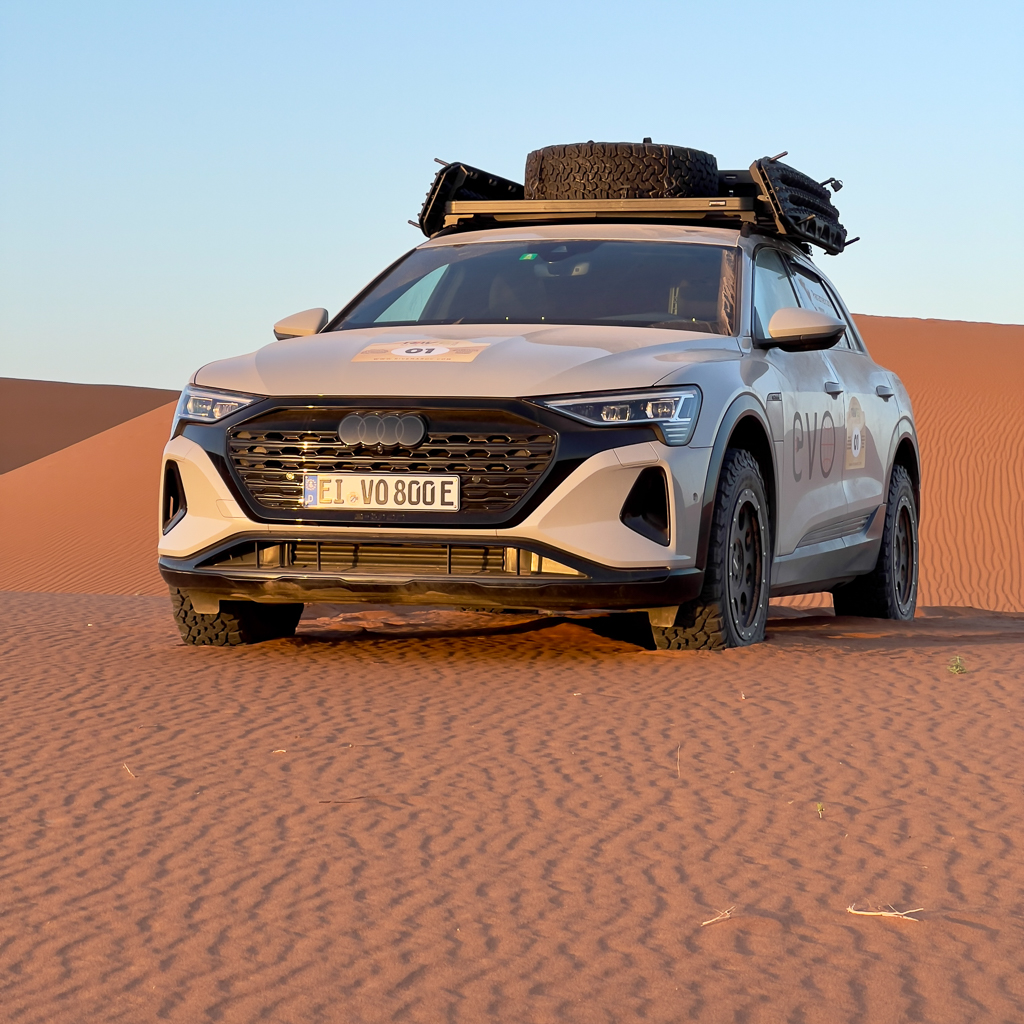
It was a stunningly beautiful landscape there.


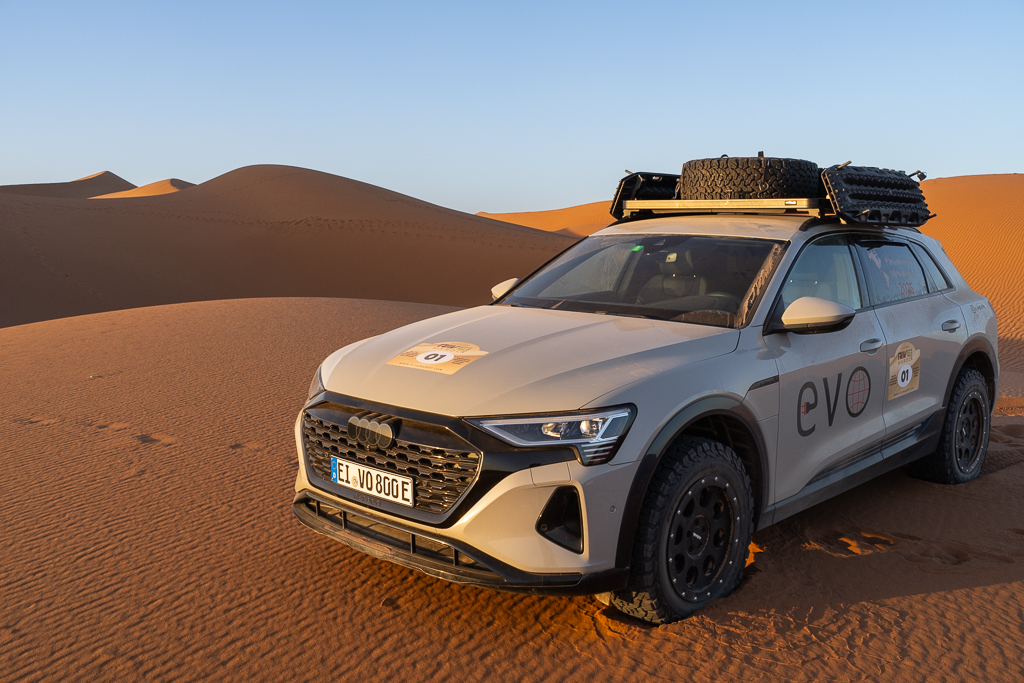
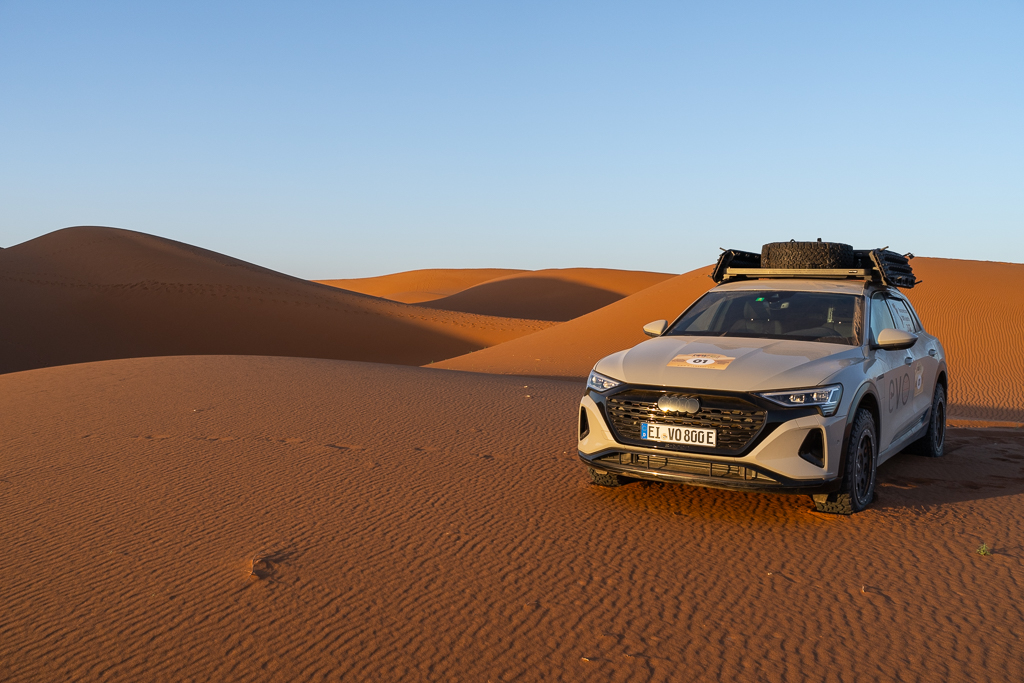


The dune camp in the Erg Chegag was definitely one of the highlights of my Morocco trip.


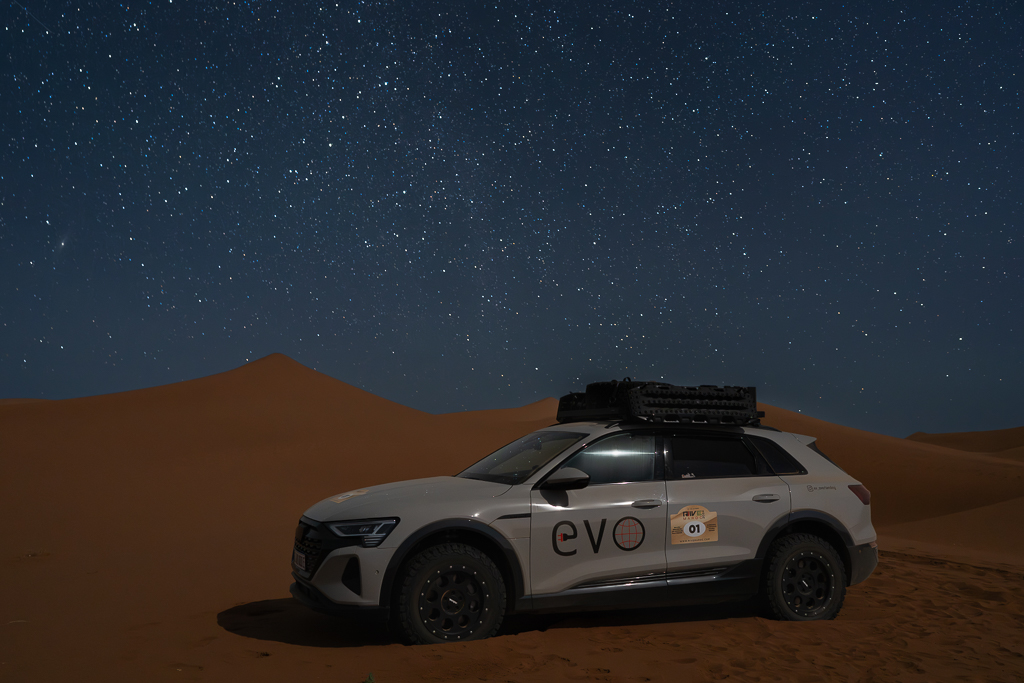
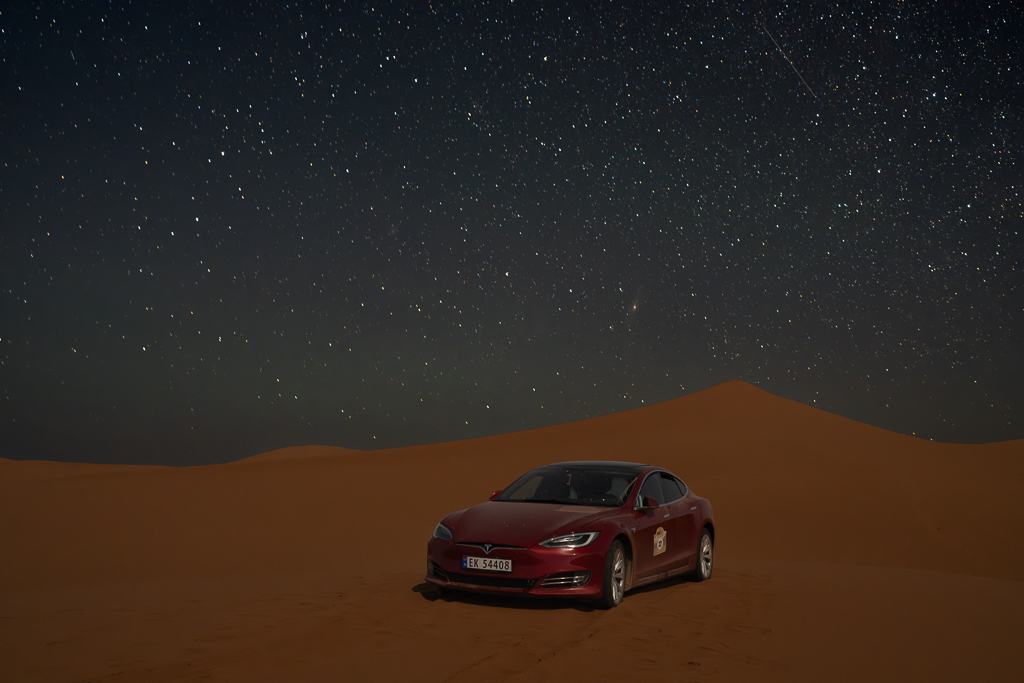
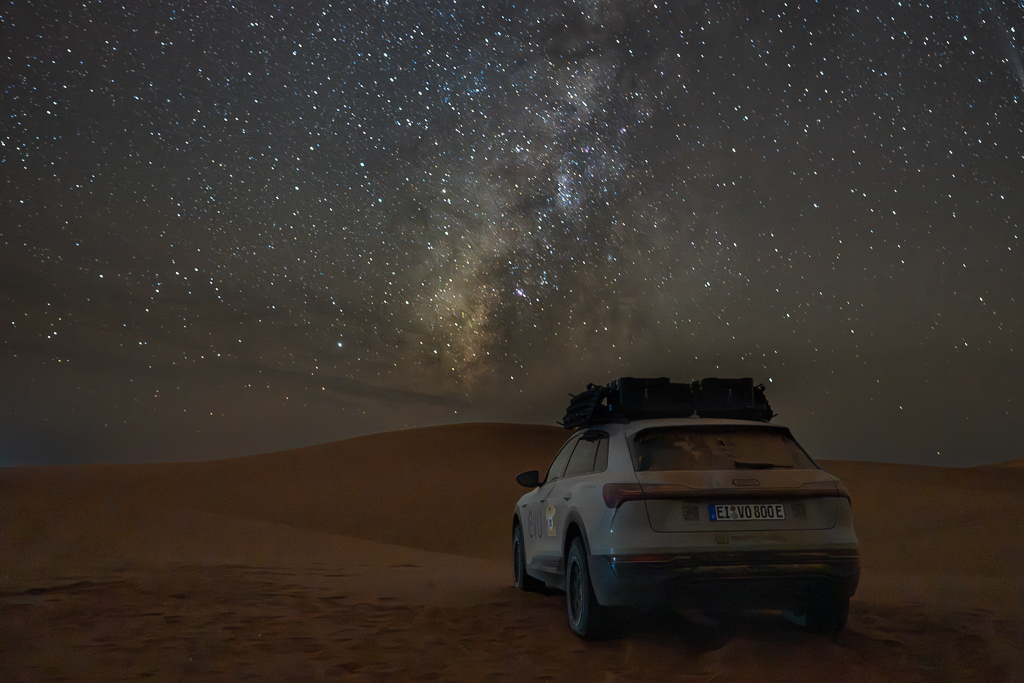
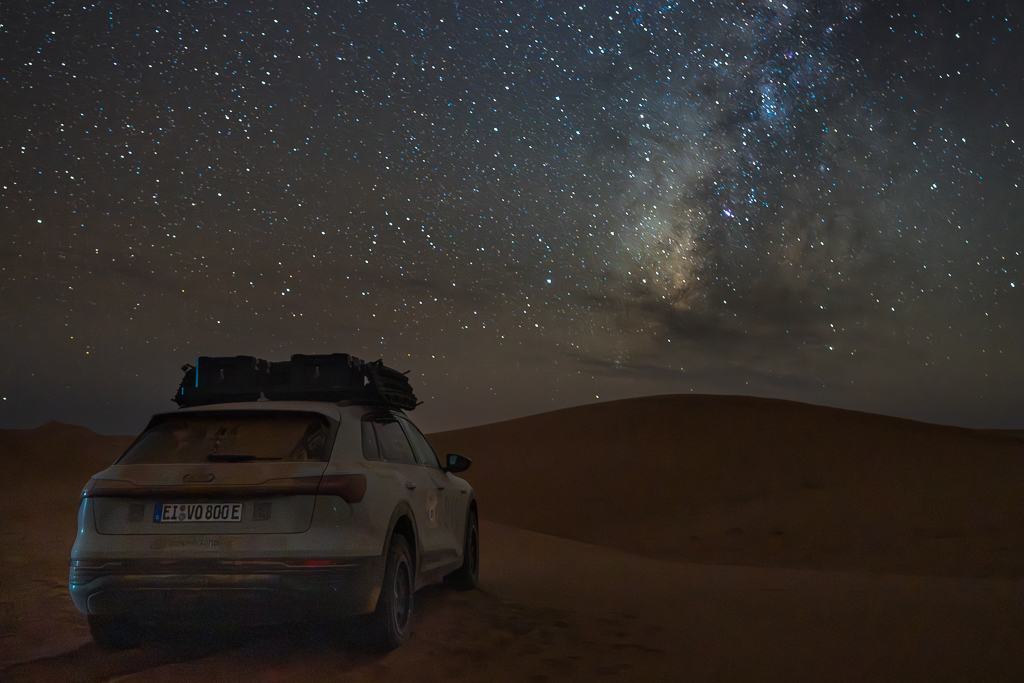
We had a calm night in the dunes and after a beautiful sunrise, we were ready for the second part of our desert crossing adventure from M‘Hamid to Foum Zguid.


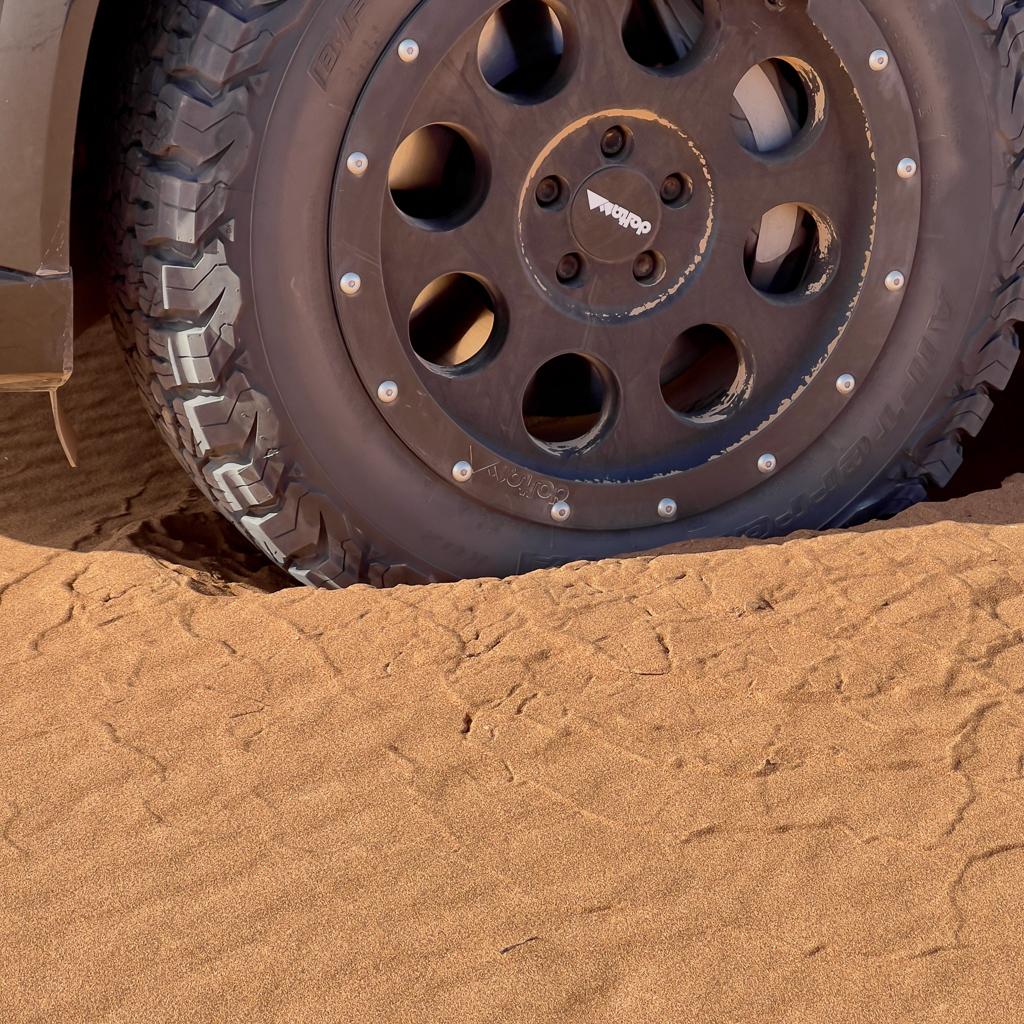
The section from Erg Chegaga to Lac Iriki was even a bit more challenging than the one from M’Hamid to Erg Chagaga. For about 30km there was nonstop soft sand. Luckily, I never got stuck with my car. I was driving with really low tire pressure (1.3 bar instead of 2.8 bar) which helped a lot.
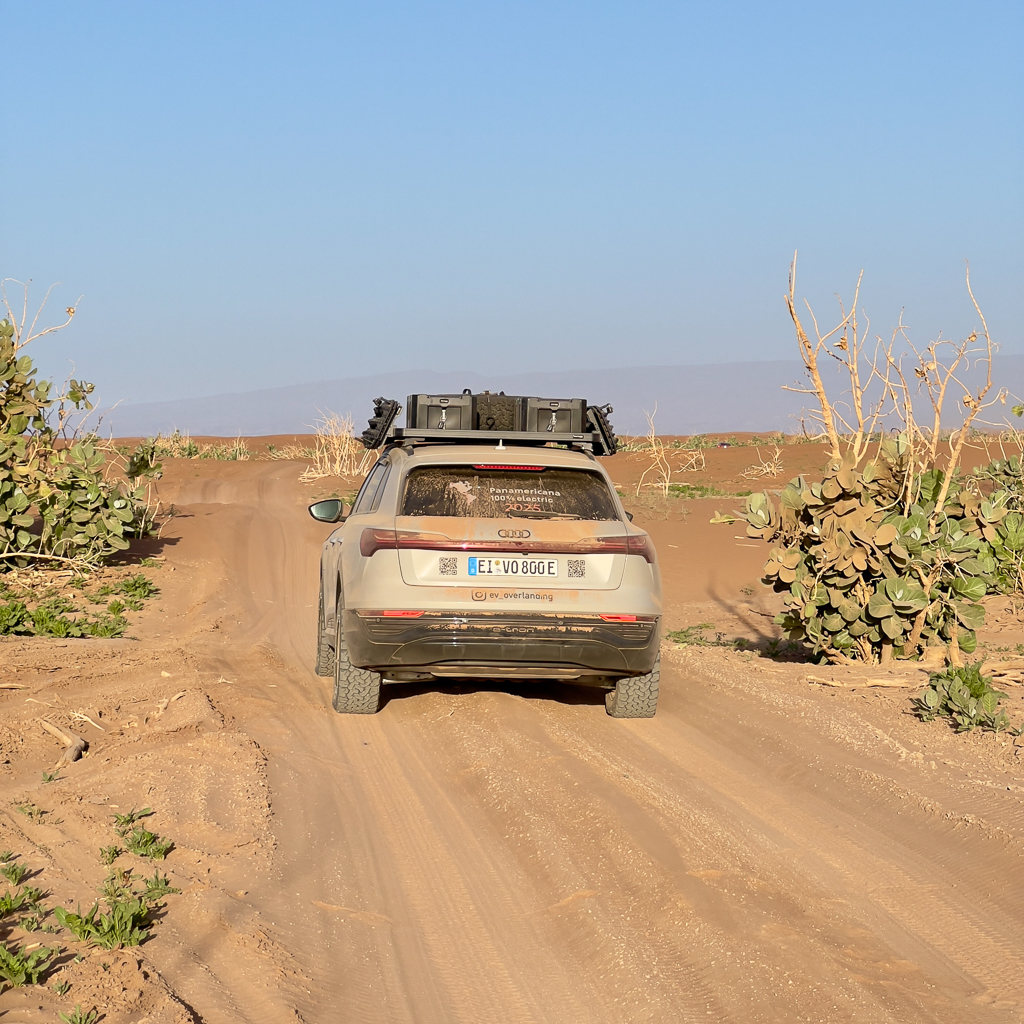

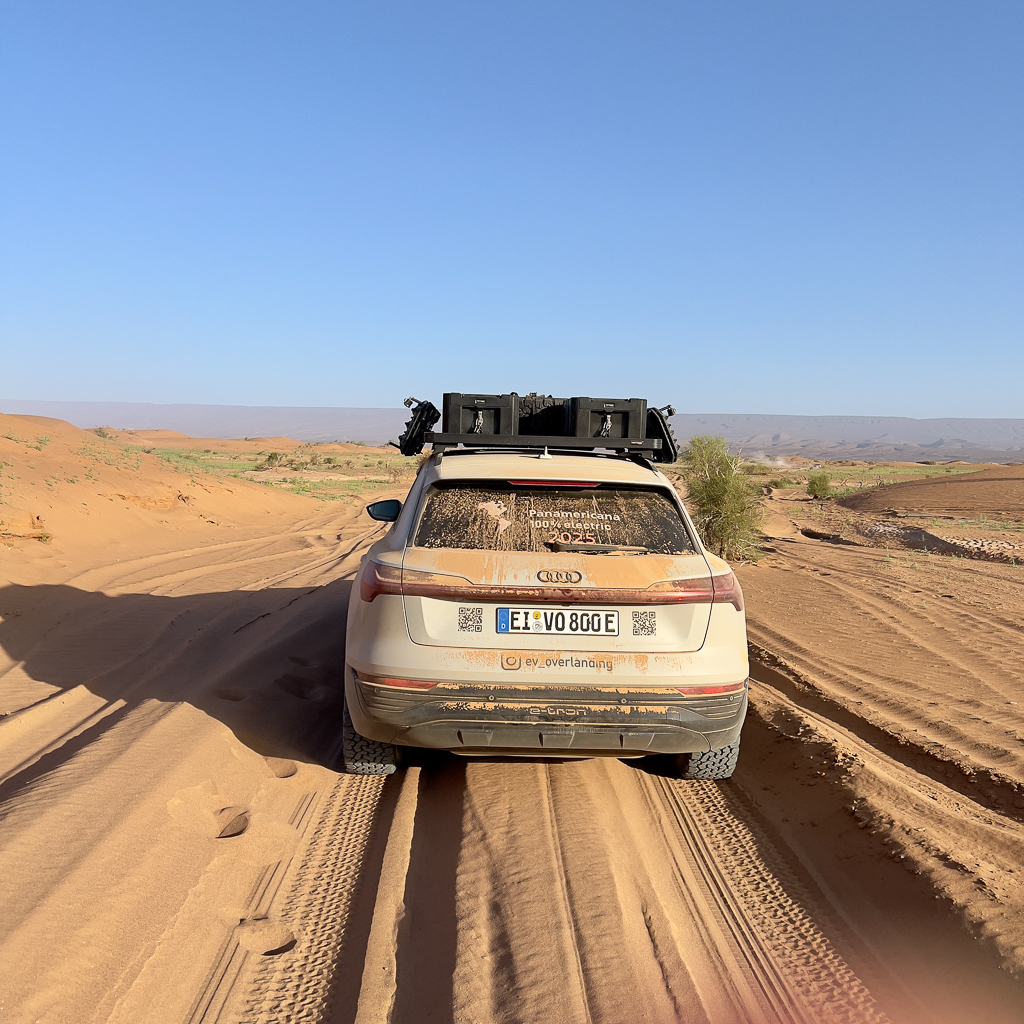
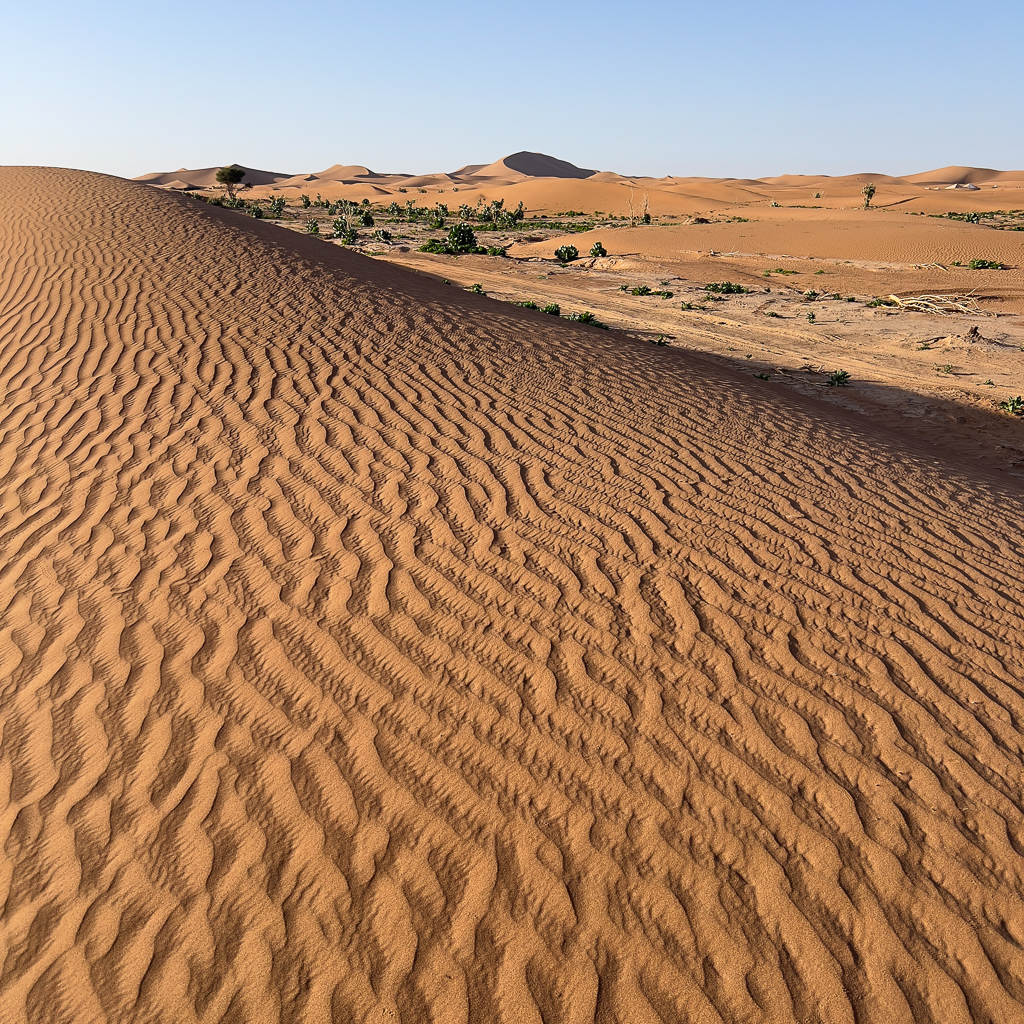
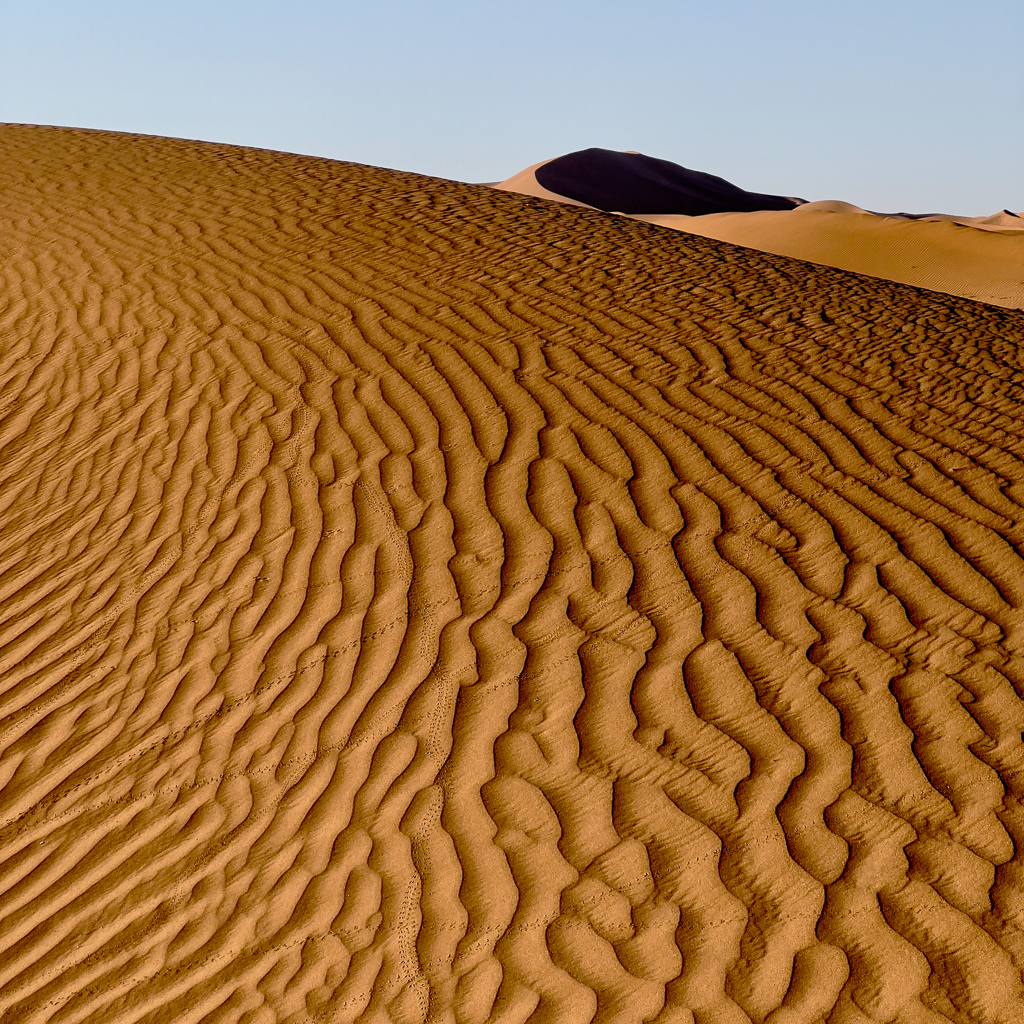
The problem with the soft sand was that the energy consumption went through the roof. I had an average consumption of over 75kWh/100km. If the track stayed like this for the remaining distance I would never make it to Foum Zguid.


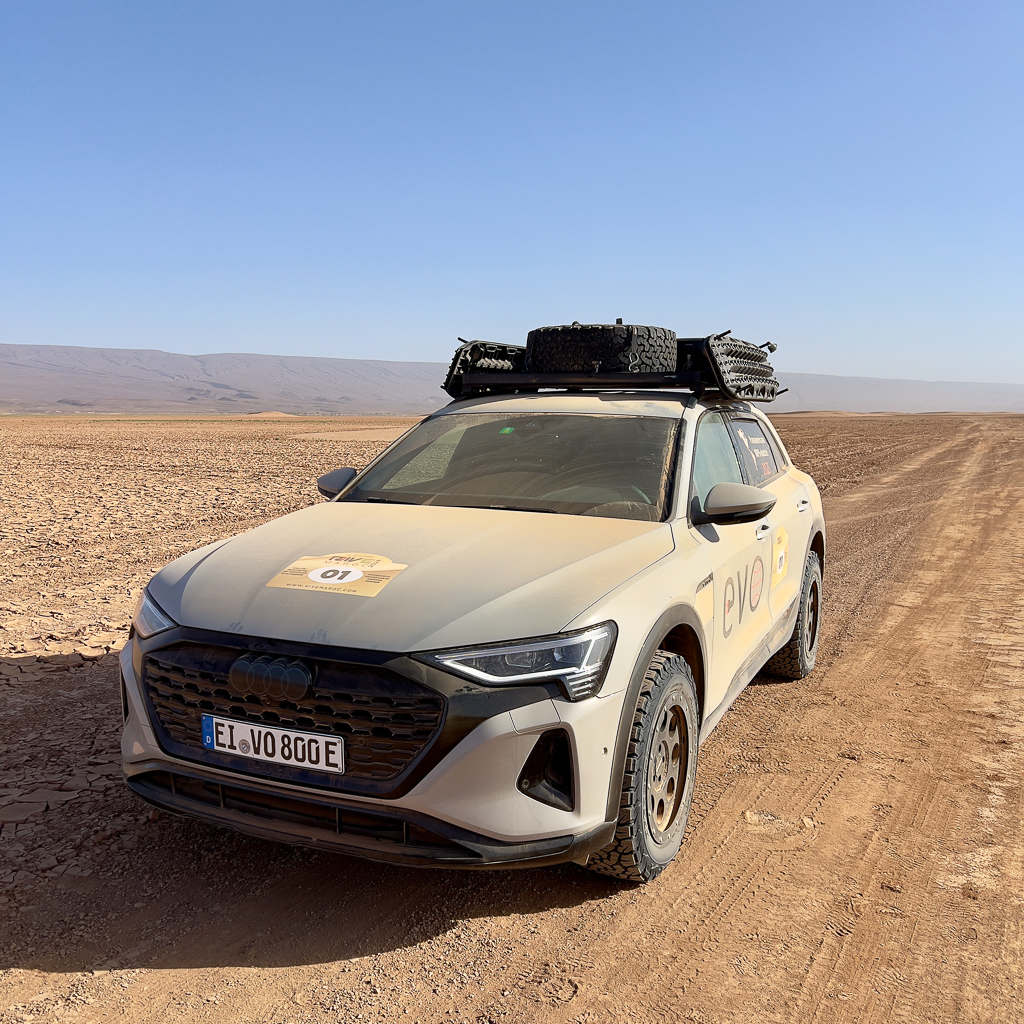
After about two hours of driving, we finally reached the famous Lac Iriki.

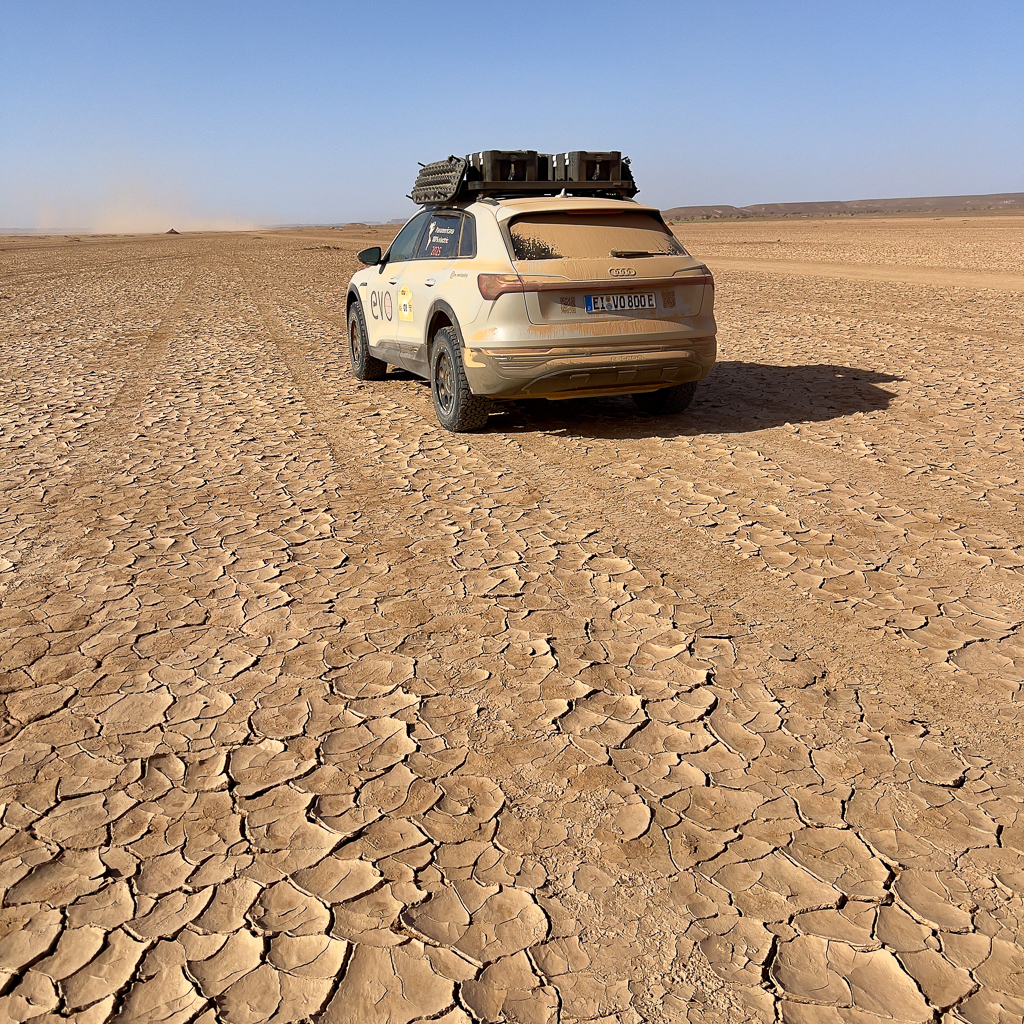
Normally this lake in the middle of the largest desert of Morocco is completely dry. But this year there was some heavy rainfall a few weeks ago and we were lucky to experience a Lac Iriki partially filled with water. An extremely rare occurrence.


After the Lac Iriki, we continued through the desert in the direction of Foum Zguid. The track changed from soft sand to a more rocky terrain.


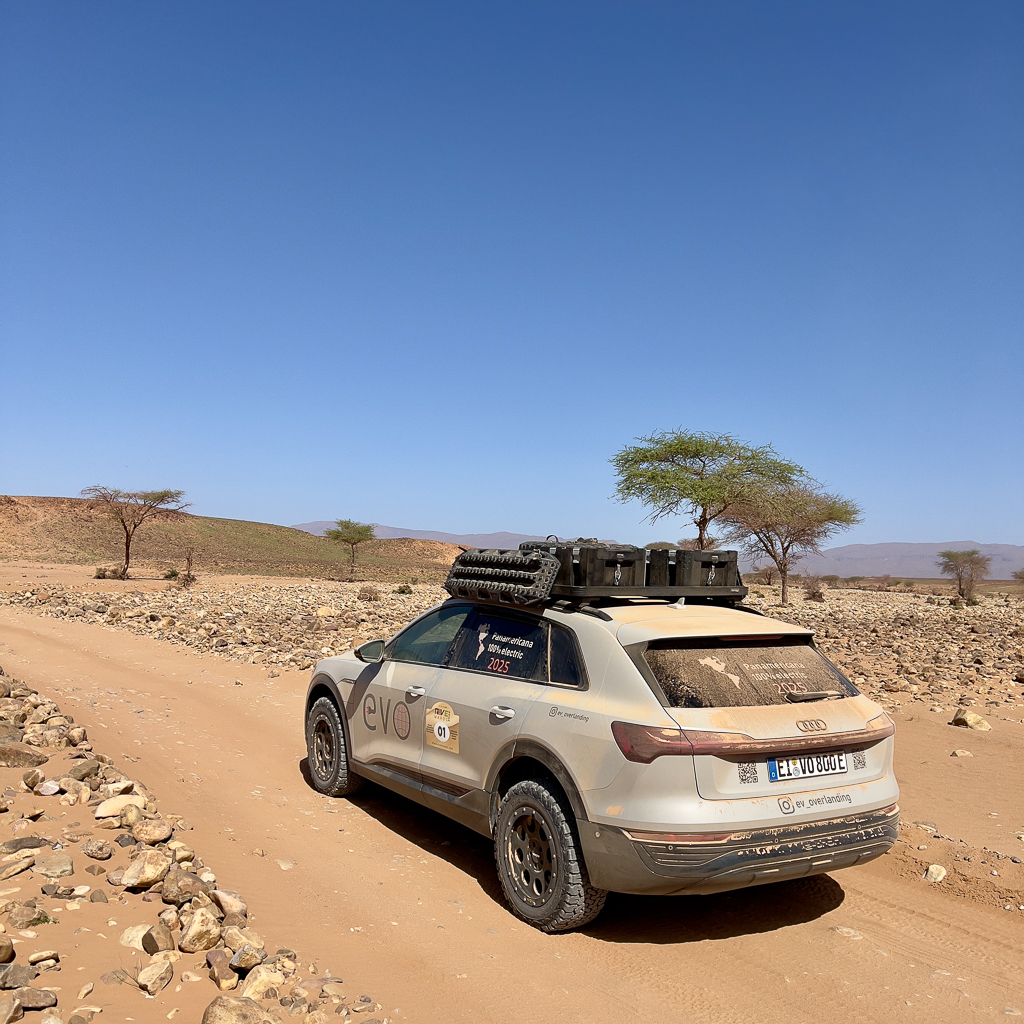
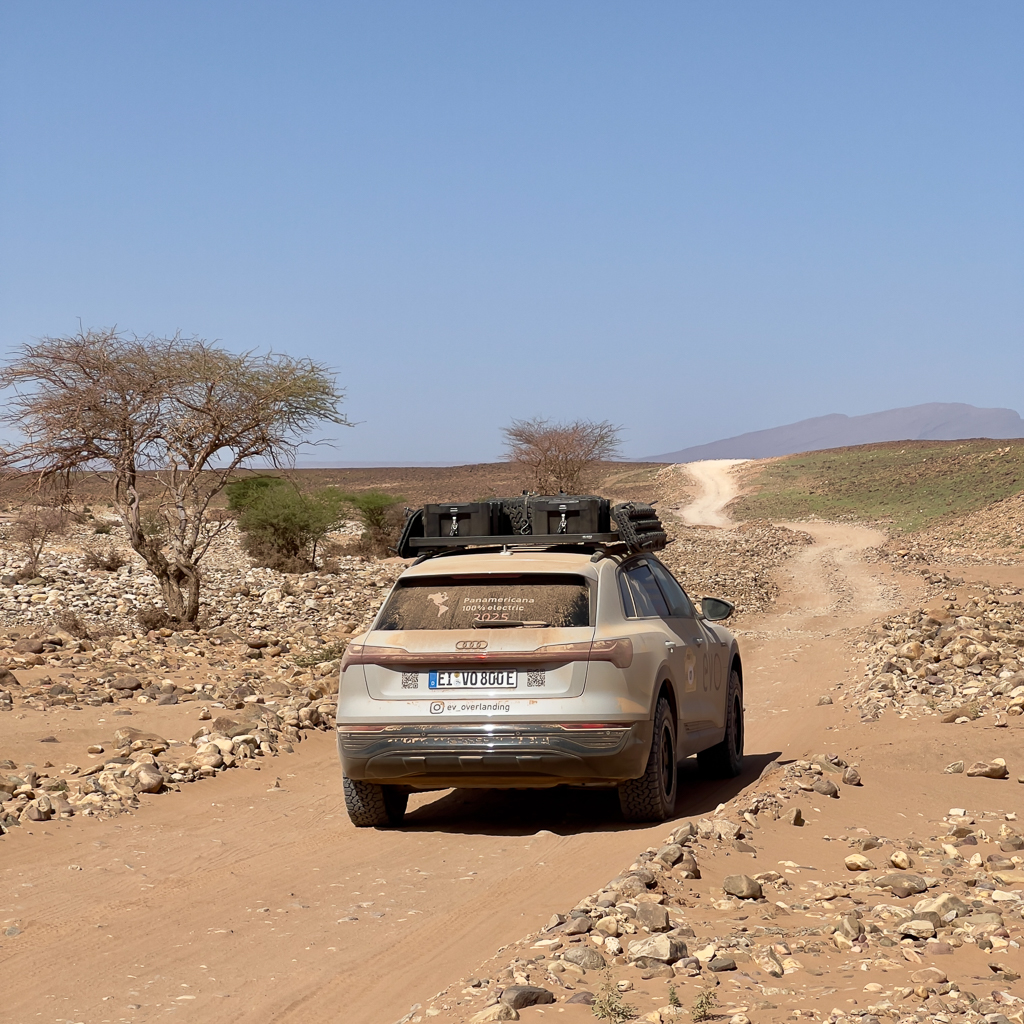

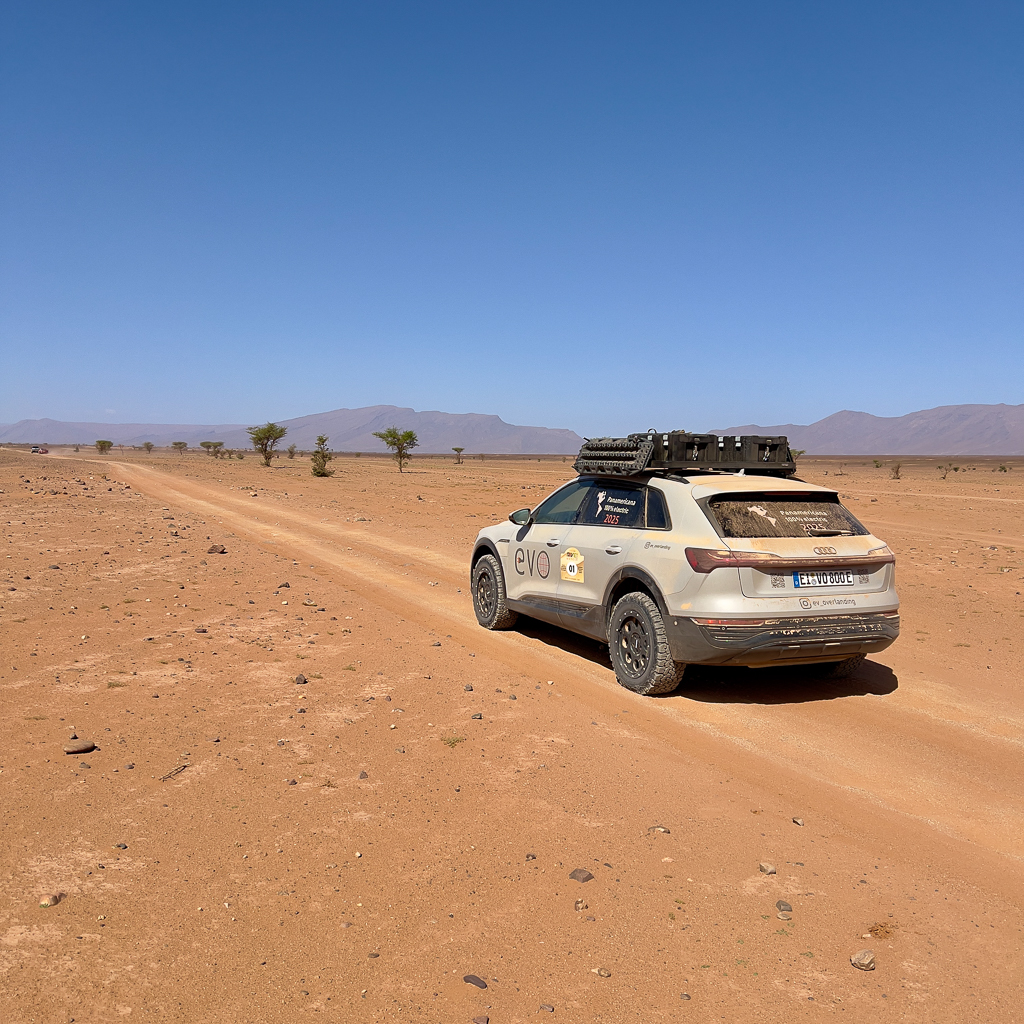
About 20km before Foum Zguid the SOC of the Tesla was rapidly approaching 0%. It was clear that the Tesla wouldn’t make it to Foum Zguid (remember that due to a power outage in M‘Hamid, the Tesla was only charged to 75% at the start of the crossing). We evaluated our options. I had a 2kWh EcoFlow power pack in my car which would probably charge the Tesla just enough to reach the next village. But it would take at least 1-2 hours. Since my Q8 e-tron still had 35% SOC left we decided to try something else. The plan was to tow the Tesla for a few km with the Q8 and recharge the battery just enough with recuperation to be able to reach Foum Zguid.

It worked very well. But keep in mind that most manufacturers advise against tow charging. If you do this it‘s at your own risk and can void your warranty.
We finally reached Foum Zguid after two days in the desert. We were likely the first people in the world to drive from M‘Hamid to Foum Zguid with an electric vehicle. That’s the fun part of using EVs in remote locations: you can feel like a real explorer.

In Foum Zguid there was electricity again and with a bit of help from the Rive Maroc charging team, we were able to charge our cars on a 16 amps connection.

The following image shows the recorded track that we drove with our EVs from M‘Hamid to Foum Zguid via Lac Iriki.

If you want to repeat this desert crossing with your own electric car it should at least fulfill the following minimum requirements:
- 4WD is a must, 2WD won‘t work
- A spare tire or all-terrain tires, ideally both
- At least 400km of range on normal roads (= 200km in the desert)
- 17cm of ground clearance is the absolute minimum => with 17cm the occasional ground contact is unavoidable, most of the time the underground is just soft sand, but damage to your car can happen (examples of cars with this kind of ground clearance: VW ID.4, Skoda Enyaq, Tesla Model Y, Tesla Model S with air suspension, Tesla Model 3 with lift kit)
- To be on the safe side 20cm of ground clearance is strongly recommended (examples of cars with this kind of ground clearance: Audi Q8 e-tron, Audi Q6 e-tron, Tesla Model X, Tesla Model Y with lift kit, VW ID.4 with lift kit)
If you don’t have a lot of experience driving in desert terrain I would strongly recommend getting a local guide to accompany you. I can recommend Mohamed, the owner of the Sbai Palace in M‘Hamid.
But with enough experience, you can also do the crossing without a guide. Then I would recommend buying the Morocco trackbook from Pistenkuh and downloading their GPS tracks (they are free when you buy the book). The Pistenkuh track from M‘Hamid to Foum Zguid is nearly identical to the track we drove.
In addition, I would recommend taking a satellite phone if you plan to do it alone. On about 1/3 of the track, there is no cellphone coverage.
And of course, take enough water to survive at least a couple of days in the desert. But that should be obvious.
Altogether this desert crossing was really a fun experience. Traction in soft sand was never a big problem for my Audi Q8 e-tron. It’s a beast in the dunes. But energy consumption definitely is a challenge under these conditions. But it’s fascinating what’s already possible with the current generation of EVs. With next-generation battery technology or smaller/lighter onboard solar charging concepts, there will be no limits for EVs in the future.
 EV Overlanding
2 thoughts